Imagine opening a file where the only thing separating a "clean" result from a violation is a decimal point. In the world of forensic toxicology, that tiny detail often defines the outcome of a legal case, a medical diagnosis, or an employment decision. Many people stumble when reading these reports because they assume all lab results work the same way. They don’t. There is a fundamental divide between simply knowing if something is there and knowing how much is there.
This distinction isn’t just academic jargon; it dictates the reliability of the evidence. To truly understand what you are looking at, you need to know the difference between Qualitative Testing and Quantitative Analysis. One tells you yes or no, while the other gives you a number. Both are essential, but using one when you need the other can lead to dangerous misunderstandings.
The Core Difference: Presence vs. Amount
At its simplest level, a toxicology report acts as the official record of substances found in a biological specimen. When labs run tests, they usually start with a question: Is this substance present? If the answer is “yes,” they often stop there unless specifically asked to measure the amount. This first step is qualitative.
Qualitative Testing A laboratory method designed to identify whether a specific analyte is present in a sample, returning a positive or negative result.
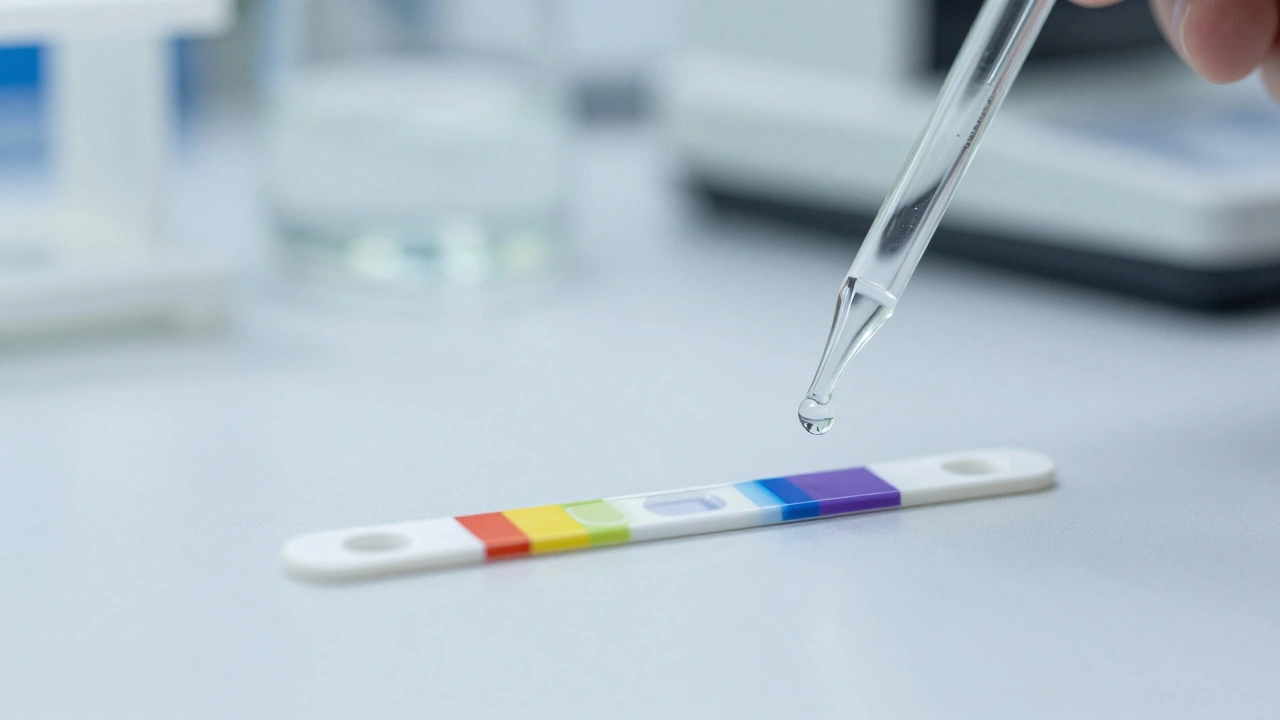
Think of a qualitative result like a home pregnancy test. It shows you two lines or one line. It tells you presence, but it does not tell you the hormone level. In toxicology, a qualitative screen might say “Positive for Amphetamines.” It confirms the substance was detected above a certain threshold. However, it cannot confirm dosage or blood concentration.
Now, consider the opposite. In a hospital setting involving an overdose, doctors need to know exactly how concentrated the toxin is to administer the right antidote. This requires numbers. This is where Quantitative Analysis A testing methodology that measures the exact concentration of an analyte in a specimen, providing numerical data. comes into play. Instead of a simple checkmark, you get a value like “45 ng/mL” (nanograms per milliliter).
The Alabama Department of Forensic Sciences notes that sometimes, for investigative purposes, mere presence is enough. If the goal is just to prove a person consumed cocaine, a qualitative report stating “cocaine metabolite detected” might suffice. But if the defense argues the defendant was innocent due to accidental exposure, or if a driver claims their reaction time wasn’t impaired, the quantitative value becomes the centerpiece of the debate.
How Labs Determine the Result: Screening vs. Confirmation
You will see two main technology tracks when reviewing lab methods. The process usually follows a funnel. First, you filter everything down with a fast test, and if something triggers an alarm, you zoom in with a precise microscope.
The first stage typically uses Immunoassay A rapid screening technique that uses antibodies to detect the presence of specific drugs in biological fluids. . These are great for speed. Police departments and workplaces love them because they give a result in minutes. However, they have a flaw. Antibodies can mistake similar molecules for the target. For example, some cold medications contain pseudoephedrine, which can cross-react with amphetamine screens. An immunoassay might scream “positive!” when the person actually just took medicine for a sinus infection. Because of this, these are considered presumptive results.
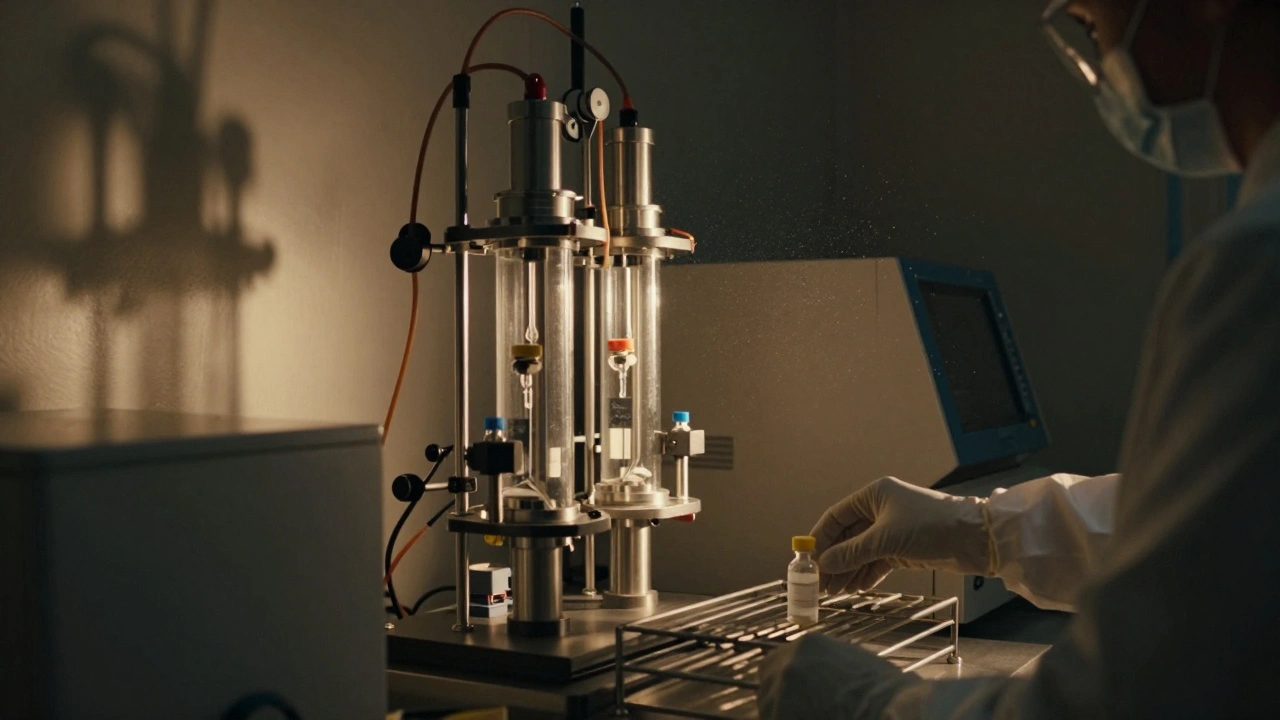
When accuracy is non-negotiable, the sample moves to the definitive phase. This usually involves Mass Spectrometry A sophisticated analytical technique used to identify and quantify chemical compounds based on their mass-to-charge ratio. machines. Gas Chromatography-Mass Spectrometry (GC/MS) or Liquid Chromatography-Tandem Mass Spectrometry (LC-MS/MS) separate the chemicals by boiling points or electrical charges before weighing them. This process is slow but precise. It strips away the false positives that immune-based tests might catch.
| Method Type | Primary Output | Typical Technology | Accuracy Goal |
|---|---|---|---|
| Qualitative | Positive/Negative | Immunoassay | Detection of Substance |
| Quantitative | Numerical Value | Mass Spectrometry | Precise Concentration |
Coding for these services also differs, which is relevant if you are auditing billing. Qualitative screening has a specific CPT code that covers the broad search. However, quantitative testing is coded per substance. Testing for Amphetamine (CPT 82145) costs differently than testing for Phencyclidine/PCP (CPT 83992). This financial distinction reinforces the operational difference: one is a sweep, the other is a targeted measurement.
Interpreting the Numbers: Cutoffs and Thresholds
If your report is quantitative, staring at a number can still be confusing. Does “0.05” mean high or low? You cannot interpret this without knowing the Cutoff Levels Pre-determined thresholds established to distinguish between a negative and a positive finding in laboratory testing. .
Labs set these cutoffs to prevent natural background levels from triggering alerts. Every specimen matrix has its own standards. Urine tests generally have higher cutoffs than blood tests because urine concentrates waste products. The Federal Drug Administration (FDA) guidelines and Substance Abuse and Mental Health Services Administration (SAMHSA) mandates provide standardized ranges for workplace testing.
Consider alcohol. A blood alcohol level (BAL) of 0.08 g/dL is the legal limit for driving in most US states. However, if a tox report shows 0.02 g/dL, qualitatively, you have been drinking. Quantitatively, legally, you are likely under the impairment limit. This nuance changes everything for a defense attorney. Without the quantitative value, you only know alcohol was ingested. With it, you can argue capacity and impairment levels.
In clinical medicine, therapeutic windows matter even more. A drug like Digoxin is life-saving for heart patients but fatal in higher doses. A therapeutic range might be 0.5 to 2.0 ng/mL. A result of 0.4 suggests the patient didn’t take their dose. A result of 3.0 signals toxicity risk. Here, the qualitative result (Digoxin detected) is useless. The quantitative value is the only one that guides the doctor’s hand.

Forensic Challenges: When Precision Fails
Even with advanced tools, reporting isn’t always perfect. The Alabama Department of Forensic Sciences highlights a practical constraint: complexity. Sometimes quantification is technically possible, but the lab chooses not to do it. Why? Time and resources.
If a deceased individual is found in a car crash, and traces of a common prescription drug are found, proving the person took the drug (qualitative) might be the priority. Measuring the exact nanogram level requires calibration curves, internal standards, and validation checks for that specific matrix. If the sample quality is poor (decomposed tissue), a quantitative result might be unreliable.
In those cases, the lab may issue a report stating “Oxazepam detected.” They omit the number because the variability in post-mortem redistribution could skew the concentration readings. Oxazepam moves through body tissues unevenly after death. Therefore, the number might lie more than a binary detection. Understanding when a lab omits numbers is part of interpreting the document. It often indicates technical limitations rather than an oversight.
Another pitfall is the “relief” effect in research. If a study compares qualitative vs. quantitative findings, they might find that qualitative interviews reveal intent, whereas quantitative assays reveal chemistry. In forensic science, the objective data usually wins, but the context fills the gaps. For instance, finding methamphetamine quantitatively proves consumption, but it doesn't explain behavior. You need to combine the report data with witness statements and physical signs of intoxication for the full picture.
The Human Impact: Deciding Action Based on Data
Ultimately, these reports drive decisions that affect livelihoods. In occupational health, a failed drug screen (qualitative) might trigger a second test (quantitative). Many policies state that a positive screen must be confirmed by GC/MS before termination happens. If the confirmation fails to find the drug (or finds a different quantity below the cutoff), the employee remains employed.
Medical professionals rely on this flow daily. Emergency rooms prioritize stability over legal proof. When a patient presents with unknown ingestion, clinicians order a comprehensive panel. They need the numbers to treat acute poisoning. A toxicologist might later review the file for legal records, checking if the cutoffs met the criteria for reporting to authorities.
We must acknowledge the subjectivity too. While quantitative data feels hard and scientific, interpretation involves judgment calls. Did the person sweat out the drug? Was the hair sample contaminated? These environmental factors introduce variables that a machine cannot see. That is why chain-of-custody documentation accompanies the data. It links the sample physically to the numbers.
Next Steps for Professionals
If you are tasked with reviewing these documents, start by identifying the methodology used. Look for the footer of the lab report. Is this an Immunoassay screen, or a Gas Chromatograph confirmation?
- Check the Matrix: Are you looking at blood, urine, or hair? Each holds drugs differently.
- Review the Cutoff: Ensure the lab reported values relative to their stated limits.
- Verify the Method: Does the test claim to be definitive or preliminary?
- Understand Limitations: Postmortem samples degrade faster than living ones.
By mastering these distinctions, you turn a dense list of numbers into a narrative of fact.
What is the main difference between qualitative and quantitative toxicology tests?
Qualitative tests determine presence (yes/no) of a substance, while quantitative tests measure the exact amount or concentration of the substance in the specimen.
Can a positive urine test be wrong?
Yes, initial screening tests (immunoassays) can produce false positives due to cross-reactivity with other medications. Confirmatory testing using mass spectrometry is required to validate the result.
Why do labs sometimes not report numerical values?
In certain forensic cases, particularly postmortem, samples may degrade or redistribute substances unevenly. Labs may report qualitative presence only to avoid misleading quantitative inaccuracies.
What technology is used for quantitative drug testing?
Quantitative analysis primarily relies on Mass Spectrometry techniques like GC-MS (Gas Chromatography-Mass Spectrometry) or LC-MS (Liquid Chromatography-Mass Spectrometry).
Are qualitative tests always less accurate than quantitative ones?
Qualitative tests are designed for sensitivity (finding anything), while quantitative tests are designed for precision. A screen might miss low levels that a precise instrument catches, or flag contaminants as real drugs.