You send a sample to the lab for a standard drug screen. It comes back negative. But the patient is tachycardic, hypertensive, and acting bizarrely. Sound familiar? This scenario plays out in emergency rooms and morgues across the country every day, often because the substance involved isn't on the panel you requested. Synthetic cannabinoids are not just a single drug; they are a rapidly evolving class of novel psychoactive substances (NPS) that mimic THC but possess entirely different chemical structures and metabolic pathways. For forensic toxicologists, keeping up with this cat-and-mouse game requires more than just updating a library file-it demands a fundamental shift in how we approach screening and confirmation.
The Moving Target of Synthetic Cannabinoid Chemistry
Unlike traditional drugs like cocaine or heroin, which have stable chemical structures, synthetic cannabinoids are designed specifically to evade detection. Chemists tweak the core structure-often based on indole, indazole, or naphthoyl scaffolds-to create new compounds faster than regulatory bodies can schedule them. As of 2026, there are hundreds of known synthetic cannabinoid compounds, ranging from early generations like JWH-018 to newer, potent variants such as MDMB-4en-PINACA and ADB-BUTINACA.
The challenge isn't just the number of compounds; it's their potency. Many modern synthetic cannabinoids bind to CB1 receptors with an efficacy far exceeding natural THC. This means users consume much smaller amounts, leading to lower concentrations in biological fluids that might fall below the limit of detection (LOD) for older assays. If your lab is still relying on immunoassays designed for THC-COOH, you are effectively blind to these substances.
Why Standard Immunoassays Fail
Most workplace and initial clinical screenings use immunoassays targeting Δ9-tetrahydrocannabinol (THC) and its primary metabolite, 11-nor-9-carboxy-THC (THC-COOH). These antibodies are highly specific to the natural cannabis molecule. Synthetic cannabinoids do not share this structural similarity. Consequently, a positive result for "cannabinoids" on a standard panel usually indicates natural marijuana use, while a negative result tells you nothing about synthetic exposure.
| Method | Target Analytes | Specificity | Limit of Detection (Typical) | Cost & Turnaround |
|---|---|---|---|---|
| Immunoassay (IA) | THC, THC-COOH | Low for SCs | 50 ng/mL (urine) | Low / Minutes |
| LC-MS/MS Screening | Parent compounds + Major Metabolites | High | 0.5 - 5 ng/mL | Medium / Hours |
| HRMS (QTOF/Orbitrap) | All detectable ions | Very High (Retrospective) | < 0.5 ng/mL | High / Days |
The Metabolic Complexity Challenge
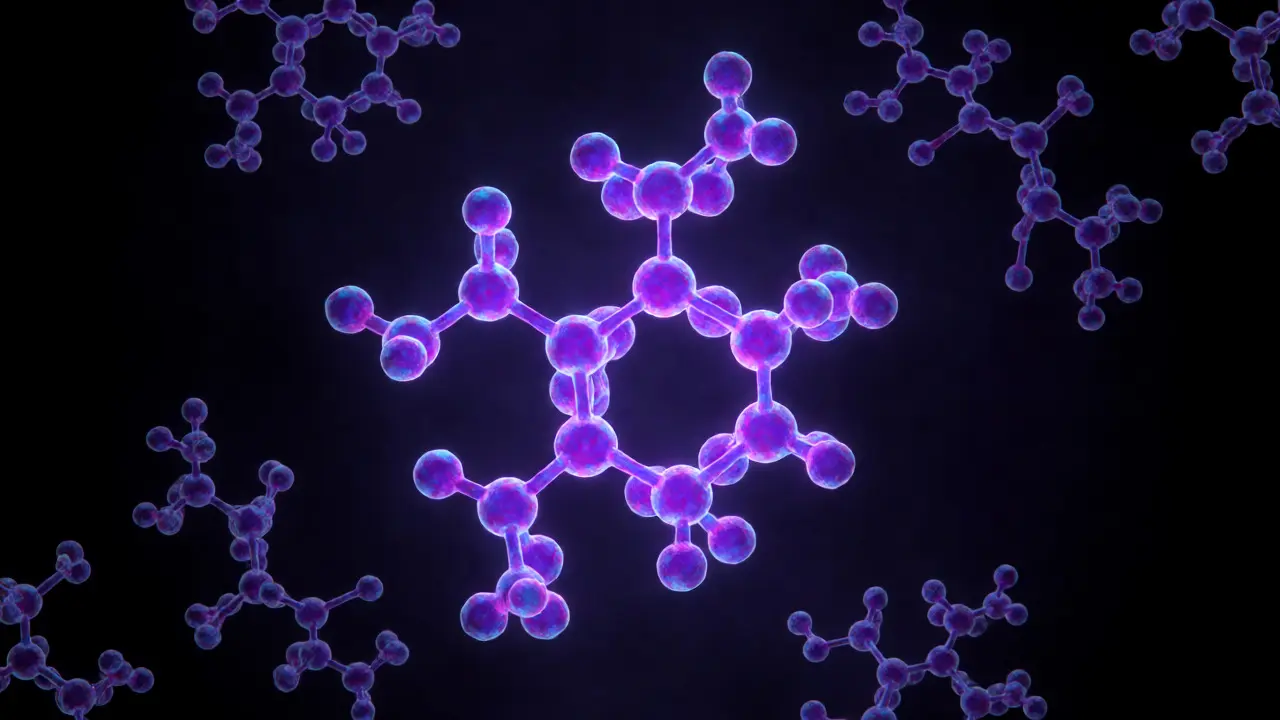
If you think identifying the parent compound is hard, wait until you look at what happens after ingestion. Synthetic cannabinoids undergo extensive metabolism in the liver, primarily via cytochrome P450 enzymes. The parent compound often disappears from urine within hours, leaving behind a complex cocktail of metabolites. Unlike THC, where one metabolite dominates, synthetic cannabinoids can produce dozens of oxidative products.
For example, the hydroxylation of the alkyl side chain is common, but so is carbonylation, carboxylation, and conjugation with glucuronic acid. Crucially, many of these metabolites are unique to specific subclasses. A metabolite of an indazole-based compound will look structurally distinct from one derived from an indole backbone. This means you cannot simply run a generic "synthetic cannabinoid" test. You need to target specific marker metabolites that persist longer in the body than the parent drug.
- Short-lived parents: Compounds like AB-FUBINACA may be undetectable in urine after 12-24 hours.
- Longer-lived metabolites: Oxidative metabolites can remain detectable for 3-7 days, depending on hydration and dosage.
- Conjugated forms: Glucuronidation increases water solubility but changes mass-to-charge ratios, requiring enzymatic hydrolysis before analysis if you want to measure total burden.
Evolving Analytical Panels: From Targeted to Untargeted
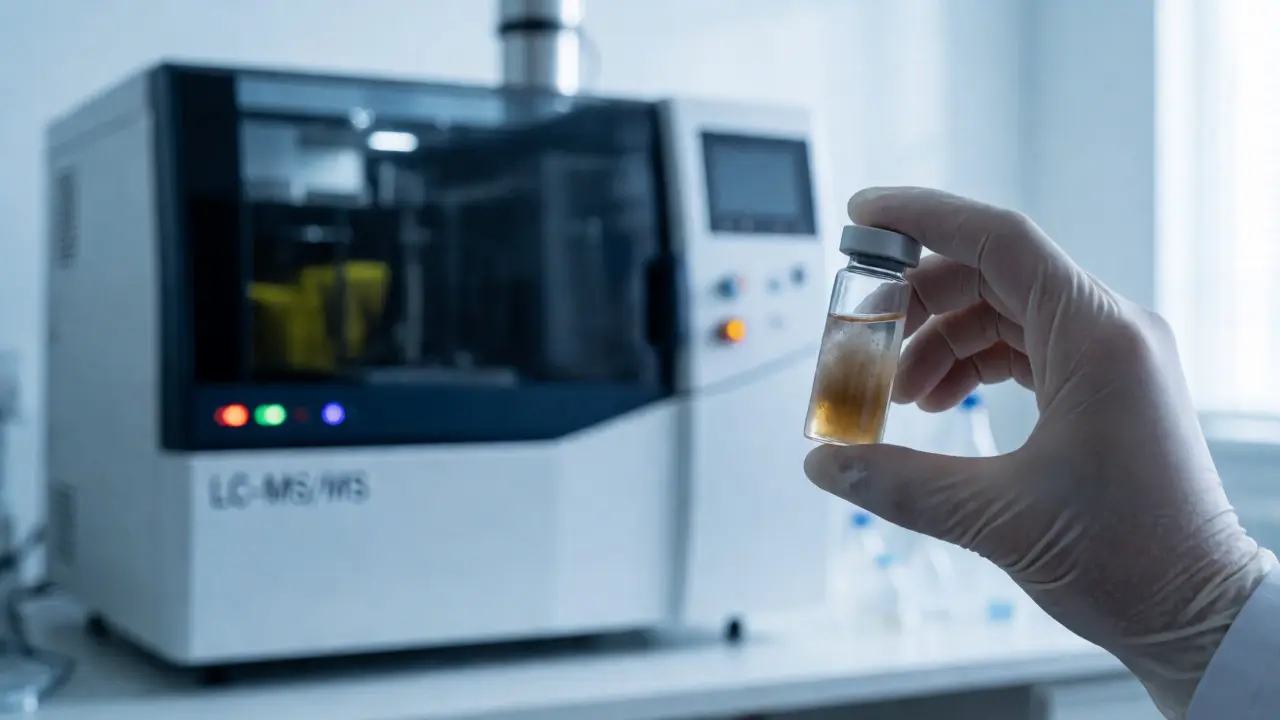
Historically, labs used targeted Liquid Chromatography-Tandem Mass Spectrometry (LC-MS/MS) methods. You had to know exactly what you were looking for. If a new compound emerged last week, it wasn't in your method list. Today, the gold standard for high-stakes forensic cases involves a two-tier approach.
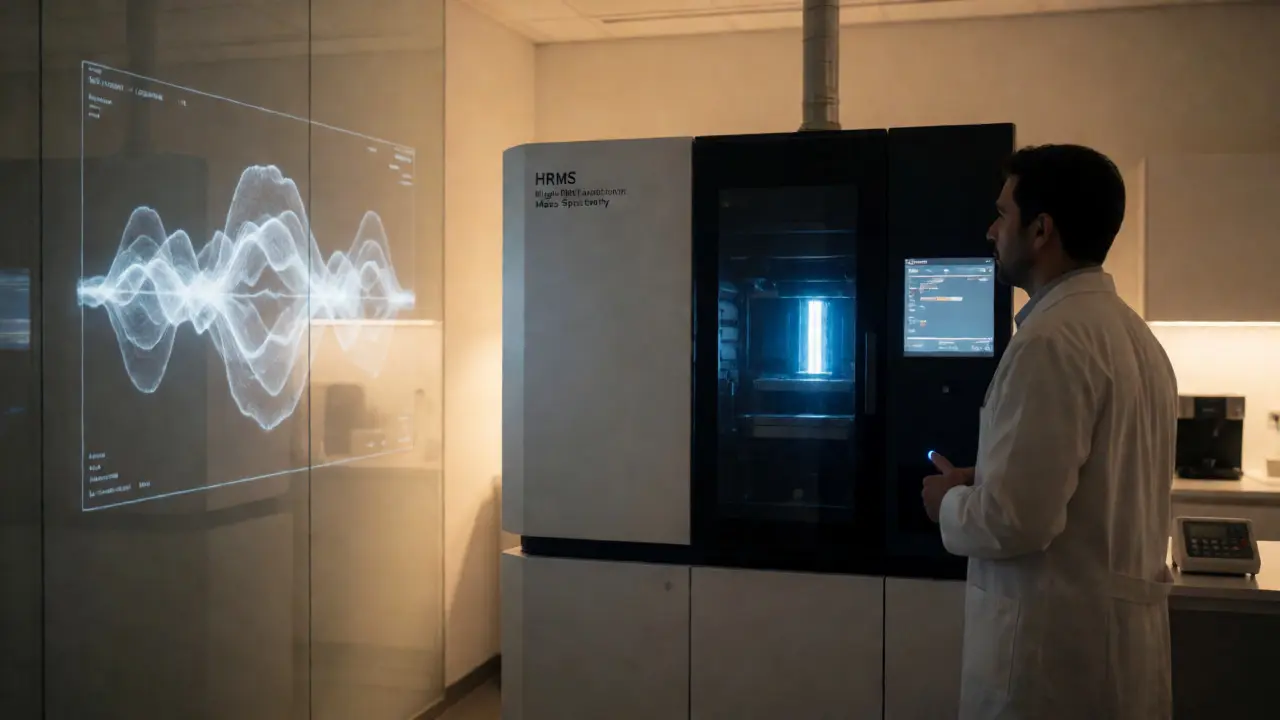
First, use a broad-spectrum LC-MS/MS panel that includes the most prevalent current NPS. Organizations like the United Nations Office on Drugs and Crime (UNODC) and the American Academy of Forensic Sciences (AAFS) regularly update recommended lists. Second, employ High-Resolution Mass Spectrometry (HRMS), such as Quadrupole Time-of-Flight (QTOF) or Orbitrap technology. HRMS doesn't just tell you if a drug is present; it captures the exact mass of every ion in the sample. This allows for retrospective data mining. If a new synthetic cannabinoid becomes popular next month, you can re-analyze old samples without needing fresh material, provided the storage conditions preserved the analytes.
Interpretation Pitfalls in Forensic Contexts
Detection is only half the battle. Interpretation is where forensic toxicologists earn their keep. Because synthetic cannabinoids vary wildly in potency, a low concentration does not necessarily mean minimal impairment. Some compounds are active at nanogram-per-milliliter levels. Furthermore, post-mortem redistribution can complicate blood levels in fatal cases, though this is less pronounced in synthetic cannabinoids compared to lipophilic drugs like fentanyl.
A critical error occurs when labs report "Negative for cannabinoids" without specifying that the assay was limited to natural THC. In legal proceedings, this ambiguity can lead to wrongful assumptions. Always specify the scope of the test. Was it a screen for THC only? Or did it include a panel of 20+ synthetic analogs? The difference can determine whether a defendant faces DUI charges or walks free.
Best Practices for Laboratory Implementation
If you are managing a forensic toxicology lab, here is a practical roadmap for staying ahead of the curve:
- Update Libraries Quarterly: Subscribe to updates from commercial vendors (e.g., Cerilliant, Lipomed) and academic databases. New compounds appear monthly.
- Validate Marker Metabolites: Don't just validate parent compounds. Identify and validate the most stable metabolites for each major class (indoles, indazoles, quinolinones).
- Implement Confirmatory Protocols: Any presumptive positive should be confirmed using a second, orthogonal technique or by verifying isotopic patterns and retention times against certified reference standards.
- Monitor Regional Trends: Use local case data to tailor your panel. The dominant synthetic cannabinoid in Portland, Oregon, might differ significantly from those in Miami or London.
Remember, the goal isn't just to find the needle in the haystack; it's to recognize that the hay itself keeps changing shape. By combining updated targeted panels with the flexibility of high-resolution mass spectrometry, forensic toxicologists can close the gap between emergence and detection.
Can standard drug tests detect synthetic cannabinoids?
No, standard immunoassay drug screens typically do not detect synthetic cannabinoids. They are designed to identify natural THC and its metabolites. Specialized liquid chromatography-mass spectrometry (LC-MS/MS) or high-resolution mass spectrometry (HRMS) methods are required to identify synthetic analogs.
How long do synthetic cannabinoids stay in the system?
Detection windows vary widely based on the specific compound, dosage, and frequency of use. Parent compounds may be undetectable in urine within 24 hours, while certain metabolites can remain detectable for 3 to 7 days. Hair testing can extend this window to months.
Why are metabolites more important than parent compounds in testing?
Many synthetic cannabinoids are metabolized rapidly into inactive or active metabolites. The parent compound often clears the bloodstream quickly, making it difficult to catch during routine sampling. Metabolites, particularly oxidative ones, persist longer and serve as more reliable biomarkers for recent use.
What is the risk of false negatives in forensic cases?
The primary risk is reporting a negative result for "cannabinoids" when the subject actually consumed a synthetic variant not included in the test panel. This can lead to incorrect conclusions about impairment or cause of death in legal contexts. Explicitly stating the limitations of the screening panel is crucial.
How often should forensic labs update their synthetic cannabinoid panels?
Given the rapid rate of new substance emergence, labs should review and update their target analyte lists at least quarterly. Monitoring regional trends and global reports from organizations like the UNODC helps ensure the panel remains relevant to current abuse patterns.