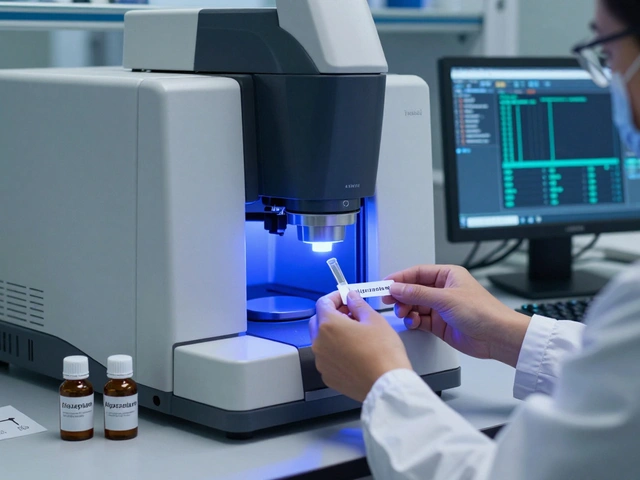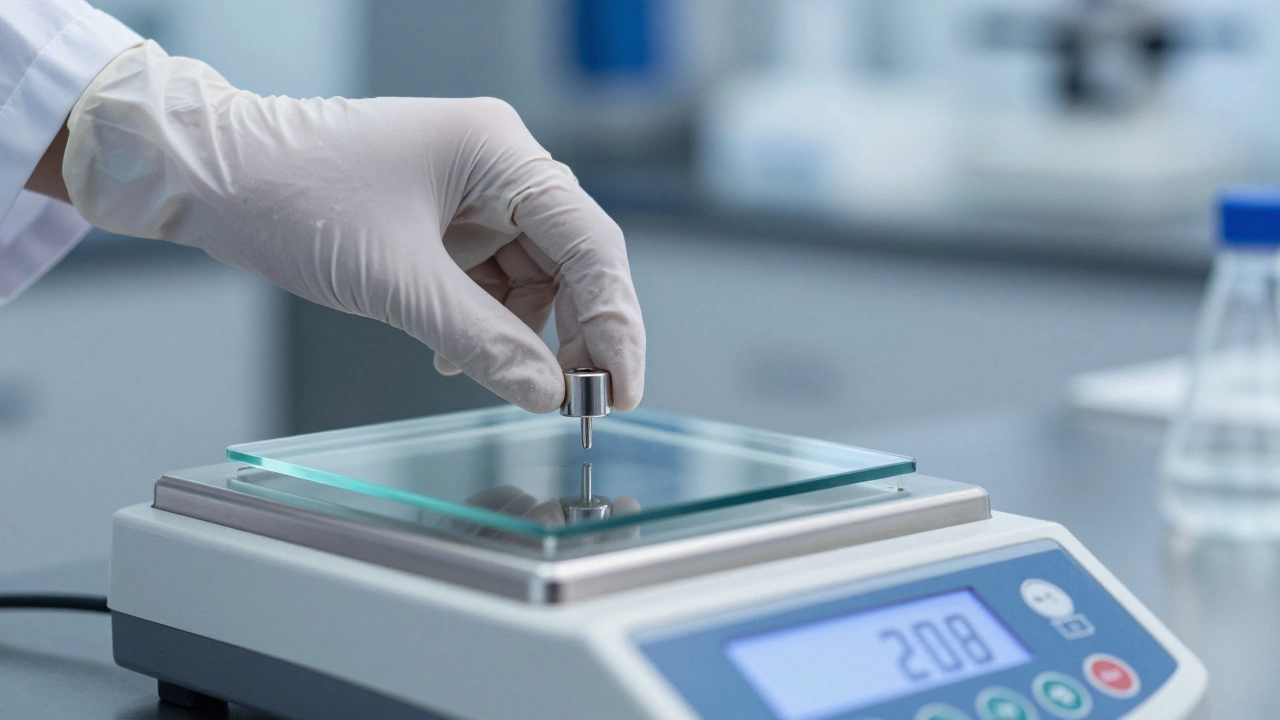
You trust your analytical balance to weigh a microgram of active ingredient. You rely on your incubator to keep cells at exactly 37 °C. But what if those numbers are wrong? In the high-stakes world of laboratory testing, a small deviation isn't just an inconvenience-it can invalidate results, trigger regulatory fines, or even endanger lives. This is why equipment calibration is not merely a maintenance task; it is the backbone of data integrity and the process of comparing measurement devices against known standards to ensure accuracy and reliability.
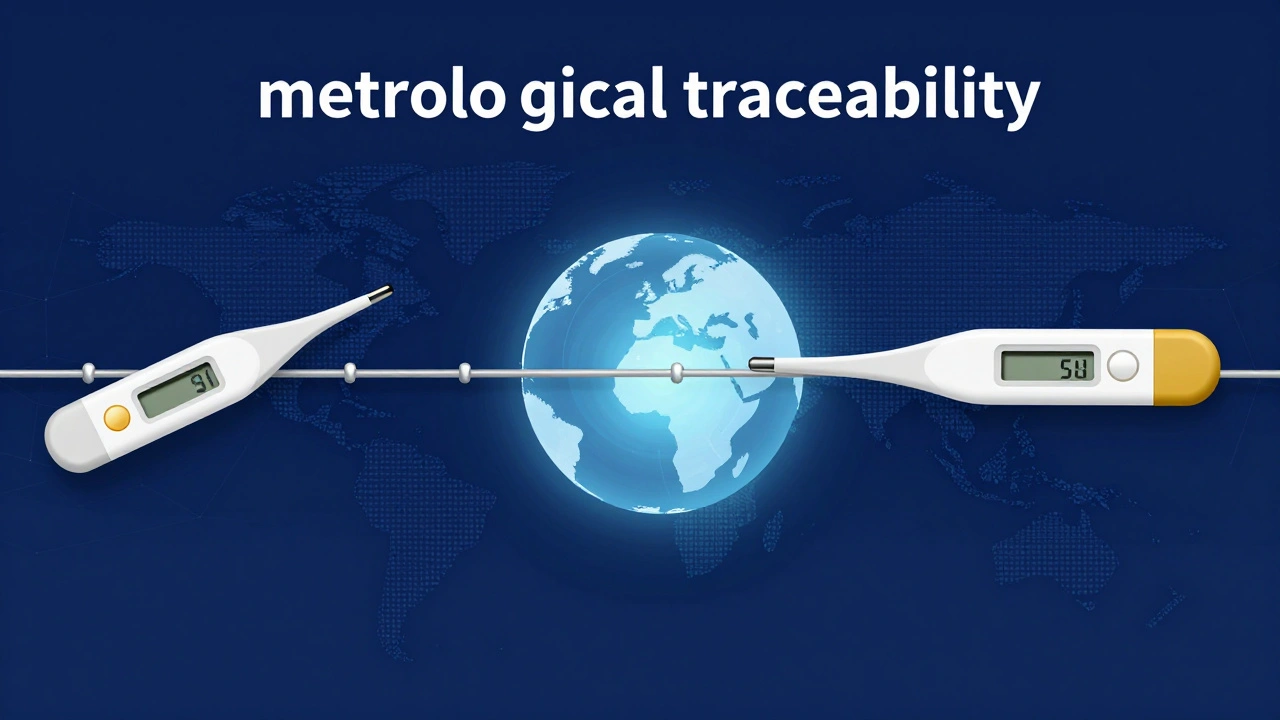
Calibration connects your daily measurements to the International System of Units (SI), creating an unbroken chain of evidence called metrological traceability. Without this link, your data is just noise. Whether you are running a clinical lab, a pharmaceutical quality control unit, or an automotive testing facility, maintaining these standards is non-negotiable.
The Core Definition: What Is Calibration Really?
Many people confuse calibration with adjustment. They are not the same thing. Adjustment involves changing the device settings to match a standard. Calibration is the documented comparison that tells you how far off the device is from the truth. It quantifies the error without necessarily fixing it immediately.
The International Vocabulary of Metrology (VIM), specifically JCGM 200:2012, defines calibration as an operation that establishes a relationship between quantity values provided by measurement standards and the corresponding indications of a measuring instrument, under specified conditions. Crucially, this definition includes measurement uncertainty. Every calibration result comes with a range of doubt. If you ignore uncertainty, you aren't calibrating-you're guessing.
In practice, this means taking your "unit under test" (UUT)-say, a digital thermometer-and comparing its readings against a reference standard that is significantly more accurate. If the reference standard says 100.00 °C and your thermometer reads 100.05 °C, the calibration record shows a +0.05 °C error. That data point allows you to decide whether the device is fit for purpose or needs repair.
Why ISO/IEC 17025 Matters More Than Ever
If you want your lab accredited, you need to understand ISO/IEC 17025. First published in 1999 and fundamentally updated in 2017, this is the global gold standard for testing and calibration laboratories. It doesn't just tell you to calibrate equipment; it dictates how you do it to ensure competence and impartiality.
Clause 6.4 of ISO/IEC 17025:2017 requires that laboratories only use equipment capable of achieving the required measurement accuracy. This means you can't just buy any old scale. The equipment must be suitable for its intended use, meet necessary precision requirements, and be maintainable. Furthermore, clause 6.5 mandates that calibration be traceable to SI units via national or international standards wherever possible.
The 2017 revision introduced "risk-based thinking." Instead of blindly following fixed schedules, labs must evaluate the risk associated with each piece of equipment. A critical chromatograph detector affecting product release gets tighter controls than a room temperature monitor used for general environmental tracking. This flexibility helps labs optimize resources while maintaining rigorous standards.
NIST Traceable vs. ISO/IEC 17025 Accredited
This is where most labs get tripped up during audits. You will often see vendors advertise their services as "NIST Traceable." Does that mean they are good enough? Not necessarily.
NIST traceability simply means there is an unbroken chain of comparisons leading back to the National Institute of Standards and Technology (or equivalent national metrology institutes like NPL in the UK). However, the lab performing the calibration might not be audited for competence. They could have poor procedures, untrained staff, or inadequate environmental controls.
ISO/IEC 17025 accreditation adds a layer of third-party verification. An accrediting body (like A2LA in the US or UKAS in the UK) assesses the lab's technical competence, management system, and uncertainty evaluations. For critical applications-such as aerospace pressure measurements or pharmaceutical temperature mapping-accreditation is often mandatory. For low-risk tools, like a tape measure for rough layout work, NIST traceability might suffice. Always match the level of calibration to the risk of the measurement.
The Step-by-Step Calibration Process
A proper calibration follows a strict protocol to ensure validity. Here is how accredited labs typically handle it:
- Planning: Define the device, measurement ranges, required tolerances, and environmental conditions (e.g., 23 ± 2 °C, 40-60% RH).
- Pre-checks: Inspect the device for damage, contamination, or obvious faults. Review previous records for drift trends.
- As-Found Calibration: Compare the device readings against the reference standard at multiple points across its range. Record deviations without adjusting the device. This step is vital for assessing historical performance and potential impact on past data.
- Adjustment (if allowed): If the "as-found" results exceed tolerance, adjust the device mechanically or via firmware. Note that ISO/IEC 17025 requires clear documentation distinguishing calibration from adjustment.
- As-Left Calibration: Repeat the measurements after adjustment to verify compliance with acceptance criteria.
- Uncertainty Evaluation: Calculate the combined measurement uncertainty using methods like the GUM (Guide to the Expression of Uncertainty in Measurement). This accounts for factors like reference standard uncertainty, environmental influences, and repeatability.
- Documentation: Issue a certificate containing UUT identification, dates, environmental conditions, standards used, results, uncertainty statements, and the authorizing personnel.
Selecting Equipment and Managing Intervals
Not all equipment needs the same level of scrutiny. Under ISO/IEC 17025 and ISO 9001:2015 (clause 7.1.5), you must classify your assets. Critical equipment directly affects test results or product release decisions. Non-critical equipment might only provide indicative readings.
For critical instruments, you need a higher Test Accuracy Ratio (TAR). A common rule of thumb is a 4:1 ratio. If your device has a tolerance of ±0.1%, your calibration standard should have an uncertainty of no more than ±0.025%. Using a standard that is too inaccurate renders the calibration useless because you can't distinguish between the error in the standard and the error in your device.
Calibration intervals are another pain point. There is no universal "12-month" rule. Intervals must be justified based on usage frequency, stability history, manufacturer recommendations, and risk. Many labs use Computerized Maintenance Management Systems (CMMS) or specialized software like Beamex CMX or Fluke MET/CAL to track thousands of assets. These systems allow you to shorten intervals for unstable devices and extend them for stable ones, optimizing cost and compliance.
| Feature | NIST Traceable | ISO/IEC 17025 Accredited |
|---|---|---|
| Traceability Chain | Present (to SI units) | Present (to SI units) |
| Third-Party Audit | No | Yes (by ILAC-signatory body) |
| Uncertainty Statement | Often missing or vague | Mandatory and detailed |
| Cost | Lower | Higher (10-50% premium) |
| Best For | Low-risk, non-critical tools | Critical measurements, regulatory compliance |
Sector-Specific Requirements
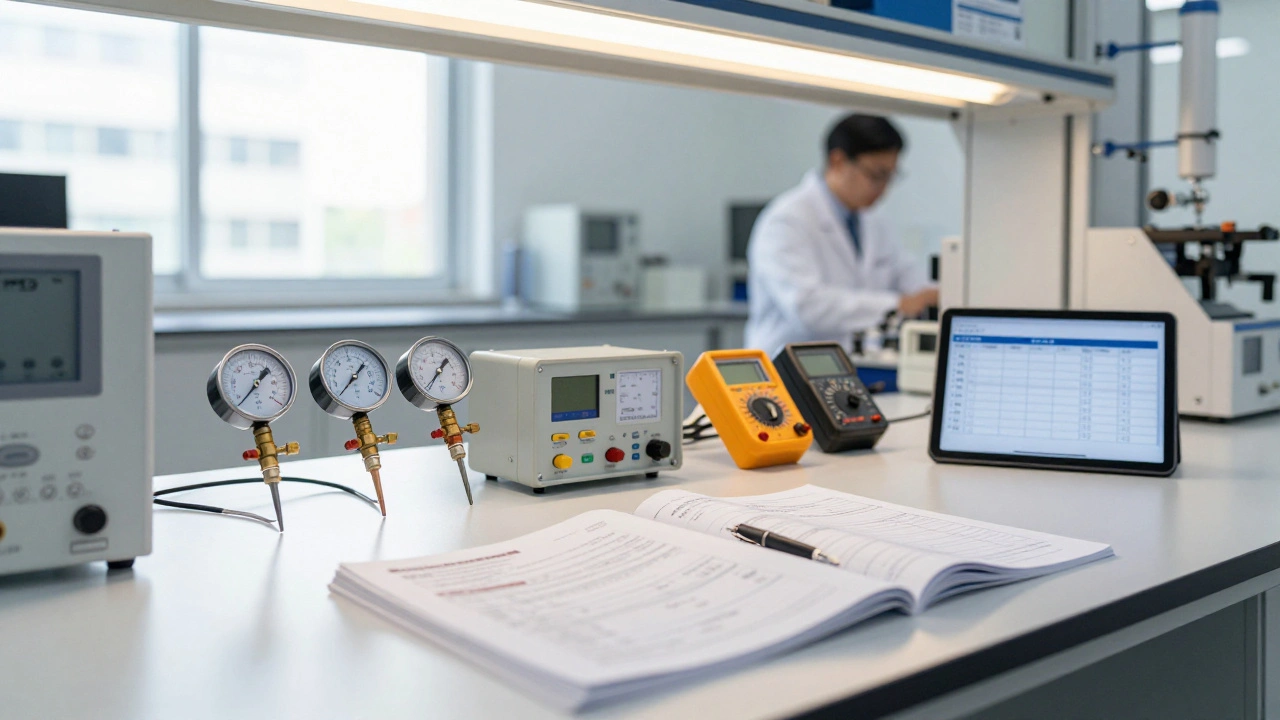
Different industries have unique demands. In the automotive sector, IATF 16949:2016 requires suppliers to use ISO/IEC 17025 accredited labs whenever possible. For heat treatment processes, AIAG CQI-9 sets specific accuracy requirements for thermocouples (±1.1 °C for process thermocouples) and forbids interpolation outside test points.
In pharmaceuticals, FDA 21 CFR Part 211 mandates routine calibration of automatic and electronic equipment. While it doesn't explicitly demand ISO 17025 accreditation, audit expectations often push companies toward accredited providers for critical reference standards like sterilization sensors. Clinical labs governed by CLIA or ISO 15189 must perform calibration verification at defined intervals, ensuring traceability to reference methods.
Common Pitfalls and How to Avoid Them
Auditors frequently find three major issues: expired calibrations, lack of traceability evidence, and certificates without uncertainty statements. To avoid these:
- Implement Automated Alerts: Use software to notify owners before a due date arrives. Human memory is unreliable for hundreds of assets.
- Verify Scope of Accreditation: Don't just check if a lab is accredited. Check their Scope of Accreditation document. Ensure they cover the specific discipline, range, and uncertainty level you need. A lab accredited for ±5 psi pressure cannot validly calibrate a device requiring ±1 psi resolution.
- Conduct Impact Assessments: If a device is found out of tolerance, don't just fix it. Investigate whether previous results were affected. Document this review thoroughly.
- Include All Devices: Built-in probes, data loggers, and timers often slip through the cracks. Every device used for quality-relevant measurements must be in your inventory.
Calibration is not a cost center; it is an insurance policy for your data's credibility. By adhering to ISO/IEC 17025 principles, selecting the right providers, and managing intervals intelligently, you protect your lab from costly errors and maintain the trust of your customers and regulators.
What is the difference between calibration and verification?
Calibration is a formal comparison against a traceable standard that determines the measurement error and uncertainty. Verification is a simpler check to confirm that an instrument remains within specified limits between full calibrations, such as using a control sample or a quick reference weight.
How often should I calibrate my laboratory equipment?
There is no fixed interval mandated by ISO/IEC 17025. Intervals should be determined based on the device's criticality, usage frequency, historical stability data, manufacturer recommendations, and risk assessment. Stable devices may be calibrated every 24 months, while critical or volatile instruments might require monthly checks.
Is NIST traceability enough for ISO 17025 accreditation?
No. NIST traceability ensures the measurement chain leads back to national standards, but it does not guarantee the competence of the lab performing the calibration. ISO/IEC 17025 accreditation requires third-party assessment of the lab's technical proficiency, management system, and uncertainty evaluations.
What happens if a device is found out of tolerance?
The device must be removed from service. You must then conduct an impact assessment to determine if any previous test results produced since the last valid calibration were affected. If results are suspect, you may need to recall reports or re-test samples. Corrective actions, such as root cause analysis, must be documented.
Why is measurement uncertainty important in calibration?
Measurement uncertainty quantifies the doubt associated with a measurement result. It allows users to judge the fitness for purpose of the measurement. Without uncertainty, you cannot determine if the calibration standard is sufficiently more accurate than the device being tested, rendering the calibration invalid for high-precision applications.