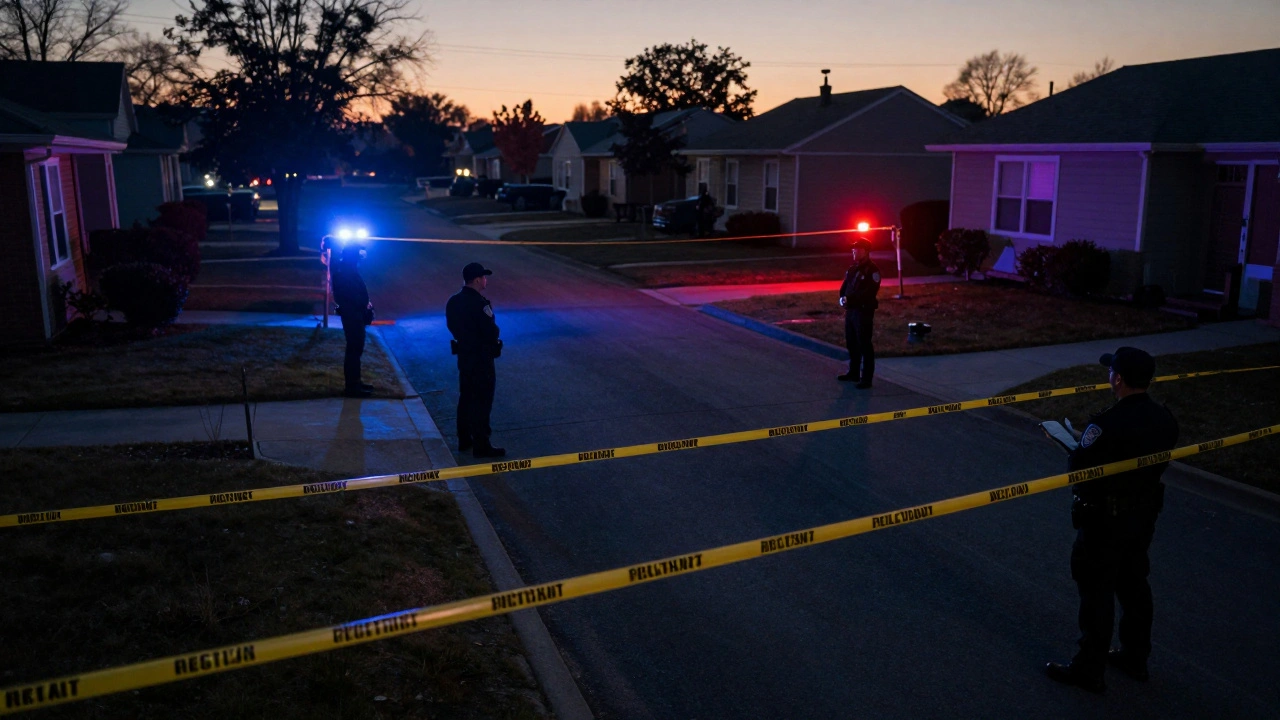
Walking into a death scene is unlike any other call in law enforcement. The stakes are absolute, and the margin for error is zero. In a burglary, a missed fingerprint is a setback; in a homicide, a contaminated blood spatter or a misplaced shell casing can be the difference between a conviction and a killer walking free. The body is often the most critical piece of evidence, and the environment surrounding it tells a story that must be read perfectly before the scene is disturbed.
Processing a homicide scene isn't just about bagging clues; it's a multidisciplinary operation that requires a level of precision far beyond standard police work. You aren't just looking for a weapon; you're reconstructing a timeline of violence. To do that, investigators follow a rigid, yet adaptable, framework designed to ensure that every scrap of DNA and every tool mark is preserved for the lab.
The First Response: Securing the Perimeter
Before a single photo is taken, the scene must be locked down. The first priority is establishing scene dimensions and identifying safety hazards. This starts with finding the "focal point"-the heart of the struggle, where the primary attack happened or where the victim was discovered. From there, investigators push the perimeter out. The golden rule here is simple: it's better to make the scene too big than too small. If you realize a trail of blood leads further into the woods than you thought, it's much easier to shrink a perimeter than to try and re-secure an area that bystanders have already trampled.
Safety is the immediate concern. Is there a shooter still in the house? Are there chemical hazards or structural instabilities? Only after the scene is deemed safe and the offender is confirmed gone or in custody does the actual processing begin. At this stage, the rule is absolute: touch nothing. Any movement of a chair or opening of a door without documentation destroys the original state of the scene, which can be torn apart by defense attorneys in court.
Planning and Tactical Coordination
You don't just rush in and start picking up items. High-level homicide scene processing requires a strategy. Lead investigators develop a theory of the crime based on initial observations and witness statements. If the evidence suggests a targeted hit versus a random act of violence, the search patterns and the types of evidence sought will change.
Coordination involves assembling a specialized team. A standard homicide unit isn't just detectives; it's a crew of specialists. You'll have Crime Scene Photographers capturing every angle, DNA specialists looking for biological transfers, and latent print experts scanning for fingerprints. They also account for environmental factors-heavy rain can wash away tire tracks, and extreme heat can accelerate the decomposition of biological evidence, forcing the team to prioritize certain collections over others.
The Primary Survey and Walkthrough
The initial walkthrough is a reconnaissance mission. The lead investigator moves through the scene to identify high-value evidence and record the "atmosphere." This includes things that won't be in a photo: the smell of gunpowder or bleach, the temperature of the room, and whether the lights were left on or off. These details help determine the time of death and the killer's state of mind.
To prevent the investigators themselves from contaminating the area, they often create an "evidence-free pathway." This is a cleared path from the entrance to the focal point, ensuring that the team can move back and forth without stepping on a crucial piece of trace evidence. During this phase, the first set of photographs is taken to freeze the scene in time before any items are touched or moved.
Systematic Evidence Collection
Once the survey is complete, the actual collection begins. This is a methodical process of documentation, measurement, and packaging. For large scenes, this involves high-resolution video and detailed diagrams. In modern forensics, many teams now use three-dimensional scanners to create a digital twin of the room, allowing analysts to revisit the scene virtually months later.
When a body is present, it is treated as the primary piece of evidence. If the victim has non-survivable injuries and doesn't need immediate transport for medical reasons, the body remains in place. An officer is typically stationed as a guard to prevent contamination, and if the scene is outdoors, the body is covered to protect it from elements and public view. The processing of the body is surgical: documenting organ damage, tracing the path of a bullet through the tissue, and carefully removing clothing and jewelry. Any recovered projectiles are immediately turned over to the lead investigator to maintain a strict paper trail.
| Evidence Type | Examples | Collection Method |
|---|---|---|
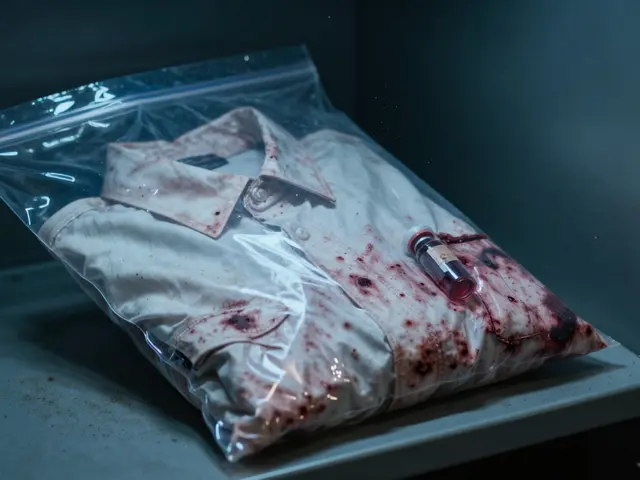
| Biological | Blood, saliva, hair, skin cells | Sterile swabbing, vacuuming, scraping |
| Latent Prints | Fingerprints, palm prints | Dusting powders, cyanoacrylate fuming |
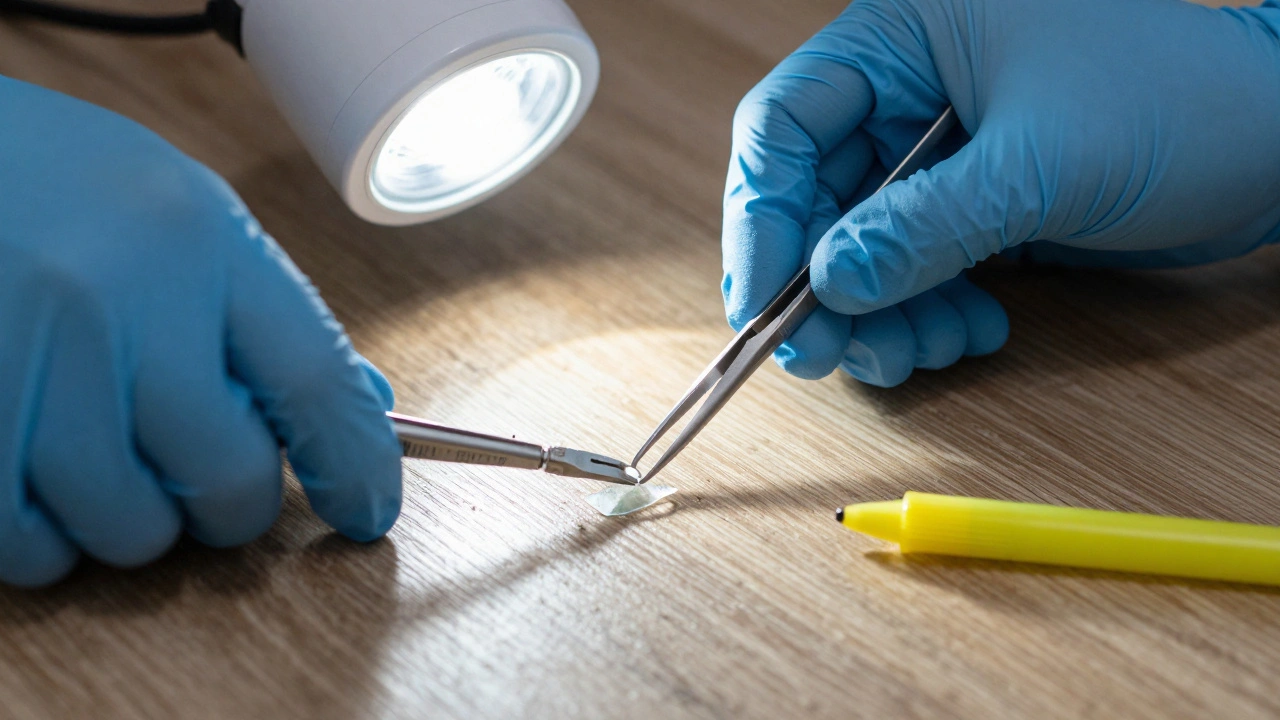
| Trace Evidence | Glass shards, fibers, soil, paint | Hand-picking with forceps, tape lifts |
| Digital | Phone logs, GPS data, emails | Device seizure, cloud forensics |
| Ballistics | Shell casings, bullets, firearms | Precision mapping, secure firearm bagging |
Preventing Contamination and the Chain of Custody
Contamination is the enemy of forensic science. To fight this, investigators use a strict protocol: new gloves and new disposable forceps for every single item collected. If you use the same tweezers for a piece of glass and a hair sample, you've just created a cross-contamination event that could invalidate both pieces of evidence.
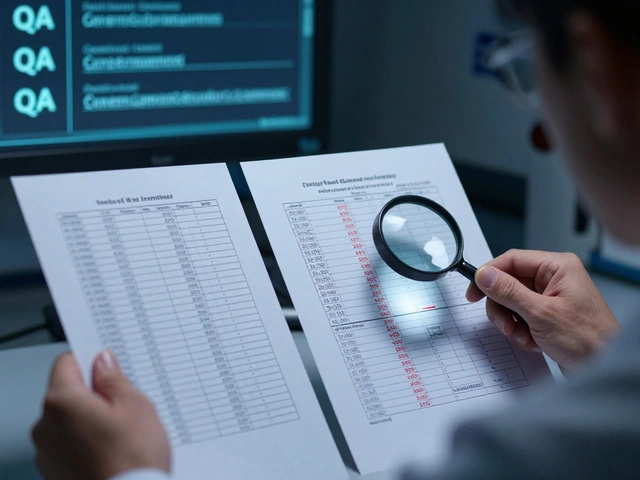
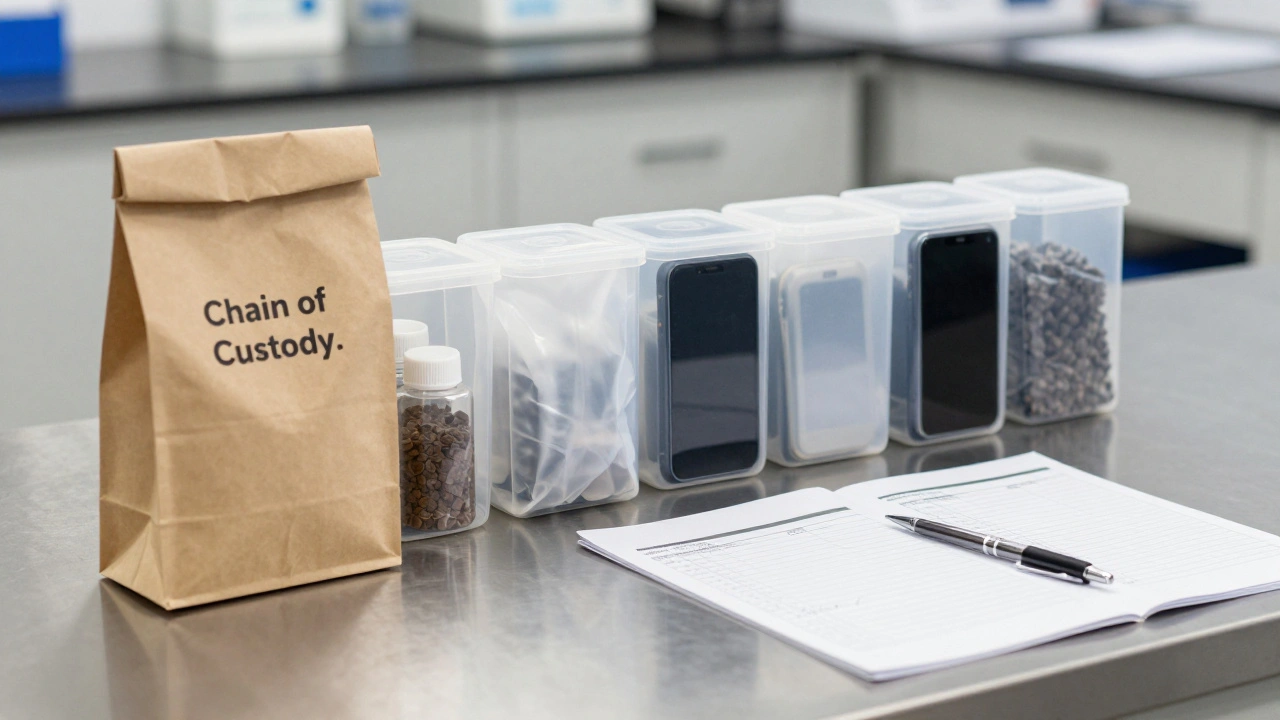
The process concludes with the Chain of Custody. This is a rigorous inventory log that tracks every single piece of evidence from the moment it's bagged until it reaches the courtroom. Every entry must be perfect. For example, if a handgun is collected, the serial number recorded in the log must match the serial number visible in the scene photograph. If there is a discrepancy, the evidence can be challenged as "tampered with," potentially leading to a case dismissal.
The Final Recording and Preservation
Before the scene is released, a final check is performed. Every item in the inventory log is cross-referenced with the photos and the written report. Evidence is placed in secure, labeled containers-breathable paper bags for biological samples to prevent mold, and anti-static bags for electronics. This ensures that when the evidence arrives at the lab, it is in the exact condition it was in when it left the scene.
While the seven-step process (dimensions, hazards, planning, survey, processing, recording, and preservation) is the gold standard, real-world homicide scenes are messy. Sometimes steps are combined or shifted to accommodate an unfolding situation. However, the goal remains the same: a bulletproof record of the facts that can withstand the scrutiny of a trial.
Why is the focal point so important in a homicide scene?
The focal point is the area where the most significant activity occurred, such as the site of the struggle or where the body was left. Identifying this allows investigators to center their search for the highest concentration of evidence, such as blood spatter, weapon fragments, and struggle-related trace evidence.
How is trace evidence collected without contaminating it?
Trace evidence, like fibers or glass, is collected using a combination of visual examination and specialized tools. Investigators use new disposable forceps for every single item and employ tape lifts or vacuuming in specific areas to ensure that no foreign materials are introduced to the sample.
What happens if the chain of custody is broken?
A break in the chain of custody means there is a gap in the documentation of who handled the evidence. In court, this allows the defense to argue that the evidence could have been altered, planted, or contaminated, which often leads to the evidence being ruled inadmissible.
Is the body always removed immediately?
No. If the injuries are clearly non-survivable, the body is often left in place to be processed as part of the scene. This allows forensic pathologists and investigators to document the body's exact position relative to other evidence, which is crucial for reconstructing the crime.
What is an evidence-free pathway?
An evidence-free pathway is a designated route through a crime scene that has been thoroughly swept and cleared of evidence. This allows investigators to move between the perimeter and the focal point without stepping on or disturbing potential clues.
Next Steps for Investigation
Once the scene is processed, the investigation shifts from the field to the laboratory. The next critical phases include the full autopsy by a medical examiner to determine the exact cause and time of death, and the forensic analysis of collected DNA and fingerprints. For those coordinating these efforts, the primary focus becomes linking the physical evidence found at the scene to a specific suspect through a combination of digital footprints and biological matches.