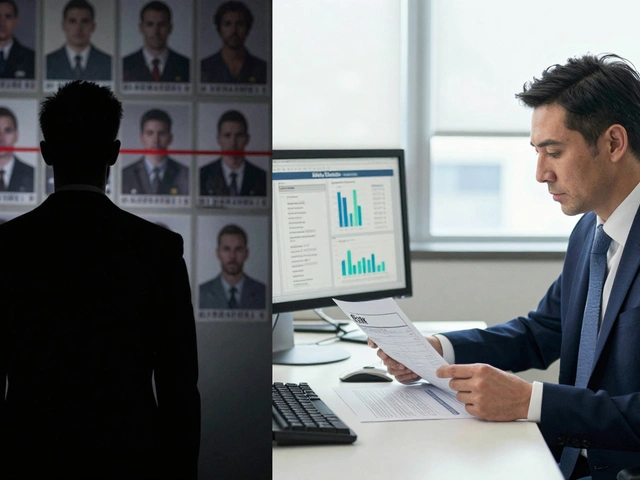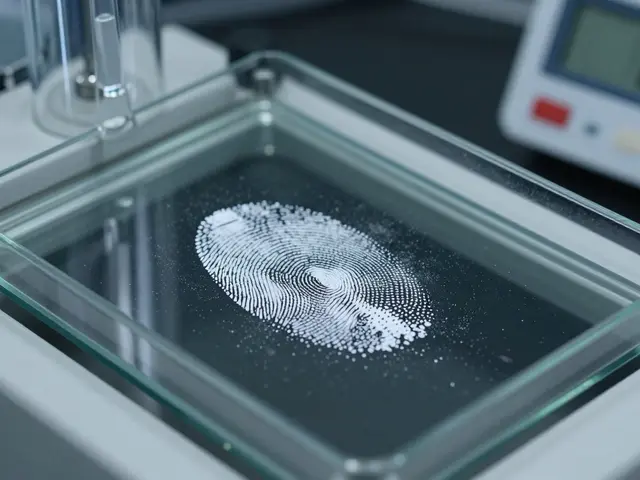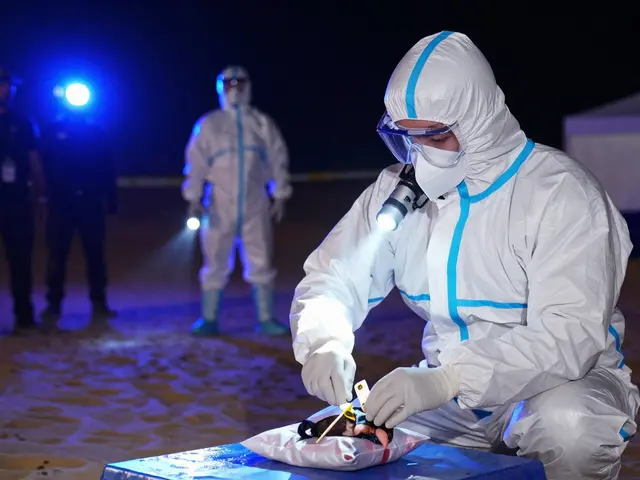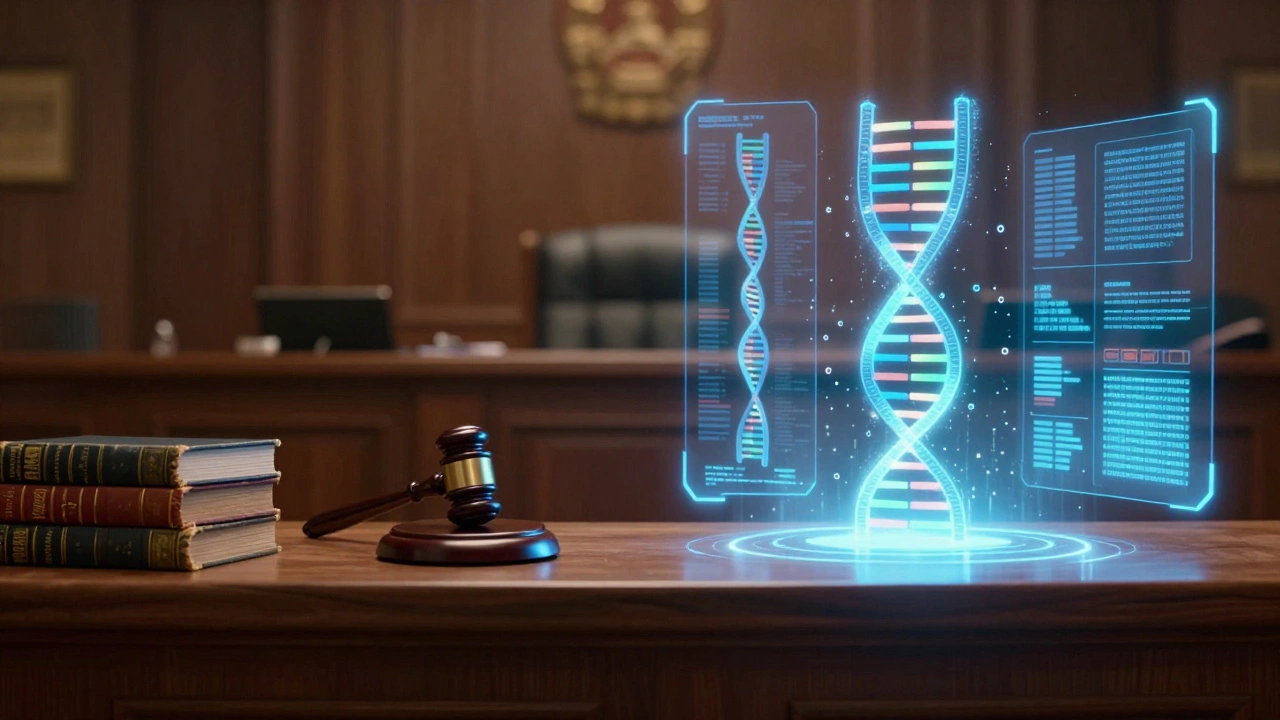
Imagine a courtroom where a fingerprint match or a ballistics report is treated as gospel truth simply because "that's how it's always been done." For decades, this was the norm. But the tide is turning. We are currently seeing a massive collision between old-school judicial habits and a new era of scientific transparency. The core problem is a gap in forensic expert evidence: while science evolves at lightning speed, the legal "gatekeeping" process-the way judges decide what evidence is reliable enough to show a jury-often lags behind.
The Great Divide: Daubert vs. Frye
Not every courtroom plays by the same rules. Depending on where a case is heard, a judge might use two completely different philosophies to decide if a novel forensic technique is admissible. This creates a strange reality where the same piece of evidence could be thrown out in one state but accepted as a smoking gun in another.
In the federal system and many states, courts use the Daubert standard, which is a flexible rule requiring judges to act as active gatekeepers who evaluate whether a technique is scientifically valid and applicable to the specific case. It puts the burden on the judge to actually understand the science, rather than just trusting the expert.
Contrast that with the Frye standard, still used in places like Pennsylvania. This approach is essentially "science by consensus." Under the Frye test, a judge only asks if the methodology is "generally accepted" in the relevant field. In Pennsylvania, for example, Rule of Evidence 702(c) explicitly tells judges to leave the science to the scientists. They aren't allowed to question the merits of the theory; they just check if the community agrees with it. If the community has been wrong for fifty years, the Frye standard tends to keep those errors alive.
| Feature | Daubert Standard (Federal) | Frye Standard (e.g., Pennsylvania) |
|---|---|---|
| Judge's Role | Active Gatekeeper (Evaluates validity) | Passive Moderator (Checks acceptance) |
| Core Question | "Is this method reliable and applicable?" | "Is this method generally accepted?" |
| Flexibility | High; allows for novel, proven science | Low; relies on established consensus |
| Risk | Judges may lack scientific expertise | May admit outdated or flawed methods |
The 2023 Shake-up of Federal Rule 702
If you think the law is static, look at December 2023. The Federal Rule of Evidence 702 was amended to stop a troubling trend: judges letting experts slide into the courtroom too easily. For years, some courts were using a "relaxed" approach, essentially deciding that if an expert seemed qualified, their testimony was fine. The new amendment is a loud wake-up call.
Now, the proponent of the evidence must prove to the judge that it's "more likely than not" that the testimony is the product of reliable principles and that the expert actually applied those principles correctly to the facts of the case. It's a shift from "probably okay" to a more rigorous requirement of reliability. However, the rollout has been messy. In the 2024 case Larson v. Davidson Trucking, Inc., the court suggested that rejecting experts is the exception, not the rule. Other courts, however, are leaning into the amendment, arguing that it empowers them to stop "junk science" from reaching the jury.
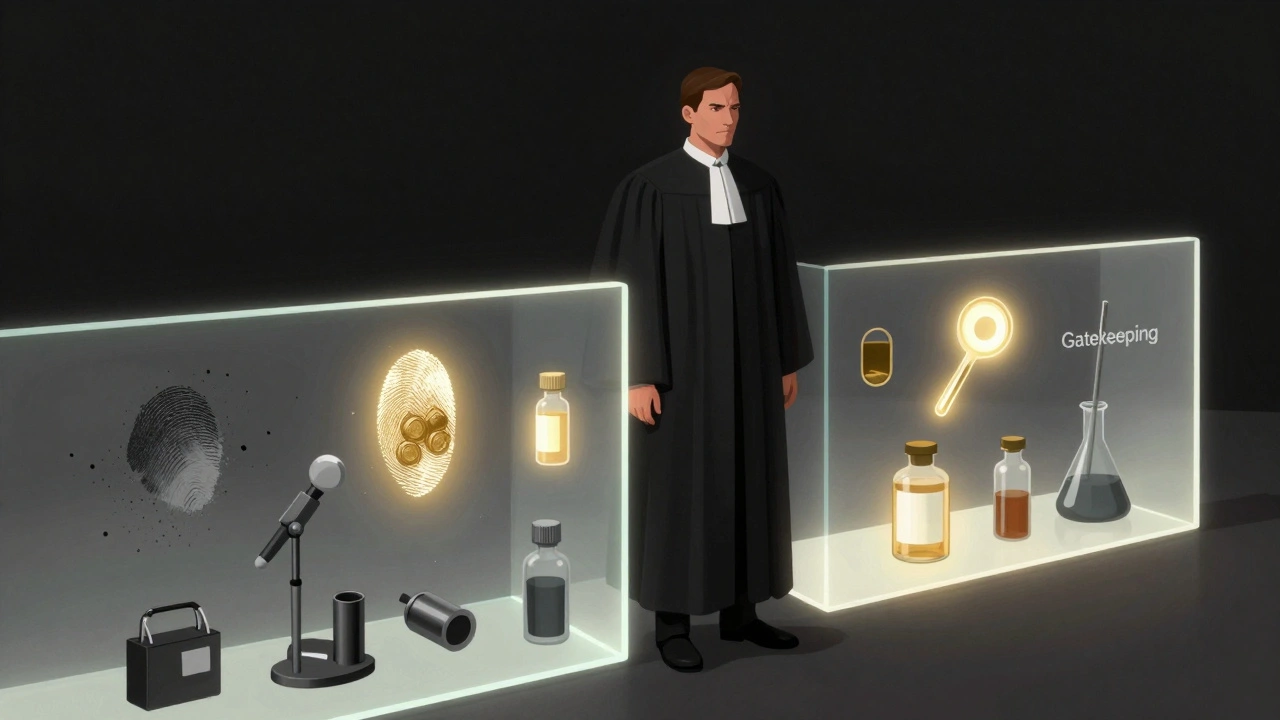
Moving from Subjective Judgment to Hard Data
The tension in the law reflects a deeper shift in forensic science itself. For a long time, forensics relied on what we call "interpretive methods." This is basically an expert looking at two patterns and saying, "In my professional opinion, these match." It's based on human perception, which is notoriously prone to cognitive bias.
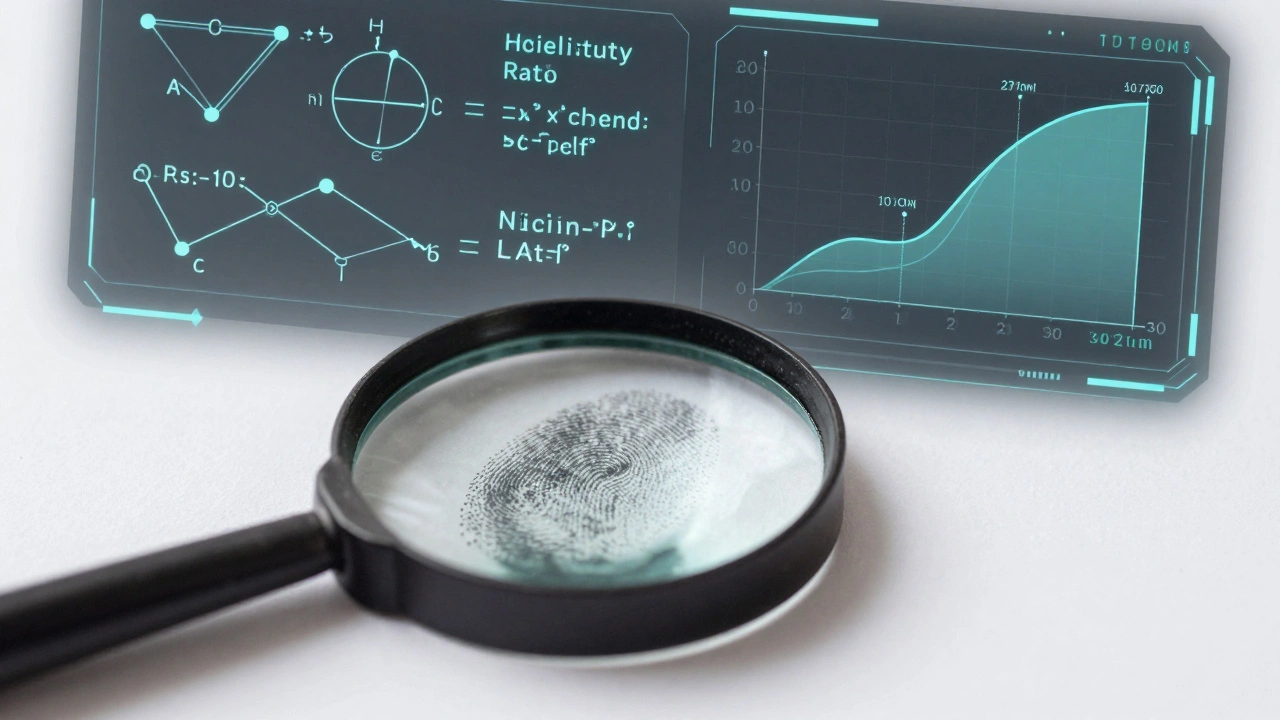
We are now seeing a transition toward an evidence-based paradigm. Instead of subjective "matches," new techniques use quantitative measurements and statistical models. The gold standard is now the likelihood-ratio framework, which provides a mathematical way to express the probability of a match versus a random occurrence. This makes the process transparent and reproducible. If a technique can't be tested in a lab or quantified with data, it's increasingly likely to be flagged as unreliable during a gatekeeping hearing.
The Danger of "Pedigree" Evidence
One of the biggest traps for trial judges is the "pedigree" of certain evidence. Think about firearms analysis, fingerprinting, or shoeprint matching. These have been staples of criminal trials for a century. Because they are so familiar, lawyers often don't even bother to challenge their admissibility. They assume the reliability is a given.
But research from the National Institute of Justice and the Wilson Center for Science and Justice at Duke Law tells a different story. They've documented how certain traditionally accepted forensic disciplines are heavily linked to wrongful convictions. When a judge relies on the "pedigree" of a technique rather than its actual scientific validity, the risk of a miscarriage of justice skyrockets. This is why the Due Process Clause is becoming a central argument in challenging old-school forensic methods.
The Judge vs. The Jury: Who Decides?
There is a fine line between deciding if a method is valid and deciding if an expert used it correctly. Scholars like David L. Faigman suggest that we need to be very clear about this division of labor. If an expert is talking about the general laws of physics or a validated scientific framework, the judge should be the sole decider of its admissibility. That's the gatekeeping function.
However, if the dispute is about whether the expert accidentally contaminated a sample or misread a specific measurement in this specific case, that's a matter of credibility. That's a job for the jury. When judges try to do both, they risk overstepping their role and essentially becoming a second jury, which undermines the adversarial system.
What is the main difference between Daubert and Frye?
The Frye standard focuses on whether a technique is "generally accepted" by the scientific community. In contrast, the Daubert standard requires the judge to evaluate the reliability of the method itself, regardless of whether it has a broad consensus, by looking at things like peer review, error rates, and testability.
How did the December 2023 amendment to FRE 702 change things?
The amendment made the gatekeeping standard more stringent. It clarifies that the proponent of the expert testimony must prove it is "more likely than not" that the methodology is reliable and was applied correctly to the facts of the case, reducing the likelihood of "liberal" admissions of expert testimony.
Why is subjective judgment in forensics considered a problem?
Subjective judgment relies on human perception, which is susceptible to cognitive biases. If an expert "feels" two patterns match without quantitative data, there is no way to objectively verify that conclusion, leading to higher rates of error and wrongful convictions.
What is the likelihood-ratio framework?
It is a statistical approach to interpreting forensic evidence that compares the probability of the evidence given one hypothesis (e.g., the suspect left the print) against the probability given an alternative hypothesis (e.g., a random person left the print). This removes subjective "matching" in favor of mathematical probability.
Does the same gatekeeping apply to civil and criminal cases?
While the rules of evidence may be similar, the practical application differs wildly. Criminal cases often involve higher stakes and more scrutiny regarding the Due Process Clause, whereas civil cases may have different resource allocations and challenges regarding expert testimony.
Next Steps for Legal Professionals
If you're a lawyer dealing with novel forensics, don't assume the "standard" evidence is safe. Start by auditing the specific technique's current standing in the Forensic Expert Evidence Database. If you're in a federal court, leverage the 2023 FRE 702 amendments to challenge any testimony that looks more like an "opinion" than a data-driven conclusion. For those in Frye jurisdictions, the goal is to prove that the "general acceptance" of a method has shifted or that the scientific community has moved on to a more reliable paradigm.