A forensic toxicologist doesn't just look at blood and urine samples. They answer life-or-death questions: Did this drug kill him? Was she too high to drive? Is this poison the reason she collapsed? Every sample they analyze could be the key to solving a murder, clearing an innocent person, or proving a crime happened. This isn’t guesswork. It’s science under pressure.
What a Forensic Toxicologist Actually Does
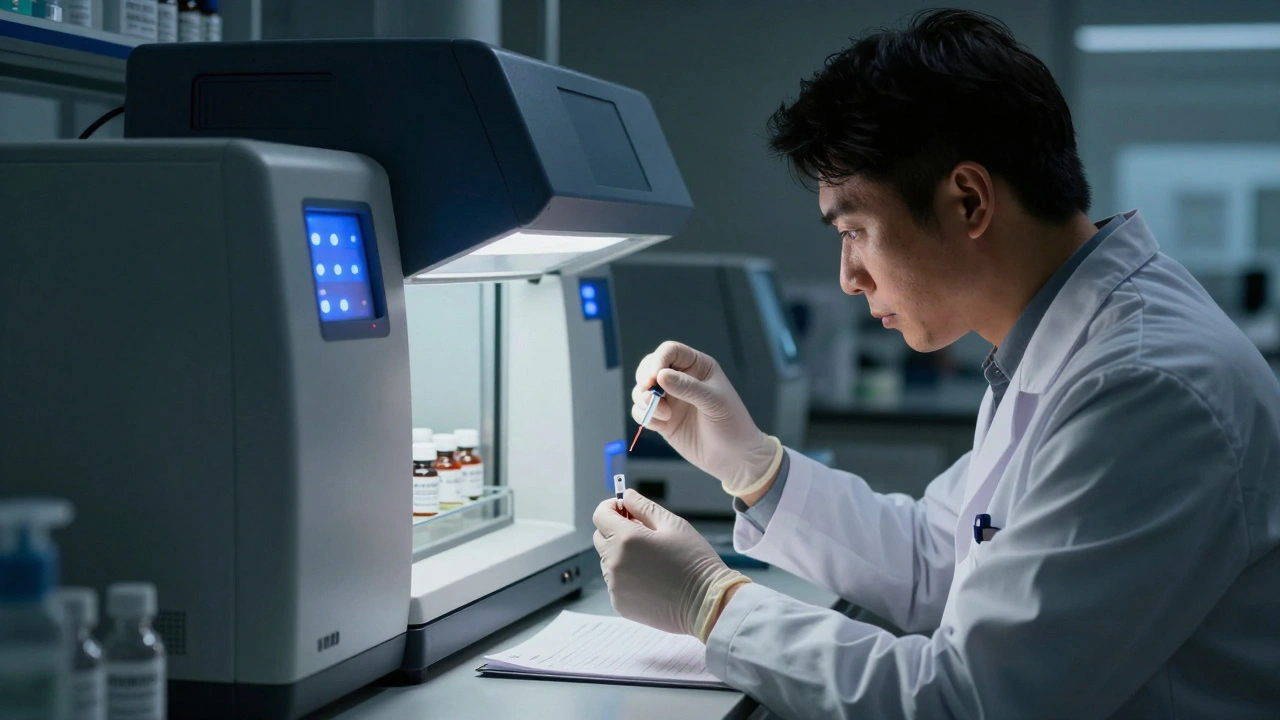
Imagine a lab filled with machines that can detect a single drop of fentanyl in a liter of blood. That’s the daily reality for a forensic toxicologist. They don’t just test for alcohol or marijuana. They hunt for everything: synthetic opioids, designer drugs no one’s heard of, industrial solvents, heavy metals like lead or arsenic, even carbon monoxide from a faulty heater. Their job is to find what shouldn’t be there-and prove it beyond doubt.
Most of their work happens after death. They work with medical examiners to figure out if drugs or poisons played a role in someone’s passing. But it’s not just about murder. They test drivers involved in fatal crashes. They check athletes for banned substances. They analyze samples from suspected sexual assaults to find date-rape drugs like Rohypnol or GHB. They even test wildlife samples to catch poachers who used poison to kill animals.
Every sample they handle has to be tracked from the crime scene to the courtroom. Chain of custody isn’t just paperwork-it’s the difference between justice and a mistrial. One missed label, one unrecorded transfer, and the whole case can fall apart.
The Tools of the Trade
Forget simple drug tests. Forensic toxicologists use tools that cost hundreds of thousands of dollars. Gas chromatography (GC) and liquid chromatography (LC) separate the chemicals in a sample like sorting a tangled necklace. Then, mass spectrometry (MS) identifies each piece by its molecular weight. Together, GC/MS and LC/MS are the gold standard. They can detect a trace of cocaine in a drop of vitreous fluid from an eyeball-something no home test kit can touch.
They also use immunoassays for quick screening. But those are just the first step. Any positive result must be confirmed with GC/MS or LC/TOF-MS. Why? Because false positives happen. A common painkiller can look like a controlled substance on a basic test. Only the high-end instruments give results that hold up in court.
These machines don’t run themselves. Toxicologists spend hours calibrating them, running quality controls, and troubleshooting errors. A single calibration error could mean convicting the wrong person-or letting a killer walk free.
From Lab to Courtroom
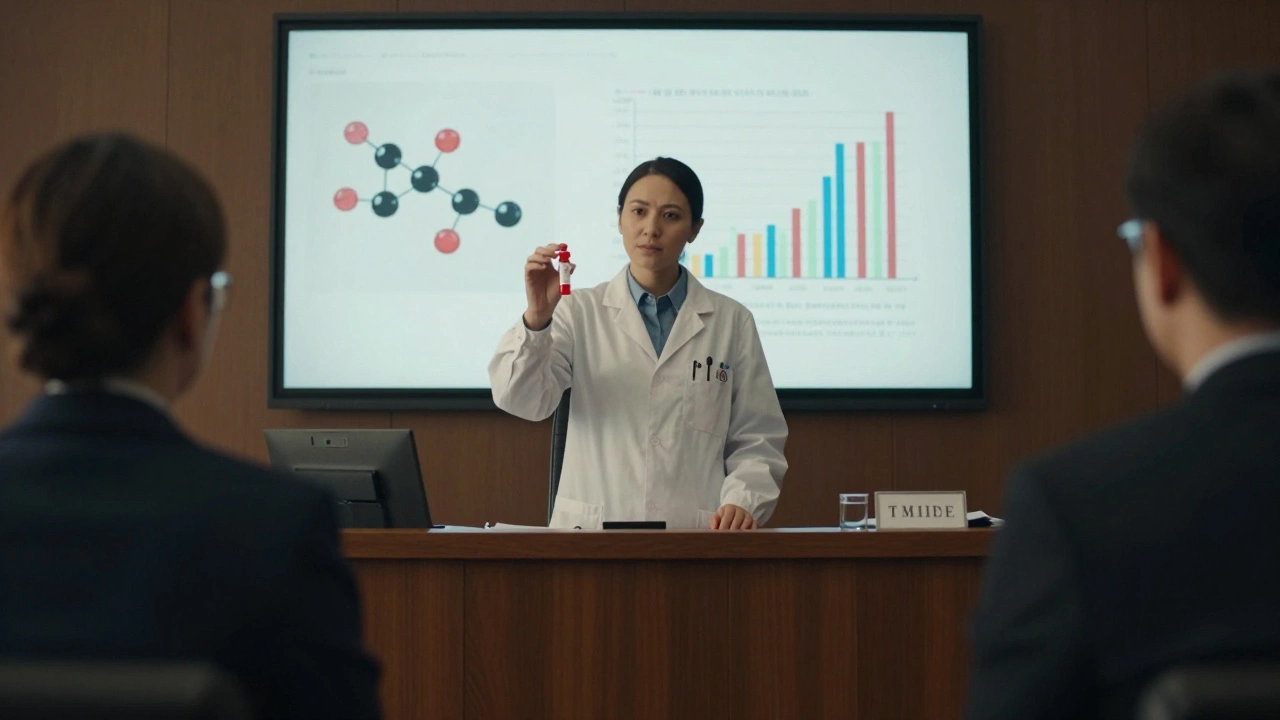
Most forensic scientists stay behind the scenes. Toxicologists don’t. They’re called to testify. Not just once. Sometimes dozens of times a year. They have to explain complex chemistry to a jury that may not know the difference between a pill and a powder.
They don’t just say, “Cocaine was found.” They explain: “The concentration in the blood was 1.2 micrograms per milliliter. At that level, most people experience severe impairment-slowed reaction time, blurred vision, loss of coordination. This person was not just using cocaine. They were in toxic range.”
Defense attorneys will challenge everything. Was the sample contaminated? Was the machine calibrated? Was the chain of custody broken? A toxicologist has to answer all of it, calmly, clearly, and with data to back it up. One misstep on the stand can undo years of investigation.
What They Test For
It’s not just street drugs. Forensic toxicologists deal with a wild mix of substances:
- Alcohol: Still the most common finding in fatal crashes.
- Prescription opioids: Fentanyl, oxycodone, morphine-often found in combination with alcohol or benzodiazepines.
- Illicit drugs: Cocaine, methamphetamine, heroin, MDMA.
- Designer drugs: Synthetic cannabinoids (like Spice), cathinones (like bath salts), and new fentanyl analogs that pop up every year.
- Poisons: Arsenic, cyanide, ethylene glycol (antifreeze), rat poison.
- Industrial chemicals: Solvents, pesticides, heavy metals.
- Carbon monoxide: Often overlooked in home deaths.
They also test for substances people don’t expect. A person who died after taking a “natural” supplement? The toxicologist checks for hidden steroids or stimulants. A driver who claims they were fine? They test for sleep aids, muscle relaxers, even antihistamines that cause drowsiness.
Who Hires Them
Most forensic toxicologists work for government labs-county medical examiner offices, state crime labs, or federal agencies like the DEA or FBI. In Portland, the Multnomah County Medical Examiner’s Office employs a team of toxicologists who handle over 800 cases a year.
Some work in private labs that contract with law enforcement. Others test employees for drug use in safety-sensitive jobs-truck drivers, pilots, railroad workers. A few even work with sports organizations like the NCAA or USADA to test athletes.
Entry-level positions usually require a bachelor’s in chemistry, biology, or forensic science. But to advance, most need a master’s degree. Senior toxicologists often have PhDs and years of hands-on lab experience. The job isn’t just about knowing how to run a machine. It’s about understanding how drugs affect the body, how they’re metabolized, and how long they stay detectable.
The Hidden Challenges
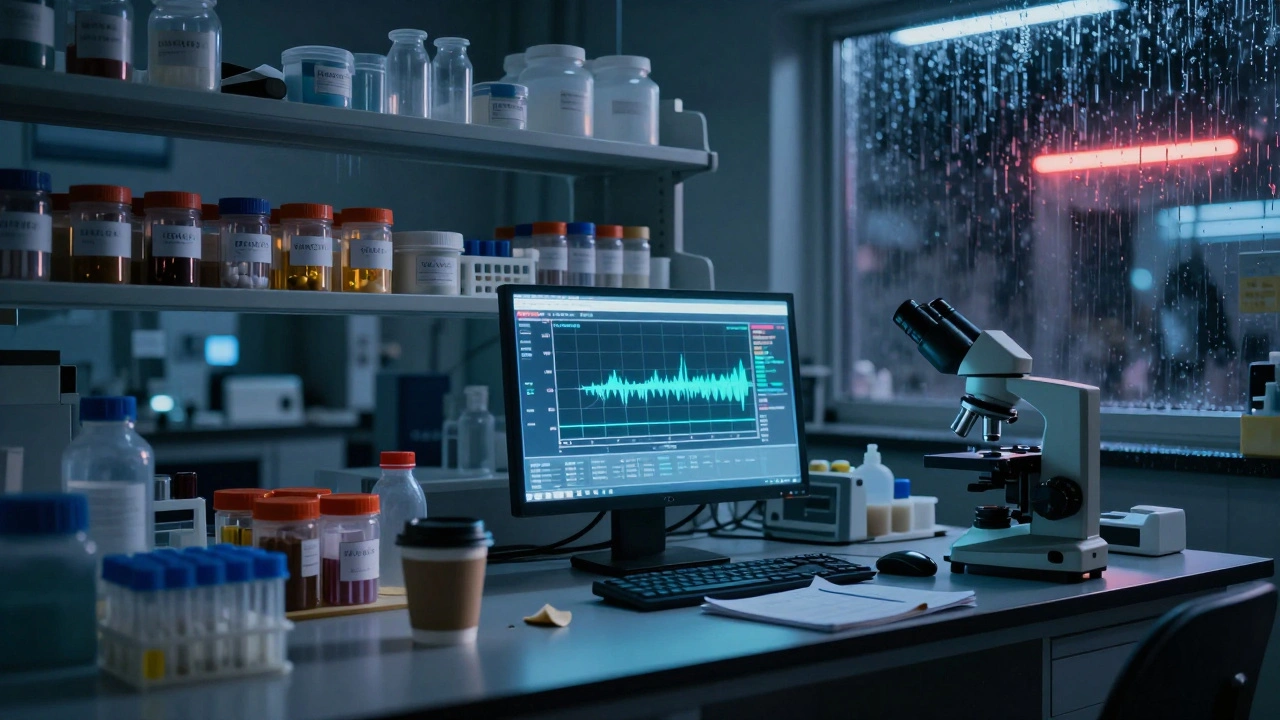
This job isn’t glamorous. It’s repetitive. You’ll analyze the same drugs, the same samples, over and over. You’ll work long hours during a spike in overdoses. You’ll see the same names on death certificates-people who died alone, forgotten, with a syringe still in their arm.
There’s emotional weight too. You’re not just testing samples. You’re answering questions for grieving families. You’re helping determine if a death was an accident, a suicide, or a murder. You’re the one who can say, “The fentanyl level was 10 times the lethal dose.” That’s not data. That’s a verdict.
And the drugs keep changing. New synthetic opioids appear every few months. Labs have to scramble to develop tests for substances that don’t even have names yet. One year, it’s fentanyl. The next, it’s isotonitazene. The next, a new analog no one’s studied. Toxicologists have to stay ahead of the curve-or risk missing a killer.
How to Get Into the Field
You need science. A bachelor’s in chemistry, biology, or forensic science is the starting point. Coursework should include organic chemistry, biochemistry, pharmacology, and statistics. Lab experience is non-negotiable. Internships in crime labs or hospital toxicology units are the best way to get your foot in the door.
Most positions require certification. The American Board of Forensic Toxicology (ABFT) offers board certification, which many employers require. To qualify, you need a degree, several years of experience, and to pass a rigorous exam.
Advanced roles demand a master’s or PhD. You’ll need to publish research, present at conferences, and prove you can develop new testing methods. Senior toxicologists don’t just run tests-they design them. They train new staff. They write protocols. They advise law enforcement and prosecutors.
Why This Job Matters
Forensic toxicology doesn’t make headlines. But it’s behind every drug-related conviction, every DUI case, every death investigation. It’s what separates speculation from truth. It’s what stops someone from being wrongly jailed-or lets a murderer go free.
In 2025, overdose deaths in the U.S. hit over 80,000. Many of those cases required toxicology reports to identify the exact drug involved. Without toxicologists, we wouldn’t know that fentanyl was behind 70% of those deaths. We wouldn’t know which drugs were being mixed dangerously. We wouldn’t be able to warn the public.
This isn’t just a lab job. It’s a bridge between science and justice. The people who do it don’t wear badges. But they hold the evidence that changes lives.
What’s the difference between a forensic toxicologist and a clinical toxicologist?
A clinical toxicologist works in hospitals to treat people who’ve overdosed or been poisoned. Their goal is to save lives. A forensic toxicologist works for law enforcement or medical examiners. Their goal is to determine if drugs or poisons caused death, impaired behavior, or broke the law. Clinical labs focus on treatment; forensic labs focus on evidence.
Can a forensic toxicologist be wrong?
Yes-but it’s rare. Errors happen when samples are mishandled, machines aren’t calibrated, or protocols are skipped. That’s why forensic labs follow strict standards: double-checking results, using blind controls, and requiring confirmation with two different methods. Most labs have quality control systems that catch mistakes before they reach court. But human error still exists, which is why defense attorneys always challenge the results.
Do forensic toxicologists only work with dead people?
No. While postmortem cases are common, they also test living people. Drivers pulled over for suspicion of DUI, athletes under suspicion of doping, parolees randomly screened for drugs, and victims of sexual assault-all these cases require toxicology testing on living individuals. Blood, urine, and even hair samples are analyzed.
How long does it take to get toxicology results?
It varies. Simple screening tests can be done in 24-48 hours. Full confirmation with GC/MS or LC/MS can take 2-6 weeks, especially in busy labs. Postmortem cases often take longer because samples must be collected, transported, and processed in order. In urgent cases-like a suspect in custody-the lab may prioritize the sample, but the science still takes time.
Is there a demand for forensic toxicologists?
Yes. With the opioid crisis, the rise of synthetic drugs, and increased testing in workplaces and sports, demand has grown. The U.S. Bureau of Labor Statistics projects a 14% increase in forensic science jobs through 2030. Toxicologists are among the most needed specialists because of the technical complexity of their work and the shortage of trained professionals.