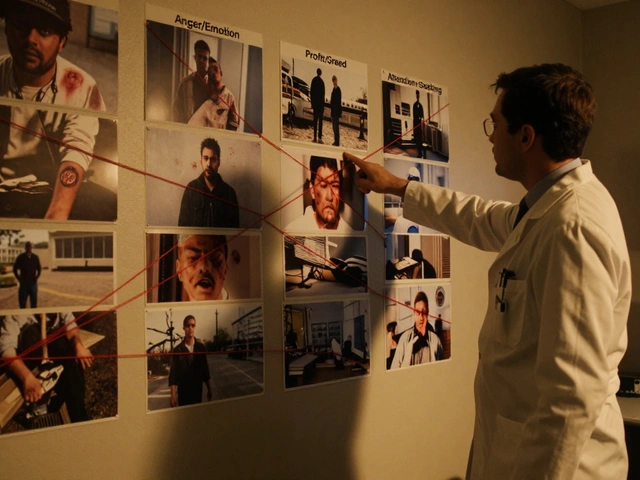
When a homicide occurs, the clock starts ticking immediately. Investigators need to find evidence fast-weapons, digital footprints, bloodstains-but they can’t just kick down doors and rummage through drawers without permission. That’s where search warrants come into play. They are not blank checks for police to search anywhere they want. Instead, they are precise legal tools governed by strict rules about scope and specificity.
If you’re following a high-profile case or studying criminal procedure, you’ve probably noticed that judges scrutinize these warrants closely. Why? Because the Fourth Amendment protects citizens from unreasonable searches and seizures. In homicide cases, the stakes are incredibly high. A warrant that is too broad might get thrown out of court, meaning crucial evidence disappears. Let’s break down exactly how scope and specificity work in these investigations.
The Core Requirement: Particularity
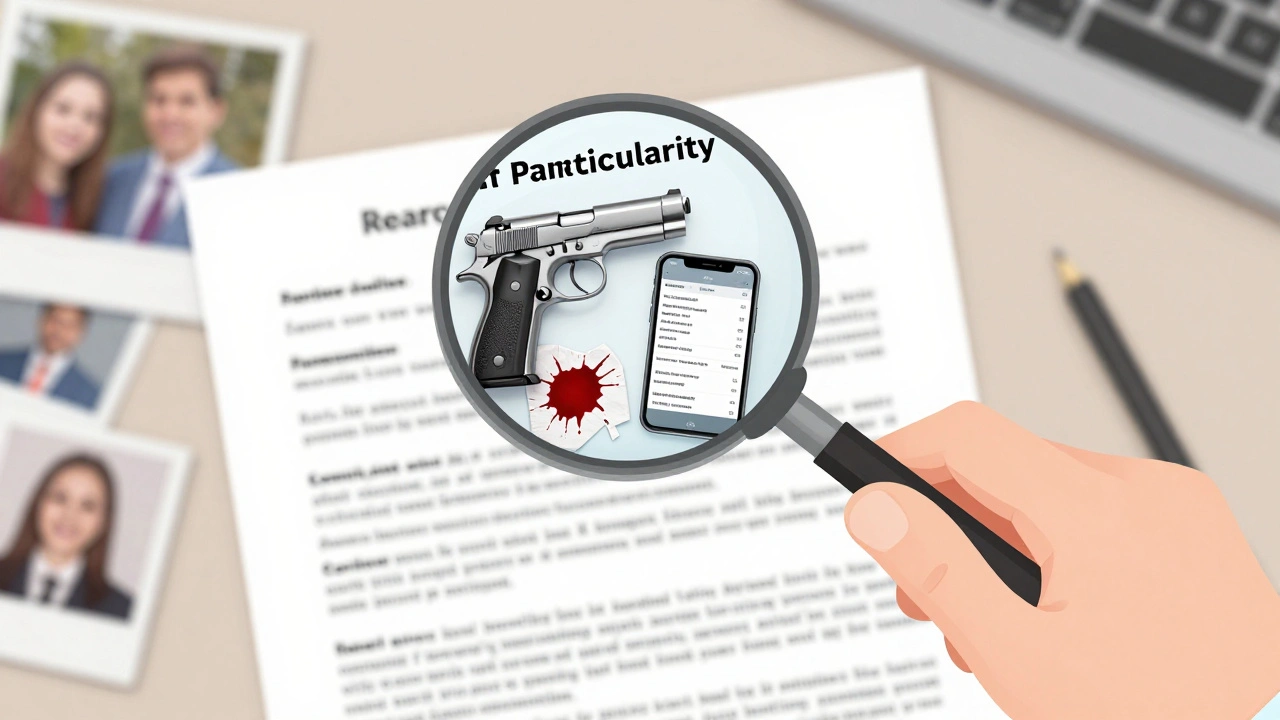
The heart of any valid search warrant is the particularity requirement. This isn’t just legal jargon; it’s a constitutional mandate. The Fourth Amendment states that warrants must "particularly describe the place to be searched and the persons or things to be seized." In plain English, this means the document cannot be vague.
A warrant cannot simply say "search the suspect's home for evidence." It must specify what kind of evidence. For example, it might list "a silver handgun," "digital devices containing communications with the victim between January 1 and March 15," or "clothing stained with blood." This specificity prevents general searches, which are essentially fishing expedits. It ensures that officers don’t seize unrelated items, like family photos or private medical records, unless those items directly relate to the crime.
In homicide cases, this requirement forces investigators to think carefully before they ask for a warrant. They have to explain to the judge exactly why they believe specific items are at a specific location. If the affidavit (the sworn statement supporting the warrant) lacks detail, the judge will likely deny it. This process acts as a check on police power, ensuring that the intrusion into a person’s privacy is justified and limited.
Defining the Scope: Where Can Officers Look?
Once a warrant is issued, its scope defines the boundaries of the search. The scope refers to the physical limits of where officers can go and what they can touch. If a warrant authorizes a search of a single-family home, officers generally cannot enter the detached garage next door unless they have a reasonable basis to believe it is part of the premises.
Courts use an "objectively reasonable" standard to determine if a search stays within scope. This means asking whether a reasonable officer would believe the area searched was connected to the place described in the warrant. Several factors influence this decision:
- Proximity: How close is the structure to the main premises? A shed five feet from the house is more likely to be considered part of the property than one across the street.
- Functional Relationship: Does the structure serve a purpose for the home? A storage unit used exclusively for household items might fall within the scope, even if it’s technically separate.
- Type of Evidence: If the warrant seeks large items, like a stolen safe or bulk drugs, officers might reasonably look in areas where such bulky items could be hidden, like a basement or attic, even if not explicitly listed.
However, this flexibility has limits. Officers cannot expand the search based on hunches. If the warrant covers the backyard, they cannot enter the neighbor’s yard. If they do, any evidence found there is likely inadmissible in court due to the exclusionary rule.
Homicide-Specific Challenges: Digital Evidence and Large Premises
Homicide investigations often involve complex scenes that challenge traditional notions of scope. One major issue is digital evidence. Smartphones, computers, and cloud servers contain vast amounts of data. A warrant for a "computer" is often too broad because it doesn’t specify what files are relevant.
Courts increasingly require warrants to specify the type of digital data sought. For instance, a warrant might limit the search to "emails sent to the victim" or "GPS location history during the night of the murder." This prevents investigators from sifting through years of personal browsing history, photos, and messages unrelated to the crime. The Supreme Court’s decision in Riley v. California reinforced this by ruling that police need a warrant to search a cell phone incident to arrest, highlighting the unique privacy interests in digital devices.
Another challenge arises in multi-unit buildings or large properties. If a homicide suspect lives in an apartment complex, the warrant must clearly identify the specific unit. Searching the entire building or common areas without additional justification violates the particularity requirement. Similarly, in rural settings with multiple outbuildings, the warrant must describe each structure with enough detail to distinguish it from others on the property.
Exceptions to the Rule: Plain View and Safety
While warrants set strict boundaries, there are recognized exceptions. The most common is the plain view doctrine. If an officer is legally searching for a weapon and sees illegal drugs on the table, they can seize the drugs even if they weren’t mentioned in the warrant. The key is that the item must be immediately recognizable as contraband or evidence of a crime.
Safety is another critical factor. During a homicide investigation, officers may encounter unexpected dangers. If they hear sounds suggesting someone is hiding in a closet not covered by the warrant, they may enter to ensure their safety or prevent the destruction of evidence. However, these actions must be narrowly tailored to the immediate threat. They cannot become a pretext for a broader search.
Additionally, if officers discover evidence of other crimes while executing a homicide warrant, they can seize that evidence. But they cannot extend the search to look for unrelated crimes. The initial scope remains the boundary, and deviations must be justified by exigent circumstances.
| Feature | General Search (Invalid) | Valid Homicide Search Warrant |
|---|---|---|
| Description of Place | Vague (e.g., "suspect's residence") | Specific (e.g., "Unit 4B, 123 Main St") |
| Items to Seize | Broad (e.g., "any evidence") | Detailed (e.g., "blood-stained clothing, firearm") |
| Scope of Search | Unlimited | Limited to described premises and appurtenant structures |
| Digital Data | No restrictions | Limited to relevant timeframes and file types |
Consequences of Overstepping Boundaries
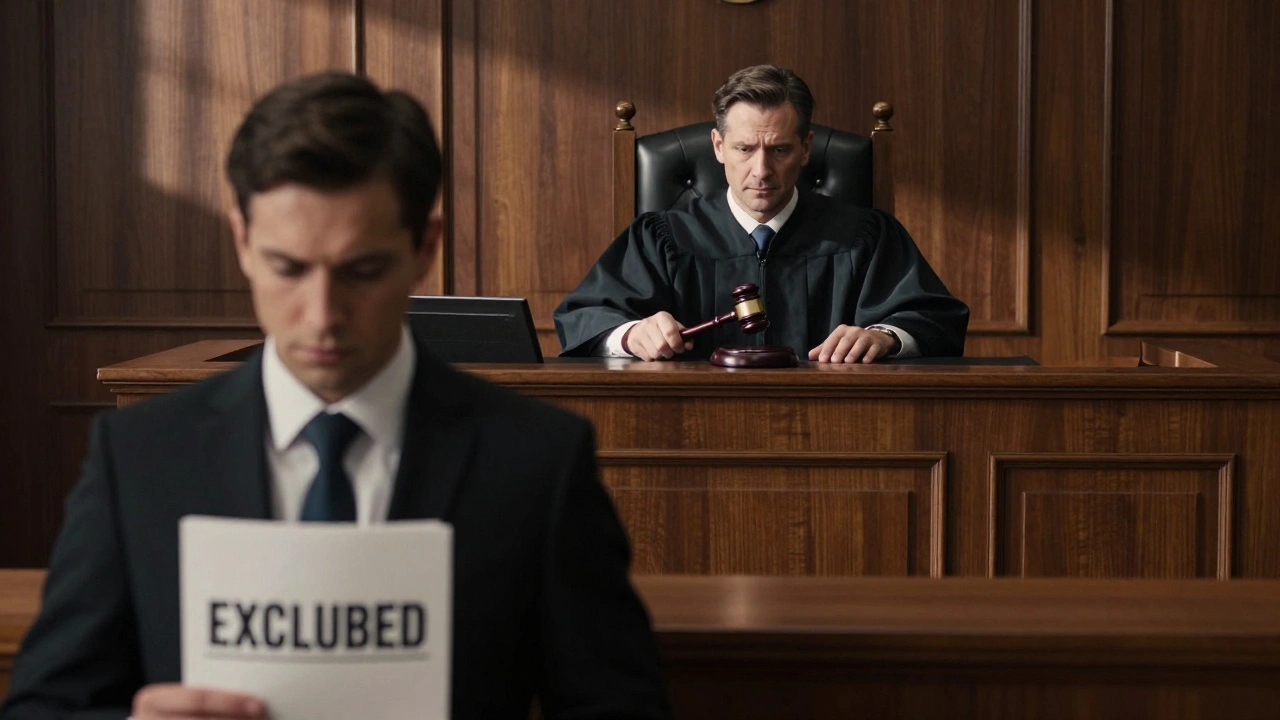
What happens if police exceed the scope of a warrant? The primary consequence is the suppression of evidence. Under the exclusionary rule, evidence obtained in violation of the Fourth Amendment cannot be used in court. In a homicide trial, this can be devastating for prosecutors. Without key evidence, they may be unable to prove guilt beyond a reasonable doubt.
Courts carefully review complaints about overreach. Defense attorneys often argue that officers expanded the search beyond the warrant’s terms. Judges then examine the affidavit, the warrant itself, and the officers’ testimony to determine if the expansion was reasonable. If the court finds a violation, the evidence is tossed. This underscores the importance of precision in drafting warrants.
Furthermore, repeated violations can lead to disciplinary action for officers and damage public trust in law enforcement. Communities expect police to respect legal boundaries, even in emotionally charged homicide cases. Maintaining integrity requires adhering strictly to the scope defined by the judge.
Best Practices for Investigators
To avoid legal pitfalls, homicide investigators should follow best practices when seeking and executing warrants:
- Be Specific: List every item suspected to be evidence. Avoid generic terms like "effects of the crime."
- Describe Locations Clearly: Use addresses, unit numbers, and descriptions of structures. Include maps if necessary.
- Limit Digital Searches: Specify dates, file types, and keywords for electronic devices.
- Document Reasoning: Explain in the affidavit why certain areas or items are believed to contain evidence.
- Respect Boundaries: Train officers to stop searching when they leave the described area unless exigent circumstances arise.
By following these steps, investigators can gather strong evidence while respecting constitutional rights. This balance is essential for securing convictions and upholding justice.
Can police search a car without a warrant during a homicide investigation?
Yes, under certain conditions. The automobile exception allows police to search a vehicle without a warrant if they have probable cause to believe it contains evidence of a crime. However, the search must still be limited to areas where the evidence could reasonably be hidden. If the vehicle is parked on private property and not immediately mobile, a warrant may be required.
What happens if a warrant lists the wrong address?
If the address is incorrect but the description of the premises is accurate enough for officers to identify the correct location, courts may uphold the warrant under the "good faith" exception. However, if the error leads to the search of an innocent party’s home, the evidence is likely suppressed, and officers may face liability.
Do search warrants expire?
Yes, most warrants include a validity period, typically 10 days. Officers must execute the warrant within this timeframe. If they fail to do so, they must return to the judge for a new warrant. This prevents indefinite surveillance or delayed searches that could compromise evidence.
Can officers seize cash found during a homicide search?
Only if the cash is linked to the crime. For example, if the warrant seeks proceeds from drug sales related to the homicide, cash might be seized. Otherwise, seizing money solely because it’s present violates the particularity requirement unless it falls under the plain view doctrine as contraband.
How does the Fourth Amendment apply to cloud storage?
Cloud storage is treated similarly to physical premises. A warrant must specify the account and the type of data sought. Law enforcement often serves warrants on tech companies rather than physically searching devices. Courts require particularity to protect users’ privacy in digital spaces.