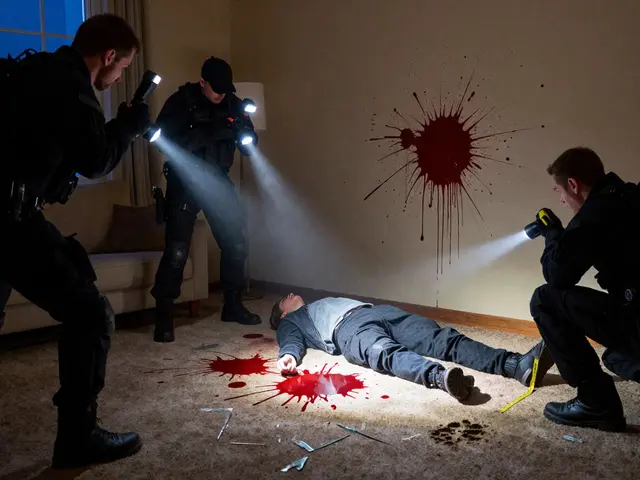
When a body is buried, it’s not the end of the story-not if justice, truth, or closure demands more. Exhumation and re-autopsy are not scenes from a crime drama. They are serious, tightly regulated forensic procedures that happen when the original death investigation falls short. People don’t request these lightly. Courts don’t grant them casually. And forensic pathologists don’t perform them without clear, compelling reasons.
Why Exhumation Happens
Exhumation isn’t about curiosity. It’s about resolution. There are four main reasons a body might be dug up years after burial.In criminal cases, new evidence can turn a closed case upside down. Maybe a suspect finally confesses. Maybe DNA from a crime scene didn’t match anyone at the time-but now it does. Or perhaps a witness comes forward saying the death wasn’t natural. When that happens, investigators turn to the body. A second autopsy might reveal hidden trauma, trace evidence, or toxic substances that weren’t tested for-or even detectable-during the first exam.
In civil cases, families fight for answers too. Insurance companies deny payouts if death is ruled accidental. Families sue for wrongful death when they believe negligence caused a loved one’s death. In both cases, the original death certificate might say "cardiac arrest" or "natural causes," but that’s not enough. A re-autopsy can show if a medication error, surgical mistake, or undiagnosed condition actually caused death. Without solid forensic evidence, these cases collapse.
Sometimes, families just don’t believe the official story. A parent dies suddenly after a routine surgery. The hospital says it was a heart attack. But the family knows the person was healthy. They push for a second opinion. That’s when exhumation becomes a last resort for truth.
And then there’s the rare but devastating case: misidentification. Did the right person get buried? Maybe records were mixed up. Maybe the body was damaged beyond recognition. DNA testing is the only way to know for sure-and that requires the body to be examined again.
The Legal Roadblock
You can’t just show up at a cemetery with a shovel. Exhumation is controlled by law. In Texas, for example, the process starts with a court order. No judge, no excavation.Only three parties can legally request it: next of kin, a district attorney, or a judge. Next of kin must prove a valid reason-like a dispute over cause of death or a need for closure. A district attorney needs to show the exhumation is essential to a criminal investigation. A judge can order it if evidence in a civil case hinges on forensic findings.
But the court order is only step one. Then comes the disinterment permit, issued by the local registrar or city secretary. This step ensures cemetery rules are followed, nearby plots are notified, and public health standards are met. The Texas Funeral Service Commission oversees licensed professionals involved to make sure everything is done with dignity and legality.
This two-step system isn’t unique to Texas. Most states require similar layers: judicial approval, regulatory clearance, and cemetery coordination. Federal law doesn’t govern exhumation directly-but state laws, cemetery bylaws, and religious protections all add complexity. Some cemeteries are consecrated ground. Removing a body from there requires permission from religious authorities. Others require consent from all adjacent plot owners. Skipping any step can lead to lawsuits, criminal charges, or public outrage.
What the Body Can Still Tell You
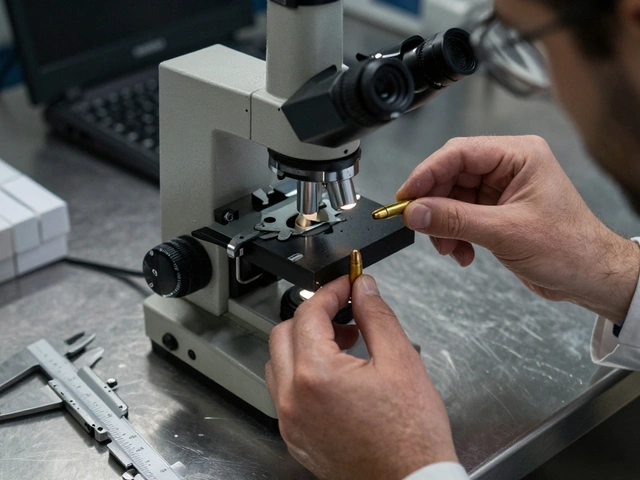
Time doesn’t erase everything. But it does change what’s visible.Fractures in bones? They can last decades. A broken rib from blunt force trauma? Still there. A crushed larynx from strangulation? The marks remain. Even after years underground, forensic pathologists can identify blunt force injuries, sharp force trauma, and signs of asphyxia.
But soft tissue? That’s gone. A heart attack from a blood clot? The clot dissolves. A brain hemorrhage? The tissue decomposes. If the first autopsy didn’t test for poisons, and the body was embalmed, those chemicals might have masked or destroyed evidence. Embalming fluid can interfere with toxicology. So can burial conditions-wet soil, high heat, or acidic ground.
This is why forensic pathologists don’t jump into exhumation without a plan. They first ask: What question are we trying to answer? Can we answer it? And if so, how?
For example, if the goal is to test for arsenic, the body must be in a condition where bone or hair samples can still retain traces. Arsenic binds to keratin, so even decades-old hair can be analyzed. But if the goal is to detect a recent drug overdose, and the body was embalmed and buried for five years? That’s probably impossible.
Advances in technology make this possible now where it wasn’t before. DNA extraction from bone marrow, mass spectrometry for drug detection, and 3D imaging of skeletal trauma-all of these were either unavailable or too expensive 20 years ago. That’s why re-autopsies are more common today. What was once "untestable" is now testable.
The Role of the Forensic Pathologist
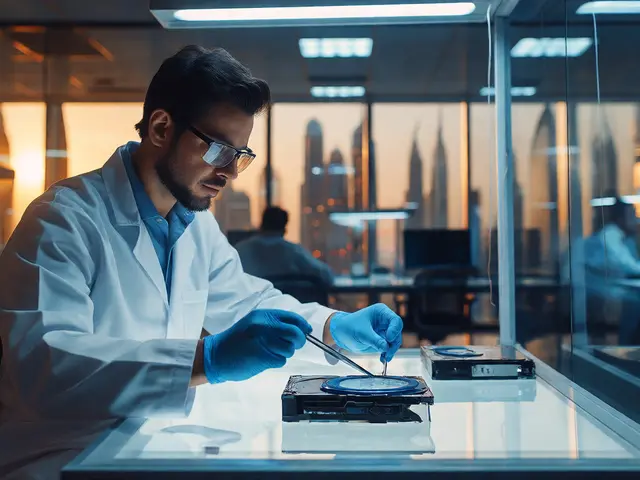
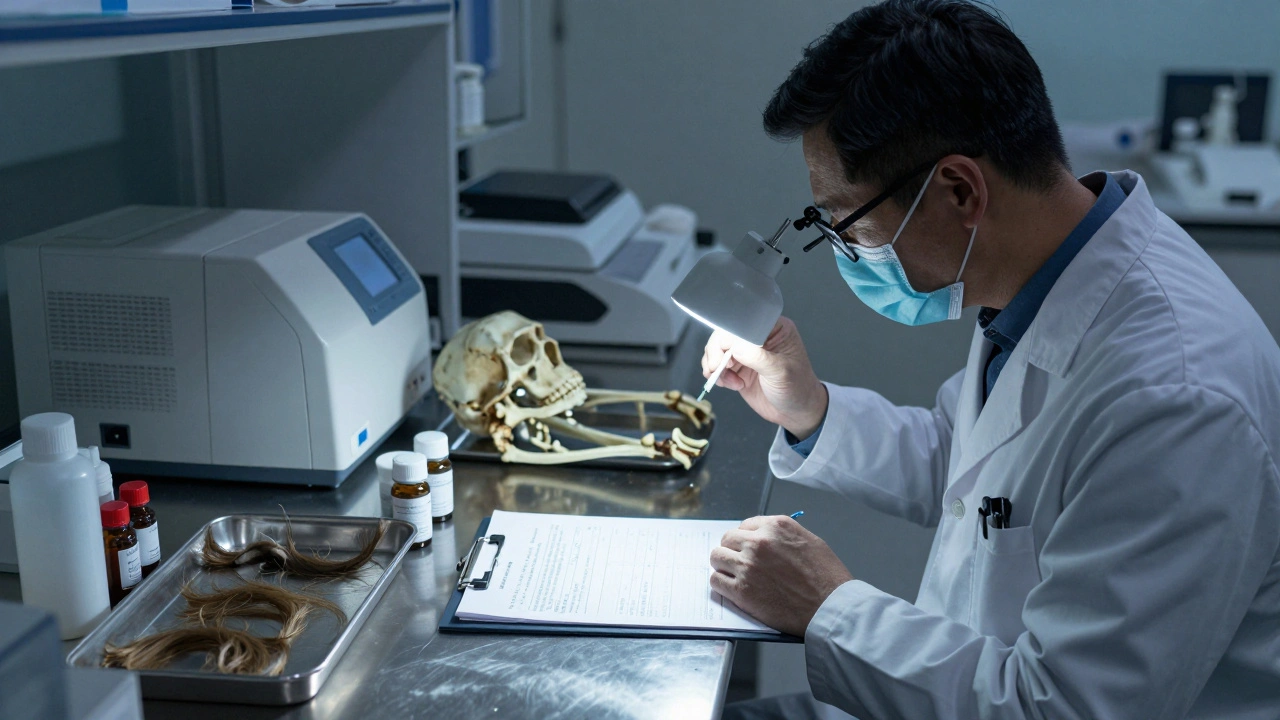
A forensic pathologist doesn’t just cut open a body. They decide whether the body can give answers. They advise lawyers, families, and investigators on what’s possible. They help draft the court petition. They choose which samples to collect: bone, hair, teeth, soil from around the casket. They know which tests to run and which ones are useless.For example, in a suspected poisoning case, they might request a soil sample from the casket’s interior. If the poison leached out, it might still be detectable in the dirt. In a case involving suspected medical negligence, they might compare the original autopsy report with current standards. Was the heart examined properly? Were the lungs checked for embolism? Did the pathologist miss something obvious?
They also document everything. Every incision. Every sample. Every observation. The re-autopsy report becomes evidence in court. If it’s sloppy, the whole case crumbles.
And they’re not alone. A team often works behind the scenes: forensic anthropologists for skeletal analysis, toxicologists for drug screening, odontologists for dental ID, and even archaeologists to help excavate the grave without damaging evidence.
When It Won’t Work
Not every exhumation leads to answers. Sometimes, it’s a dead end.If too much time has passed and the body was embalmed, toxicology results may be worthless. If the original autopsy was thorough and the cause of death was clear, a second exam rarely changes anything. And if the family just wants closure without evidence? Courts usually deny it.
There’s also the emotional cost. Families who request exhumation often face backlash from the community, religious groups, or even other relatives. The process can take months. It’s expensive. And even if it’s done perfectly, the results might not be what they hoped for.
That’s why forensic pathologists don’t rush into it. They weigh the cost against the likelihood of success. If the odds are low, they say so. They don’t give false hope.
International Context
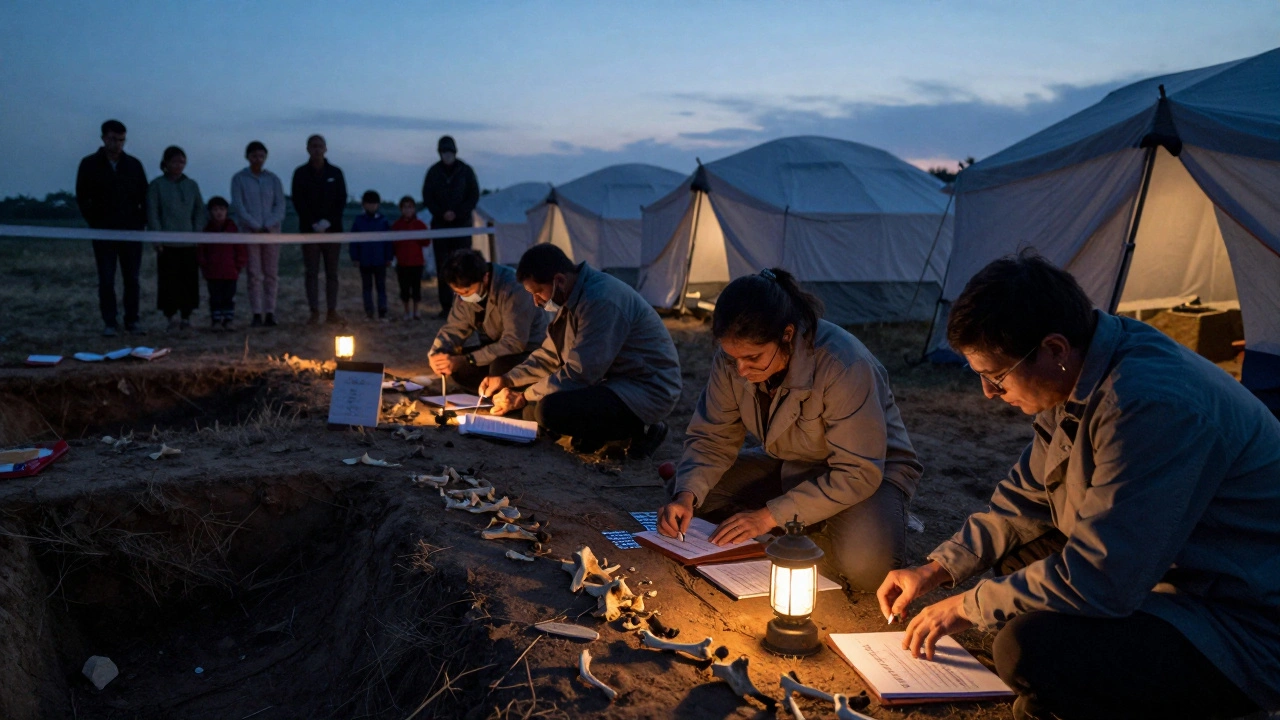
In countries with histories of human rights abuses, exhumations are common. Mass graves from dictatorships, war crimes, or forced disappearances are often exhumed by international forensic teams. These aren’t done for court cases alone-they’re for truth commissions, historical record, and healing.In places like Argentina, Chile, or Guatemala, forensic teams work under strict protocols: chain of custody, photo documentation, DNA databases, and collaboration with human rights organizations. The goal isn’t just to find cause of death-it’s to identify the person, return their remains to family, and hold perpetrators accountable.
Even in the U.S., these international standards influence how domestic cases are handled. The same attention to detail, documentation, and ethical care is expected.
Final Considerations
Exhumation and re-autopsy are not routine. They’re last-resort tools. They require legal justification, scientific feasibility, and emotional readiness. They’re expensive, time-consuming, and emotionally taxing.But when done right, they can correct miscarriages of justice. They can give families answers they’ve waited years for. They can prove innocence-or guilt-where no other evidence exists.
The body doesn’t lie. But it only speaks if someone listens-and if the law lets them dig deep enough.
Can anyone request an exhumation just because they’re curious?
No. Exhumation requires a legal basis. Courts only approve requests tied to criminal investigations, civil litigation, misidentification, or clear evidence that the original cause of death was incorrect. Personal curiosity or emotional distress alone is never enough.
How long after burial can a body still be autopsied?
There’s no strict time limit. Bone fractures, dental records, and trace elements like arsenic can be detected decades later. However, soft tissue and many toxins degrade. If the body was embalmed and buried for over 10 years, most internal organ evidence is lost. The key question isn’t time-it’s what you’re looking for.
What if the body was embalmed? Can anything still be learned?
Yes. Embalming fluid can mask some toxins, but it doesn’t destroy everything. Bone marrow, hair, teeth, and soil samples around the casket can still contain traces of drugs, poisons, or environmental toxins. Forensic pathologists use specialized techniques to extract and analyze these materials. It’s harder, but not impossible.
Do you need permission from the cemetery?
Yes. Even with a court order, you need a disinterment permit from the cemetery or local registrar. Some cemeteries require consent from nearby plot owners or religious authorities, especially if the grave is in consecrated ground. This step ensures the process respects local rules and community norms.
Is a re-autopsy always more accurate than the first one?
Not necessarily. If the first autopsy was thorough and modern techniques were used, a second one might not add anything. But if the first exam was rushed, incomplete, or done without proper equipment, a re-autopsy can reveal major errors. The value depends on the quality of the original work and the tools available now.