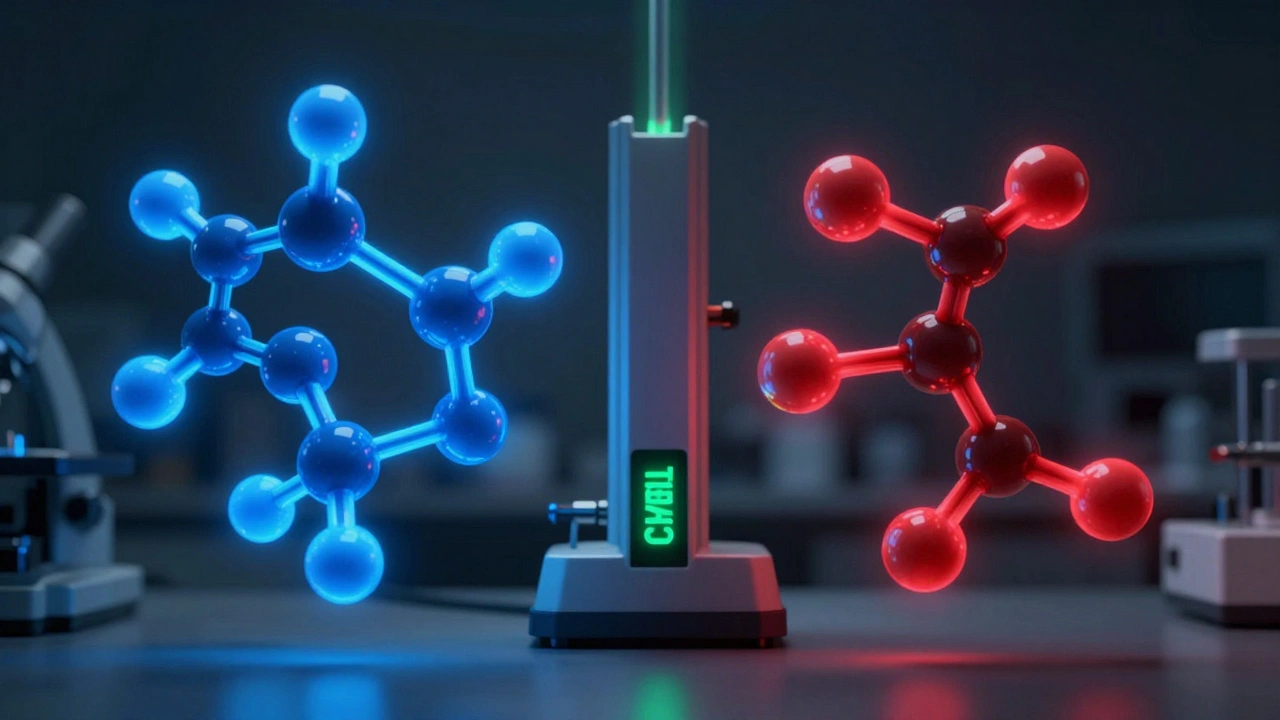
Two molecules that look identical under a microscope can have wildly different effects in the human body. One might heal, while the other could cause serious harm. This isn’t science fiction-it’s everyday reality in modern drug development. The difference? Chiral separation. It’s the process that lets scientists tell apart mirror-image versions of a drug molecule, called enantiomers. And in today’s pharmaceutical world, getting this right isn’t optional-it’s mandatory.
Why Enantiomers Matter
Every drug molecule has a shape. Some molecules have a left-handed version and a right-handed version, like your left and right hand. These are enantiomers. On paper, they’re the same. In your body? Totally different. Take thalidomide. In the 1950s, it was sold as a sedative and morning sickness treatment. One enantiomer calmed nausea. The other caused severe birth defects. Thousands of babies were born with missing limbs because regulators didn’t require separating the two. Today, that kind of mistake is impossible. Why? Because we now know: enantiomeric purity saves lives. The FDA and other global regulators now demand proof that a drug contains only the intended enantiomer. Even if a drug was once sold as a racemic mix (50/50 blend of both forms), companies must now prove the active form is pure. That’s why chiral separation isn’t just a lab curiosity-it’s the backbone of drug safety.How Chiral Separation Works
You can’t separate left and right hands by size or weight. They’re identical in mass. So how do you pull them apart? You need something that can feel the difference. That’s where chiral stationary phases (CSPs) come in. These are special materials packed into HPLC columns that interact differently with each enantiomer. Think of them like a lock that only fits one key-even if both keys look identical. The most common CSPs are made from polysaccharides: cellulose and amylose derivatives. Brands like Chiralcel OD, Chiralpak IA, and Chiralpak IG-3 dominate the market. Why? Because they’re stable, repeatable, and work across a wide range of drugs. A 2024 study compared 12 different chiral columns for separating new antifungal azole drugs. Only Chiralpak IA could resolve all eight compounds in a single run. The rest failed on at least two. That’s not luck-it’s design. These columns are engineered to form temporary bonds with specific parts of a molecule’s 3D structure. One enantiomer binds tighter, moves slower through the column. The other zips through. That tiny delay is all you need to detect and isolate them.Mobile Phase and Method Optimization
It’s not just the column that matters. The liquid that carries the drug through it-called the mobile phase-plays a huge role. For nonsteroidal anti-inflammatory drugs (NSAIDs) like ibuprofen and naproxen, researchers found a single mobile phase works for all: 50/50 acetonitrile and water with 0.1% formic acid. That’s a game-changer. Instead of developing a new method for each drug, labs can use one setup for dozens. It saves time, reduces costs, and cuts down on errors. Temperature also matters. Running a column at 30°C instead of 20°C can shrink analysis time by 40% without losing resolution. And in some cases, switching from reversed-phase to HILIC (hydrophilic interaction liquid chromatography) mode improves peak shape for polar drugs like β-blockers. One study using the Chiralpak IG-3 column showed that HILIC mode cut analysis time for carvedilol enantiomers by half compared to traditional reversed-phase. That’s critical in high-throughput labs where hundreds of samples roll in daily.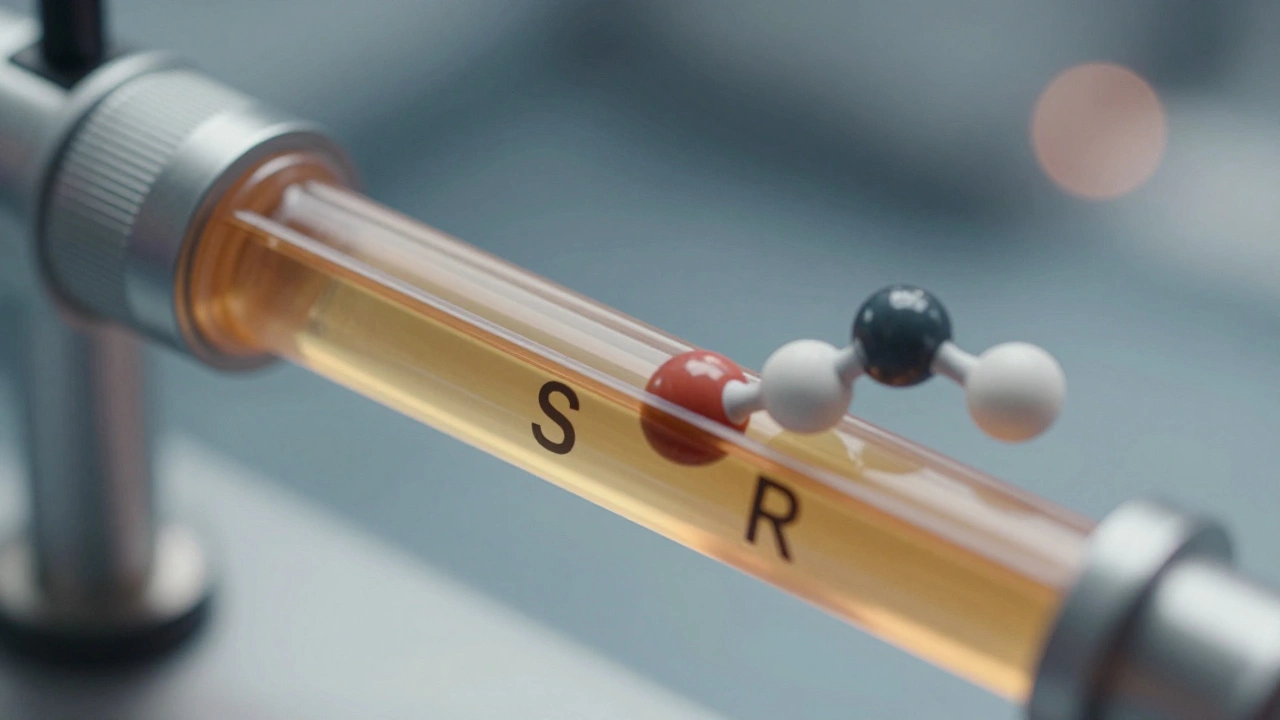
Capillary Electrophoresis: The Silent Competitor
HPLC isn’t the only player. Capillary electrophoresis (CE) is quietly becoming a favorite in research labs. It uses electric fields instead of pressure to move molecules through a narrow capillary tube. CE shines when you need ultra-high sensitivity. It can detect enantiomers at concentrations 100 times lower than HPLC. That’s why it’s used for trace impurity testing in high-potency drugs. The trick? Chiral selectors in the buffer. Cyclodextrins-ring-shaped sugar molecules-are the most common. They act like molecular handcuffs, grabbing one enantiomer tighter than the other. β-cyclodextrin, in particular, binds well with most drugs because of its cavity size and chemical flexibility. Crown ether-based CE methods have also cracked tough cases. One team used a Crownpak CR (+) column to separate four stereoisomers of a new antibacterial compound. The key? Hydrogen bonding patterns unique to each enantiomer. Without CE, they’d have spent months trying to find the right HPLC conditions.Chiral Separation Meets Mass Spectrometry
The real power move? Combining chiral HPLC with tandem mass spectrometry (LC-MS/MS). Traditional HPLC detects drugs by how they interact with UV light. But blood, urine, and tissue are messy. They’re full of other molecules that can hide or mimic the drug signal. LC-MS/MS doesn’t care. It identifies molecules by their exact mass and how they break apart under pressure. That means even if two drugs look similar on an HPLC chart, MS/MS will tell them apart instantly. A 2025 study on sertraline (Zoloft) used the Chiralpak IC column with LC-MS/MS to measure enantiomer levels in rat plasma. They got clean results-even with complex biological matrices. The limit of detection? 10 times lower than standard HPLC. That’s the difference between spotting a needle in a haystack and finding it in a pile of needles. This combo is now standard for pharmacokinetic studies, toxicology screens, and bioequivalence testing.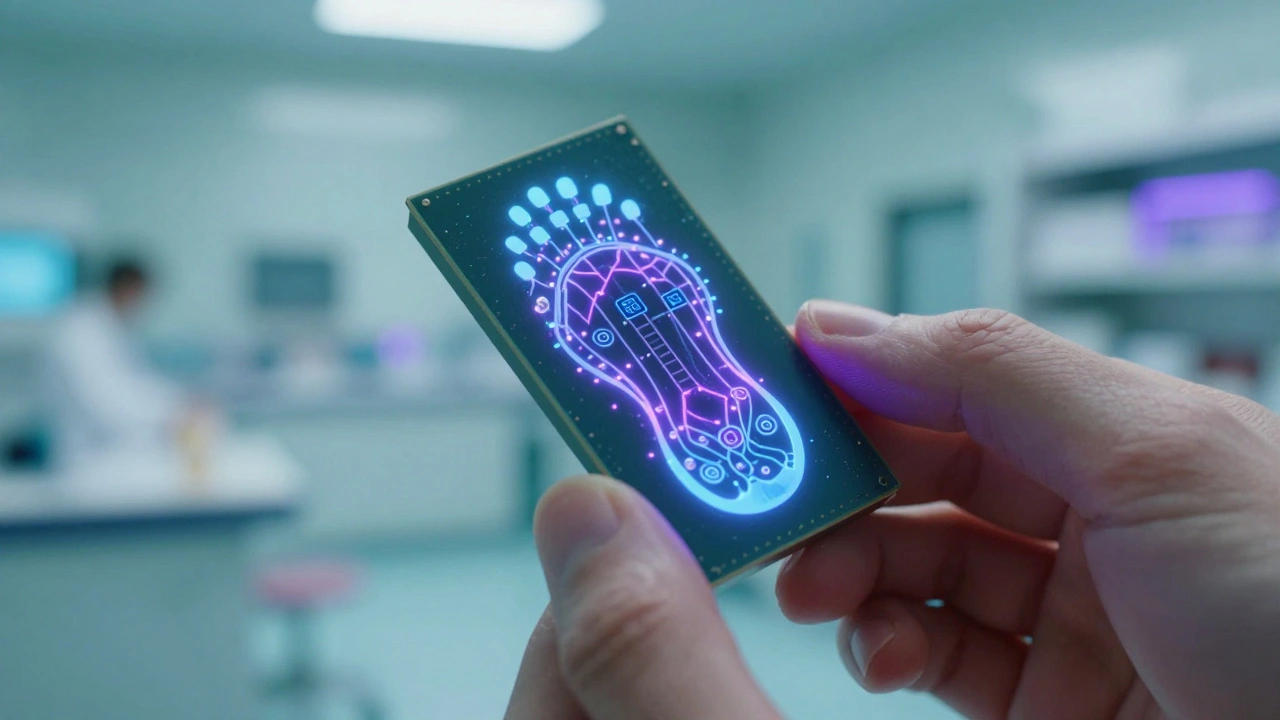
Emerging Frontiers: Microfluidics and Automation
The next wave isn’t bigger columns or faster pumps. It’s miniaturization. Microfluidic chips-small devices with channels thinner than a human hair-are now being used to perform chiral separations on a chip. These systems can process dozens of samples in minutes, using nanoliters of solvent instead of milliliters. One lab in Boston built a chip that separates enantiomers of a Parkinson’s drug in under 90 seconds. It uses integrated HPLC and electrokinetic flow. No pumps. No valves. Just electricity and precision engineering. This isn’t just about speed. It’s about accessibility. A small clinic or field lab could soon run chiral purity tests without a $200,000 HPLC system. All they need is a handheld device and a USB connection.Real-World Impact
This isn’t abstract science. It’s in your medicine cabinet. - The antidepressant escitalopram (Lexapro) is the pure S-enantiomer of citalopram. The R-form is inactive and even counterproductive. Chiral separation made this switch possible. - The asthma drug levalbuterol (Xopenex) is the active enantiomer of albuterol. It works with fewer heart side effects. - The anticoagulant warfarin’s two enantiomers are metabolized differently. Testing for each helps personalize dosing to prevent bleeding. Even natural products like sterubin-a compound from California yarrow-must be purified by enantiomer before testing for neuroprotective effects. Without chiral separation, researchers would never know if the effect came from the right-handed or left-handed version.What’s Next?
The future of chiral separation is smarter, faster, and more integrated. - AI is now being trained to predict which CSP will work for a new molecule, cutting method development time from weeks to hours. - Immobilized polysaccharide phases are more stable than ever, allowing use of 100% organic solvents-something older columns couldn’t handle. - Regulatory agencies are pushing for real-time chiral monitoring during drug manufacturing, not just end-product testing. The message is clear: if a drug has a chiral center, you must prove you’ve got the right one. And that means chiral separation isn’t just a technique. It’s a requirement for every drug that enters the human body.What is chiral separation in pharmaceuticals?
Chiral separation is the process of isolating individual enantiomers-mirror-image versions-of a drug molecule. Since these enantiomers can have different biological effects, separating them ensures the drug contains only the therapeutically active form, reducing side effects and improving safety.
Why is HPLC the gold standard for chiral drug analysis?
HPLC is the gold standard because it offers high resolution, reproducibility, and compatibility with industrial-scale production. Chiral stationary phases (CSPs) like cellulose and amylose derivatives provide predictable, stable separation across a wide range of drugs. Unlike other methods, HPLC can be scaled from analytical testing to large-scale purification.
What are the most commonly used chiral stationary phases?
The most widely used CSPs are polysaccharide-based, including Chiralcel OD, Chiralpak IA, and Chiralpak IG-3. These use immobilized cellulose or amylose derivatives coated onto silica particles. They dominate because they’re versatile, stable, and effective for over 80% of chiral drugs tested. Other types include Pirkle phases, macrocyclic antibiotics like vancomycin, and protein-based phases, though these are used less frequently today.
How does capillary electrophoresis differ from HPLC in chiral separation?
Capillary electrophoresis (CE) separates enantiomers using an electric field and chiral selectors in the buffer, while HPLC uses pressure-driven flow and chiral columns. CE offers higher sensitivity and uses less solvent, making it ideal for trace analysis. HPLC is more robust for routine testing and large-scale purification. CE is often used for complex biological samples where detection limits are critical.
Why is LC-MS/MS important for chiral drug analysis?
LC-MS/MS combines chiral separation with mass detection, allowing precise identification of enantiomers even in complex mixtures like blood or urine. It eliminates interference from other compounds, improves detection limits, and provides quantitative accuracy. This is essential for pharmacokinetic studies, toxicology, and regulatory compliance, especially when measuring low concentrations of active enantiomers in patients.
Can chiral separation be automated?
Yes. Modern systems use robotic injectors, automated method development software, and integrated LC-MS/MS platforms that run unattended for hours. Microfluidic chips are pushing automation further, enabling chip-based chiral separations with minimal manual input. Automation reduces human error, increases throughput, and is now standard in large pharmaceutical labs.
Are chiral impurities regulated by the FDA?
Yes. The FDA requires strict control of enantiomeric impurities in chiral drugs. If an inactive or harmful enantiomer exceeds 0.1% in the final product, the drug may be rejected. Manufacturers must validate their chiral separation methods and demonstrate consistent purity across batches. This is part of the ICH Q3A and Q3B guidelines for impurity control.