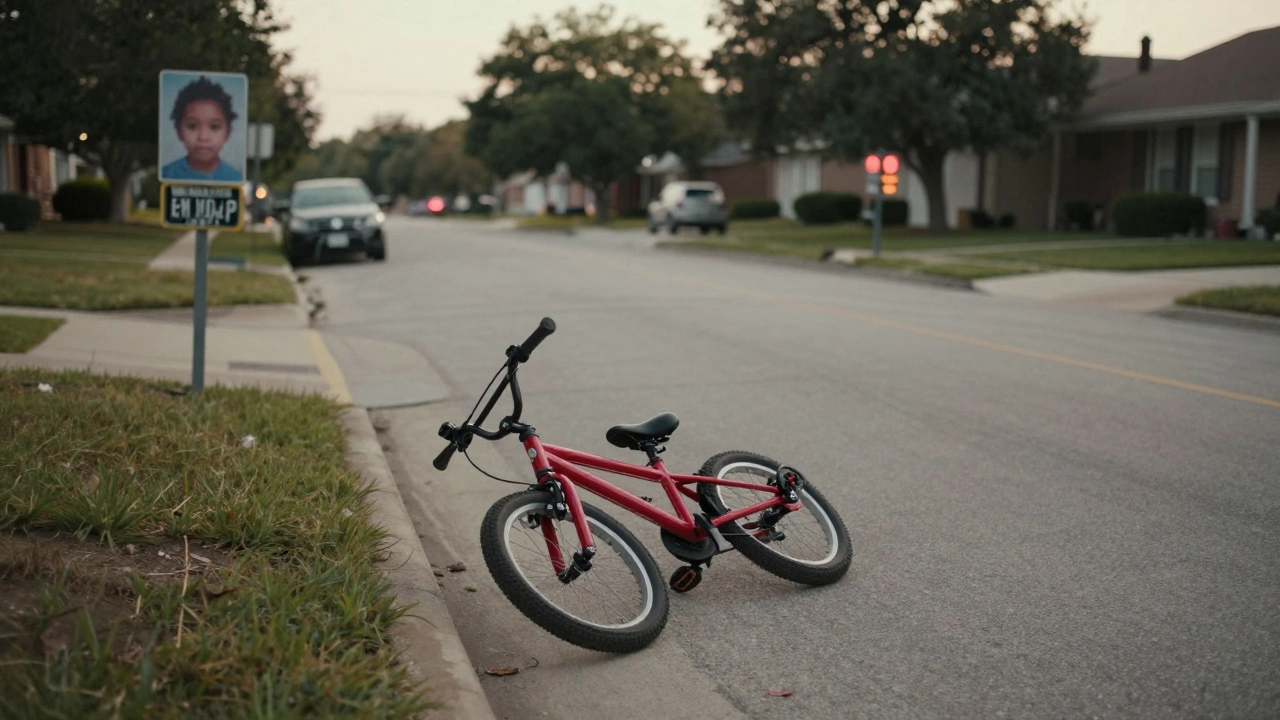
On a quiet afternoon in Arlington, Texas, in 1996, 9-year-old Amber Hagerman vanished while riding her bike. Four days later, her body was found. Her death didn’t just break hearts-it sparked a revolution in how communities respond to child abductions. What followed wasn’t a government mandate or a high-tech app. It was a simple idea: if the public knows what to look for, they can help find a child before it’s too late. That idea became the AMBER Alert system.
What Exactly Is an AMBER Alert?
AMBER Alert stands for America’s Missing: Broadcast Emergency Response. It’s not a phone app you download. It’s not a website you check. It’s a real-time emergency broadcast system that interrupts regular TV, radio, and cell phone signals to deliver urgent information about a child abduction. The goal? Get eyes on the ground-fast.
When a child is reported missing and law enforcement confirms the case meets strict criteria, an alert is triggered. This includes:
- The child is under 18
- There’s evidence of abduction
- The child is in immediate danger of serious harm or death
- There’s enough descriptive information to help the public identify the child, abductor, or vehicle
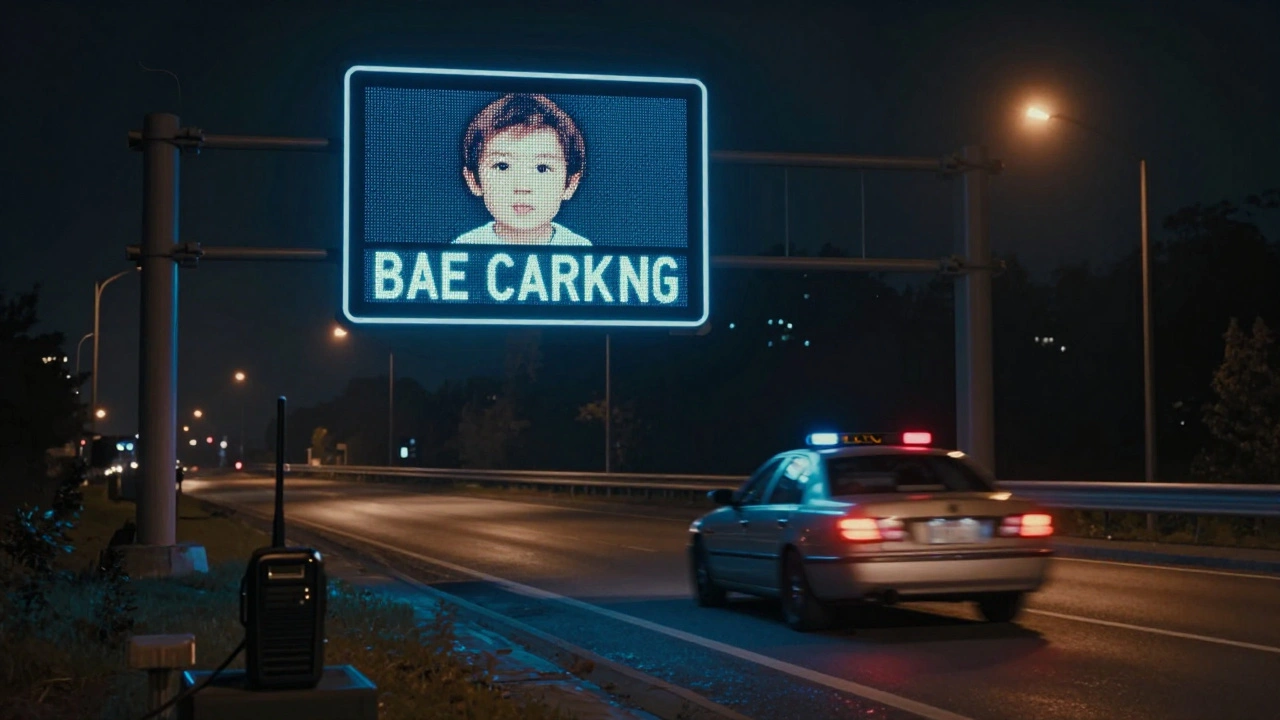
Once activated, the alert floods the airwaves. Radio stations cut into programming. TV screens flash the child’s photo, description, and license plate. Digital highway signs light up with warnings. And within seconds, your phone buzzes with a loud, unmistakable tone.
How It Works: From Radio to Your Pocket
It started with radio. After Amber Hagerman’s death, local broadcasters in Dallas-Fort Worth began reading alerts on air. A reporter, C.J. Wheeler, worked with police to create a script. A local resident, Diana Simone, suggested broadcasting details to drivers and pedestrians. It worked. Within months, they had their first recovery.
By 1998, automation took over. The Child Alert Foundation built a system that could send alerts via fax, email, and pagers. By 2002, the Federal Communications Commission gave it national backing. That same year, AOL started letting people sign up for alerts by ZIP code. By 2006, wireless carriers began sending alerts directly to phones through the Wireless Emergency Alerts (WEA) program.
Today, an AMBER Alert reaches you through:
- Cell phone push notifications (WEA)
- Emergency broadcasts on TV and radio
- Digital highway signs
- Electronic billboards
- NOAA Weather Radio
- Online streaming services
- Text messages via opt-in programs
You don’t need to sign up. If you have a modern cell phone in the U.S., you’ll get the alert automatically. That’s intentional. In a child abduction, every second counts. Waiting for someone to check a website or download an app isn’t an option.
Why It Works: The Public as First Responders
The system’s power doesn’t come from satellites or databases. It comes from you.
Think about it: police can’t be everywhere. But millions of drivers, shoppers, and walkers? They can. An AMBER Alert turns strangers into witnesses. A trucker sees a car matching the description on a highway sign. A parent notices a person matching the suspect’s description at a gas station. A cyclist remembers seeing a child in a van near a park.
That’s how children are found. In 2002, California issued 13 alerts in its first month. Twelve children were recovered safely. One alert turned out to be a false alarm-but even that helped refine the system.
Since 1996, AMBER Alerts have helped recover over 900 children. In 2023, after the kidnapping of 7-year-old Athena Strand in Texas, state lawmakers passed legislation to speed up local alert activation. The system keeps evolving because it works.

What Happens After You Get the Alert?
When your phone buzzes, you’re not supposed to panic. You’re supposed to act.
The alert includes:
- The child’s name, age, and description
- The suspected abductor’s name, description, and possible motive
- The make, model, color, and license plate of the vehicle
- Directions to the nearest law enforcement agency
If you see anything matching that information, call 911 immediately. Don’t wait. Don’t post it on social media first. Don’t try to confront the suspect. Just call. Even a partial match-a color, a direction, a number-can be the break investigators need.
Many alerts lead to tips from people who don’t even realize they saw something. A delivery driver remembers a van with tinted windows. A school crossing guard recalls a man acting nervous near a playground. These details don’t make headlines. But they save lives.
Challenges and Improvements
It’s not perfect. As the system grew, so did complaints.
Some people find the alerts disruptive. A mother in Oregon once told a news reporter she got three alerts in one week-none near her. She felt overwhelmed. That’s alert fatigue. And it’s real.
That’s why modern systems are getting smarter. Geographic targeting now uses cell tower data to send alerts only to people in the area where the child was last seen or where the suspect is heading. No more alerts in California if the abduction happened in Maine.
Canada adopted the system in 2002. Alberta’s first alert was expected to happen once a year. It’s happened dozens of times since. Each alert is reviewed for accuracy. Each case is studied. The goal isn’t to scare people. It’s to protect them.
Global Reach and Legacy
The AMBER Alert didn’t stay in Texas. By 2005, every U.S. state had its own system. Canada, Mexico, the Netherlands, Australia, and the UK now have similar programs. Some use different names-Canada calls it the “Child Abduction Alert System”-but the model is the same: rapid, public, coordinated.
Amber Hagerman’s name is on every alert. Her story is why the system exists. But it’s not about her alone. It’s about what happened after she was gone. A community came together. A system was built. And now, thousands of children go home because someone saw something and called 911.
What You Can Do
You don’t need to be a cop. You don’t need special training. You just need to pay attention.
- Know what an AMBER Alert sounds like on your phone. Test it. It’s loud. It’s different.
- Don’t ignore it. Even if you think it’s a mistake, report anything unusual.
- Teach your kids: if they feel unsafe, they should run to a store, gas station, or police station-not wait.
- Keep your phone’s emergency alert settings turned on. Don’t disable them.
Every alert is a race against time. The first three hours after an abduction are the most critical. After that, survival rates drop sharply. AMBER Alert isn’t magic. It’s just fast, clear, and loud. And it works because you’re listening.
How do I know if an AMBER Alert is real?
AMBER Alerts are only sent by law enforcement through official channels: your phone (via WEA), TV, radio, and digital highway signs. If you get a text, email, or social media post claiming to be an AMBER Alert that doesn’t come from one of these sources, it’s fake. Never trust alerts from unknown apps or websites. Always verify through local police or the National Center for Missing & Exploited Children (NCMEC).
Can I opt out of AMBER Alerts on my phone?
Yes, but it’s strongly discouraged. Most smartphones let you disable AMBER Alerts in the Settings > Notifications > Emergency Alerts menu. But doing so removes one of the fastest ways to help find a missing child. These alerts are designed to be loud and hard to ignore for a reason: time matters. If you’re concerned about too many alerts, know that modern systems now use geographic targeting to limit alerts to only those in the affected area.
What happens if I see the child or vehicle in the alert?
Call 911 immediately. Don’t follow the vehicle. Don’t confront the person. Don’t take photos or post online. Your job is to provide accurate information: location, direction, license plate, behavior. Law enforcement will handle the rest. Many recoveries happen because a stranger saw something and called.
Are AMBER Alerts only for stranger abductions?
No. While stranger abductions get the most attention, most AMBER Alerts are issued when a child is taken by a family member-often in custody disputes. The system activates based on danger, not relationship. If a parent takes a child during a custody battle and there’s evidence they may harm the child, an alert can be issued. The goal is safety, not blame.
How often are AMBER Alerts issued?
In the U.S., about 150 to 200 AMBER Alerts are issued each year. Not every alert leads to a recovery, but the system has helped recover over 900 children since 1996. The number of alerts varies by state. Texas and California issue the most, not because they have more abductions, but because they have the most robust systems and population density.