Building a strong portfolio isn’t just for designers or software developers. If you’re working in forensics, your portfolio is one of the most powerful tools you have to prove you can do the job - not just say you can. Employers don’t just want to see your degree or certification. They want to see how you think, how you document your work, and how you handle real cases under pressure. A well-structured portfolio of casework and documentation samples can set you apart from dozens of other candidates with the same credentials.
What a Forensic Portfolio Actually Is
A forensic portfolio isn’t a binder full of case photos or a stack of lab reports. It’s a curated collection of your best work that shows your decision-making, attention to detail, and ability to communicate findings clearly. Think of it as your professional story told through evidence, not just results. Every sample you include should answer a simple question: What did you do, why did you do it that way, and what did you learn?Many new forensic technicians make the mistake of dumping every report they’ve ever written into a folder. That doesn’t help. Employers don’t want 20 reports. They want 3 great ones that show depth, clarity, and professional judgment. A portfolio with three strong, well-documented cases will always beat one with ten rushed, poorly explained ones.
Essential Components of a Forensic Portfolio
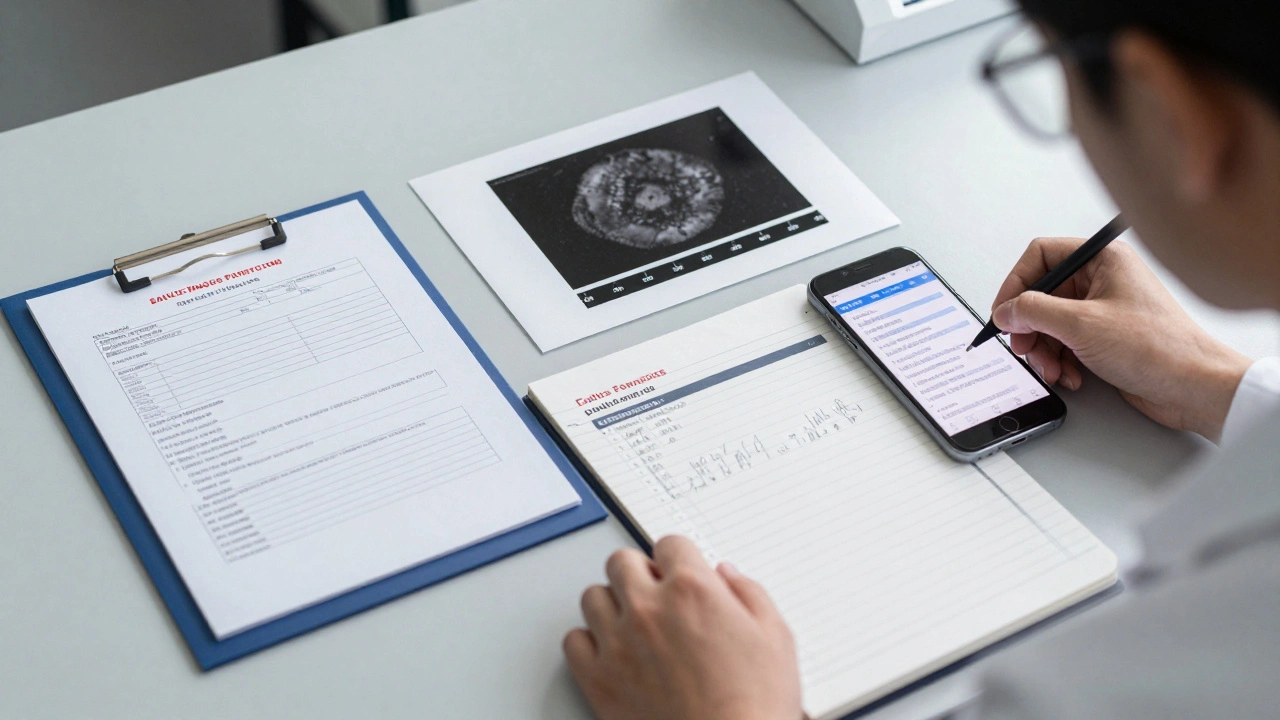
Your portfolio needs structure. Without it, even the best work gets lost. Here’s what every forensic portfolio should include:- Case summaries - Brief, clear overviews of each case. Not just the outcome, but the context: what was the crime scene like? What was the challenge?
- Documentation samples - Redacted copies of your actual reports, chain-of-custody logs, evidence logs, or lab notes. Never include personally identifiable information.
- Process explanations - For each sample, include a short paragraph explaining your role, the methods you used, and why you chose them. Did you use a different technique because of contamination risk? Why did you prioritize one piece of evidence over another?
- Lessons learned - What went wrong? What would you do differently? This shows maturity and growth.
- Contact information - A way for hiring managers to reach you. No need for a full resume here - just an email and LinkedIn profile.
Don’t forget: your portfolio should look professional. Use clean formatting, consistent fonts, and clear headings. If you’re submitting PDFs, make sure they’re properly labeled: “Case_047_Ballistics_Report_Final.pdf” - not “Final Draft v2 edited by boss.docx”.
What Good Forensic Documentation Looks Like
Documentation in forensics isn’t just paperwork - it’s evidence. Courts rely on it. Your reputation depends on it. Here’s what quality documentation must include:- Clear problem statement - What were you trying to determine? Example: “Determine if the firearm found at the scene was fired within the last 48 hours.”
- Methodology - What tools, protocols, or standards did you follow? Mention NIST, ASTM, or ISO if applicable. Did you use AFIS? STR analysis? Ballistic imaging software?
- Chain of custody - Show you understand evidence integrity. Include timestamps, names, and signatures (redacted if needed).
- Findings and conclusions - State your results plainly. Avoid vague language like “likely” or “probably.” Use “confirmed,” “excluded,” or “inconclusive” based on data.
- Limitations - Be honest. Was the sample degraded? Was there a delay in processing? Acknowledge it. It builds trust.
One common mistake? Writing like you’re explaining to another expert. You’re not. Your report might be read by a judge, a jury, or a lawyer with no science background. Clarity beats complexity every time.
Real-World Examples to Model
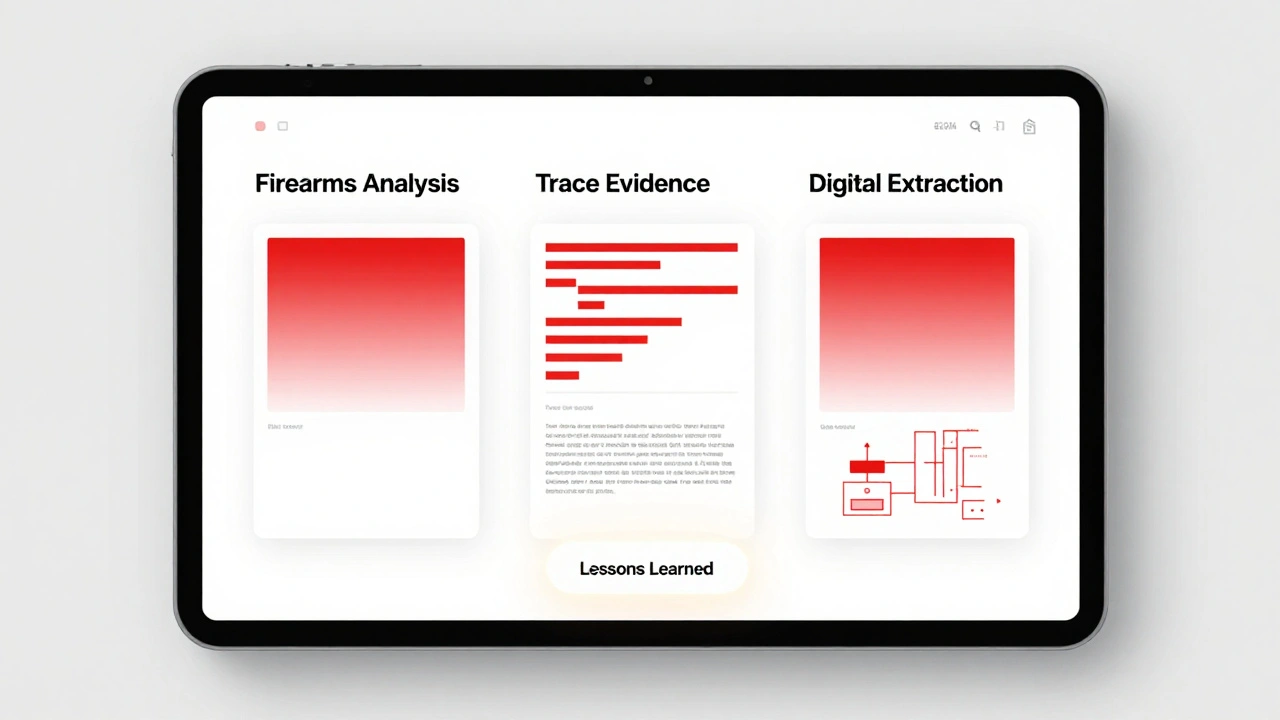
Here are three types of casework samples that make strong portfolio pieces:- Firearms and Toolmark Analysis - Include a comparison report between a recovered bullet and a test-fired sample. Show your measurement methodology, the software used (like IBIS), and how you ruled out other firearms. Add a note: “Sample analyzed under NIST SRM 2460 standards.”
- Trace Evidence Examination - Document a fiber transfer case. Include microscopy images (with scale bars), color analysis, and fiber comparison tables. Explain why you chose FTIR over Raman spectroscopy for this sample.
- Digital Forensics Extraction - Show a timeline of device activity from a smartphone. Highlight how you recovered deleted messages, the tools used (Cellebrite, Autopsy), and how you preserved metadata integrity. Mention compliance with Rule 16 of the Federal Rules of Evidence.
Each of these examples includes: context, process, results, and reflection. That’s the gold standard.
Tools to Build Your Portfolio
You don’t need to be a web developer to build a strong portfolio. Here are simple, effective tools:- Google Drive or OneDrive - Organize folders by case type. Use clear naming. Share a read-only link.
- Notion - Create a clean, searchable portfolio with embedded PDFs, images, and text explanations. Easy to update.
- PDF compilations - Combine your best samples into one well-organized document. Title it: “Forensic Portfolio - [Your Name].”
- GitHub Pages - If you’re comfortable with basic markdown, host your portfolio online. It shows technical fluency - especially useful for digital forensics roles.
For entry-level candidates, start with PDFs. No need for a fancy website. Just make sure your files are labeled, organized, and easy to navigate. If you’re applying for a senior role, consider a simple website. But only if you can keep it updated.
Tailor Your Portfolio to the Job
You don’t need one portfolio for everything. If you’re applying for a crime scene technician role, focus on scene photography, sketching, and evidence collection logs. If you’re going for a lab analyst position, highlight your testing procedures, calibration records, and QA/QC checks. For digital forensics? Show your data recovery workflows, hash verification, and chain-of-custody protocols.Some professionals keep three versions: one for lab roles, one for field roles, and one for expert witness positions. That’s smart. It shows you understand that different jobs need different proof of competence.
Quality Control: Avoid These Mistakes
Even experienced analysts mess up their portfolios. Here’s what to watch out for:- Too much text - Long paragraphs scare people off. Use bullet points. Break it up.
- No context - Just showing a report without explaining your role? That’s useless.
- Outdated standards - If you’re citing a 2012 protocol, update it. Forensics evolves fast.
- Unprofessional formatting - Comic Sans? Blue text on black? Don’t.
- No reflection - If you don’t say what you learned, you look like you haven’t grown.
Before you submit anything, ask yourself: Would I trust this person if I were on a jury?
How to Get Started (Even If You’re New)
If you’re just starting out and don’t have real cases to show, don’t panic. You can build practice samples. Use public case studies from the National Institute of Justice or the American Academy of Forensic Sciences. Redact names, locations, and personal details. Then, recreate the documentation as if you handled the case.For example:
- Take a published arson case. Write your own fire origin report using the same data.
- Use a mock drug analysis scenario from a forensic training manual. Document your GC-MS results and interpretation.
- Create a chain-of-custody log for a simulated evidence transfer.
Label them clearly: “Practice Case - [Your Name].” Employers understand new professionals need experience. What they want to see is that you know how to document properly - even when you’re not on a real case yet.
Final Thought: Your Portfolio Is Your Reputation
In forensics, your name is tied to your work. One sloppy report can undermine a whole investigation. Your portfolio is your chance to show you’re the kind of professional who gets it right - every time. It’s not about how many cases you’ve worked. It’s about how clearly you can explain what you did, why you did it, and how you improved.Start small. Pick one case you’re proud of. Document it well. Then add another. Over time, your portfolio becomes more than a job tool - it becomes proof that you belong in this field.
What should I include in my forensic portfolio if I don’t have real casework yet?
If you’re new and haven’t worked real cases, create practice samples using publicly available forensic case studies. Redact all identifying information and recreate reports, logs, or analysis notes as if you handled the case. Label them clearly as “Practice Case” and explain your methodology. This shows you understand documentation standards and can apply them - even without official experience.
Is it okay to use templates for forensic documentation in my portfolio?
Yes - but only if you customize them. Templates help with structure, but using a generic template without adding your own analysis, reasoning, or conclusions makes your portfolio look robotic. Show how you adapted the template to solve a specific problem. For example: “I used the standard evidence log template but added a contamination risk flag because the scene was outdoors in rainy conditions.” That’s what makes your work stand out.
How many samples should I include in my forensic portfolio?
Three high-quality samples are better than ten average ones. Focus on depth, not quantity. Each sample should clearly show your role, your decision-making, and what you learned. Employers care more about how you think than how many cases you’ve seen.
Should I include photos or diagrams in my forensic portfolio?
Yes - if they add clarity. A well-labeled crime scene photo, a diagram of a toolmark comparison, or a flowchart of your digital evidence extraction process can make your documentation much stronger. Always include captions, scales, and context. Never include unredacted images with personal details. Use redacted versions or schematic illustrations instead.
Do I need a website for my forensic portfolio?
Not unless you’re applying for digital forensics, forensic IT, or leadership roles. For most forensic positions, a clean PDF or organized Google Drive folder is enough. A website only adds value if you can keep it updated and it demonstrates technical skills. Otherwise, it’s unnecessary and can look unprofessional if poorly designed.
How often should I update my forensic portfolio?
Update it after every major case or certification. Even if you don’t have new cases, update your documentation standards. Forensic protocols change - your portfolio should reflect that. Review your portfolio at least once every six months. Remove outdated examples. Add new lessons learned. Keep it alive.