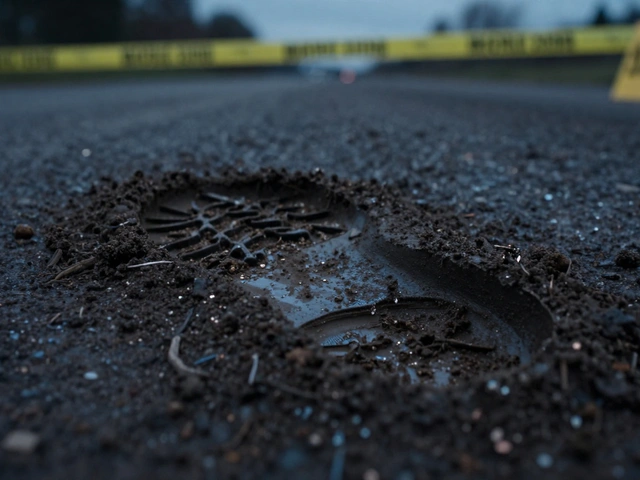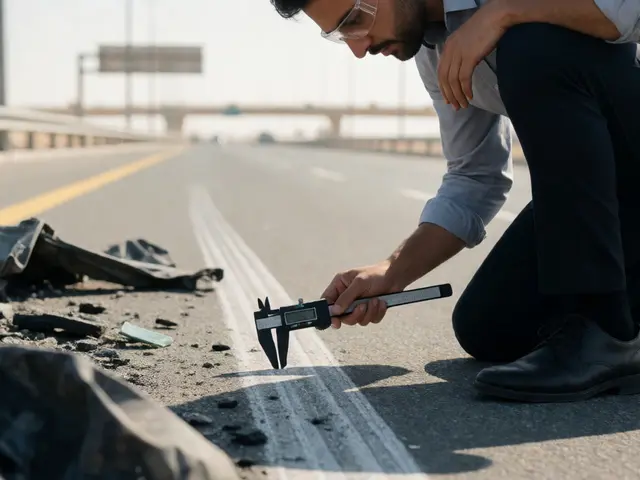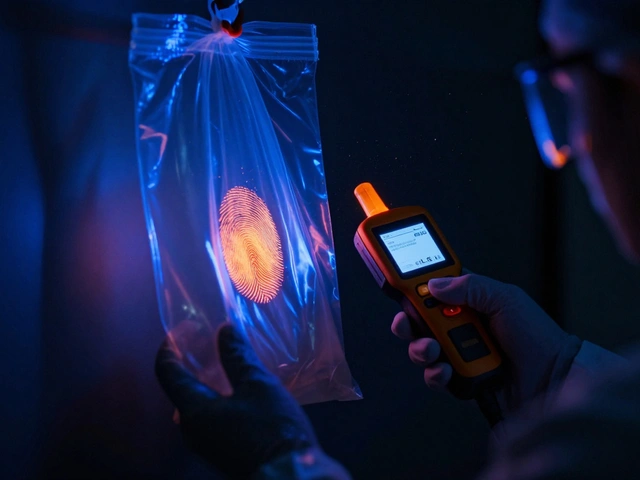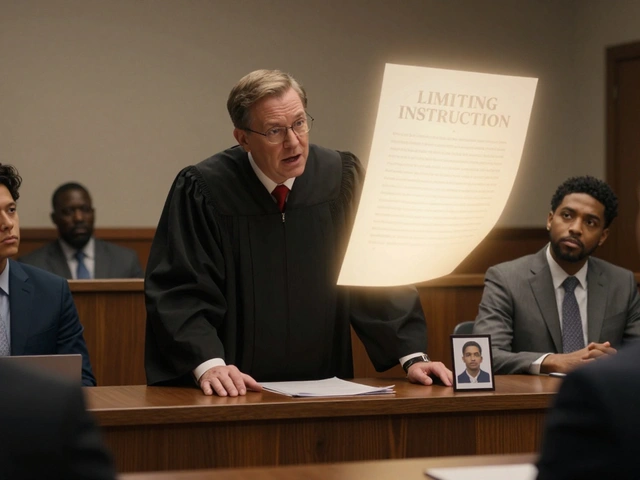
When investigators walk into a crime scene with blood on the walls, floor, and furniture, they don’t just see mess-they see a story. But not every drop tells the same tale. Some stains come from a single blow, others from someone wiping their hand on a curtain after the fact. And then there are the ones that are harder to spot: re-contact spatter. These aren’t the big, dramatic splashes you see in TV crime dramas. They’re subtle, often overlooked, and they can completely change what you think happened.
What Is Re-contact Spatter?
Re-contact spatter happens when blood that’s already been deposited on a surface gets disturbed again-by a person, an object, or even air movement-and then gets flung into the air a second time. It’s not the first impact. It’s the second. Think of it like this: someone gets stabbed, blood flies onto their shirt. They stumble, brush against a doorknob, and their bloody sleeve flicks off a few droplets onto the wall behind them. Those droplets? Re-contact spatter. It’s easy to mistake this for primary spatter, especially if you’re not trained to look for the subtle clues. Primary spatter comes from direct force-like a hammer strike or a gunshot. Re-contact spatter comes from movement after the initial event. The difference matters because it tells you whether someone was moving around after the injury, or if they were stationary. That can mean the difference between self-defense, accident, or staged scene.How It Differs from Contact Transfer
People often confuse re-contact spatter with contact transfer. They’re related, but not the same. Contact transfer is passive. It’s when a bloody object touches another surface and leaves a smear-like a bloody handprint on a wall, or a shoe dragging across the floor. No force is involved. Just contact. Re-contact spatter? That’s active. The blood has to be lifted off a surface and then thrown through the air again. It needs motion. And when it lands, it looks different. Under a microscope, re-contact spatter shows up with irregular, jagged edges. The droplets are smaller than primary spatter, often under 1 millimeter. They tend to cluster in odd places-like the edge of a cabinet, the top of a doorframe, or along the curve of a chair back. These are places you wouldn’t expect blood to land from a direct impact. They’re the kind of stains you’d skip over if you weren’t looking for them.Why It Matters in Real Cases
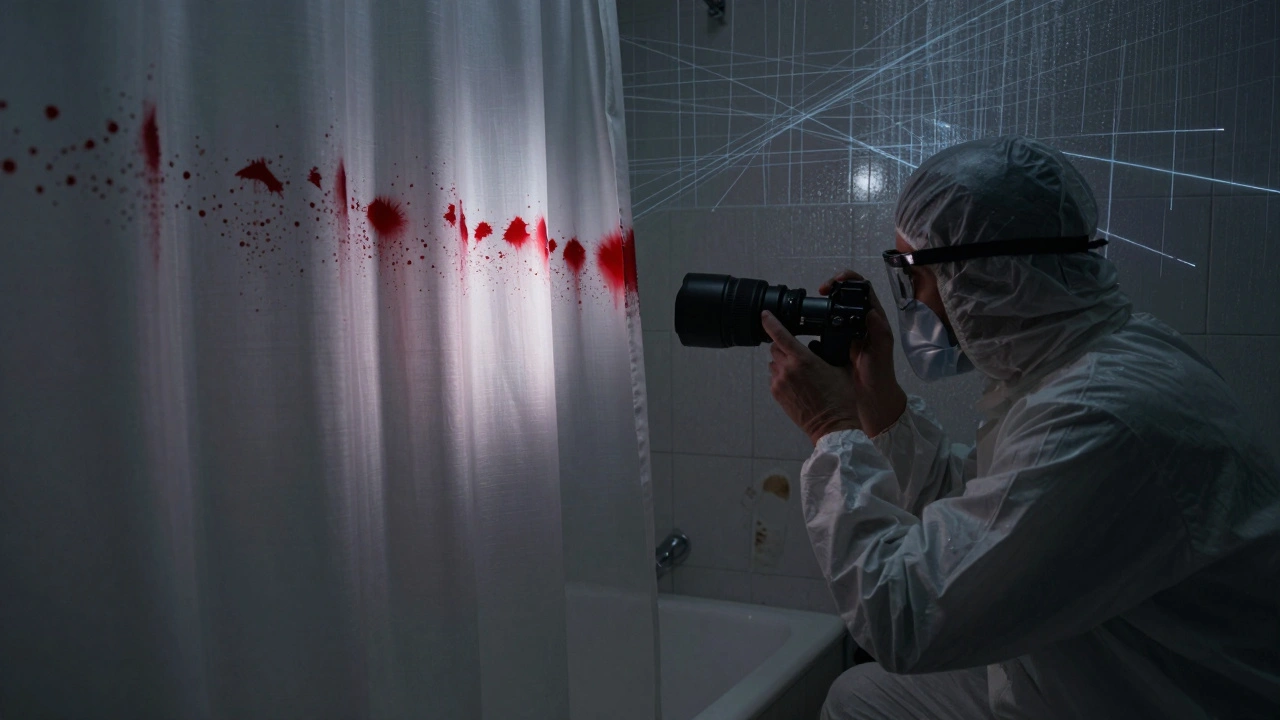
In a 2023 case in Oregon, a man claimed his wife fell and hit her head on the bathtub, causing the blood on the floor and tiles. But the blood on the shower curtain? It didn’t match. It was too high, too scattered, and too uneven. A forensic analyst noticed faint, clustered droplets along the top edge of the curtain-where the curtain rod was. That’s not where someone would drip blood from a fall. That’s where someone might have moved the curtain after the injury, and a small amount of blood on their hand or sleeve flicked upward. That re-contact spatter led to the discovery of a second person’s DNA on the curtain. The original story collapsed. The case went from accidental death to homicide. This isn’t rare. In a 2024 study of 117 domestic violence cases reviewed by the National Institute of Forensic Sciences, re-contact spatter was present in 34% of scenes where the suspect claimed the victim was alone. In 89% of those cases, the presence of re-contact spatter contradicted the suspect’s version of events.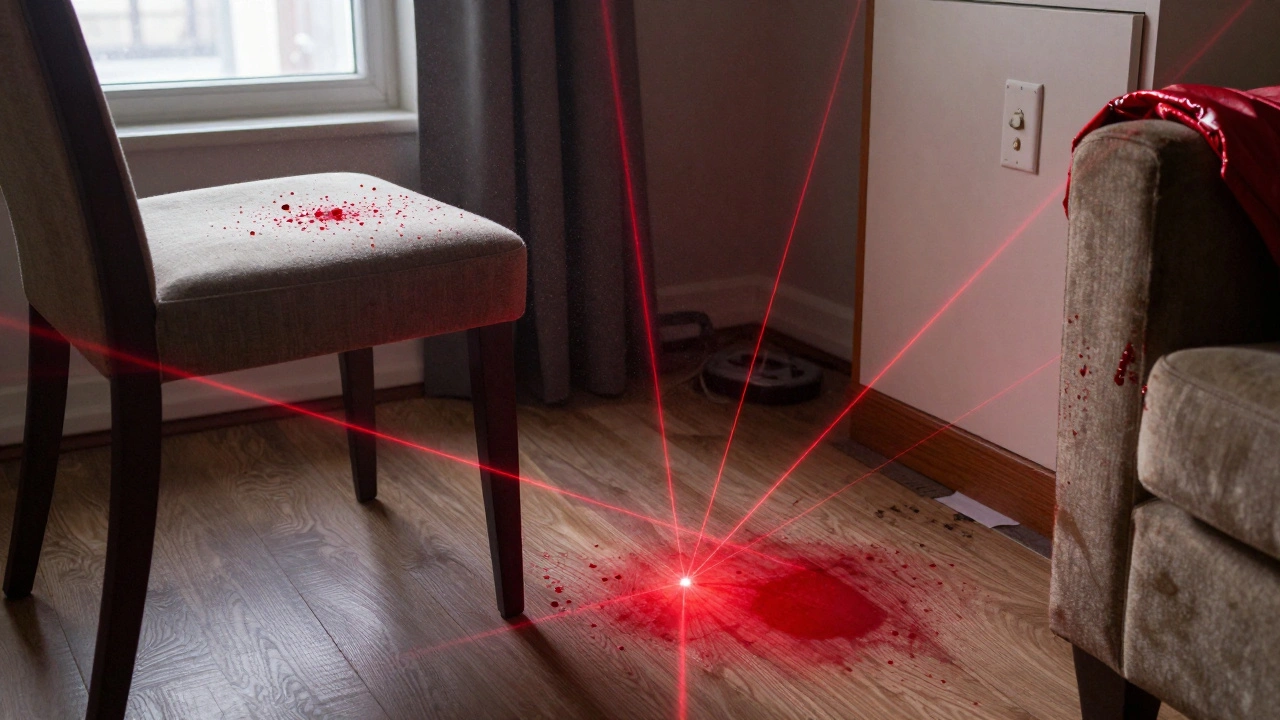
How Analysts Spot It
You can’t just look at a stain and say, “That’s re-contact.” You need context, tools, and pattern recognition.- Size and shape: Re-contact spatter droplets are typically 0.3 to 0.8 mm wide. They’re irregular-not round like a falling drop. They often have satellite stains or spines pointing in multiple directions.
- Location: Look for stains in places that don’t line up with the victim’s position. Behind doors, on light switches, on the inside of drawers, on the underside of furniture. These are common re-contact zones.
- Directionality: Unlike primary spatter, which usually flows away from the point of impact, re-contact spatter can come from any angle. It’s chaotic. Analysts use laser grids and 3D scanning to map the angles of each droplet. If the trajectories don’t converge on one point, it’s likely secondary.
- Surface texture: On fabric, re-contact spatter often clusters along raised threads or looped fibers. One study found that 82% of stains from re-contact landed on the left loop legs of woven fabric-because those fibers stick out farther. That’s not random. That’s physics.
Environmental Factors That Change Everything
Blood doesn’t behave the same everywhere. Temperature, humidity, airflow-all of it changes how blood moves and dries. In a cold, dry room, blood dries fast. That means re-contact spatter might not have time to spread. It’ll look like tiny dots. In a humid bathroom? The same droplet might spread into a smear, making it look like contact transfer. That’s why every crime scene photo must include environmental notes. Temperature. Humidity. Airflow direction. Even the time of day. A window open at 3 a.m. creates a draft that can carry droplets 20 inches farther than you’d expect.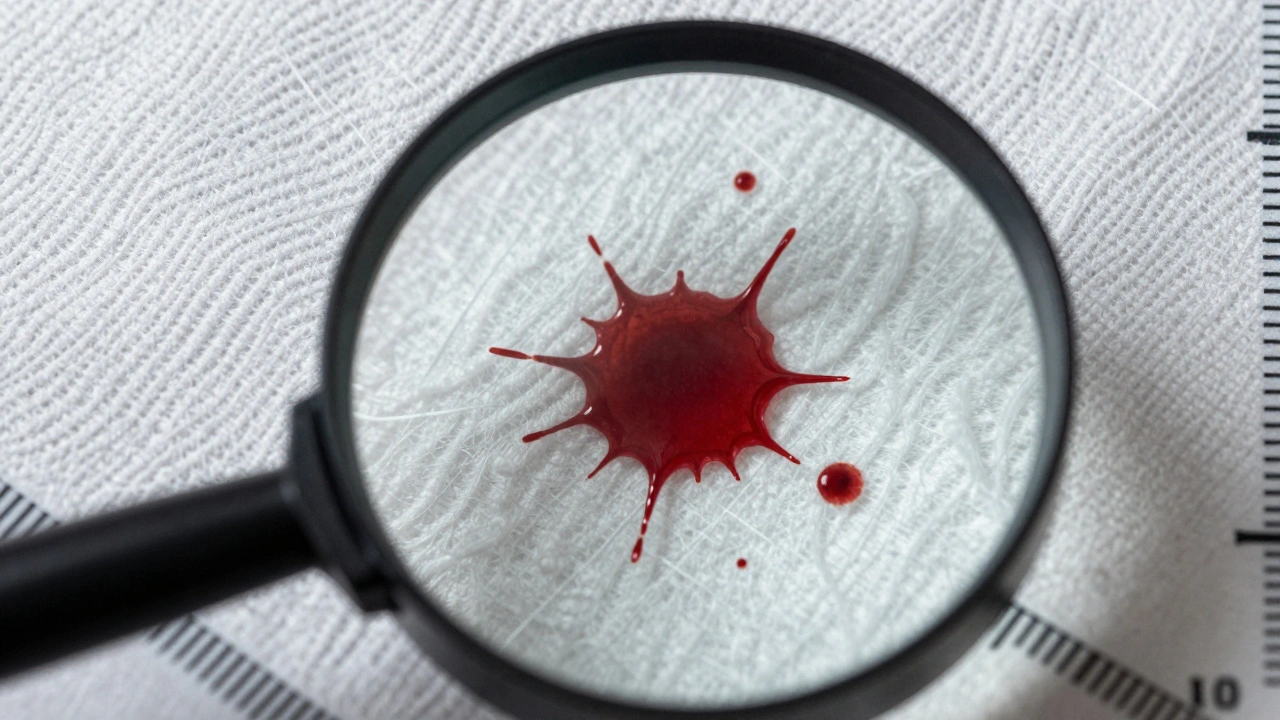
Tools of the Trade
Modern forensic teams don’t rely on just their eyes anymore.- High-resolution macro photography: Used to capture the edge structure of each stain. A single droplet can reveal whether it came from a flick, a drip, or a spray.
- Laser scanning: Creates a 3D model of the entire scene. Analysts can rotate it, zoom in, and trace the path of every droplet. If the patterns don’t line up with the suspect’s story, it shows up instantly.
- Chemical contrast enhancement: Some re-contact stains are faint. Using luminol or alternate light sources helps reveal hidden patterns.
- Pattern simulation software: Programs like HemoSpat or Bloodstain Pattern Simulator let analysts input variables-angle, force, surface type-and test whether their theory matches the real stains.
Common Mistakes and How to Avoid Them
Even experienced analysts misread re-contact spatter. Here are the top three errors:- Assuming all small stains are spatter. Tiny stains can also be from drying blood, dust, or even insect activity. Always check the context. Was the area disturbed? Was there movement?
- Ignoring voids. A void is an area where blood should be but isn’t-like a shape of a body or a chair. If a void is surrounded by re-contact spatter, it suggests the object was moved after the blood was deposited. That’s a red flag for staging.
- Not comparing surfaces. If blood on the wall matches the victim’s DNA but the blood on the door handle matches someone else’s, that’s not coincidence. It’s a trail. Re-contact spatter often leaves behind these trails.
The Bigger Picture
Re-contact spatter isn’t just a technical detail. It’s a gateway to truth. In the past, many cases were closed based on incomplete pattern analysis. A bloody handprint? Assumed to be the victim’s. A few droplets on the ceiling? Assumed to be from a fall. But now, with better tools and training, analysts are learning to ask: Who moved? When? And why? The most powerful tool isn’t the camera or the laser. It’s skepticism. If a story doesn’t fit the stains, keep digging. Re-contact spatter doesn’t lie. It just waits for someone to look closely enough.Forensic science isn’t about proving what you think happened. It’s about letting the blood tell you what really happened-even when it’s quiet.
Can re-contact spatter be mistaken for a wipe pattern?
Yes, and that’s one of the biggest pitfalls. Wipe patterns are smooth, continuous smears caused by dragging a bloody object across a surface. Re-contact spatter is made of individual droplets that were thrown through the air. Under magnification, wipe patterns have a feathered edge, while re-contact spatter has jagged, irregular edges with satellite stains. The key is to look at the shape of each individual stain-not the overall smear.
Is re-contact spatter common in real crime scenes?
Very common. Studies show it appears in over one-third of violent crime scenes where movement occurred after the injury. It’s especially frequent in domestic settings, where people tend to move around-trying to clean up, grabbing a phone, or moving a body. Analysts who don’t look for it miss critical evidence.
Does re-contact spatter always mean someone else was involved?
Not necessarily. A victim can create re-contact spatter after being injured-like if they stumble into a wall or brush against furniture. But if the spatter appears in places the victim couldn’t reach, or if the DNA doesn’t match, it points to another person. Context is everything.
How long after the injury does re-contact spatter occur?
It can happen seconds after the injury-or even hours later. Blood doesn’t dry instantly. On skin or fabric, it can remain wet for 10 to 30 minutes depending on temperature and surface. That’s plenty of time for someone to move around and transfer blood again. That’s why timing matters as much as location.
Can re-contact spatter be used in court?
Yes, increasingly so. Courts now accept re-contact spatter analysis when it’s backed by photographic evidence, 3D mapping, and peer-reviewed methodology. In 2024, a federal court in Oregon admitted re-contact spatter evidence in a homicide trial after the defense’s expert failed to refute the analysis with scientific counter-evidence. The precedent is growing.