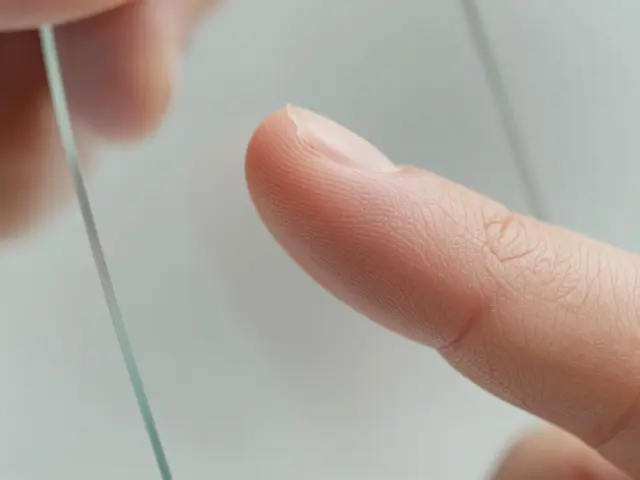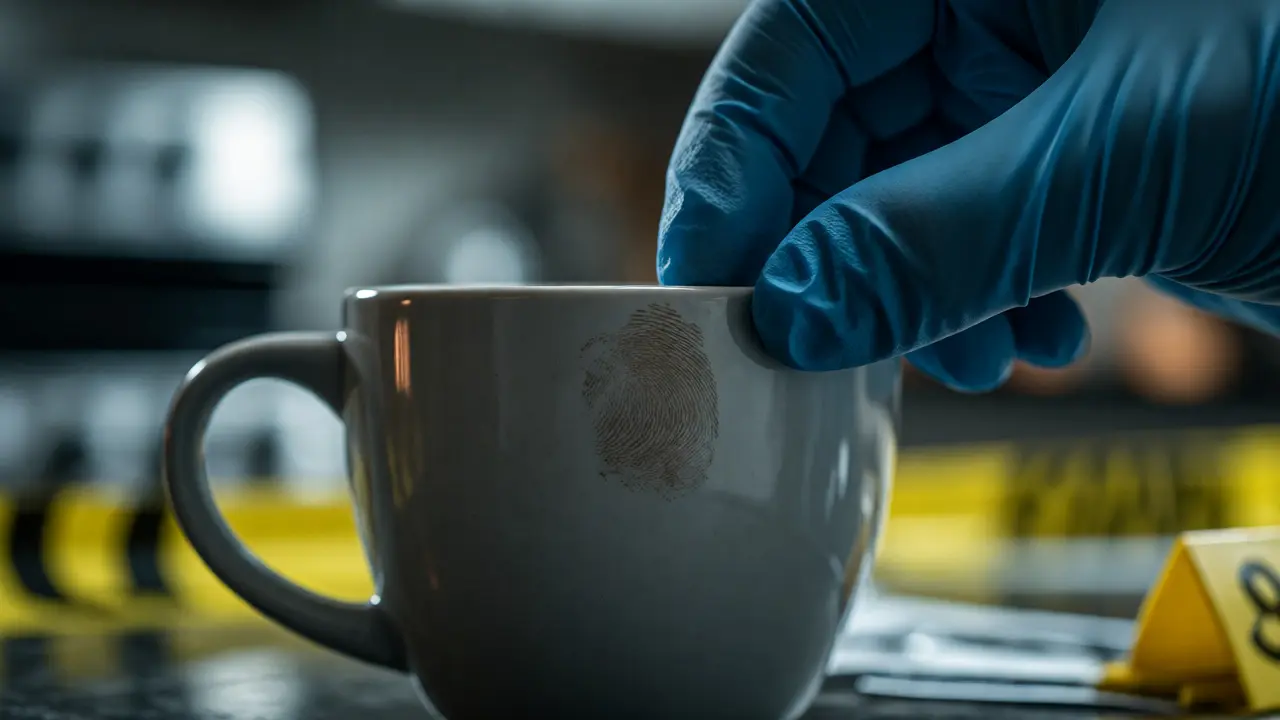
You walk into a crime scene. The suspect didn't wear gloves. They touched the door handle, the window latch, maybe the rim of a coffee mug left on the counter. But when the evidence tech lifts the prints, they aren't perfect oval shapes with all ten loops and whorls clearly defined. Instead, you get smudges, fragments, or edges. This is the reality for most investigators: partial fingerprints are far more common than full impressions.
Here’s the million-dollar question: can a tiny fragment of skin pattern actually put someone behind bars? The short answer is yes, but it’s complicated. It depends on quality, quantity, and the technology used to match them. Let's break down how experts turn these incomplete clues into solid evidence.
The Reality of Crime Scene Evidence
If you’ve watched any true-crime documentary, you might think every fingerprint found at a scene is a clear, high-resolution image ready for comparison. In real life, that rarely happens. Most latent prints recovered from surfaces are partial. Why? Because people don’t press their entire finger flat against a surface. We grab things with the tips or sides of our fingers. We brush past objects. We sweat unevenly.
A latent fingerprint is an invisible impression left by the ridges of human skin, typically transferred via sweat or oil onto a smooth surface. When we say "partial," we mean less than the full tip area is visible. Sometimes it’s just a few millimeters wide. Other times, it’s half a loop. Does this lack of completeness make them useless? Not at all. It just changes the rules of engagement.
Think of it like recognizing a friend by their ear instead of their whole face. If the ear has distinctive features-a notch, a specific curve-you can still identify them. Friction ridge patterns work similarly. Even small sections contain unique identifiers called minutiae.
What Are Minutiae and Why Do They Matter?
To understand why partials work, you need to know what makes fingerprints unique. It’s not just the general shape (loop, whorl, arch). It’s the tiny details within those lines. Forensic scientists call these minutiae, which are specific points where ridge characteristics change, such as bifurcations, endings, dots, or islands.
- Bifurcation: A single ridge splits into two.
- Ridge Ending: A line stops abruptly.
- Dot: A very short ridge, usually shorter than its width.
- Island: A short ridge enclosed between two longer ones.
No two people have the same arrangement of these minutiae, even identical twins. In a full print, you might see dozens of these points. In a partial, you might only see three or four. Is that enough? Historically, there was debate. Some older guidelines suggested you needed twelve points for a positive ID. Today, most modern standards rely on quality over quantity. If you have three clear, distinct minutiae in the correct spatial relationship, many jurisdictions accept that as sufficient for individualization.
The Role of AFIS Technology
Before computers, matching partials was a nightmare. An examiner had to manually flip through thousands of ink cards, looking for similar patterns. With a partial print, the search space was huge because you couldn’t rule out large sections of the database easily.
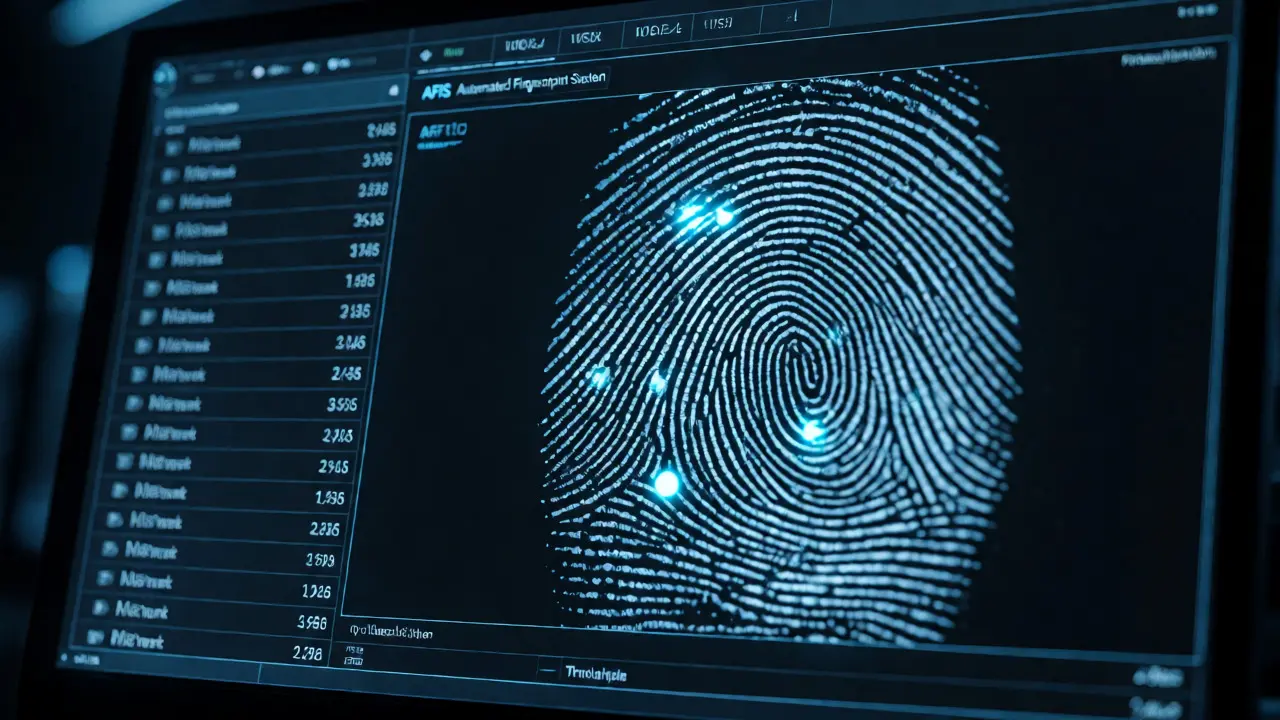
Enter AFIS (Automated Fingerprint Identification System), a computerized system that digitizes fingerprint images and searches vast databases for potential matches based on algorithmic analysis of minutiae. Modern AFIS systems are incredibly smart. They don’t just look for exact matches; they calculate probability scores.
When you feed a partial print into AFIS, the system scans millions of records. It ranks candidates based on how well the known minutiae align with stored data. You might get a list of ten possible suspects. Now, the human examiner takes over. They compare the top candidates visually. This human-in-the-loop approach is critical because algorithms can be fooled by poor-quality images, but trained eyes can spot context.
| Feature | Full Fingerprint | Partial Fingerprint |
|---|---|---|
| Typical Minutiae Count | 30-50+ | 3-15 |
| AFIS Search Time | Fast (high specificity) | Slower (lower specificity) |
| Examiner Confidence | High | Moderate to Low (depends on clarity) |
| Common Source | Ink cards, controlled lifts | Crime scenes, everyday objects |
| Legal Acceptance | Universally accepted | Accepted if quality meets standards |
Quality Over Quantity: The ACE-V Method
How do examiners decide if a partial print is good enough? They follow a strict protocol known as ACE-V, a standardized method for fingerprint examination consisting of Analysis, Comparison, Evaluation, and Verification steps.
- Analysis: Before comparing, the examiner looks at the latent print alone. Is it clear? Are the ridges continuous? If the image is blurry or distorted due to pressure or surface texture, they might mark it as "no value." No value means it cannot be used for identification, regardless of who it belongs to.
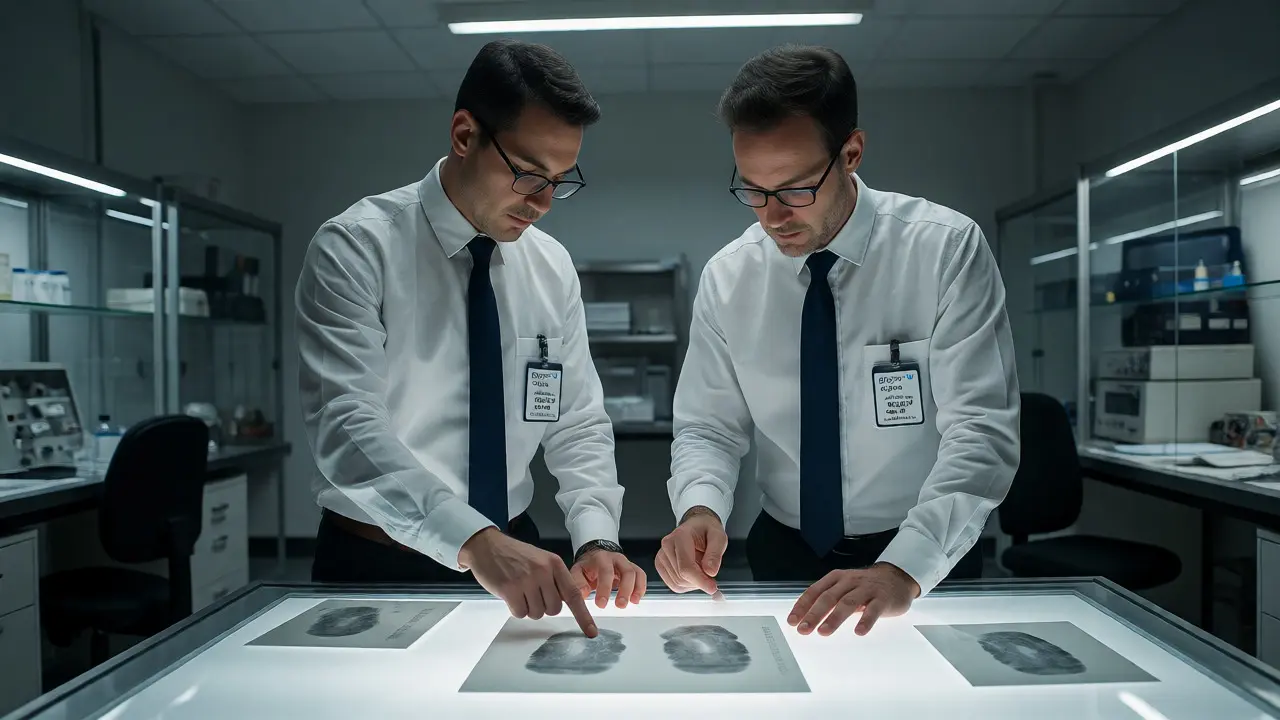
- Comparison: If the print has value, they place it side-by-side with the candidate’s known print. They look for agreement in minutiae location, direction, and type.
- Evaluation: The examiner decides: Individualization (match), Exclusion (not a match), or Inconclusive (can’t tell).
- Verification: Another qualified examiner reviews the decision independently. This double-check reduces errors.
This process highlights why partials are tricky. A low-quality partial might lead to an "Inconclusive" result. That doesn’t mean the suspect is innocent; it just means the evidence isn’t strong enough to prove guilt beyond a reasonable doubt yet.
Can Partial Prints Exclude a Suspect?
While proving identity with partials is hard, excluding someone is often easier. If you find a partial print with a rare feature-say, a scar cutting across the ridges-and your suspect has no scar on that finger, you can likely rule them out. Similarly, if the minutiae in the partial simply don’t exist in the suspect’s known print, exclusion is straightforward.
This makes partials powerful investigative tools even when they don’t yield a definitive match. They help narrow down lists of suspects quickly. For example, if a victim says five people were in the house, but only two sets of prints are found, and one set excludes the main suspect, investigators can focus resources elsewhere.
Challenges and Limitations
Don’t let TV fool you. Partial prints come with significant hurdles.
Distortion: Skin is elastic. When you touch a curved object like a glass bottle, your fingerprint stretches and warps. A straight line becomes curved. This distortion makes matching harder for both humans and machines.
Background Noise: Surfaces matter. A print on a glossy phone screen is easy to lift. A print on rough wood or fabric might absorb the oils, leaving a faint, broken pattern. These are often too degraded for reliable analysis.
Subjectivity: Despite standards, fingerprint analysis involves human judgment. Two experts might disagree on whether a blurry dot is a minutia or just dirt. Recent studies, including those reviewed by the National Academy of Sciences, have highlighted the need for more objective metrics in latent print examination to reduce bias.
Real-World Success Stories
Despite the challenges, partial prints close cases regularly. Consider a burglary where the thief wore thin cotton gloves. Sweat seeped through, leaving faint traces on a safe dial. Only a small portion of the index finger was visible. Using enhanced imaging techniques, analysts recovered six clear minutiae. AFIS returned a hit on a local offender with a prior record. The visual comparison confirmed the match. Without that partial, the case might have gone cold.
Another scenario: a homicide suspect denies being at the scene. Investigators recover a partial thumbprint from a light switch. It’s small, but the ridge flow is distinct. After processing, it matches the suspect’s known print. The defense argues it’s circumstantial. The prosecution argues it places him at the scene. Juries tend to trust forensic science, especially when explained clearly.
Best Practices for Collecting Partials
If you’re ever involved in preserving evidence, remember this: don’t wipe everything. Use proper lifting techniques. Dusting with powder works on non-porous surfaces. Superglue fuming helps on plastics. Always photograph the print in situ before lifting. Scale markers are essential for size reference.
For digital collection, use high-resolution scanners. Modern devices capture depth and color variations, helping distinguish real ridges from background textures. This improves the odds of getting usable data from difficult partials.
Frequently Asked Questions
How many minutiae are needed to identify a person from a partial fingerprint?
There is no universal number, but generally, three to five clear, distinct minutiae in the correct spatial relationship are often considered sufficient for individualization in many jurisdictions. However, higher numbers increase confidence. Quality matters more than count; a clear three-point match is better than a blurry ten-point smear.
Can a partial fingerprint exclude a suspect?
Yes, partial fingerprints are often more effective at excluding suspects than identifying them. If the unique features (minutiae) present in the latent print are absent in the suspect’s known prints, the suspect can be ruled out as the source of that specific print.
Does AFIS automatically identify partial fingerprints?
No, AFIS does not automatically identify. It provides a ranked list of potential candidates based on algorithmic scoring. A certified fingerprint examiner must then perform a visual comparison to confirm or deny the match. This human verification step is crucial to avoid false positives.
Why are partial fingerprints so common at crime scenes?
People rarely press their entire finger flat against objects. We grip handles, touch edges, and brush against surfaces, transferring only portions of our friction ridges. Additionally, environmental factors like dust, moisture, and surface texture degrade the complete pattern, leaving only fragments.
Are partial fingerprint matches admissible in court?
Yes, provided the examiner follows established protocols like ACE-V and can demonstrate the quality of the print. Courts generally accept latent print evidence, including partials, if the methodology is scientifically valid and the expert testimony explains the basis for the conclusion clearly.
Next Steps for Investigators
If you’re dealing with partial prints, prioritize clarity. Don’t force a match. If the print is ambiguous, document it as inconclusive rather than guessing. Invest in training for examiners to recognize subtle distortions. And always consider the context: where was the print found? Who had access to that spot? Combining physical evidence with investigative leads turns a tiny smudge into a compelling story.