Imagine you are handed a small bag of white powder. Is it sugar? Is it baking soda? Or is it something far more dangerous? In the high-stakes world of forensic science, guessing is not an option. You need proof, and you need it fast. This is where microcrystalline testing, also known as microscopic drug identification, steps in. It is one of the oldest tricks in the forensic chemist's book, yet it remains surprisingly effective today.
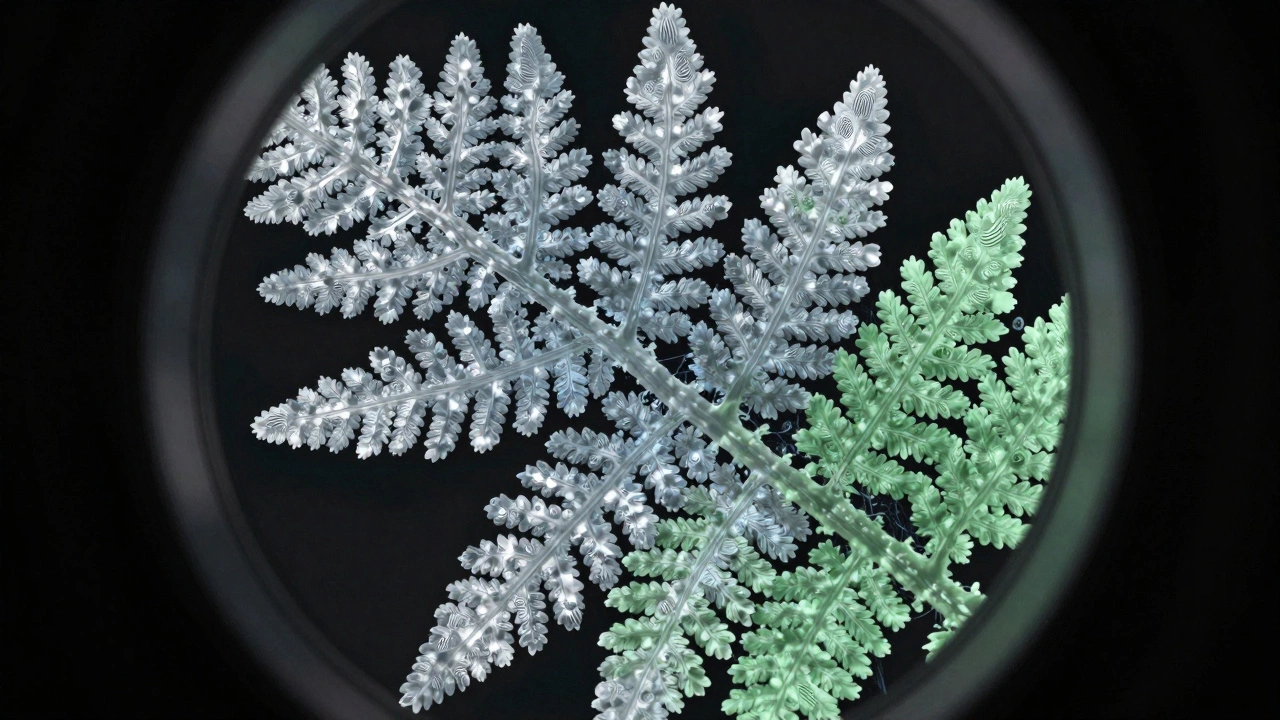
This technique does not rely on expensive machines or complex software. Instead, it uses simple chemistry and a light microscope to reveal the unique "fingerprint" of a drug molecule. When a suspected substance reacts with specific reagents, it forms tiny crystals. These crystals have distinct shapes-like fern leaves, needles, or plates-that tell the analyst exactly what they are looking at. It is rapid, cheap, and requires only a minuscule amount of sample. But how does it actually work, and why do labs still use it when we have mass spectrometers?
How Microcrystalline Testing Works: A Step-by-Step Look
The beauty of this method lies in its simplicity. You do not need a PhD in physics to run it, though you do need a steady hand and a good eye. Here is the basic procedure that forensic analysts follow:
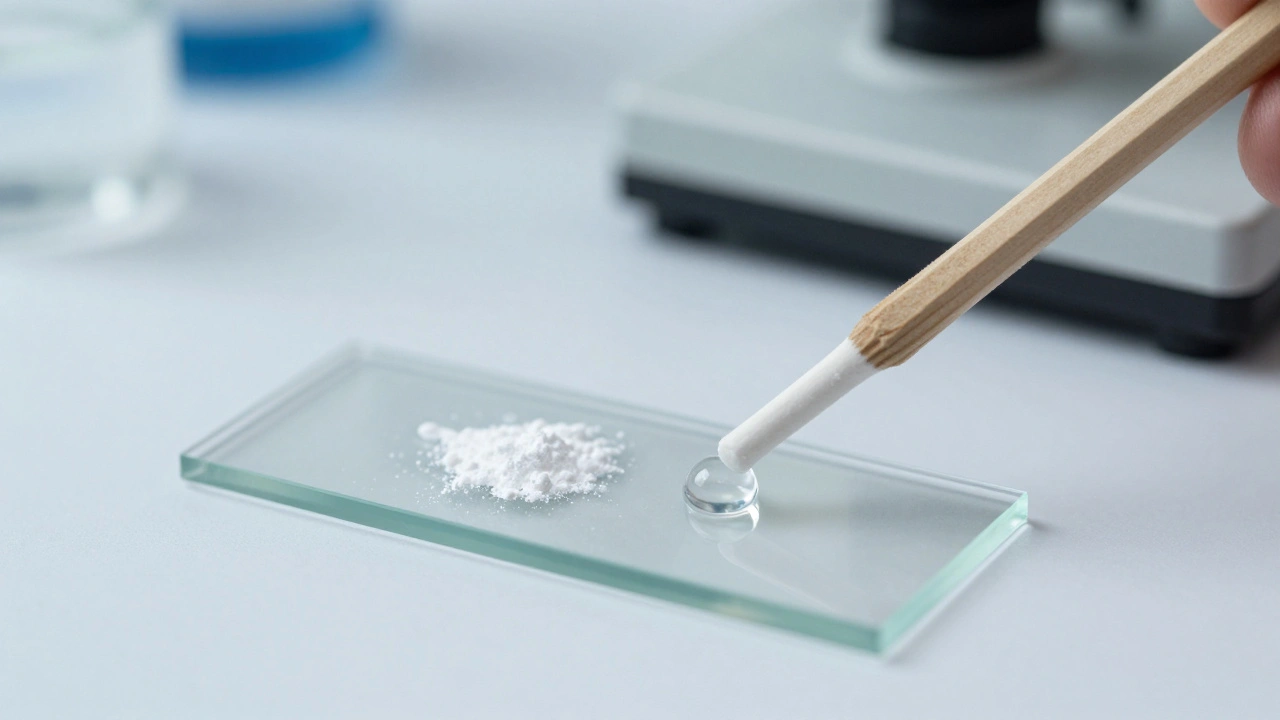
- Prepare the slide: Take a clean glass microscope slide. Place a tiny amount of the questioned sample on it. We are talking about 1 to 30 micrograms of substance. That is less than the weight of a grain of sand.
- Add the reagent: Position several drops of a specific chemical reagent near the sample. Do not mix them yet. Common reagents include mercury(II) chloride, which is versatile for many drugs.
- Create the reaction: Using a wooden stick, gently draw the liquid reagent toward the solid sample. As the two meet, a chemical precipitation reaction occurs instantly.
- Observe the crystals: Immediately place the slide under a light microscope. Watch the formation of microcrystals. Note their size, shape, and morphology. Are they long needles? Flat plates? Complex fern-like structures?
- Compare with standards: Compare your observations against known reference standards. Each drug produces a unique crystal pattern with a given reagent.
The entire process takes just minutes. The results are documented as micrographs (photos) or microvideos, creating a permanent visual record for court cases. This speed is crucial when law enforcement needs quick answers during investigations.
Why Labs Still Use Microcrystalline Tests
You might wonder why forensic laboratories bother with such an old-school technique when they have advanced instruments like gas chromatography-mass spectrometry (GC-MS). The answer comes down to cost, speed, and specific capabilities.
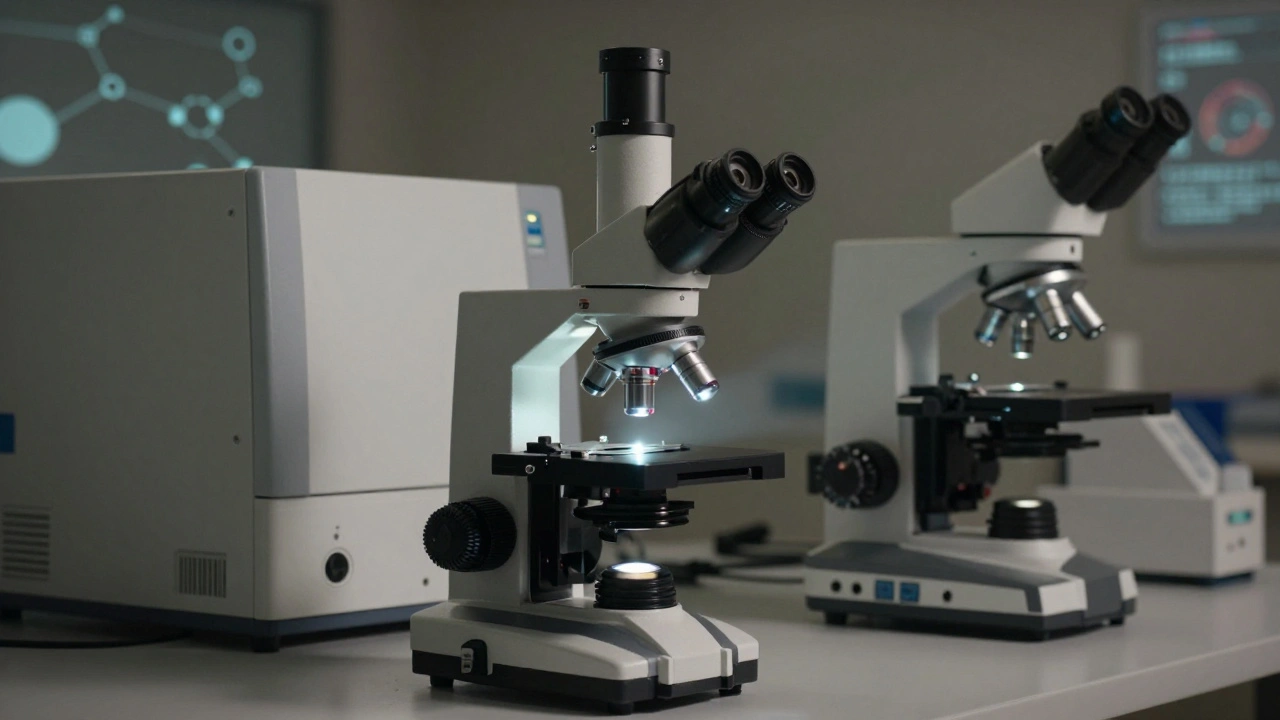
First, consider the cost. Mass spectrometers cost hundreds of thousands of dollars and require specialized technicians to operate. Microcrystalline testing costs pennies per test. You need a basic light microscope, glass slides, and inexpensive chemicals. This makes it accessible to labs worldwide, even those with tight budgets.
Second, look at sensitivity. These tests can detect substances at microgram levels. You do not need to extract the drug from a mixture first. You can test unextracted samples directly. This saves time and preserves evidence for further testing if needed.
Third, there is a unique advantage regarding isomers. Some drugs have identical molecular weights but different structural arrangements. For example, cathinone derivatives like 4-MMC, 3-MMC, and 2-MMC look similar to many standard tests. However, microcrystalline tests, especially when combined with polarizing light microscopy (PLM), can distinguish between these structural isomers. This capability is not always available with simpler screening methods.
| Feature | Microcrystalline Testing | Infrared Spectroscopy (IR) | Mass Spectrometry (MS) |
|---|---|---|---|
| Cost per Test | Very Low ($0.01 - $0.10) | Low ($1 - $5) | High ($10 - $50+) |
| Time Required | Minutes | Minutes to Hours | Hours to Days |
| Sample Prep | Minimal (often none) | Moderate (KBr pellets or films) | Extensive (extraction/purification) |
| Isomer Distinction | Yes (with PLM) | Limited | Yes (with proper tuning) |
| Confirmatory Power | Selective (Presumptive) | Confirmatory | Confirmatory |
The Role in Forensic Workflow: Not Just a Screening Tool
There is a common misconception that microcrystalline tests are merely "screening" tools. In modern forensic standards, they are classified differently. According to guidelines from the SWGDRUG (Scientific Working Group for the Analysis of Seized Drugs), these tests fall into Category B techniques. This means they provide selectivity based on physical and chemical characteristics, rather than just general presence.
Think of the forensic analysis workflow as a funnel:
- Stage 1: Initial Screening. Rapid color tests (like Marquis or Duquenois-Levine) give a broad idea of what class of drug might be present. These are Category A tests.
- Stage 2: Selective Identification. Microcrystalline testing narrows it down. If the crystals match cocaine hydrochloride patterns, you have strong evidence of that specific compound.
- Stage 3: Confirmatory Analysis. Techniques like infrared spectroscopy or mass spectrometry provide definitive structural proof.
Microcrystalline testing sits strategically in Stage 2. It bridges the gap between rough screening and final confirmation. When combined with Category A techniques like IR spectroscopy, the result is robust evidence. You get visual data from the crystals and structural data from the spectrum. This dual approach reduces the chance of error.
Limitations and Challenges
No technique is perfect. Microcrystalline testing has clear limitations that analysts must respect.
First, it is not confirmatory on its own. While the crystals are distinctive, some unrelated substances can form similar-looking crystals with certain reagents. Therefore, a positive microcrystalline result indicates the likely presence of a drug, but it must be corroborated by other methods for legal certainty.
Second, the test library is not infinite. Established protocols exist for classic drugs like cocaine, heroin, and amphetamines. However, for every new Novel Psychoactive Substance (NPS) that hits the market, researchers must develop and validate new microcrystalline tests. This takes time. Until then, labs may lack a specific protocol for that emerging compound.
Third, quantification is impossible. These tests tell you what is there, not how much. If you need to determine purity or dosage, you must turn to chromatographic methods.
Finally, operator skill matters. Identifying subtle differences in crystal morphology requires experience. A novice might miss a key feature or misinterpret a mixed sample. That is why training and reference libraries are critical.
Standards and Validation
To ensure reliability, the forensic community relies on strict standards. The ASTM E1968-19 standard practice outlines the foundational protocols for microcrystal testing. It covers validation procedures, ensuring that each test is scientifically sound. Additionally, ASTM E2329-17 integrates microcrystal testing into the broader framework for identifying seized drugs.
These standards mandate that labs maintain comprehensive reference libraries. Institutions like West Chester University of Pennsylvania have created extensive digital libraries of microcrystalline tests for both classic drugs and NPS. Researchers document crystal formations under various conditions, providing a benchmark for analysts worldwide.
The National Institute of Justice (NIJ) has also funded research to create modern compendiums of microcrystal tests. This investment shows that government agencies recognize the continued value of this technique in combating illicit drug trade.
Future Directions: Combining Old Tech with New Science
Microcrystalline testing is evolving. Analysts are no longer limited to naked-eye observation through a standard lens. By combining microcrystalline reactions with micro-Raman Spectroscopy, scientists can achieve higher specificity. Raman spectroscopy provides molecular vibrational data, which, when paired with crystal morphology, creates a powerful identification tool.
Polarizing light microscopy (PLM) is another enhancement. It reveals birefringence properties of crystals, adding another layer of discrimination. This combination allows labs to distinguish between structurally similar compounds that might otherwise confuse standard tests.
As the landscape of illicit drugs changes, so does the application of microcrystalline testing. The focus is shifting toward rapid development of protocols for new synthetic opioids, stimulants, and hallucinogens. The goal is to keep the reference libraries up-to-date so that frontline analysts can identify threats quickly and accurately.
Is microcrystalline testing enough to convict someone in court?
No. Microcrystalline testing is considered a selective or presumptive test, not a confirmatory one. While it provides strong evidence of a specific drug's presence, courts typically require confirmatory analysis using techniques like mass spectrometry or infrared spectroscopy to meet the highest burden of proof. It is best used as part of a multi-step analytical scheme.
What is the smallest amount of drug needed for a microcrystalline test?
The technique is highly sensitive. Typically, between 1 and 30 micrograms of substance are required to produce observable crystals. This minute quantity means that very little evidence is consumed, preserving most of the sample for further testing if necessary.
Can microcrystalline tests distinguish between different types of amphetamines?
Yes. Different reagents produce distinct crystal formations for various amphetamine derivatives. For example, methamphetamine and amphetamine will form different crystal patterns with specific reagents. However, distinguishing between closely related isomers often requires the use of polarizing light microscopy or additional spectroscopic methods for full confidence.
Why do forensic labs still use this old technique?
It offers significant advantages in speed, cost, and simplicity. It requires minimal equipment and training compared to mass spectrometry. It can be performed on unextracted samples and provides immediate visual results. For high-volume labs, it serves as an efficient second-stage filter before committing resources to more expensive confirmatory tests.
What happens if a new drug doesn't have a microcrystalline test protocol?
If a novel psychoactive substance (NPS) lacks an established protocol, the lab cannot rely on microcrystalline testing for identification. They must skip to confirmatory methods like mass spectrometry or nuclear magnetic resonance (NMR). Researchers are constantly working to develop and validate new microcrystalline tests for emerging drugs to fill these gaps.