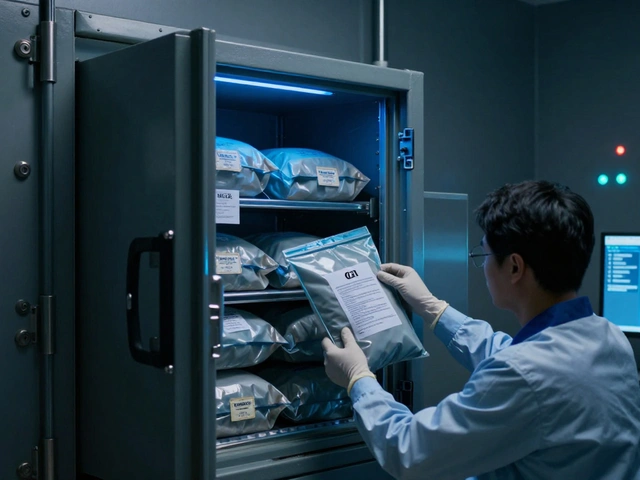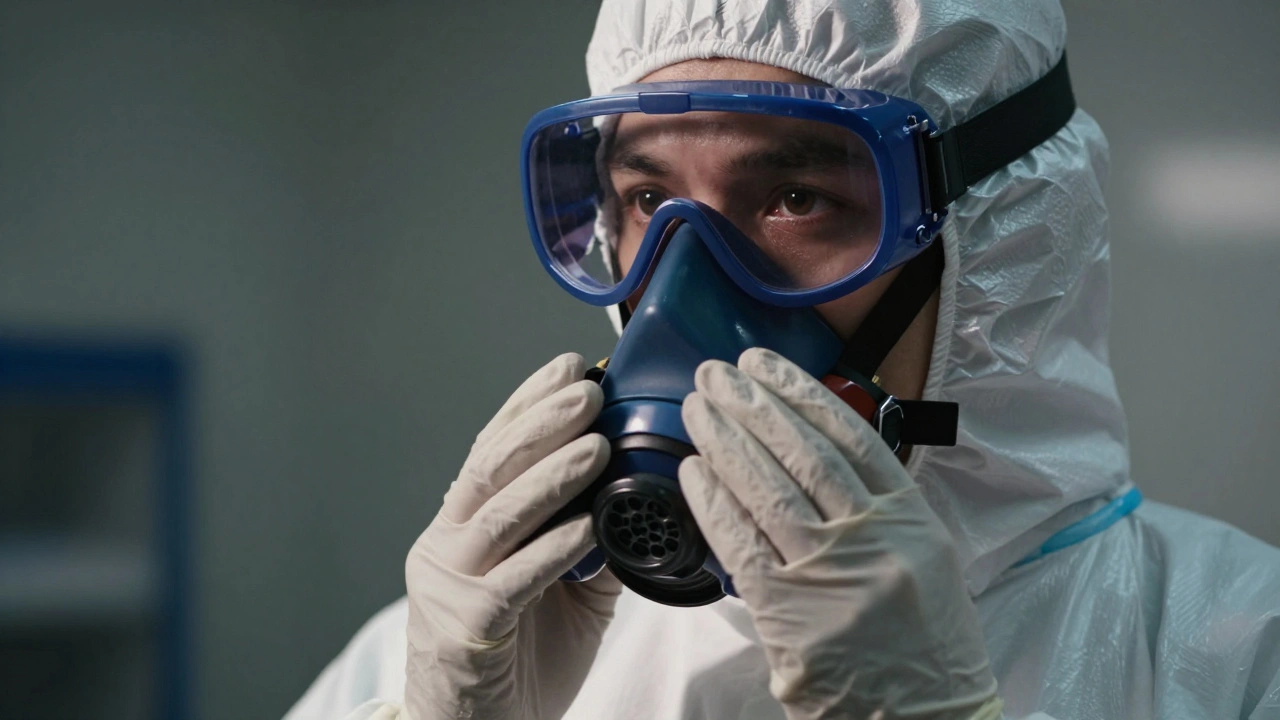
Walking into a crime scene or a hoarding situation is one thing. Breathing the air inside it is another. In biohazard cleanup, you are often dealing with invisible threats-bloodborne pathogens, mold spores, and chemical vapors from cleaning agents. A mask hanging loosely around your neck does nothing but give you a false sense of security. The difference between staying safe and getting sick comes down to two things: ensuring your respirator seals perfectly to your face and picking the right cartridges for the specific hazards in the room.
If you have ever worn a respirator that felt like it was suffocating you, or one that let every smell through, you know how frustrating it can be. But comfort isn't just about feeling good; it's about survival. When we talk about respiratory protection in this industry, we aren't discussing optional gear. We are talking about the last line of defense between your lungs and serious illness. Let’s break down exactly how to get that seal right and which cartridges actually work for the messes you clean up.
The Non-Negotiables of Respirator Fit Testing
You might think that if a respirator fits your buddy, it will fit you. It won’t. Faces vary wildly in shape, size, and structure. Fit testing is a mandatory protocol designed to verify that a respirator provides the expected level of protection by minimizing contaminants leaking into the facepiece. It is not a suggestion; it is a legal requirement under OSHA regulations for anyone wearing tight-fitting respirators, such as half-masks or full-facepieces.
The goal here is simple: ensure no contaminated air leaks in. If you fail the fit test, the respirator fails you. There are two main ways this happens: Qualitative Fit Testing (QLFT) and Quantitative Fit Testing (QNFT). QLFT relies on your senses-usually smell-to detect if a test agent has leaked into the mask. QNFT uses machines to measure the concentration of particles inside versus outside the mask. For most biohazard teams, QLFT is common because it’s accessible, but it has limits. You can only use QLFT for negative-pressure respirators when the hazard is less than 10 times the Permissible Exposure Limit (PEL).
Before you even step into the testing chamber, there are rules you must follow. You cannot have facial hair where the seal sits. Stubble, goatees, or sideburns that cross the sealing surface will compromise the fit instantly. Even a single day’s growth can create enough gaps for viruses and bacteria to slip through. Women with long hair should tie it back so it doesn’t bunch up under the headband. And remember, the test must be done with all other Personal Protective Equipment (PPE) you plan to wear. If your safety glasses dig into the top of your mask, or your hard hat straps pull the mask out of place, the fit test needs to account for that interference.
How the Fit Test Process Actually Works
Let’s walk through what happens during a standard qualitative fit test using isoamyl acetate, a common test agent that smells like banana oil. This process isn't a quick formality; it’s a rigorous check of your equipment and your technique.
- Selection: You don’t just grab any mask off the shelf. You try on several models and sizes. The employer must provide enough options so you can find one that feels acceptable and fits correctly. You need to be able to position it comfortably across your nose bridge and chin.
- Donning: You put on the respirator exactly as you would on a job site. Check the strap tension-it should be snug but not crushing. Place your chin properly inside the cup. Use a mirror to verify the fit visually.
- The Challenge: You enter a separate, well-ventilated testing room. A technician suspends a solution of isoamyl acetate above your head. You breathe normally, then take deep breaths, turn your head side-to-side, look up and down, and even say "boo" loudly to simulate heavy breathing and movement.
- The Result: If you taste or smell the banana scent at any point, you failed. The contaminant leaked in. You must remove the mask, try a different model or size, and repeat the entire process until you pass.
This annual requirement ensures that changes in your weight or facial structure haven’t altered your fit. But don’t wait a whole year to check. Perform a user seal check every single time you put the mask on. Cup your hands over the inhalation ports and inhale sharply-the mask should collapse slightly against your face. Cover the exhalation valve and exhale-if you feel air escaping near your eyes or cheeks, adjust the straps or try a different size.
Understanding Cartridge Selection for Hazards
Getting the mask to fit is only half the battle. The other half is knowing what’s inside those cartridges. A respirator without the right filter is like a car with no engine-it looks right, but it won’t protect you. In biohazard cleanup, you rarely deal with just one type of hazard. You might encounter mold spores (particulates) while also using strong solvents to strip paint or clean surfaces (vapors).
To choose the right protection, you first need to identify the hazard. Is it a particle? Is it a gas or vapor? Or both?
- Particulate Hazards: These include dusts, mists, fumes, and biological agents like mold or bloodborne pathogens. Protection here comes from filters, not cartridges. Filters are rated by efficiency: N95 filters at least 95% of airborne particles, N99 filters 99%, and N100 filters 99.97%. For higher levels of protection, such as with Powered Air-Purifying Respirators (PAPRs), you’ll see HEPA filters, which offer that same 99.97% filtration but handle higher airflow volumes.
- Gas and Vapor Hazards: These require cartridges that use activated carbon to adsorb chemicals. Common examples include solvent vapors from thinners, chlorine from bleach mixtures, or hydrogen sulfide from decomposing organic matter.
If you face both types of hazards simultaneously-which is very common in restoration work-you need combination cartridges. These units house both a particulate pre-filter and a chemical cartridge, providing dual protection in one package.
Decoding the NIOSH Color-Coding System
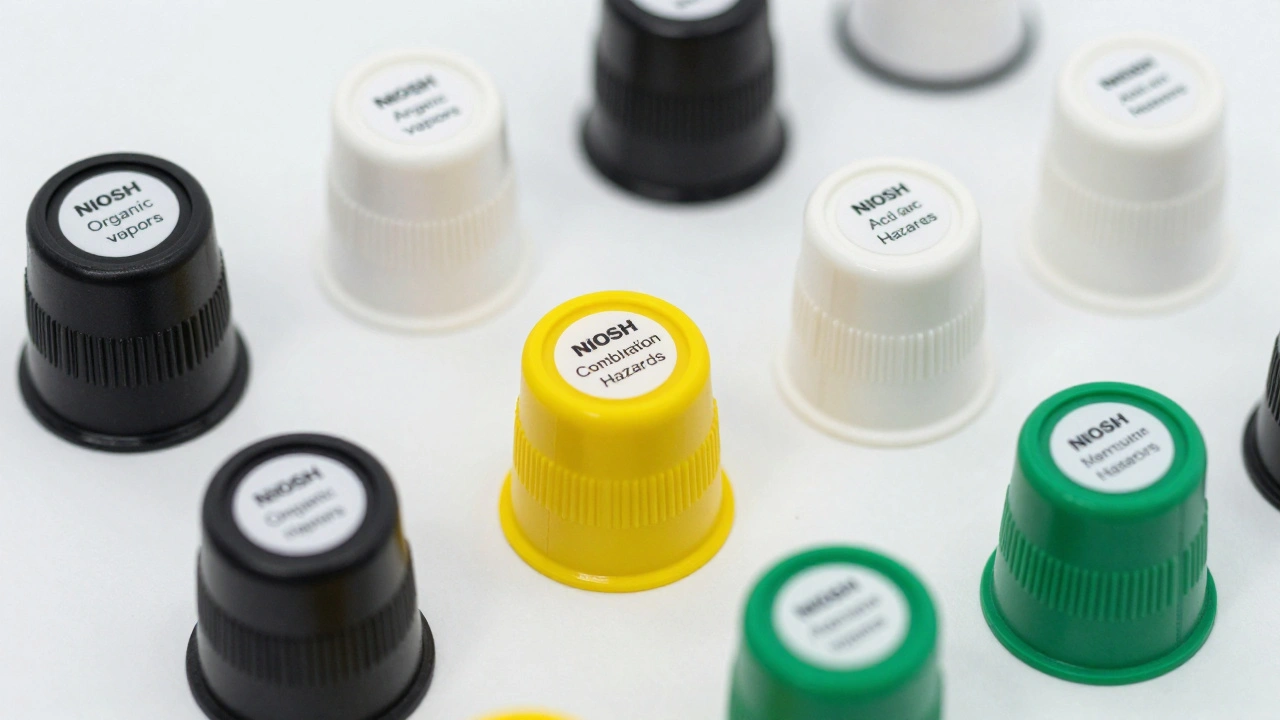
How do you know which cartridge handles which chemical? You rely on the NIOSH color-coding system. This standardized labeling makes it easy to match the threat with the tool. Never guess. Always check the label.
| Hazard Type | Cartridge Color Label | Common Examples in Biohazard Cleanup |
|---|---|---|
| Organic Vapors | Black | Solvents, paints, thinners, adhesives |
| Acid Gases | White | Chlorine, hydrogen sulfide, sulfur dioxide, ammonia |
| Combination (Organic + Acid) | Yellow | Mixtures of solvents and acidic cleaners |
| Mercury Vapor | Green | Thermometer spills, industrial sites |
Note that these colors refer to the label on the cartridge, not necessarily the plastic housing itself. Always read the text on the label to confirm approval for the specific contaminants present. If you are unsure about the chemicals in a room, consult the Material Safety Data Sheets (MSDS) or Safety Data Sheets (SDS) for every product being used. If the SDS lists unknown vapors, assume the worst-case scenario and upgrade your protection.
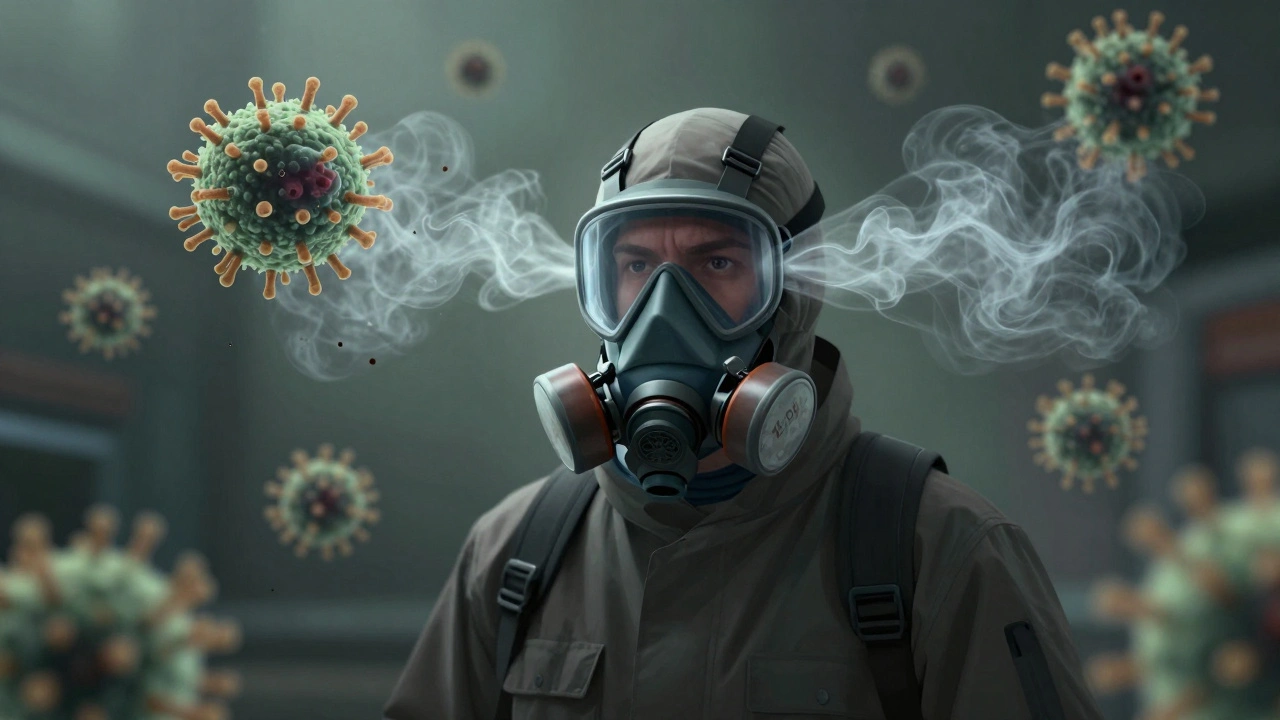
Compatibility and Maintenance: The Hidden Traps
A frequent mistake I see in the field is mixing brands. Not all cartridges fit all masks. While some manufacturers make universal threads, many proprietary systems require the cartridge and the facepiece to come from the same brand. Forcing a mismatched cartridge can damage the threading, leading to an insecure connection that breaks the seal. Always check compatibility before buying.
Another critical aspect is replacement frequency. Cartridges do not last forever. They have a limited capacity to absorb gases and trap particles. Once they are saturated, they stop working and can even release trapped contaminants back into the air. Manufacturer instructions usually recommend replacing cartridges every six months, regardless of usage. However, in heavy-use scenarios, they may need changing much sooner. Watch for signs of saturation: increased breathing resistance, a noticeable odor of the contaminant, or a distinct taste. If you smell the hazard, change the cartridge immediately.
Storage matters too. Keep unused cartridges in sealed containers to prevent them from absorbing ambient moisture or pollutants before you even open them. Moisture clogs the activated carbon and reduces effectiveness. Store them away from direct sunlight and extreme temperatures.
Building a Comprehensive Respiratory Protection Program
Fit testing and cartridge selection are just pieces of a larger puzzle. A compliant and effective respiratory protection program requires more than just handing out masks. It includes medical evaluations to ensure employees can physically tolerate the pressure of wearing a respirator. It involves training so workers understand the limitations of their gear. It demands proper maintenance, cleaning, and record-keeping.
In biohazard cleanup, the stakes are high. One breach in protocol can lead to exposure to HIV, Hepatitis B, C, or dangerous molds like Aspergillus. By treating fit testing as a serious, annual ritual and selecting cartridges based on precise hazard assessments rather than convenience, you protect not just your health, but your career. Don’t cut corners on your lungs. The air you breathe today determines how long you stay in this game.
How often must respirator fit testing be performed?
OSHA mandates that fit testing be conducted at least annually. Additionally, it must be repeated whenever a different model or size of respirator is used, or if there are significant changes to the employee's physical condition, such as dental work, facial surgery, or substantial weight loss/gain that could affect the face seal.
Can I wear a beard and still pass a respirator fit test?
No. Facial hair that grows through the area where the facepiece seals against the skin prevents an adequate seal. This includes stubble, goatees, and sideburns. Clean-shaven conditions are required for tight-fitting respirators to pass fit tests and provide effective protection.
What is the difference between a filter and a cartridge?
Filters are designed to remove particulate matter like dust, mist, and fumes (e.g., N95, P100). Cartridges contain activated carbon and are designed to adsorb gases and vapors (e.g., organic vapors, acid gases). Combination units exist for environments containing both hazards.
How do I know when to replace my respirator cartridges?
Replace cartridges according to the manufacturer's schedule, typically every six months. Replace them sooner if you notice increased breathing resistance, detect the odor or taste of the contaminant, or if the end-of-service-life indicator (if equipped) signals saturation.
Does safety glasses interfere with respirator fit?
Yes, safety glasses can interfere with the seal of a respirator if they press against the top edge of the mask. Fit testing must be conducted with all PPE worn during the job to ensure compatibility. If glasses cause a leak, alternative eyewear or a different respirator model may be needed.