When an accreditation body shows up at your door, it’s not a surprise visit-it’s a requirement. Whether you’re running a lab, managing an internal audit team, or operating a quality-driven business, external audits are the gold standard for proving you’re doing things right. These aren’t just paperwork checks. They’re independent, rigorous evaluations that decide whether your organization meets globally recognized standards. And if you’re not prepared, they can expose gaps you didn’t even know existed.
Why External Audits Matter More Than You Think
External audits aren’t about punishment. They’re about trust. When a certification body or accreditation agency reviews your operations, they’re answering one question for everyone who depends on you: Can we rely on your results?
In labs, hospitals, and forensic facilities, the stakes are high. A single error in testing, a misfiled report, or a poorly documented procedure can lead to wrongful conclusions, legal liability, or even public safety risks. Accreditation bodies step in to make sure those errors don’t slip through. They don’t just look at your reports-they check your training records, your equipment calibration logs, your staff’s decision-making, and how you handle mistakes.
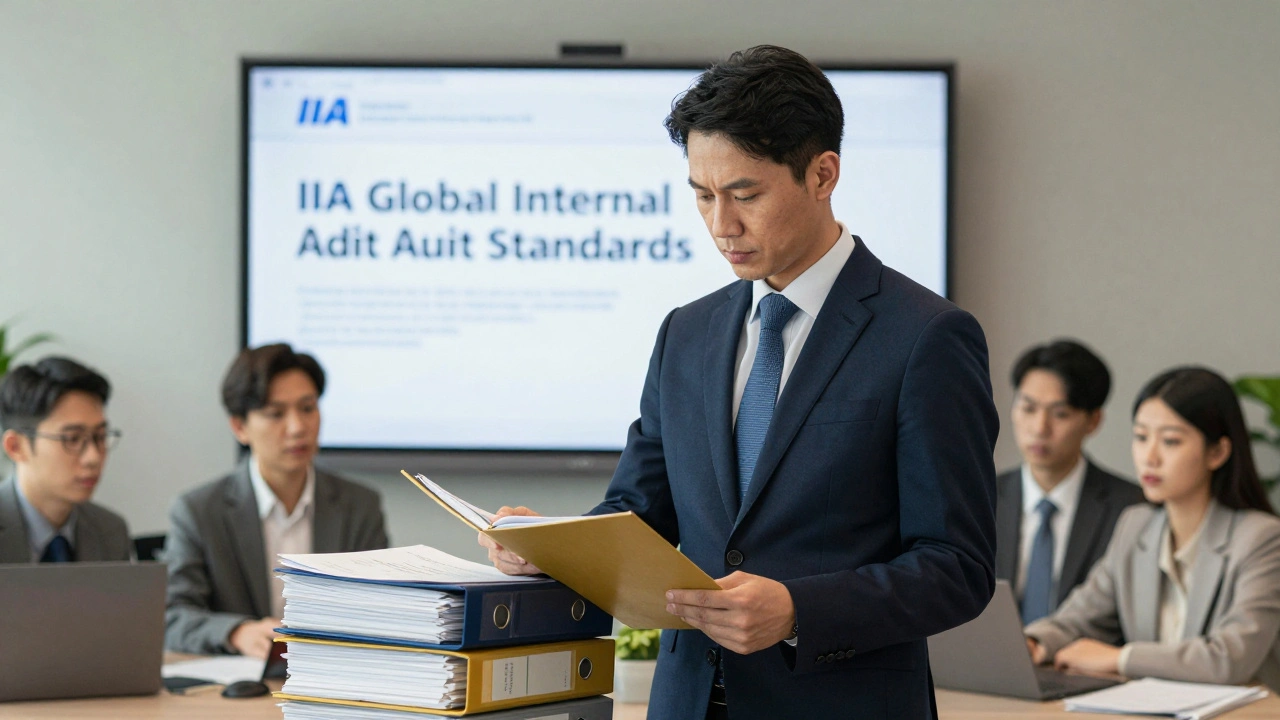
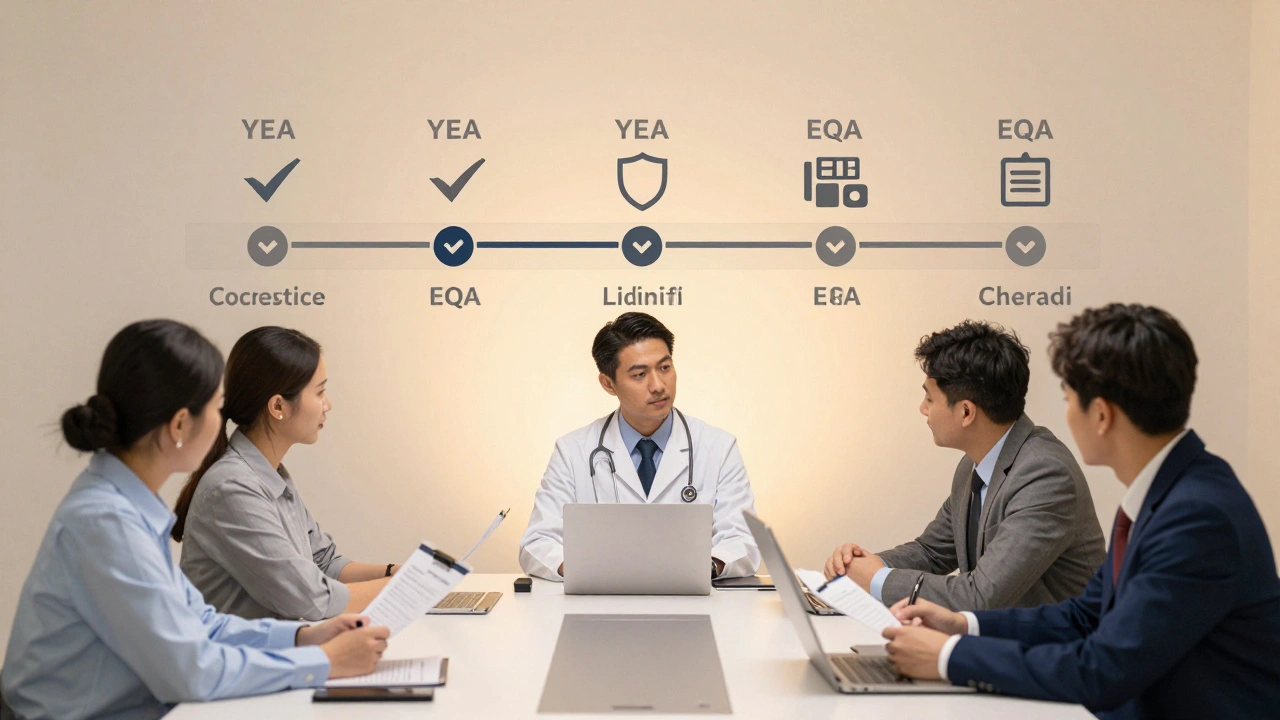
For internal audit functions, the External Quality Assessment (EQA) is mandatory under the Global Internal Audit Standards. Every five years, your audit team must be reviewed by someone completely independent. This isn’t optional. It’s the only way to keep your function credible. If you skip it, your board, regulators, and even your own employees lose confidence in what you do.
How Accreditation Body Assessments Work
There are two main types of external audits you’re likely to face: those for internal audit functions and those for quality management systems like ISO 9001. Both follow a similar pattern but serve different purposes.
For internal audit teams, the EQA is a structured, independent review of an internal audit function’s conformance with the Global Internal Audit Standards. There are two ways to do it:
- Full-scope EQA: An external team does the entire review. They interview staff, review documents, observe meetings, and analyze past audit reports. You provide access, but they do the work.
- Self-Assessment Independently Validated (SAIV): Your team does the self-review first, then an external assessor validates it. It’s cheaper and less disruptive, but you have to do the heavy lifting upfront.
Either way, at least one person on the assessment team must be a Certified Internal Auditor (CIA). That’s not a suggestion-it’s a rule. They also need to be truly independent. If they’ve worked with your team in the last two years, or if they’re planning to join your organization after the audit, that’s a conflict. It invalidates the whole process.
For organizations certified under ISO 9001 is an international standard for quality management systems that requires external audits by accredited certification bodies, the process is split into three stages:
- Stage 1: Documentation Review - The auditor checks your quality manual, procedures, and records to see if they match ISO 9001 requirements. This is often done remotely. They’ll ask: Do you know your risks? Do your policies reflect your actual operations?
- Stage 2: Certification Audit - This is the full on-site inspection. Auditors talk to staff, trace processes from start to finish, and pull records to see if you’re actually doing what you say you do. If you pass, you get certified.
- Surveillance Audits - Once certified, you’re audited every 6 to 12 months. These are shorter but still dig into key processes. They check whether you’ve fixed past issues and if your system is still working.
Both systems rely on the same principle: evidence over claims. You can’t just say you’re compliant. You have to prove it.

What Accreditors Look For
Accreditation bodies don’t care about your office decor or how many coffee breaks you take. They care about three things:
- Conformance - Do your policies, procedures, and practices match the standard? For internal audit, that means your charter, work plans, and reporting align with the IIA’s Global Internal Audit Standards.
- Effectiveness - Are your systems actually working? A checklist filled out on time doesn’t mean much if the audit findings never lead to change. Accreditors look for outcomes: Did your audit uncover fraud? Did it reduce errors? Did management act on your recommendations?
- Independence and Objectivity - This is non-negotiable. If your internal audit team reports to the CFO who also runs the department being audited, that’s a problem. The same goes for certification bodies: if your auditor has a financial stake in your company, the audit is invalid.
For internal audit functions, evidence of independence might include:
- Training records showing ethics education
- Performance reviews that include professional courage as a metric
- Stakeholder feedback on whether auditors speak up when needed
For ISO 9001, they’ll check:
- Corrective action logs
- Supplier evaluations
- Internal audit reports from your own team
- Management review minutes
These aren’t just documents. They’re proof that your organization learns, adapts, and improves.
What Happens When You Fail
Failing an external audit isn’t the end of the world-but it’s serious. If you don’t meet the standard, the accreditation body will issue a non-conformity report. This isn’t a penalty. It’s a roadmap.
For ISO 9001, you’ll have 30 to 90 days to fix the issue and submit evidence. If you don’t, your certification is suspended or revoked. Losing ISO 9001 certification can mean losing contracts, especially with government agencies or large corporations that require it.
For internal audit EQAs, the board or audit committee must approve a corrective action plan. They’ll set deadlines, assign owners, and track progress. If you don’t fix the issues, your audit function loses credibility-and that can lead to reduced budget, fewer responsibilities, or even replacement.
The key is this: failing once isn’t fatal. Failing repeatedly is. Accreditation bodies expect you to improve. They don’t expect perfection. They expect honesty and effort.
How to Prepare Without Stress
Preparation isn’t about cramming. It’s about consistency.
Start with a gap analysis six months before your audit. Ask:
- Do our audit reports follow the IIA’s standards for clarity and impact?
- Are our auditors trained on ethics every year?
- Do we have documented evidence that management acts on our findings?
- Is our charter still aligned with our current risks and organizational goals?
For ISO 9001:
- Review your corrective action log. Are old issues still open?
- Check if your risk assessments are updated.
- Verify that all staff know their roles in the quality system.
Don’t wait until the auditor arrives to start talking. Have your CAE or quality manager meet with your leadership team. Make sure they understand the stakes. If your CEO thinks this is just another audit, you’re already behind.
And choose your assessor wisely. Don’t pick the cheapest option. Look for someone with real experience in your field. A generalist might miss key nuances. A specialist who’s audited labs or forensic units before will ask better questions and give better feedback.
It’s Not a One-Time Event
External audits aren’t a box to check. They’re part of a cycle. ISO 9001 certification lasts three years, with annual surveillance audits. EQAs happen every five years. But between those dates, you should be auditing yourself.
The best organizations treat every month like an audit month. They monitor their own performance. They ask for feedback. They fix small problems before they become big ones.
Accreditation bodies aren’t here to catch you out. They’re here to help you stay on track. When done right, these assessments don’t just validate compliance-they improve your entire operation.
What’s the difference between an internal audit and an external audit?
An internal audit is done by your own team to evaluate risks and controls. An external audit is done by an independent third party-like an accreditation body-to verify that you meet a recognized standard. Internal audits look inward; external audits look outward and validate your credibility.
Can my own team perform the external audit?
No. By definition, an external audit must be done by someone independent. Even if your team is highly qualified, they’re still part of the organization. That creates a conflict. The only exception is the SAIV model, where your team does a self-assessment, but an outside party validates it. The validation part must be external.
Why does the external assessor need to be a CIA?
The Certified Internal Auditor (CIA) designation is the global benchmark for internal audit competence. The IIA requires at least one CIA on every EQA team because it ensures the assessor has proven knowledge of audit standards, ethics, and practice. It’s not about prestige-it’s about reliability.
How often are external audits required?
For internal audit functions, the IIA requires an external quality assessment every five years. For ISO 9001 certification, the initial audit leads to a three-year cycle, with annual surveillance audits in between. Missing either deadline puts your certification or accreditation at risk.
What happens if I don’t pass the external audit?
You’ll receive a list of non-conformities. You’ll have a set timeframe-usually 30 to 90 days-to fix them and submit proof. If you don’t, your certification may be suspended or revoked. For internal audit functions, failure to address issues can lead to loss of board confidence and reduced authority.