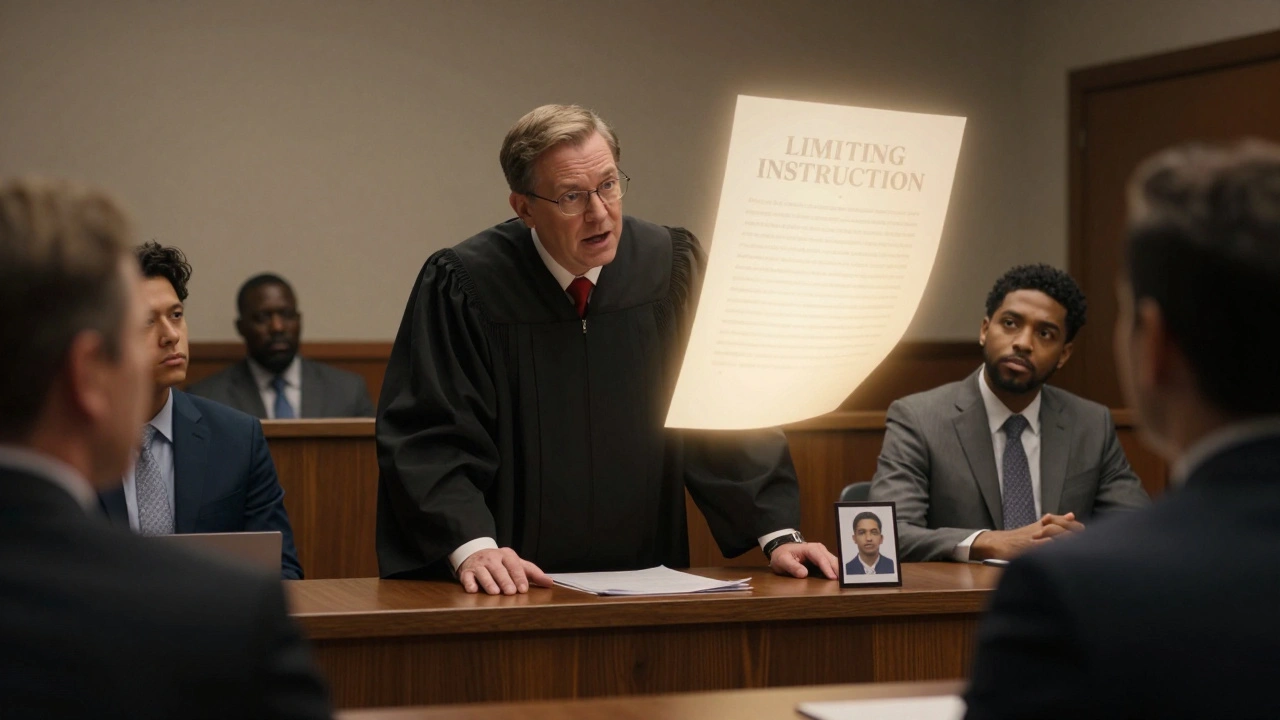
When a jury hears evidence in a trial, they don’t get to decide what’s relevant or fair-they follow the judge’s directions. That’s where limiting instructions come in. These aren’t just legal jargon. They’re real, spoken commands from the judge that tell jurors: ‘You can hear this, but you can’t use it the way you might want to.’ It’s one of the most overlooked but vital tools in keeping trials fair.
What Exactly Is a Limiting Instruction?
A limiting instruction is a judge’s direction to the jury about how to treat a specific piece of evidence. It doesn’t block the evidence from being heard. Instead, it tells jurors: ‘This information is only allowed for this one purpose.’ For example, if a defendant has a past conviction for theft, the prosecution might bring it up not to prove they’re a criminal, but to show they’re lying on the stand. The judge then gives a limiting instruction: ‘You may consider this prior conviction only to assess the defendant’s credibility as a witness-not to decide whether they committed this crime.’ Without that instruction, jurors might think, ‘He’s a thief, so he probably did this.’ That’s bias. The instruction tries to stop that. But it’s not magic. It’s a tool that assumes jurors can mentally split the evidence into boxes: one for the legal purpose, another for the forbidden one.When Are Limiting Instructions Required?
They’re not optional. Courts must issue them when evidence could be used in two ways-one legal, one illegal. The most common situations include:- Prior criminal records: Used to challenge a witness’s honesty, not to prove guilt.
- Other crimes or bad acts: Under Federal Rule of Evidence 404(b), prosecutors can show past behavior to prove motive, opportunity, or intent-but not to say ‘he’s the type of person who does this.’
- Hearsay statements: If one defendant’s confession implicates a co-defendant, the jury can only use it against the person who made it.
- Crime scene photos: Graphic images might be allowed to show the scene’s layout, but not to stir up emotion or disgust.
Who Asks for These Instructions-and When?
The party who wants the instruction has to ask for it. Right then. At the moment the evidence is introduced. If you wait until closing arguments, it’s too late. Judges won’t go back and redo instructions after the jury has already heard the evidence. This rule might seem strict, but it’s practical. Imagine a witness blurts out something prejudicial. The defense attorney objects, the judge sustains it, and says, ‘Stricken from the record.’ But the jury already heard it. That’s why timing matters. The instruction has to come as close as possible to when the evidence is presented. Some judges give it right after the testimony. Others wait until the next break. As long as it’s before the jury starts deliberating, it’s usually okay.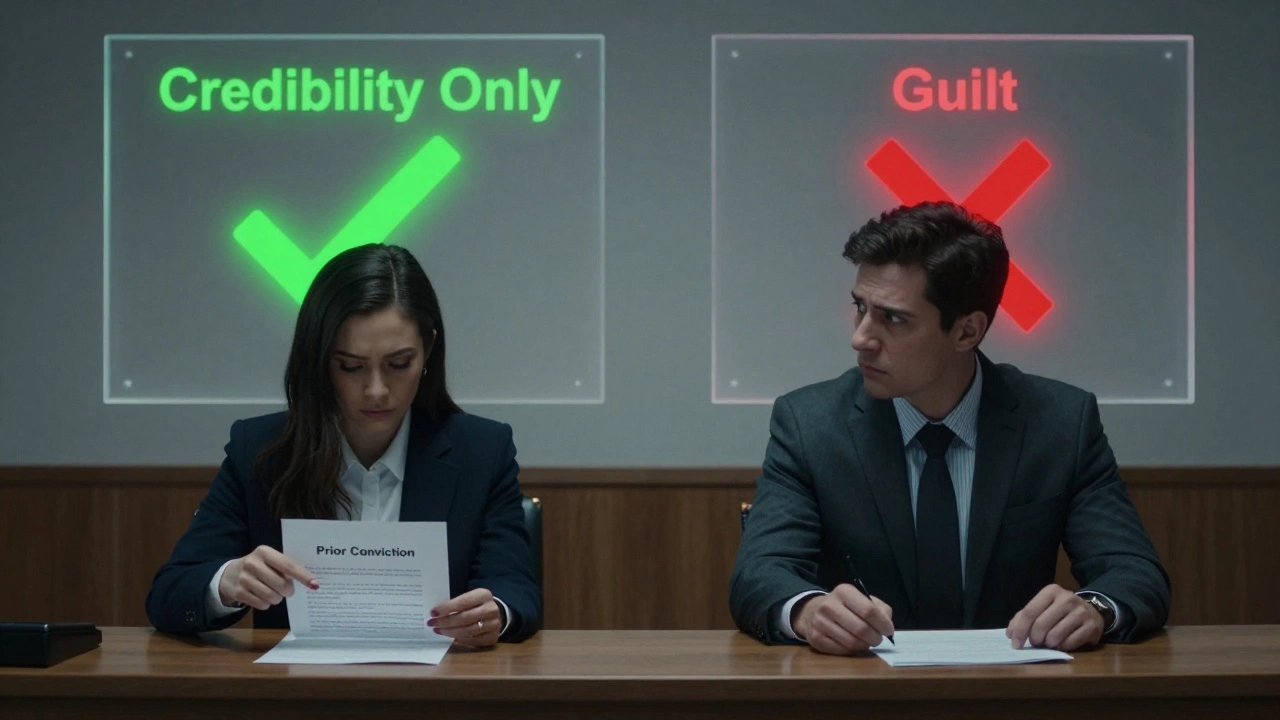
The Big Problem: Do Jurors Even Listen?
Here’s the uncomfortable truth: research says they often don’t. Studies using mock juries have shown that even when jurors are told to ignore a defendant’s prior record, they still use it to judge guilt. The same thing happens with hearsay, inflammatory photos, or confessions that only apply to one defendant. One study found that jurors who heard a limiting instruction about a prior conviction still rated the defendant as more likely to be guilty than those who never heard the record at all. Another showed that jurors struggled to separate a co-defendant’s confession from the case against the other defendant-even after being told not to. It’s not that jurors are dumb. It’s that the human brain doesn’t work that way. Once you hear something, especially something shocking or emotionally charged, it sticks. Trying to unhear it, or to use it only for one purpose, is like asking someone to think about a red apple without thinking about the word ‘apple.’ It’s nearly impossible. Some judges and scholars admit this. Judge Learned Hand once said, ‘We know these instructions won’t work, but we give them anyway because it shows we care about fairness.’ The system isn’t perfect. It’s a compromise. We admit risky evidence because it’s useful, and we give instructions because we have to pretend jurors can follow them.Why Keep Using Them If They Don’t Work?
If limiting instructions are flawed, why do courts still rely on them so heavily? Three reasons:- They’re legally required. The rules say if evidence is admissible for one purpose but not another, the court shall limit it. No exceptions.
- They protect the record. If a case gets appealed, the judge can point to the instruction as proof they followed procedure. Without it, the trial might be overturned.
- They preserve evidence access. If courts banned all evidence that could be misused, we’d lose a lot of useful information. A defendant’s past behavior might show a pattern. A co-defendant’s statement might help prove the crime. Limiting instructions let us use that evidence without letting it turn into prejudice.
Limiting vs. Exclusionary Instructions
Don’t confuse limiting instructions with exclusionary ones. They’re different.- Exclusionary instruction: ‘You must disregard this entirely. Pretend you never heard it.’ This is used when evidence is completely inadmissible-like an illegal search.
- Limiting instruction: ‘You heard it, and it’s allowed, but only for this reason.’ This is used when evidence has a legal use, even if it’s risky.
What Happens in Joint Trials?
Joint trials-where multiple defendants are tried together-are where limiting instructions are most critical. Say two people are accused of robbery. One defendant told a friend, ‘I’m going to hit the store tomorrow.’ That statement is admissible against the person who made it. But if the jury hears it and thinks, ‘Oh, so both of them planned it,’ that’s a problem. The judge must give a clear instruction: ‘This statement only applies to Defendant A. You may not use it to infer anything about Defendant B.’ But studies show jurors still link the two. They treat the statement as evidence against both. That’s why some defense attorneys push for separate trials. But courts often deny that, relying on the instruction instead. It’s a gamble.The Bottom Line
Limiting instructions aren’t a perfect solution. They’re a bandage on a wound we can’t fully close. We let in evidence that could bias jurors, then ask them to pretend they didn’t hear it-or to use it in a way that’s mentally exhausting. We know it doesn’t always work. But we keep doing it because we don’t have a better option. The system isn’t about perfect justice. It’s about balance. We balance the need for full information with the need for fairness. We balance efficiency with rights. Limiting instructions are the mechanism that holds that balance together. They’re not foolproof. But they’re still the law. And until we find a better way to keep juries from being swayed by what they shouldn’t hear, we’ll keep giving them.Can a judge give a limiting instruction after the evidence is already heard?
Yes, but only if it’s before jury deliberations begin. Judges have discretion in timing. If a juror hears prejudicial evidence, the judge can issue a limiting instruction during a break, after the witness finishes, or even during closing arguments-so long as it’s before the jury starts discussing the case. However, waiting too long risks the instruction being ineffective, and appellate courts may later find error if the evidence had a strong emotional impact.
What happens if a lawyer doesn’t ask for a limiting instruction?
If a lawyer doesn’t request a limiting instruction when the evidence is presented, they usually lose the right to ask for one later. Courts treat this as a failure to preserve the issue for appeal. Even if the evidence was highly prejudicial, the judge isn’t required to give the instruction on their own. This rule forces attorneys to be proactive and precise during trial.
Are limiting instructions used in civil cases too?
Yes. While they’re more common in criminal trials, civil cases use them too. For example, if a plaintiff’s past lawsuit is introduced to show a pattern of filing claims, the judge may limit its use to show motive or bias-not to suggest the plaintiff is dishonest in this case. The same rules apply: the evidence must be relevant for one purpose but potentially misleading for another.
Do jurors ever get confused by limiting instructions?
Yes. Studies show jurors often misunderstand or forget the instructions. They may remember the evidence but forget the limitation. Judges are advised to repeat key points clearly, use simple language, and avoid legalese. Phrases like ‘You can’t use this to decide if they’re guilty’ are more effective than ‘This evidence is admissible solely for the purpose of assessing credibility.’
Can a limiting instruction be appealed?
Yes, but only if the instruction was missing, inadequate, or given too late. If a judge refuses to give an instruction that was properly requested, or gives one that’s misleading or too vague, a defendant can appeal on the grounds that their right to a fair trial was violated. Appellate courts review whether the instruction was sufficient to protect the defendant’s rights under the rules of evidence.