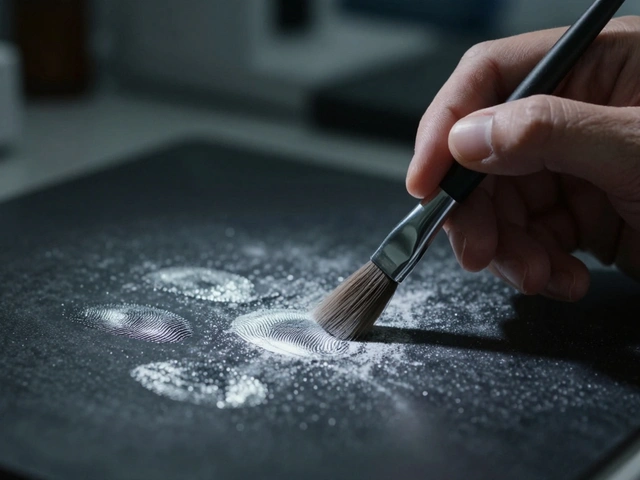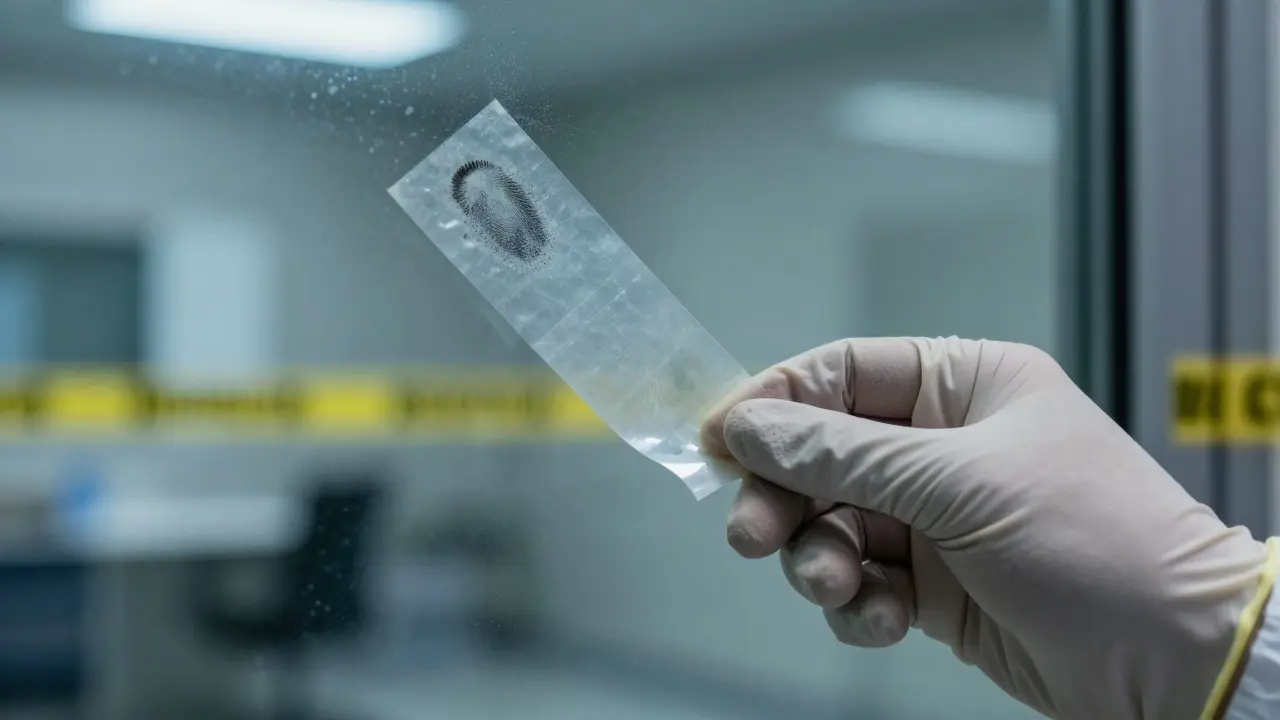
Imagine you are standing at a crime scene. A smudge on a glass door is your only lead. You lift it, hoping for a match. But before you run that print through the database, you have a bigger problem: what if that smudge isn't from the suspect? What if it’s from the victim, a witness, or even yourself while you were processing the scene? This is where elimination prints come in. They are the fingerprints of known individuals taken to rule them out as the source of a latent print found at a scene. Without them, your investigation is like trying to find a needle in a haystack without knowing which part of the haystack the needle came from.
Managing these known exemplars is not just a bureaucratic checkbox; it is a critical component of case integrity. If you fail to collect elimination prints properly, you risk wasting hours on false leads or, worse, missing the actual perpetrator because you got distracted by a print from a first responder who touched the doorframe earlier that morning.
What Are Elimination Prints and Why Do They Matter?
Elimination prints are fingerprints collected from known individuals to determine if they are the source of a latent print found at a crime scene. Also known as known exemplars, these prints serve as a control group in fingerprint analysis. When an examiner finds a partial print on a window latch, they need to know if it belongs to the burglar or the homeowner who locked up last night. By comparing the latent print against the homeowner's elimination print, the examiner can definitively say, "This is not the suspect," clearing the path to identify the true culprit.
The importance of this process cannot be overstated. In high-traffic areas like hospitals, schools, or offices, latent prints are everywhere. Without a robust elimination protocol, forensic laboratories often spend significant time analyzing prints that belong to innocent bystanders. According to data from the FBI's Integrated Automated Fingerprint Identification System (IAFIS), a large percentage of latent print submissions result in no candidate match or a match to a non-suspect. Elimination prints streamline this workflow by providing immediate local matches before national databases are queried.
Who Needs Their Prints Taken?
It might seem intuitive to take prints from everyone involved, but in practice, investigators must prioritize based on likelihood of contact with the evidence. The following groups typically require elimination prints:
- Victims: If a victim handled the weapon or entered the room, their prints will likely be present.
- Suspects: While suspects' prints are usually already in criminal databases, fresh prints may be needed if the database record is old or poor quality.
- Witnesses: Anyone who was at the scene and had physical contact with key surfaces.
- First Responders: Police officers, paramedics, and firefighters who touched the scene during initial response. This is often overlooked but crucial.
- Investigators: Detectives and forensic technicians who handle evidence items after collection.
A common mistake is forgetting to take prints from people who left the scene before the forensic team arrived. For example, if a neighbor helped move a body and then went home, their prints remain on the furniture. If you don’t have their exemplar, those prints become unexplained noise in your case file.
How to Collect High-Quality Elimination Prints
Getting a good print is easier said than done. Human fingers sweat, dry out, or get dirty. The goal is to capture clear ridge details that allow for a positive identification or exclusion. Here is the standard procedure used by most forensic units:
- Prepare the Finger: Ensure the finger is clean and dry. If it is too dry, lightly moisten it. If it is sweaty, wipe it down. The ideal state is slightly damp, not wet.
- Ink the Finger: Use black ink for light-skinned individuals and purple or blue ink for darker skin tones to ensure contrast. Roll the finger evenly across the ink pad, ensuring all ridges pick up ink without smudging.
- Roll the Print: Place the finger on a white card and roll it from one side to the other in two separate motions: one from the left whorl to the right whorl, and another from the top to the bottom. This ensures you capture both arches and loops that might be missed in a flat press.
- Label Thoroughly: Write the name, date, time, and specific reason for collection on the card. Mark each finger clearly (e.g., Left Thumb, Right Index). Poor labeling is a leading cause of evidence contamination in court.
- Duplicate if Necessary: If the first attempt is blurry, take a second set. It is better to have two decent sets than one unusable one.
For digital collections, many agencies now use automated fingerprint scanners. These devices capture high-resolution images directly from the finger. While faster, they still require proper finger preparation. A dirty scanner plate can ruin a digital exemplar just as easily as a smudged ink card.

Managing the Chain of Custody for Exemplars
Once you have the cards in hand, the job isn't done. Elimination prints are physical evidence, just like a murder weapon. They must be managed with the same rigor. If the chain of custody is broken, the defense attorney can argue that the print could have been swapped or contaminated.
Here is how to maintain integrity:
- Secure Storage: Keep printed cards in sealed envelopes immediately after collection. Do not leave them sitting on a desk where someone else might touch them.
- Documentation: Log every person who handles the exemplar. Note the date, time, and purpose of access. If a forensic examiner needs to view the print, they should sign it out and back in.
- Separation from Latent Prints: Store elimination prints separately from the latent prints lifted at the scene until the comparison is complete. Mixing them up can lead to cognitive bias, where an examiner unconsciously forces a match.
In Portland, Oregon, where our forensic labs handle a mix of urban and rural cases, we’ve seen instances where poor storage led to humidity damage on paper cards. Storing exemplars in climate-controlled environments or using archival-quality sleeves prevents this degradation over time.
The Role of Technology in Modern Exemplar Management
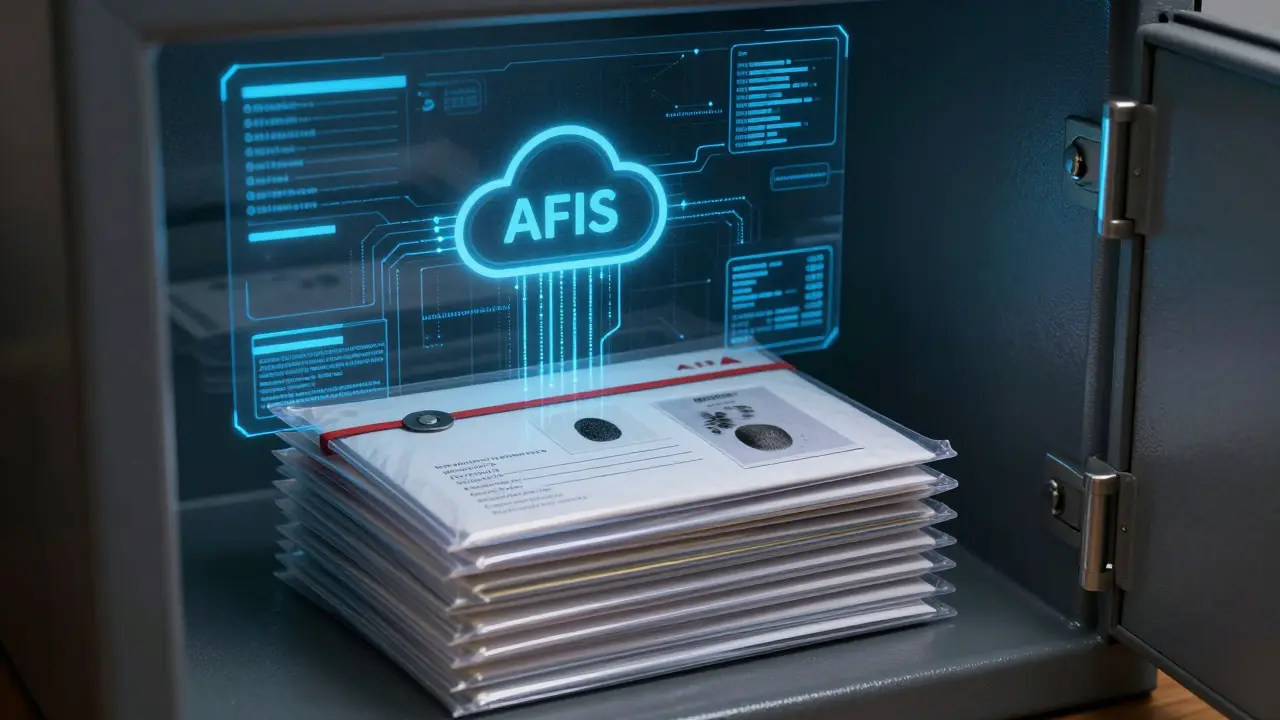
Gone are the days when examiners spent hours flipping through binders of paper cards. Today, most law enforcement agencies use AFIS (Automated Fingerprint Identification Systems) to store digital versions of elimination prints. When a latent print is digitized, the system searches the local database of known exemplars first. If there is a match, it flags it as a potential elimination. If not, it moves on to the national IAFIS database.
This automation speeds up the process significantly. However, technology introduces its own challenges. Digital files can be corrupted, metadata can be lost, or software updates can change how prints are indexed. Therefore, it is best practice to retain the original physical cards for a certain period, especially in major cases, as a backup against digital failure.
Furthermore, cloud-based storage solutions are becoming more common. These allow multiple locations to access the same exemplar data securely. For multi-jurisdictional investigations, this means a detective in Seattle can access an exemplar collected in Vancouver, Washington, without sending physical mail. Just ensure your agency has strict access controls to protect privacy.
Common Pitfalls and How to Avoid Them
Even experienced investigators make mistakes with elimination prints. Here are the most frequent errors and how to fix them:
| Error Type | Description | Prevention Strategy |
|---|---|---|
| Poor Labeling | Misidentifying fingers or missing dates leads to confusion in the lab. | Use pre-printed cards with checkboxes for fingers and mandatory date fields. |
| Over-Inking | Too much ink blurs ridge details, making comparison impossible. | Practice rolling technique; use less ink than you think is necessary. |
| Forgotten Individuals | Failing to take prints from witnesses or first responders. | Create a checklist of all persons present at the scene before leaving. |
| Custody Breaks | Unsecured storage allows tampering or loss. | Seal cards in evidence bags immediately; log all access. |
| Digital Only Reliance | Losing physical backup if digital system fails. | Retain original paper cards for major cases per agency policy. |
One subtle pitfall is cognitive bias. If an investigator tells the forensic examiner, "I bet this is the victim's print," the examiner may subconsciously look for similarities rather than differences. To combat this, keep the comparison blind whenever possible. Let the examiner work with the latent print and the exemplar without prior context about who the exemplar belongs to.
Legal Implications of Poor Exemplar Management
If you mess up the elimination print process, it doesn't just waste time; it can hurt your case in court. Defense attorneys love to attack the foundation of forensic evidence. If you failed to take prints from a key witness, they might argue that the latent print on the gun could have been planted by that witness. If your chain of custody is sloppy, they can question whether the exemplar actually belongs to the person you claim it does.
In recent years, courts have placed greater emphasis on the scientific validity of forensic methods. While fingerprint identification remains admissible in most jurisdictions, the scrutiny on the process has increased. Judges want to see that you followed standard operating procedures. Having a well-documented elimination print protocol protects you from these challenges.
Remember, the goal of elimination prints is to narrow the field. If you do it right, you eliminate the innocent quickly and focus your resources on the guilty. If you do it wrong, you muddy the waters and give the defense ammunition. Treat every print as if it will be scrutinized under a microscope in a courtroom, because it probably will be.
Frequently Asked Questions
Do you need to take elimination prints from everyone at a crime scene?
Not necessarily everyone, but anyone who had reasonable opportunity to touch the evidence items. Prioritize victims, suspects, witnesses, and first responders. If a person was merely passing by and did not interact with the scene, their prints are less likely to be relevant, but judgment should be exercised based on the specific circumstances.
What happens if an elimination print matches a latent print?
If a latent print matches an elimination print, the examiner concludes that the latent print belongs to that known individual. This effectively removes that person from consideration as the source of the unknown print. The investigation then focuses on other latent prints or lines of inquiry.
How long should elimination prints be kept?
Retention policies vary by jurisdiction and case type. Generally, they should be kept for the duration of the case plus any appeal period. For major felonies, it is common practice to keep the physical cards indefinitely or for a very long period, while digital copies may be archived according to IT retention schedules.
Can digital scanners replace traditional ink cards entirely?
While digital scanners are faster and cleaner, they are not yet a complete replacement for all scenarios. Some agencies still require physical cards for legal backup or when dealing with damaged fingers that scan poorly. Best practice is to use digital for speed but retain physical records for critical cases.
What is the difference between an elimination print and a suspect print?
An elimination print is from a known individual whose identity is not in question, used to rule them out. A suspect print is from a person suspected of committing the crime. Both are compared against latent prints, but the intent differs: elimination clears the innocent, while suspect matching aims to prove guilt.