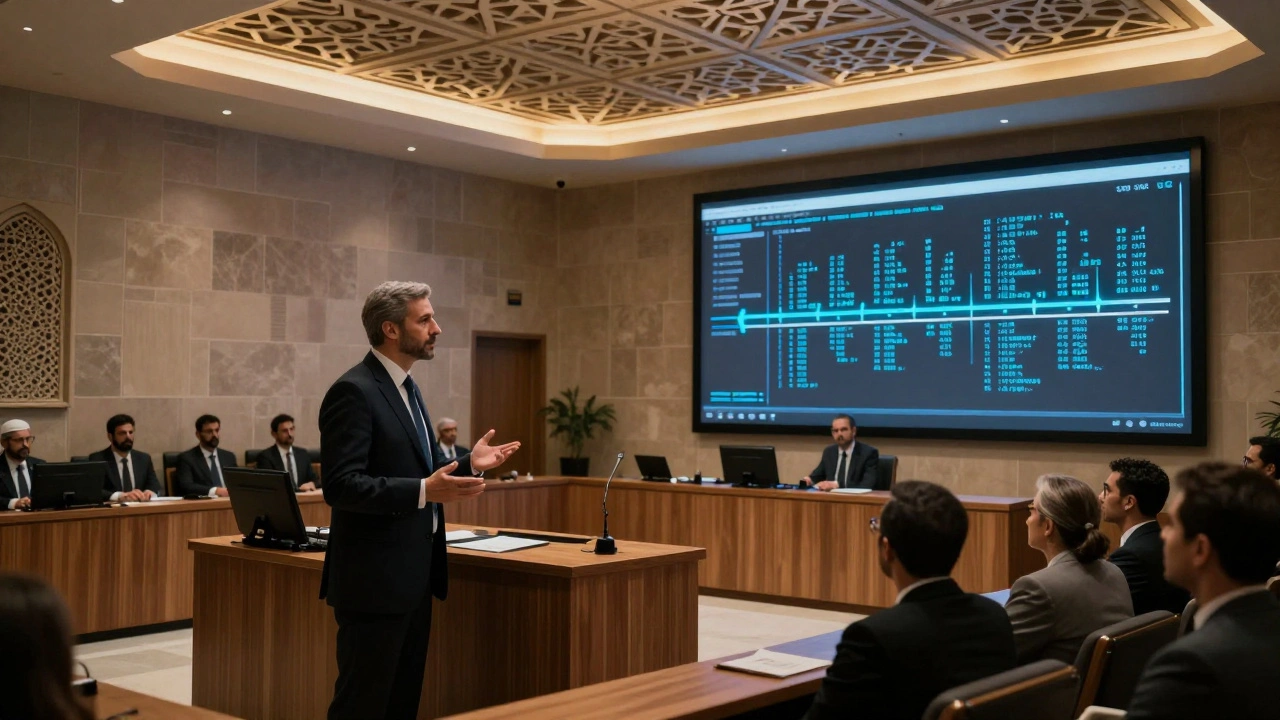
Imagine standing in a courtroom. The jury looks at you with blank stares. You just explained that a specific registry key on a Windows machine proves the defendant accessed a file three days before the alleged crime. To you, it’s a smoking gun. To them, it sounds like technobabble. If you can’t bridge that gap between complex code and human understanding, your evidence might get tossed out-or worse, ignored.
Presenting digital evidence in court isn't just about having the right data; it's about telling a story that holds up under legal scrutiny and makes sense to people who don't know a hash value from a hard drive. As we move through 2026, the rules are tightening. Courts are demanding more than ever for reliability, transparency, and clarity. Whether you're a seasoned forensic examiner or a lawyer preparing for trial, understanding how to navigate this landscape is critical.
The Legal Gatekeepers: FRE 702 and the Daubert Standard
Before you even think about showing a screenshot or explaining a log file, you need to pass the legal gatekeepers. In U.S. federal courts, the big boss is Federal Rule of Evidence 702. This rule dictates when an expert can testify. It’s not enough to be smart or experienced. Your methods must be scientifically valid.
This connects directly to the Daubert standard, established by the Supreme Court in 1993. Judges act as gatekeepers here. They ask tough questions: Has your method been tested? Is it peer-reviewed? What is the known error rate? Are there standards controlling its operation? And is it generally accepted in the scientific community?
In 2023, the Judicial Conference amended FRE 702 to clarify that judges must ensure experts demonstrate their opinions reflect a reliable application of principles to facts by a preponderance of evidence. This means you can’t just say "the tool said so." You have to prove the tool works correctly for the specific artifact you’re analyzing. If you’re using a proprietary algorithm to parse WhatsApp messages, you need to show how that algorithm was validated. Vague answers will get you struck from the record.
Authentication: Proving the Data is Real
Even if your methodology is sound, the evidence itself must be authentic. Under FRE 901, you must provide sufficient evidence to support a finding that the item is what the proponent claims it is. For digital evidence, this is tricky. Anyone can Photoshop an image or spoof an email header.
Historically, this required live testimony from someone who handled the device. But the law has evolved. Amendments in 2017 added FRE 902(13) and 902(14). These rules allow for self-authentication of records generated by electronic processes and data copied from electronic devices, provided they are accompanied by a certification of integrity.
This is a game-changer for efficiency. Instead of calling a witness to testify for hours about how they copied files, a forensic expert can provide a certification stating that the process used ensures the data hasn’t changed. However, in contested cases, opposing counsel will still challenge this. They’ll argue that the certification is boilerplate or that the underlying system was compromised. That’s why your documentation needs to be bulletproof. You need to show exactly how you captured the data, when, and with what tools.
Chain of Custody: The Backbone of Admissibility
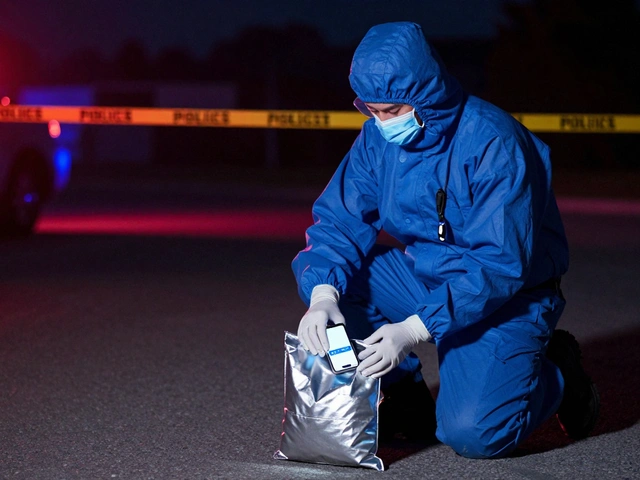
If authentication is the face of your evidence, chain of custody is its backbone. Without a clear, unbroken chain, your evidence is worthless. Chain of custody refers to the chronological documentation or paper trail that records the sequence of custody, control, transfer, analysis, and disposition of physical or electronic evidence.
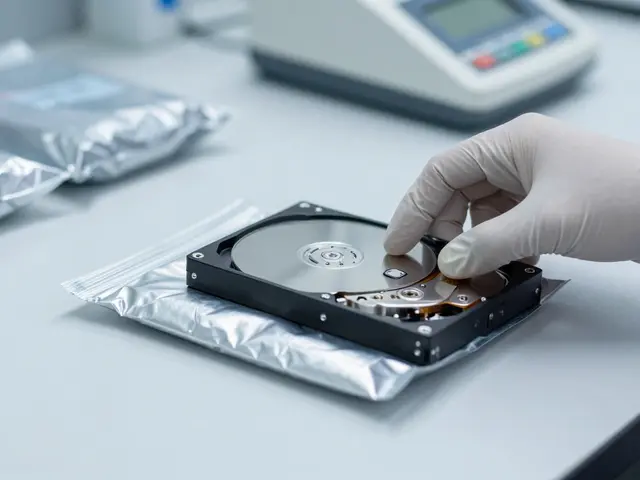
For digital evidence, this starts the moment you seize a device. Did you use a write-blocker? Write-blockers prevent any new data from being written to the source media, ensuring the original state is preserved. If you plug a phone into your computer without one, you risk altering timestamps or creating new logs. That’s fatal to your case.
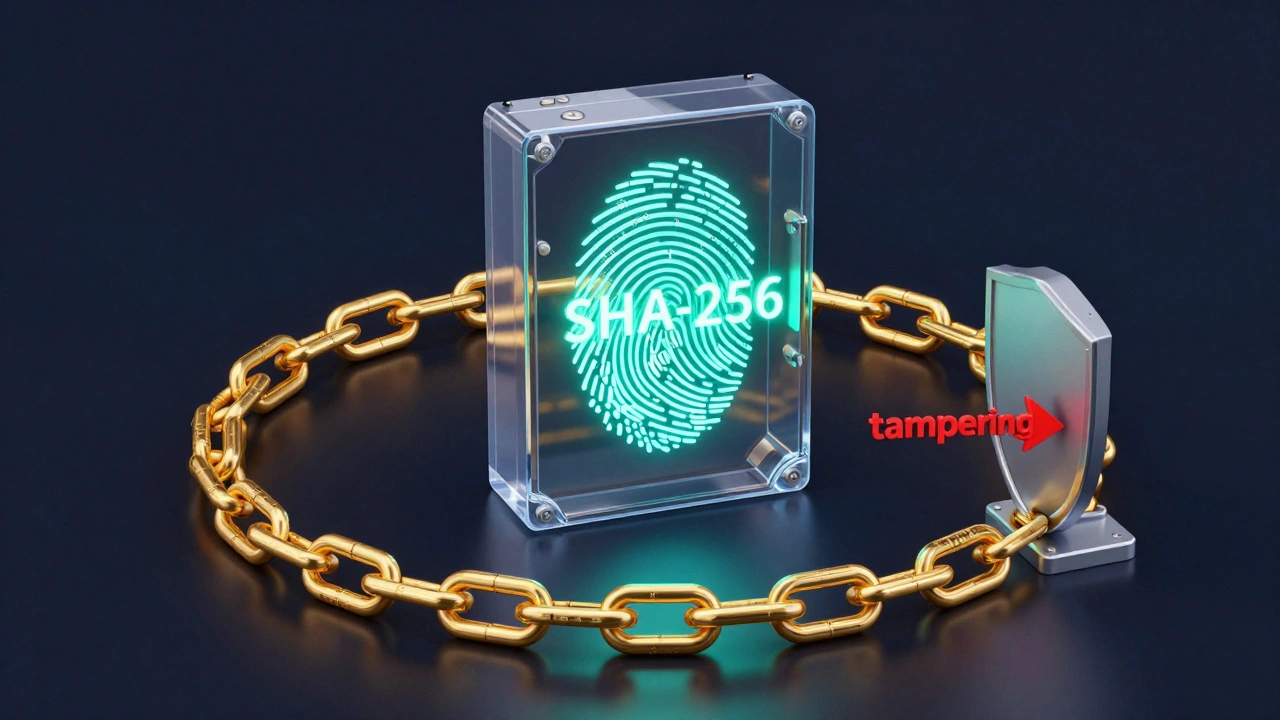
You also need cryptographic hashing. When you acquire data, you generate a hash value-usually SHA-256. This creates a unique digital fingerprint of the data. If even one bit changes, the hash changes completely. By recording this hash at acquisition and re-checking it later, you can mathematically prove the data hasn’t been tampered with. Keep detailed logs of every person who handled the evidence, where it was stored, and when. Gaps in this timeline give defense attorneys plenty of ammunition to attack your credibility.
Tools of the Trade: Validation Matters
What tools do you use? In 2026, the market is dominated by heavy hitters like Cellebrite UFED, Magnet AXIOM, and OpenText EnCase. There are also open-source options like Autopsy.
But here’s the catch: relying on these tools blindly is dangerous. Critics call this "black box forensics." If you don’t understand how the tool parses data, you can’t explain it in court. For example, some tools might misinterpret timezone conversions or fail to extract certain encrypted artifacts.
The National Institute of Standards and Technology (NIST) runs the Computer Forensics Tool Testing (CFTT) program. Many experts rely on CFTT-tested products. But even then, you should perform your own validation. Document the version of the software you used. Show that you tested it against known datasets. If you’re testifying, be ready to explain not just what the tool found, but how it found it. Transparency builds trust.
| Tool | Primary Use Case | Key Strength | Potential Weakness |
|---|---|---|---|
| Cellebrite UFED | Mobile Device Extraction | Deep physical extractions from iOS/Android | High cost; proprietary algorithms |
| Magnet AXIOM | Comprehensive Analysis | Strong visualization and correlation features | Resource-intensive processing |
| OpenText EnCase | Traditional Disk Forensics | Industry standard for desktop investigations | Steeper learning curve for mobile/cloud |
| Autopsy | Open Source Investigation | Free and transparent codebase | Lacks advanced automated parsing |
Cloud Forensics and Encryption: New Challenges
The days of just imaging a hard drive are over. Most data now lives in the cloud. Services like Microsoft 365, Google Workspace, and Amazon Web Services (AWS) hold vast amounts of electronically stored information (ESI). Collecting this data requires different skills. You often need to work with service providers to obtain logs and backups via legal process.
Encryption is another major hurdle. With full-disk encryption standard on modern smartphones and laptops, getting access to data is harder than ever. Techniques like checkm8 exploits for older Apple devices or leveraging iCloud backups are common, but they come with limitations. Not all devices are vulnerable. Not all backups contain everything. You need to be honest about these limits in court. Don’t promise what you can’t deliver.
Also, consider privacy. Imaging an entire device can expose sensitive personal data unrelated to the case. Courts are increasingly sensitive to this. Using targeted collection methods and privacy filters can help mitigate risks. It shows professionalism and respect for due process.
Testifying Effectively: Communication is Key
You’ve done the work. Now you have to talk about it. The best technical expert in the world fails if they can’t communicate. Here’s how to win over the jury:
- Avoid Jargon: Don’t say "hash collision" or "registry artifact." Say "digital fingerprint" or "computer memory record." Explain concepts simply.
- Use Visuals: Timelines, maps, and side-by-side comparisons are powerful. A map showing GPS tracks is easier to grasp than a spreadsheet of coordinates.
- Be Honest About Limits: If you’re not sure, say so. Admitting uncertainty builds credibility. Overstating conclusions invites aggressive cross-examination.
- Anticipate Questions: Defense attorneys will look for holes. Prepare for questions about tool errors, alternative explanations, and potential contamination.
- Stay Neutral: You’re an expert witness, not a party to the case. Maintain emotional distance. Let the facts speak for themselves.
Remember, your job is to educate the trier of fact. Help them understand the significance of the data without overwhelming them. Practice your testimony. Do mock sessions. Get feedback. It makes a huge difference.
Costs and Hiring Experts
Hiring a digital forensics expert isn’t cheap. Rates vary widely based on experience, location, and complexity. In the U.S., hourly rates for consulting often range from $200 to $500+. Deposition and trial testimony can cost more. Large cases involving extensive e-discovery can run into six figures.
When hiring, look beyond credentials. Check for relevant certifications like CFCE (Certified Forensic Computer Examiner), GCFA (GIAC Certified Forensic Analyst), or EnCE. Ask about their case experience. Have they testified in similar cases? Do they have lab accreditation (e.g., ISO/IEC 17025)? Avoid experts who overstate their qualifications or lack transparency about their methods.
What is the most important rule for admitting digital evidence?
The most critical requirement is authenticity under FRE 901. You must prove the evidence is what it claims to be. This is typically achieved through a documented chain of custody, cryptographic hashing, and expert testimony validating the collection and preservation methods.
How does the Daubert standard apply to digital forensics?
The Daubert standard requires that expert testimony be based on reliable principles and methods. For digital forensics, this means the tools and techniques used must be scientifically valid, tested, peer-reviewed, and have a known error rate. Judges act as gatekeepers to ensure these criteria are met before evidence is presented to the jury.
Can I use screenshots as evidence in court?
Screenshots alone are rarely sufficient. They can be easily manipulated. To admit screenshot evidence, you usually need additional proof of authenticity, such as metadata, witness testimony confirming the content, or forensic extraction of the underlying data from the device to verify the screenshot matches the original source.
What is a write-blocker and why is it necessary?
A write-blocker is a hardware or software device that prevents any data from being written to a storage medium during forensic acquisition. It is necessary to preserve the integrity of the original evidence. Without it, accessing the device could alter timestamps, create new logs, or modify files, compromising the admissibility of the evidence.
How much does it cost to hire a digital forensics expert?
Costs vary significantly. Hourly rates for consulting typically range from $200 to $500+ per hour in the U.S. Trial testimony and depositions often command higher fees. Total costs depend on the scope of the investigation, number of devices, data volume, and complexity. Simple cases may cost a few thousand dollars, while large-scale e-discovery projects can exceed $100,000.