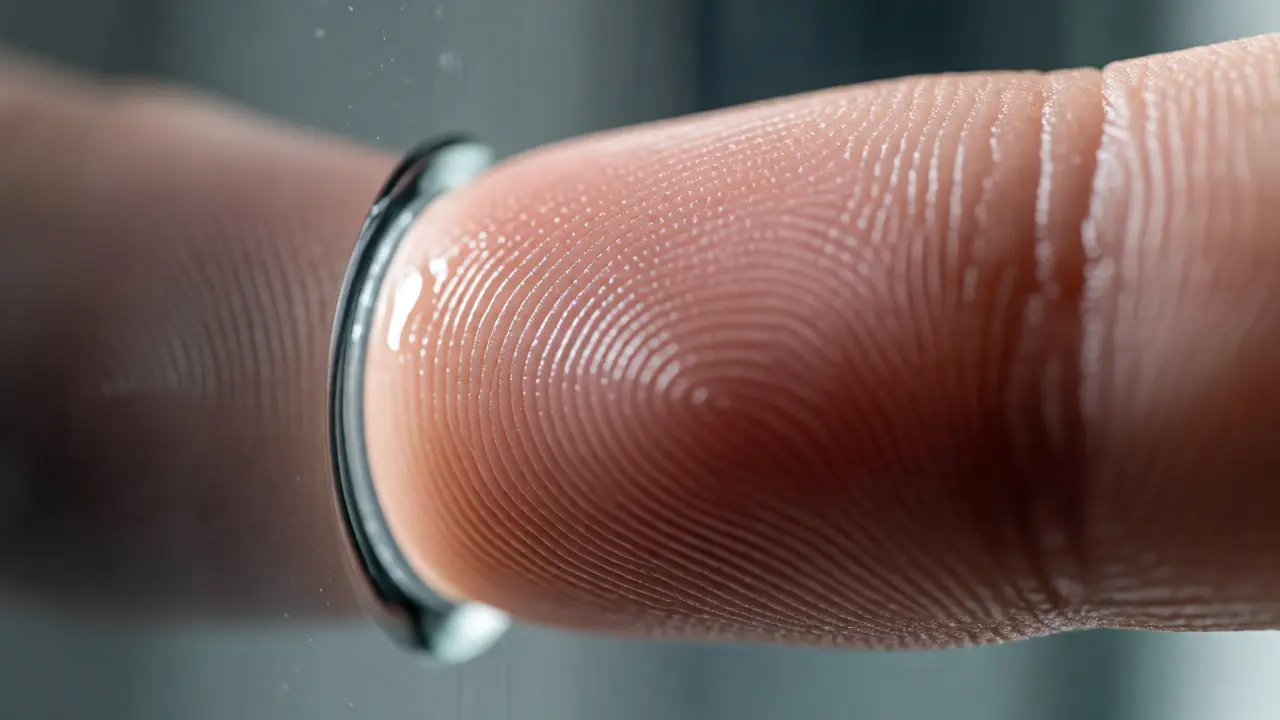
You find a latent print at a crime scene. It looks nothing like the known ten-print card you pulled from the suspect’s file. The loops are squashed, the ridges are blurred, and the core seems to have migrated three millimeters to the left. Your first instinct might be to reject it as unusable or, worse, to force a match that isn’t there. But here is the reality of friction ridge skin: it is elastic, not rigid. When you press your finger against glass, you are not stamping an ink pad; you are deforming tissue. Understanding how this deformation happens-and why-is the difference between a confident identification and a wrongful conviction.
The Physics of Elastic Deformation
To interpret distortion, you have to understand the medium. Friction ridge skin is composed of three layers: the epidermis (outer), dermis (middle), and hypodermis (inner fat layer). The ridges themselves sit on top of papillary bodies anchored to the underlying bone structure. When pressure is applied, the soft tissue compresses laterally. Think of squeezing a tube of toothpaste. If you squeeze the middle, the ends bulge out. If you squeeze one side, the other side stretches.
This lateral flow causes two primary types of geometric changes:
- Compression: Ridges get closer together, often merging into a single line if pressure is excessive.
- Dilation: Ridges spread apart, making minutiae appear farther away than they actually are.
Identifying Pressure Distortion Patterns
Not all distortion looks the same. Experienced examiners look for specific signatures that indicate how the finger was placed. One common issue is "smudging," where the finger slides during contact. This creates a directional blur. If the smear moves upward, the finger likely lifted too quickly while still under pressure. If it moves sideways, the subject may have twisted their hand.
Another critical indicator is the "ridge count" anomaly. In a standard loop, the distance between the delta and the core should remain relatively consistent across similar fingers. If you see a loop with a ridge count of 14 on the known print but only 8 on the latent, you aren't necessarily looking at a different person. You are likely looking at high-pressure compression. The ridges were squeezed so tightly that some became indistinguishable, effectively reducing the visible count.
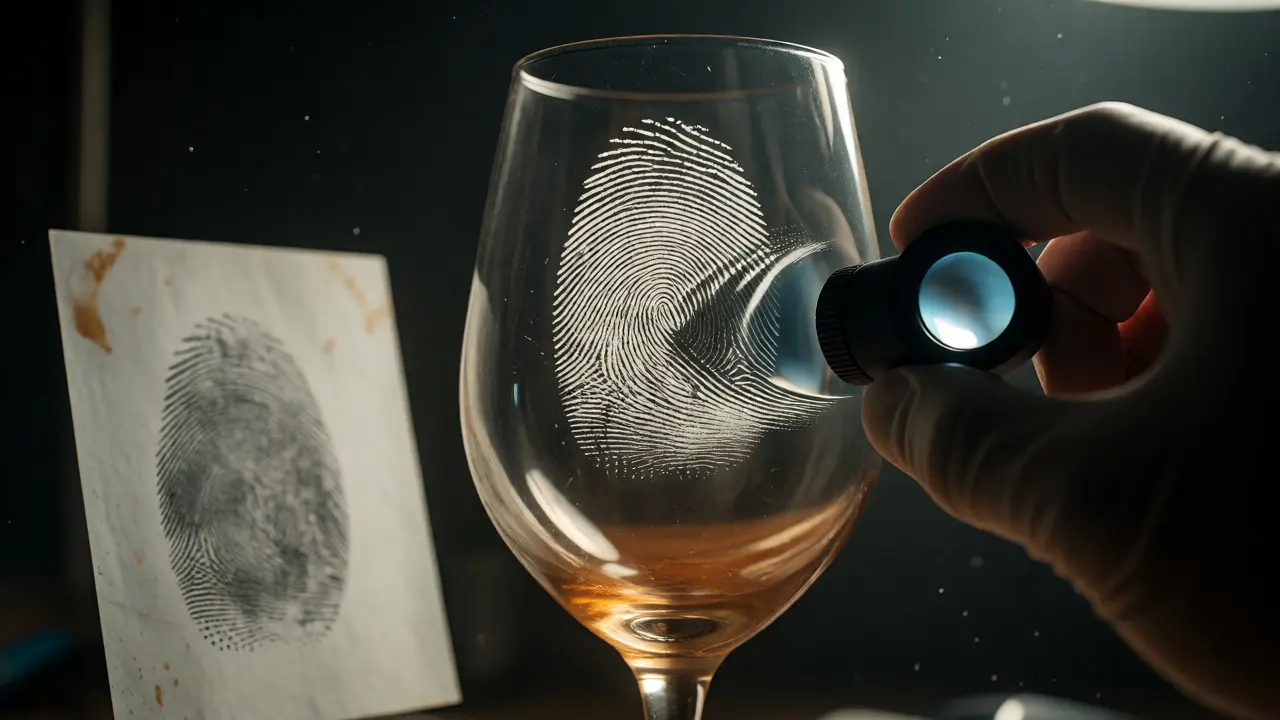
Consider the case of a fingerprint left on a curved object, like a wine glass. The curvature forces the flat plane of the finger to conform to a cylindrical shape. This introduces non-linear distortion. The center of the print might remain relatively true, while the edges stretch dramatically. Trying to compare a flat-rolled known print to a curved-surface latent without accounting for this geometric warping will lead to false exclusions.
Substrate Influence on Ridge Detail
The surface receiving the print dictates much of the final appearance. We categorize substrates into three main groups, each causing distinct distortion artifacts:
| Substrate Type | Primary Distortion Effect | Common Artifact |
|---|---|---|
| Hard Non-Porous (Glass, Metal) | Lateral spreading due to lack of absorption | Ridge merging, edge dilation |
| Porous (Paper, Cardboard) | Absorption spreads sweat salts beyond ridge boundaries | Halo effect, loss of fine detail |
| Textured (Fabric, Wood) | Interference pattern from surface grain | Moiré patterns, broken ridges |
The Role of Skin Condition and Age
We often assume fingerprints are static identifiers, but the skin itself changes. Dryness, moisture, and age alter ridge clarity. An elderly person’s skin has less elasticity and more pronounced creases. Their prints often show "double lines" or fragmented ridges because the skin folds over the ridges. This is not distortion caused by pressure; it is anatomical variation.
Conversely, a young child’s skin is thinner and more pliable. Their prints are prone to rapid degradation and higher sensitivity to minor pressure changes. When comparing a latent print from a teenager to a known print taken years later, you must account for growth-related changes in ridge density. While the fundamental pattern (loop, whorl, arch) remains stable, the absolute size and spacing of ridges change as the finger grows. Ignoring developmental scaling leads to unnecessary doubt.
Medical conditions also play a role. Chemotherapy patients often experience peeling skin, leading to temporary ridge loss. Diabetics may have reduced sweat production, resulting in fainter prints that require chemical enhancement. These conditions don't distort the geometry necessarily, but they degrade the signal-to-noise ratio, making interpretation harder.
Advanced Interpretation Techniques
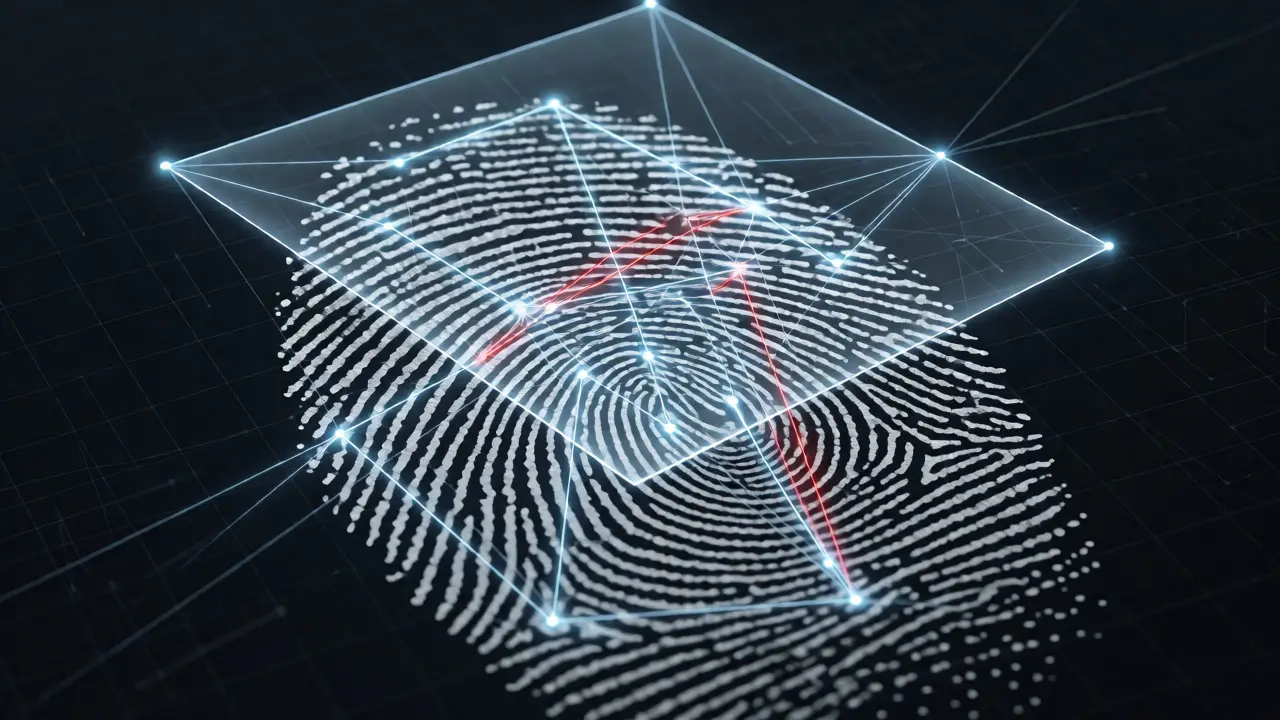
So, how do you handle these variables? Modern forensic practice relies on a combination of visual assessment and digital modeling. Examiners use software to simulate pressure effects. By applying a virtual "warp" to the known print, they can test whether the latent print matches the distorted version of the known. This approach, known as probabilistic matching, moves beyond simple overlay comparison.
One effective heuristic is the "anchor point" method. Identify areas of the print that are least affected by distortion-usually the central core where pressure is most evenly distributed. Use these stable points as anchors. Then, assess the peripheral areas relative to those anchors. If the periphery shows systematic dilation radiating from the core, it confirms a specific type of placement error rather than a mismatched identity.
Always consider the sequence of events. Did the subject grab a weapon? A grip creates localized high-pressure zones. Did they slide their hand along a railing? That creates linear smearing. Contextual clues from the crime scene help validate your interpretation of the distortion. A distorted print isn't just a bad image; it's a record of movement.
Common Pitfalls in Analysis
The biggest mistake analysts make is treating every discrepancy as evidence of exclusion. If two minutiae points don't align perfectly, novices often declare a mismatch. However, within a margin of error defined by distortion potential, those points may still correspond. The ACE-V methodology (Analysis, Comparison, Evaluation, Verification) requires strict documentation of why discrepancies are deemed acceptable.
Another pitfall is over-reliance on automated systems. Algorithms like AFIS (Automated Fingerprint Identification System) struggle with heavily distorted prints. They may return false candidates or miss true matches because their templates assume idealized ridge flows. Human oversight is critical here. An examiner who understands the physics of skin deformation can spot a match that the computer discards.
Finally, beware of confirmation bias. Once you have a suspect in mind, you might unconsciously "fix" the distortion in your mind to fit the known print. Blind verification, where a second examiner reviews the latent without knowing the candidate, helps mitigate this risk. It forces the analyst to justify every interpretation of distortion objectively.
Can distorted fingerprints still be used for identification?
Yes, absolutely. Distortion does not erase identity; it alters presentation. As long as sufficient quality features (minutiae) are preserved and the nature of the distortion can be explained by physical factors like pressure or substrate, a reliable identification can be made. The key is documenting the cause of the distortion.
How does humidity affect fingerprint distortion?
High humidity increases skin moisture, which can cause ridges to swell slightly and become more pliable. This leads to increased lateral spreading when pressed against hard surfaces. Conversely, very dry air makes skin brittle, increasing the likelihood of ridge breaks and double lines rather than smooth dilation.
What is the difference between distortion and poor quality?
Poor quality refers to a lack of clear ridge detail due to faint deposits, dirt, or low-resolution imaging. Distortion refers to a geometric alteration of the ridge path due to mechanical forces. A print can be high quality (clear black ridges on white background) but heavily distorted (ridges bent unnaturally). Both need addressing, but through different methods.
Do gloves prevent fingerprint distortion?
Gloves reduce direct skin contact but do not eliminate distortion. Latex and nitrile gloves have their own texture and elasticity. Pressing a gloved finger against a surface creates a negative impression of the glove's surface combined with the finger's pressure. This often results in unique distortion patterns specific to the glove material and thickness.
How do examiners quantify the amount of distortion?
Examiners use qualitative descriptions (e.g., "moderate dilation") and quantitative metrics like ridge density changes or angular deviation of ridge flow. Advanced labs use digital image correlation software to map displacement vectors across the print area, providing a numerical value for strain in specific regions.