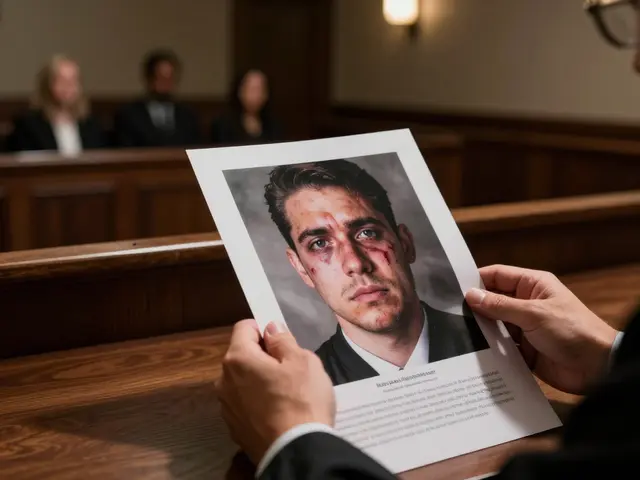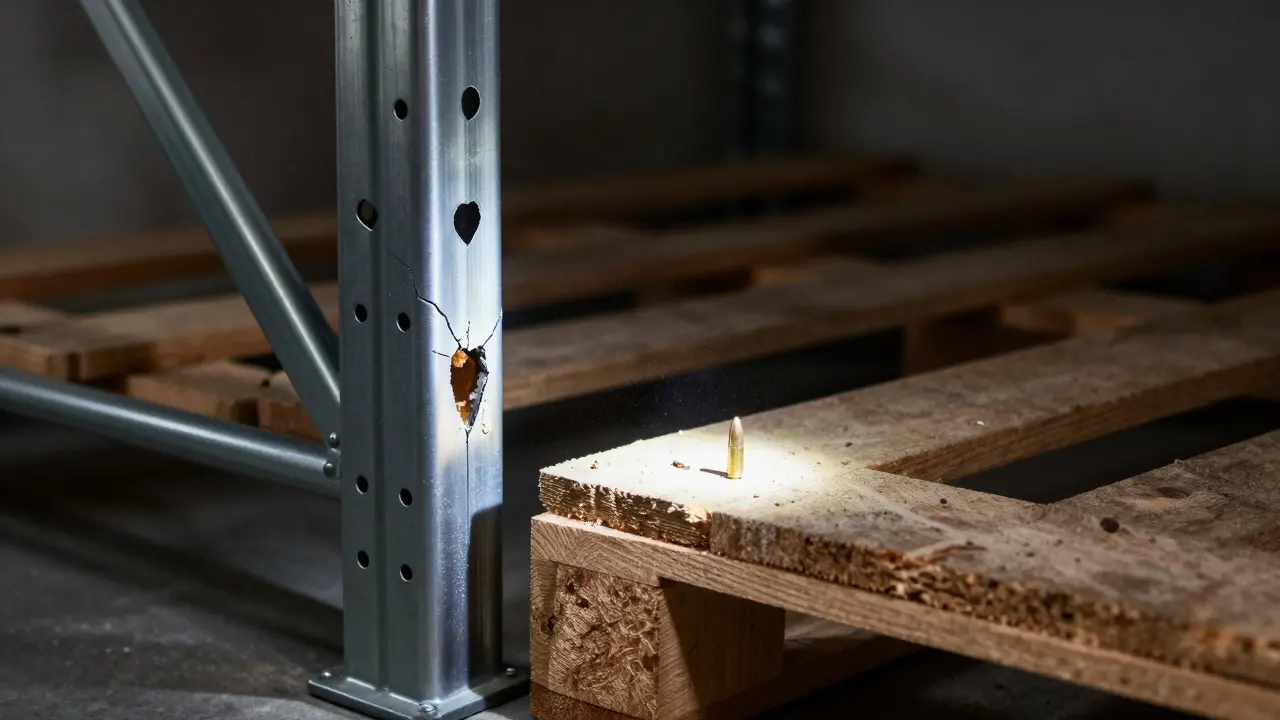
Imagine finding a bullet embedded in a concrete wall. It’s not where the shooter aimed. It hit a metal beam first, deflected at a sharp angle, and finally came to rest in the masonry. To reconstruct that scene, you can’t just draw a straight line from the gun to the final hole. You have to trace the secondary projectile paths created by the ricochet. This is where standard ballistic calculations often fail, and forensic expertise becomes critical.
Ricochet analysis is the process of determining the original direction of a projectile after it has struck an intervening surface. Unlike direct hits, which follow a predictable parabolic arc, ricochets introduce chaotic variables. The shape of the bullet, the hardness of the surface, and the angle of entry all change the exit vector. For investigators, this means distinguishing between a primary impact (the first strike) and a secondary impact (the final resting place or subsequent strikes).
Understanding the Physics of Deflection
To analyze a ricochet, you must first understand how energy transfers during impact. When a full metal jacket bullet hits a hard surface like steel or concrete, it doesn't always break apart. Instead, it skims across the surface. The degree of deflection depends heavily on the angle of incidence. If the bullet hits at a shallow angle, say less than 15 degrees, it is more likely to ricochet predictably. If it hits head-on, it will likely fragment or embed itself, ending its flight.
The law of reflection applies loosely here. In physics, the angle of incidence equals the angle of reflection. However, in ballistics, friction and deformation alter this. A bullet hitting a smooth surface retains more of its velocity than one hitting a rough, textured surface. This difference in energy loss dictates how far the projectile travels after the bounce. Investigators use these physical principles to work backward from the final impact point to the intermediate bounce point.
Identifying Primary vs. Secondary Impact Sites
The most common mistake in field investigation is assuming the deepest hole is the source of the shot. In reality, the primary impact site often looks different from the secondary one. A primary impact on a hard surface usually creates a distinct crater with radiating cracks or spall marks. The metal may be pushed outward. In contrast, a secondary impact, where the bullet enters a softer material like wood or drywall after losing speed, might look cleaner but smaller.
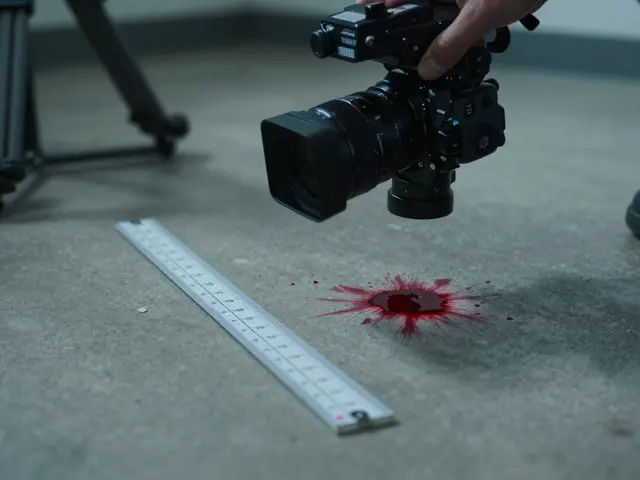
You need to examine the debris field. If you find fragments of the bullet near the first potential impact point, that is a strong indicator of the primary strike. If the bullet remains intact at the final location, it suggests it survived the initial bounce. Photographing both sites with scale references is non-negotiable. You are looking for asymmetrical damage patterns that indicate the direction of travel before the bounce occurred.
Tools for Tracing Trajectories
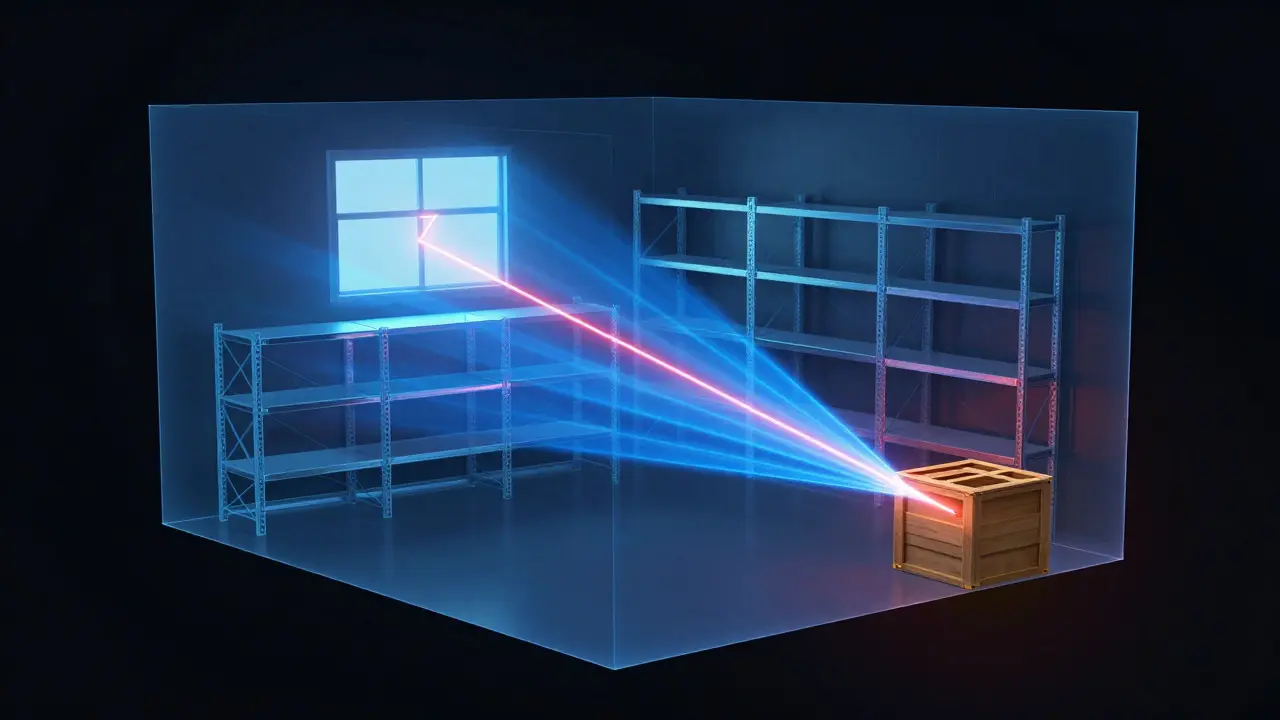
Once you have identified the impact points, you need tools to connect them. Traditional string-and-plumb-bob methods are still used, but they lack precision for complex multi-bounce scenarios. Modern labs rely on laser scanning technology to create 3D models of the crime scene. These scanners capture millimeter-level details of walls, floors, and obstacles. By overlaying the bullet's path onto this digital model, analysts can simulate the ricochet angles.
Another essential tool is the ballistic gelatin block, though this is primarily for testing rather than field analysis. In the lab, investigators fire test bullets at similar surfaces to see how specific calibers behave. They measure the exit angles and compare them to the crime scene data. This empirical approach helps validate theoretical calculations. Without this comparison, your reconstruction is just a guess based on idealized physics.
Calculating Angles and Vectors
Mathematics plays a crucial role in confirming your visual estimates. You calculate the horizontal and vertical components of the projectile's velocity. Let's say a bullet hits a steel plate at 30 degrees from the horizontal. If the surface is perfectly flat, the reflected angle should also be 30 degrees below the horizontal. But if the surface is sloped, you must adjust your coordinate system.
- Horizontal Angle: Measures left-to-right deviation.
- Vertical Angle: Measures up-and-down deviation.
- Elevation Change: Accounts for gravity acting on the bullet during flight.
Common Pitfalls in Ricochet Reconstruction
Even experienced examiners make errors when dealing with ricochets. One major pitfall is ignoring air resistance. While minor over short distances, drag accumulates. A bullet loses significant velocity after bouncing, especially if it tumbles. This tumbling effect, known as yaw, causes the projectile to fly erratically. If you assume a stable flight path, your calculated origin will be off.
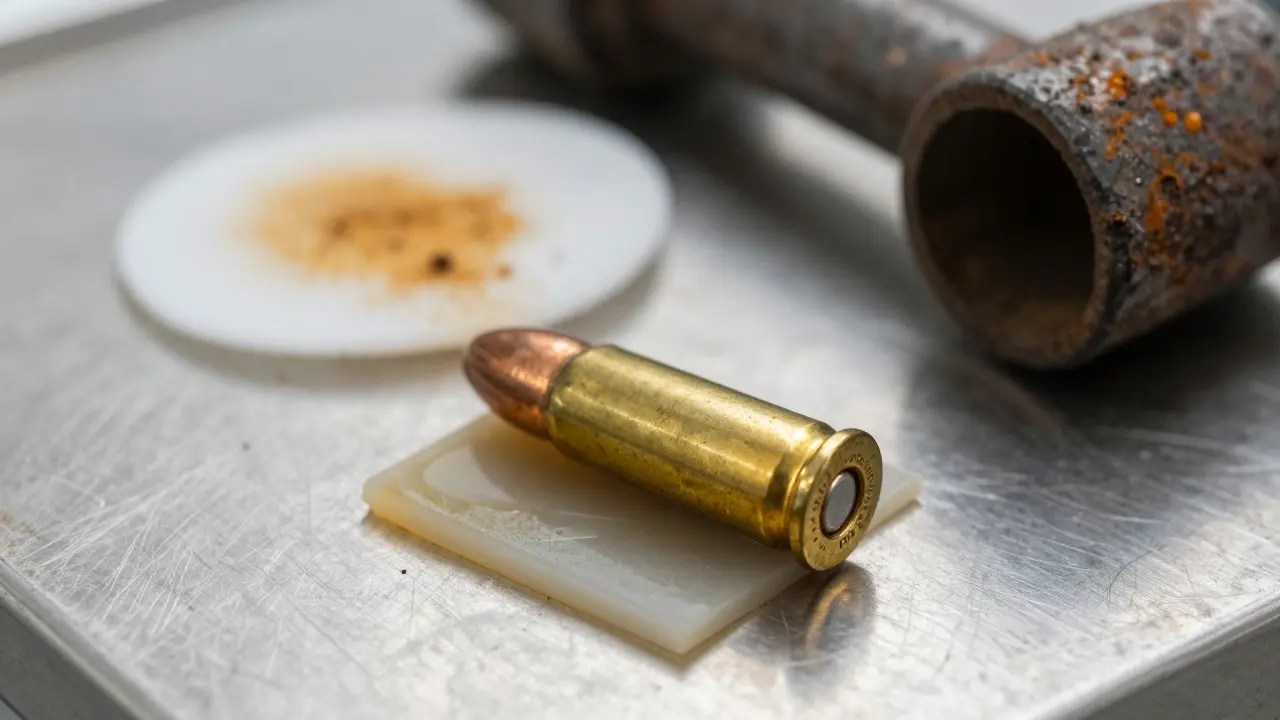
Another issue is surface degradation. Old paint, rust, or dirt on a metal surface changes the coefficient of friction. A rusty pipe acts differently than a polished rail. Documenting the condition of every surface involved is vital. If you miss a small scratch or dent on the bounce surface, you might misinterpret the deflection angle. Finally, don't forget about environmental factors. Wind can push a slow-moving, post-ricochet bullet off course. In indoor scenes, drafts from HVAC systems can have a measurable effect on lighter projectiles.
Case Study: The Warehouse Incident
Consider a real-world scenario involving a dispute in a storage facility. A .45 caliber round was found lodged in a wooden pallet. Initial assumptions suggested a direct shot from the entrance. However, examination revealed a small, conical depression in a steel shelving unit ten feet away. The bullet had bounced off the shelf leg.
By measuring the angle of the shelf leg and the final embedding depth in the wood, analysts determined the bullet lost 40% of its kinetic energy upon impact. Using laser scans, they traced the path back to a window three stories up. The shooter wasn't inside the warehouse; they were on a neighboring rooftop. This case highlights why relying solely on the final impact point leads to false conclusions. The secondary path provided the key to identifying the true vantage point.
| Feature | Direct Hit | Ricochet Impact |
|---|---|---|
| Energy Retention | High (80-90%) | Low (30-60%) |
| Debris Pattern | Radial cracks/spall | Irregular, often minimal spall |
| Bullet Integrity | Often fragmented | Usually intact or deformed |
| Trajectory Predictability | High (Parabolic) | Low (Chaotic/Tumbling) |
Best Practices for Field Documentation
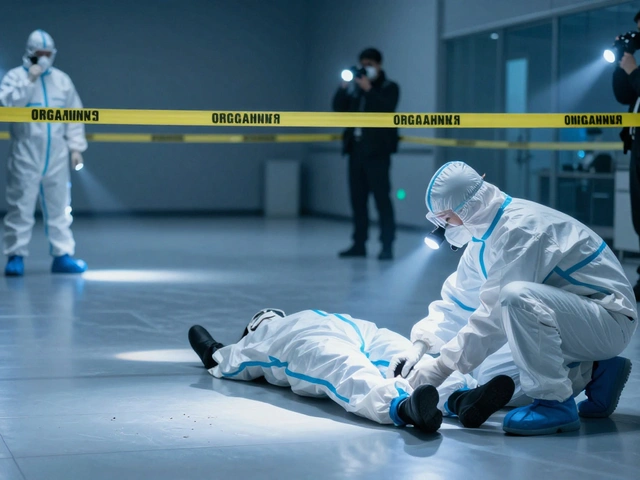
When you arrive at a scene with potential ricochets, start wide. Take panoramic photos before focusing on individual holes. Use a laser level to mark reference points on the floor and ceiling. This creates a grid system that makes later 3D modeling easier. Measure the height of every impact point relative to the floor. Small errors in height measurement compound quickly when calculating angles.
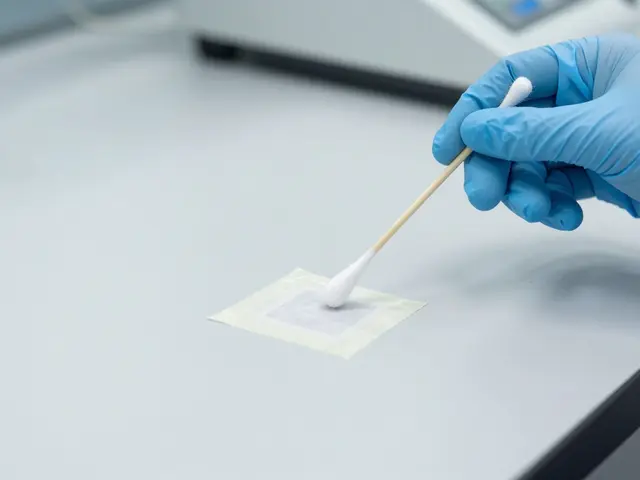
Collect samples from the bounce surface. Swab the area around the primary impact for gunshot residue (GSR). Even if the bullet didn't stay there, the explosion of gases leaves traces. Comparing GSR patterns can confirm whether a specific firearm was fired from that location. Finally, sketch the scene immediately. Memory fades, but a detailed sketch preserves spatial relationships. Include all objects that could have acted as deflectors, no matter how insignificant they seem.
Can a bullet ricochet multiple times?
Yes, but each bounce reduces the bullet's velocity and stability. After two or three bounces, most projectiles tumble unpredictably or lose enough energy to stop. Analyzing multiple bounces requires tracing each segment individually and accounting for cumulative energy loss.
What surfaces cause the most predictable ricochets?
Smooth, hard surfaces like polished steel, glass, or wet concrete produce the most predictable ricochets. Rough or porous materials like brick, dry wood, or soil tend to absorb energy and cause irregular deflections or fragmentation.
How does bullet type affect ricochet behavior?
Full metal jacket (FMJ) bullets are more likely to ricochet cleanly because their casing holds the core together. Hollow point or soft nose bullets tend to deform or expand upon impact, leading to erratic paths or immediate stops.
Is ricochet analysis admissible in court?
Yes, provided the methodology is sound and documented. Courts accept ballistic reconstructions when experts demonstrate rigorous measurement techniques, such as laser scanning and verified trigonometric calculations. The key is proving that the analysis follows established scientific standards.
What is the maximum distance a bullet can travel after a ricochet?
There is no fixed limit, but practical range decreases significantly. A high-velocity rifle round might travel hundreds of yards after a single bounce if it hits a smooth surface at a shallow angle. However, most handgun rounds lose effectiveness within 50-100 meters after a deflection due to energy loss and tumbling.