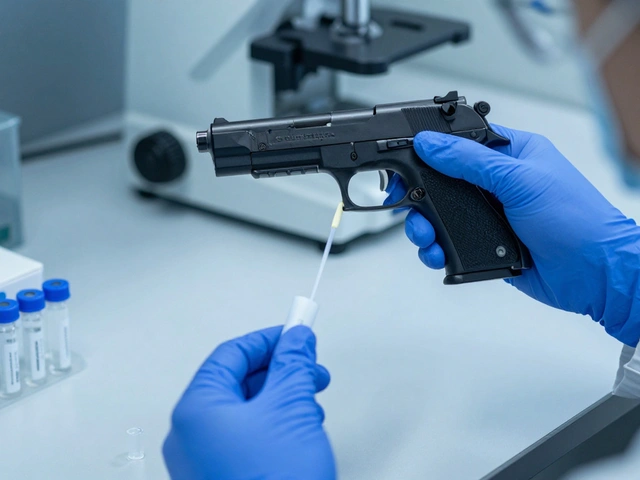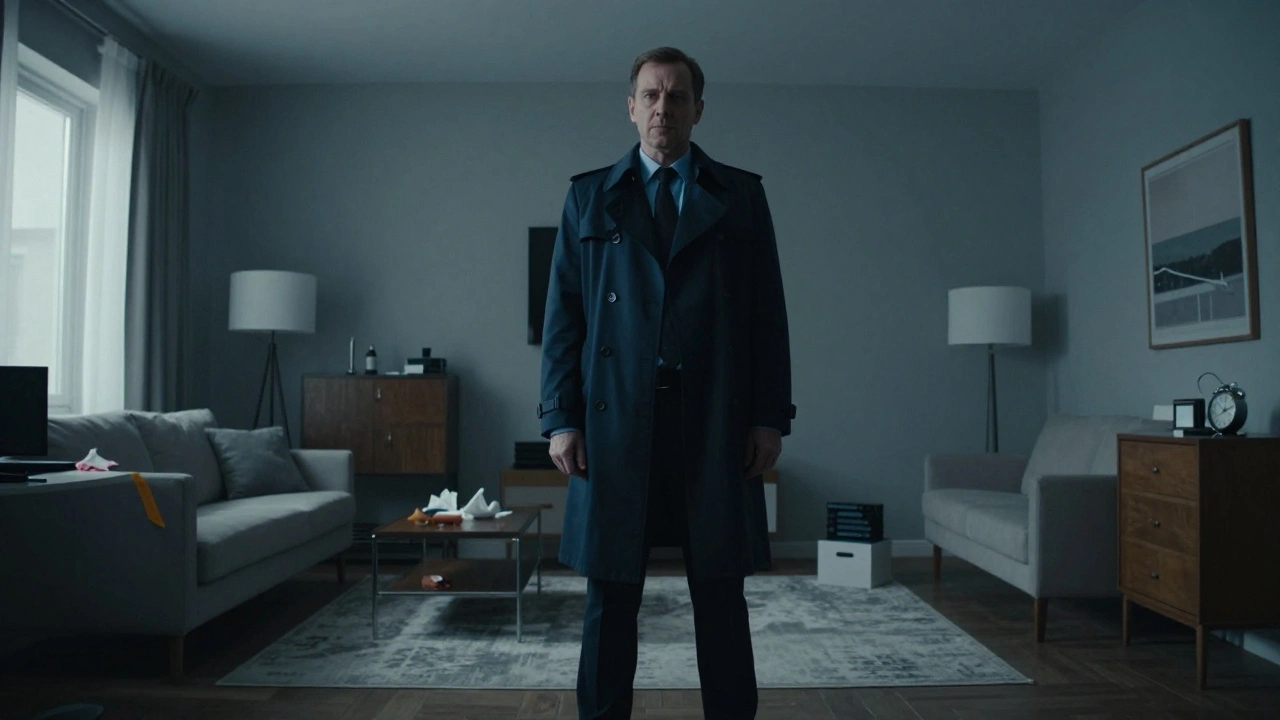
Imagine a crime scene where every piece of furniture is meticulously placed and not a single drop of blood is out of place. A seasoned investigator walks in, glances around for ten seconds, and says, "The killer is a perfectionist, likely a professional in a high-stress job." That's intuition. Now, imagine a team of analysts spending three weeks mapping the trajectory of every splatter, cross-referencing victimology with regional crime statistics, and documenting every behavioral deviation. That's behavioral evidence analysis. One is a flash of insight; the other is a mountain of data. The real question is: which one actually catches the criminal?
In the world of criminal profiling and forensics, there is a constant tug-of-war between the "gut feeling" and the spreadsheet. For decades, the public has been enamored with the idea of the intuitive profiler-the genius who sees a pattern no one else does. But in a courtroom, "I just felt it" doesn't hold up. To move from a hunch to a conviction, we need to understand how these two methodologies actually function and where they fail.
The Mechanics of Intuition in Profiling
Intuitive Decision-Making is a cognitive process that leverages unconscious information and pattern recognition to reach a conclusion without deliberate, step-by-step examination. In criminal profiling, this often manifests as a "hunch." It's not magic; it's actually your brain performing a high-speed search through your mental archives of every case you've ever seen, every textbook you've read, and every human interaction you've had.
The primary strength of intuition is speed. When a suspect is fleeing or a victim is still in danger, you don't have time to run a regression analysis. Intuition allows an investigator to act on evolved emotions and heuristics-mental shortcuts-that are modified by personal experience. If you've spent twenty years in homicide, your "gut" is actually a highly compressed database of thousands of crime scenes. However, the danger is that intuition is a black box. Because the process happens subconsciously, the investigator often can't explain why they reached a certain conclusion, making the insight vulnerable to cognitive biases.
Breaking Down Behavioral Evidence Analysis
Behavioral Evidence Analysis is a systematic methodology that relies on the collection, assessment, and logical evaluation of physical and behavioral evidence to infer the characteristics of an offender. Unlike intuition, this approach is slow, deliberate, and transparent. It treats the crime scene as a data set.
Instead of asking "What does this feel like?", the analyst asks "What does the evidence prove?" This involves a linear or algorithmic decision tree. For example, if an offender spends an hour cleaning the scene, the evidence suggests a desire to conceal the crime-a specific behavior that can be categorized. This method acts as a great leveler. While intuition requires decades of expertise to be reliable, a detailed analytical approach can lead a less experienced investigator to a correct conclusion because it relies on objective facts rather than personal history.
| Feature | Intuitive Approach | Behavioral Evidence Analysis |
|---|---|---|
| Processing Speed | Fast / Automatic | Slow / Deliberate |
| Basis of Conclusion | Pattern Recognition & Heuristics | Objective Data & Logic |
| Dependence on Experience | High (Critical for accuracy) | Low (Methodology guides the user) |
| Risk Factor | Cognitive Bias / Overconfidence | Time-Consuming / Analysis Paralysis |
| Courtroom Validity | Low (Anecdotal) | High (Evidence-based) |

The Experience Paradox: When Gut Feelings Lie
We often assume that the more experienced a detective is, the more they should trust their intuition. While it's true that expertise improves intuitive accuracy, it doesn't necessarily improve analytical skill. This creates a dangerous paradox: the most experienced investigators may become overconfident in their hunches, leading them to ignore evidence that contradicts their initial theory.
Consider the work of behavioral scientist Nicholas Epley. His research showed that even people in long-term relationships are surprisingly bad at predicting their partner's thoughts-often performing no better than chance. In a criminal context, this translates to a warning: trying to "get inside the mind" of a killer through empathy or perspective-taking can actually make an investigator more overconfident and less accurate. When we imagine we understand the "why" behind a crime, we stop looking for the "how" in the evidence.
Turning Hunches into Hypotheses
The most effective investigators don't choose between intuition and analysis; they use intuition as a starting point and analysis as the filter. The secret is translating an intuitive "feeling" into a testable claim. If you have a hunch that the offender is a local resident, don't stop there. Transform that opinion into an investigation by asking three specific questions:
- What specifically do I think is happening? (e.g., "The offender knew the alleyway shortcuts.")
- How would I know if that's true? (e.g., "Check for footprints or tire tracks that suggest a local route.")
- What would I see if it's not true? (e.g., "If the offender is an outsider, I should see evidence of navigation errors or a vehicle parked on a main road.")
This process moves the investigation from the realm of psychology into the realm of Forensics, where the results can be measured and verified. By defining what "enough" evidence looks like before the search begins, you prevent your brain from cherry-picking data to support your original hunch.

The Hybrid Model: The Professional Standard
The emerging consensus in high-stakes decision-making is the hybrid approach. In this model, intuition is used for prioritization, and analysis is used for validation. You use your experience to decide where to look first, but you use evidence to decide what to believe.
In complex scenarios with imperfect information-such as a cold case with degraded DNA-intuition helps generate early insights and recognizes subtle patterns that a computer might miss. However, once those insights are generated, they must be put through a rigorous analytical framework. If the data doesn't support the hunch, the hunch is discarded, regardless of how "strong" it felt. This synergy ensures that the speed of intuition is balanced by the accuracy of evidence.
Can intuition be taught in criminal profiling?
Not in the traditional sense. Intuition is the result of accumulated experience and pattern recognition. However, you can "train" your intuition by exposing yourself to a vast array of case studies and forensic data, which builds the mental library your brain uses to make those rapid, subconscious connections.
Why is behavioral evidence analysis preferred in court?
Courts require a transparent chain of reasoning. Behavioral evidence analysis provides a documented path from the evidence (e.g., a specific knot used to tie a victim) to the conclusion (e.g., the offender has maritime experience). Intuition cannot be cross-examined because it lacks a visible logical path.
Does experience always make intuition more accurate?
Generally, yes, but with a caveat. While expertise improves the accuracy of intuitive leaps, it can also increase overconfidence. The most dangerous state for a profiler is having enough experience to be confident in a hunch, but not enough to realize they are falling for a cognitive bias.
What happens when evidence contradicts a strong intuitive feeling?
In a professional methodology, the evidence always wins. A strong intuitive feeling is a hypothesis, not a fact. If the objective data contradicts the hunch, the investigator must pivot. Ignoring evidence to save a "gut feeling" is a primary cause of wrongful accusations and failed investigations.
Is analytical thinking too slow for active crime scenes?
In the immediate "golden hour" of an investigation, intuition is vital for rapid triage and suspect containment. However, the analytical phase begins the moment the scene is secured. The goal is to use intuition to act and analysis to confirm.
Next Steps for Investigators
If you're currently relying heavily on one of these methods, try to shift your balance. For the intuitive thinker, start keeping a "decision journal." Write down your initial hunch about a case and the specific reason why you feel that way. When the case closes, go back and see if your intuition was right and whether the evidence actually supported it. This makes your subconscious process conscious.
For the strictly analytical investigator, practice "hypothesis generation." Before diving into the data, allow yourself ten minutes of unstructured brainstorming. Use your experience to imagine three different scenarios that could explain the crime. Then, use your analytical tools to try and prove those scenarios wrong. This prevents you from becoming a slave to the data and allows you to see the "big picture" patterns that the numbers might hide.