When evidence is collected at a crime scene, it doesn’t just get tucked into a bag and shipped off to a lab. Every step that follows-every transfer, every storage change, every time someone opens or reseals it-must be recorded with precision. This is where chain seals come in. They’re not just sticky strips or plastic locks. They’re the first line of defense against contamination, tampering, and legal challenges. If a seal is broken and no one can explain why, the entire case can unravel.
What a Chain Seal Really Does
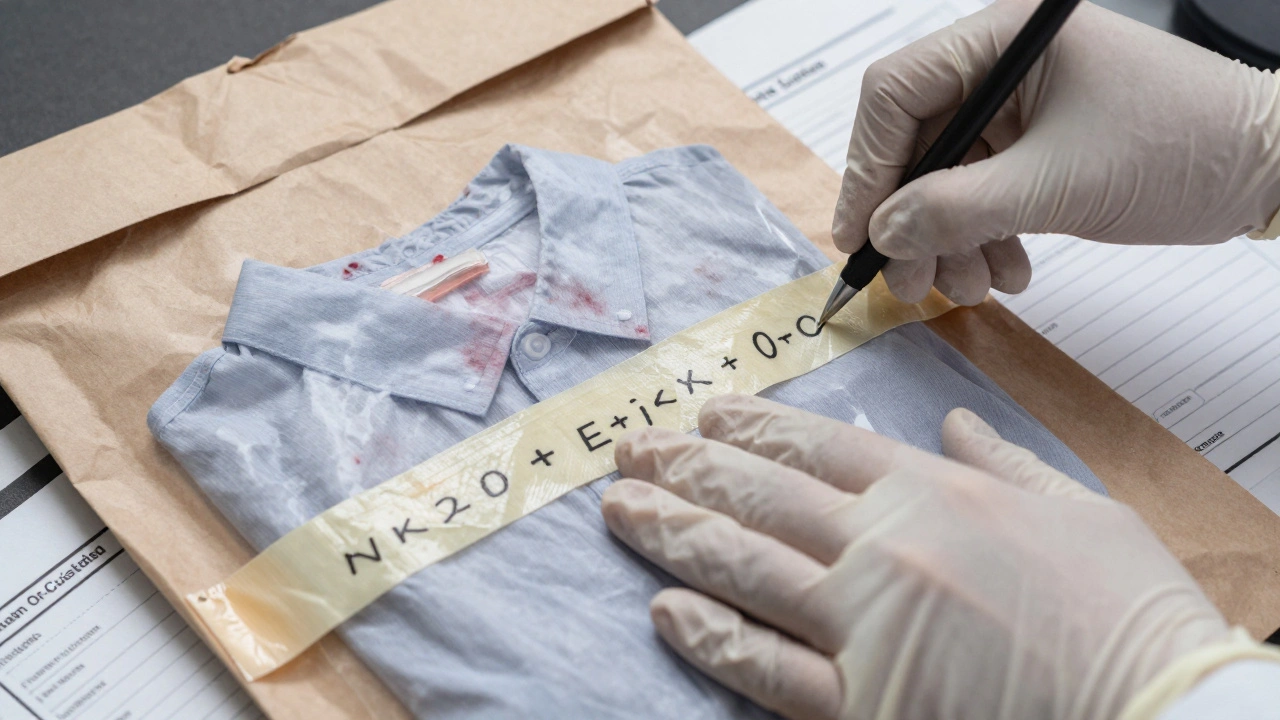
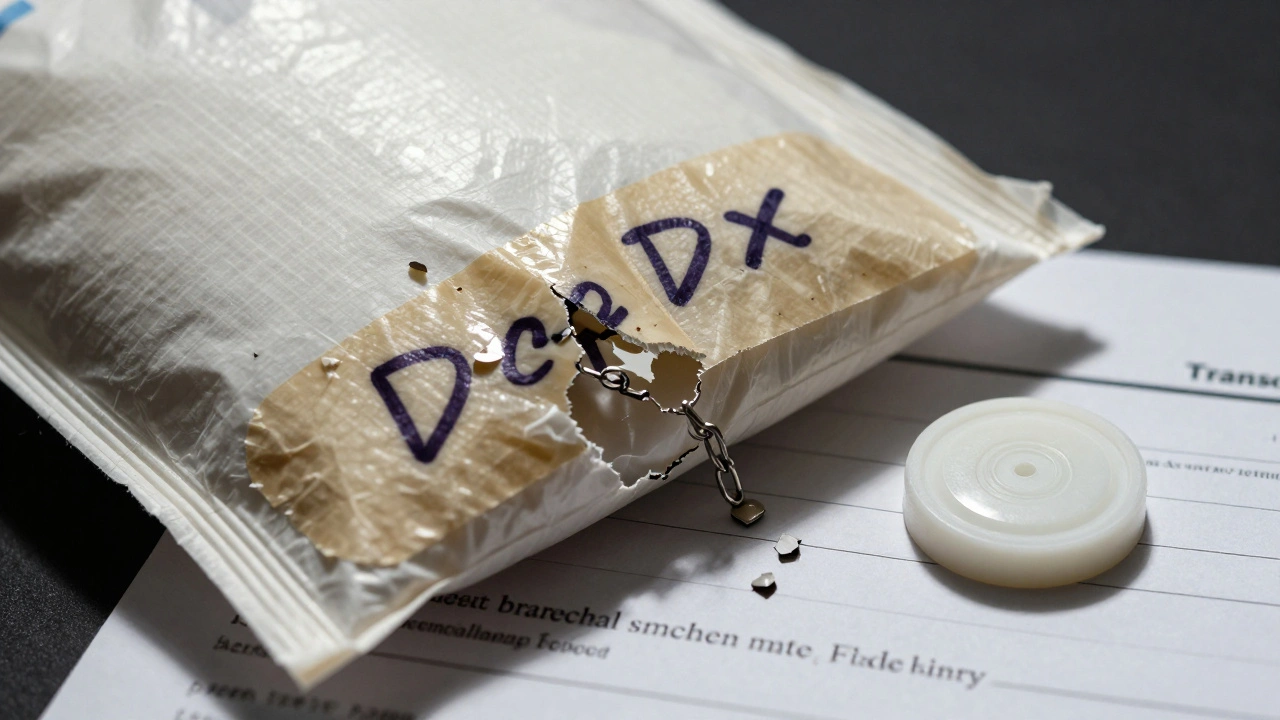
A chain seal isn’t just about keeping something closed. It’s about proving no one opened it without authorization. Think of it like a digital signature, but physical. When an officer seals a bag containing a bloody shirt, a bullet casing, or a phone, they’re not just closing it-they’re creating a legal timestamp. The seal must be applied in a way that makes any tampering obvious. If someone tries to peel it open, the adhesive tears. If they try to reseal it with tape, the original seal’s writing is broken, and the tampering is visible.
According to NIST’s OSAC 2021-N-0018 standard, every piece of evidence must be packaged with tamper-evident features. That means the bag itself should have a built-in seal, not just a zip tie or a rubber band. Staples? Never. Regular tape? No. These can be removed, replaced, or mistaken for legitimate openings. Only manufacturer-approved seals, applied correctly, count.
How to Seal Evidence Properly
Sealing an evidence bag isn’t something you do half-heartedly. There’s a process, and skipping even one step can cost a case.
- Remove air from the bag without crushing the contents. Too much pressure can damage trace evidence like fibers or DNA.
- Fold the top of the bag as instructed by the manufacturer-usually a specific flap pattern to ensure the seal overlaps fully.
- Peel off the protective strip from the adhesive seal. Don’t touch the sticky side with bare fingers.
- Press the seal firmly from one end to the other. No gaps. No bubbles. If it’s not fully adhered, it’s not valid.
- Write your initials and the date directly across the seal. Not on the bag. Not on a label. On the seal itself. This is critical. If the seal is broken later, the writing will be torn, and that’s undeniable proof someone opened it.
This isn’t optional. In court, a defense attorney will look for exactly this kind of slip. If the initials are smudged, or the date is missing, they’ll argue the evidence might have been switched. And in many cases, they’re right.
Labeling: The Other Half of the Chain
A seal without a label is useless. The label is where you answer the basic questions: Who? When? Where? What?
Every evidence bag must have a chain of custody label that includes:
- The case number
- A unique item number (so you don’t mix up the gun from Room 1 with the gun from Room 3)
- A clear description: "Black Nike sneaker, size 10, right foot, visible bloodstain on toe area"-not just "shoe"
- The exact location of collection: "Bedroom, north wall, 2 feet from window, under bed"
- Date and time of collection (down to the minute)
- The collector’s full name and signature
- Agency or department name
Missing any of these? That’s a red flag. In one 2023 case in Oregon, a DNA sample was ruled inadmissible because the label only said "blood sample" and had no time stamp. The defense argued it could’ve come from anywhere. The prosecution lost.
What Happens When Evidence Moves
Once the evidence leaves the crime scene, it moves. From the officer to the evidence locker. From the locker to the lab. From the lab to the prosecutor. Each transfer must be documented. Not just logged in a notebook. Not just emailed. It must be signed, dated, and timed by both parties.
Each transfer form should include:
- Name of person releasing the evidence
- Name of person receiving it
- Date and time of transfer
- Reason for transfer
- Both signatures
Some departments now use digital systems with password-protected logs and audit trails. Only authorized personnel can update the record. If someone tries to edit it, the system flags it. This isn’t just tech for show-it’s how modern forensics prevents fraud.
But even the best system fails if someone doesn’t sign. I’ve seen cases where evidence sat in a locker for three weeks because no one bothered to log the transfer. The defense later claimed the item was planted. Without proof of custody, the jury had no reason to believe otherwise.
Special Cases: Trace Evidence and Wet Items
Not all evidence is the same. A bloody shirt? Seal it in a paper bag. Why? Plastic traps moisture. Moisture kills DNA. Mold grows. Evidence gets destroyed before it’s even tested.
Trace evidence-hair, fibers, soil, gunshot residue-needs special handling. Paper bindles, folded like origami, prevent cross-contamination. A single hair from a suspect’s sweater can be enough to convict. But if it’s mixed with fibers from another item because it was stuffed into the same plastic bag? It’s useless.
Wet evidence? Always paper. Dry evidence? Can go in plastic. But even then, the seal must be intact. I once reviewed a case where a knife was sealed in a plastic bag with a zip tie. The defense showed photos of the zip tie being cut and reattached. The judge threw out the evidence.
Common Mistakes That Break the Chain
Even experienced officers mess up. Here are the top five errors that compromise chain of custody:
- Using the wrong bag type (plastic for wet items, paper for trace evidence that needs moisture control)
- Writing initials on the bag instead of the seal
- Missing or smudged dates and times
- Not documenting transfers-assuming "everyone knows"
- Letting untrained personnel handle evidence without supervision
These aren’t small mistakes. They’re case-killers. In 2022, a study by the National Institute of Justice found that over 30% of evidence challenges in state courts stemmed from chain-of-custody failures. Not because someone was trying to cheat. Just because someone didn’t follow the steps.
Storage and Security
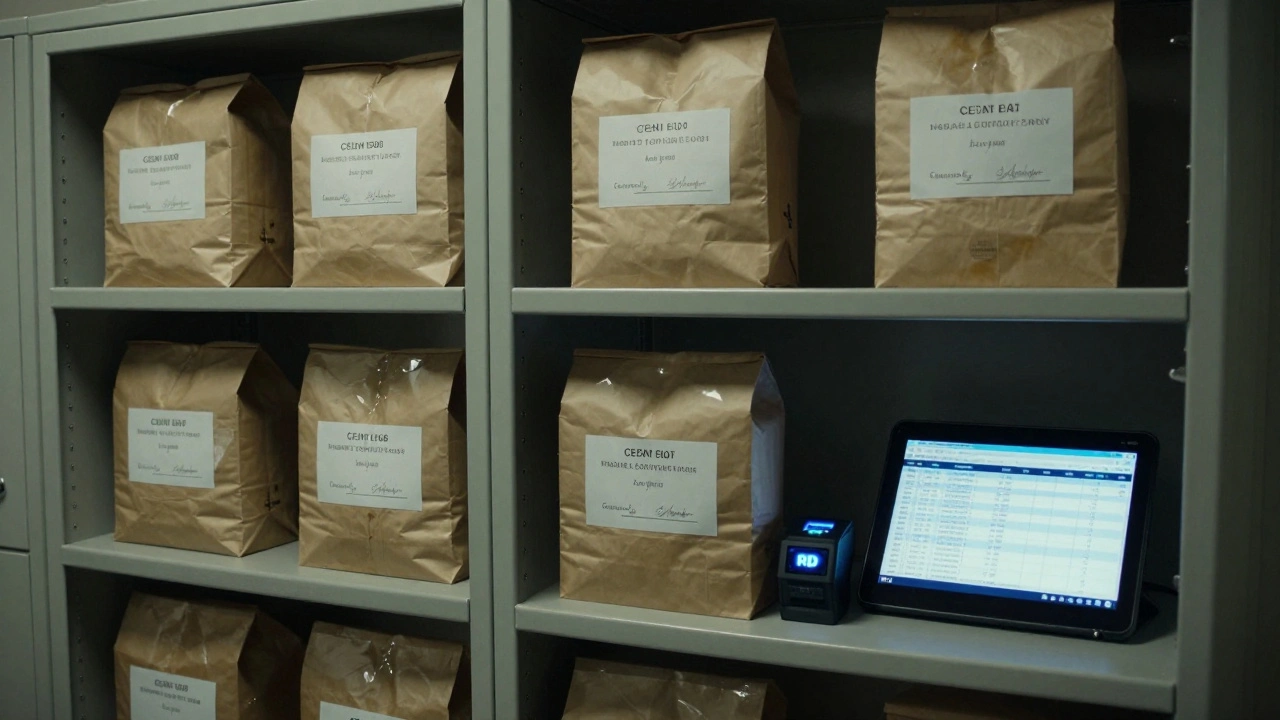
The chain doesn’t end when the evidence is sealed. It continues in storage. Evidence lockers must be locked, monitored, and accessible only to authorized personnel. Logs of who enters the room and when are mandatory. Photos of the evidence before storage? Strongly recommended. Inspection reports? Required for high-value items.
Some labs now use RFID tags on evidence containers. Each scan logs the time, location, and person. But even this tech relies on the human step: sealing correctly, labeling fully, signing every transfer.
There’s no magic bullet. No app that fixes a broken seal. No AI that can tell if a label was forged. Only a meticulous, consistent, paper-and-seal process can protect the integrity of evidence.
Why This Matters in Court
When a jury hears "the DNA matches the suspect," they assume the sample was handled properly. But if the seal was broken and not documented, the jury should doubt it. The system exists to protect the innocent as much as the guilty. If the chain is broken, the evidence is tainted. No matter how compelling it seems.
Prosecutors don’t just need evidence. They need proof that the evidence was never tampered with. That’s what the chain of custody provides. It’s not bureaucracy. It’s the foundation of justice.
What happens if an evidence seal is broken but no one admits to opening it?
If a seal is broken and there’s no documented reason, the evidence is typically deemed inadmissible. Courts treat an unexplained break in the chain as a potential tampering event. The burden falls on the prosecution to prove the evidence wasn’t altered. Without a clear chain of custody, the defense can successfully argue reasonable doubt.
Can you reseal evidence after it’s been opened for testing?
Yes-but only under strict conditions. After a lab opens evidence for analysis, it must be resealed using a new tamper-evident seal. The lab technician must document the reason for opening, the date and time, their signature, and the new seal number. The original seal is retained as part of the record. This ensures the chain remains continuous and verifiable.
Is a signature on the label enough to prove the chain of custody?
No. A signature alone doesn’t prove the seal was intact. The seal must be physically broken if the item was accessed. The signature confirms who handled it, but the seal proves it wasn’t tampered with before or after. Both are required. One without the other is incomplete.
Do all law enforcement agencies follow the same sealing standards?
Ideally, yes. The NIST OSAC 2021-N-0018 standard is widely adopted across U.S. agencies. But some smaller departments still use outdated methods, like rubber bands or duct tape. Training and funding gaps mean not all agencies meet the same level of rigor. This inconsistency is why national audits and accreditation programs are critical.
Can digital photos replace physical chain-of-custody logs?
No. Photos are helpful for documenting condition, but they can’t replace signed, dated, physical records. A photo can be edited or staged. A signed transfer form with a broken seal is a legally binding record. Digital logs are useful supplements, but they must be paired with physical documentation to hold up in court.
Chain seals aren’t glamorous. No one writes a movie about them. But every conviction, every exoneration, every verdict that holds up depends on them. One broken seal, one missing signature, one unlogged transfer-and the whole system wobbles. The job isn’t to collect evidence. It’s to protect its truth.