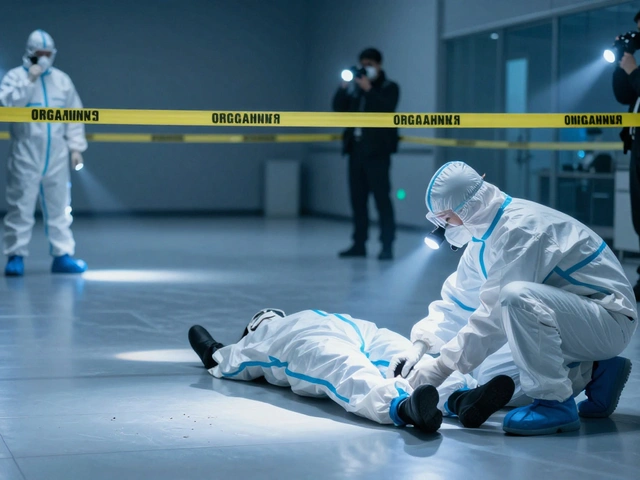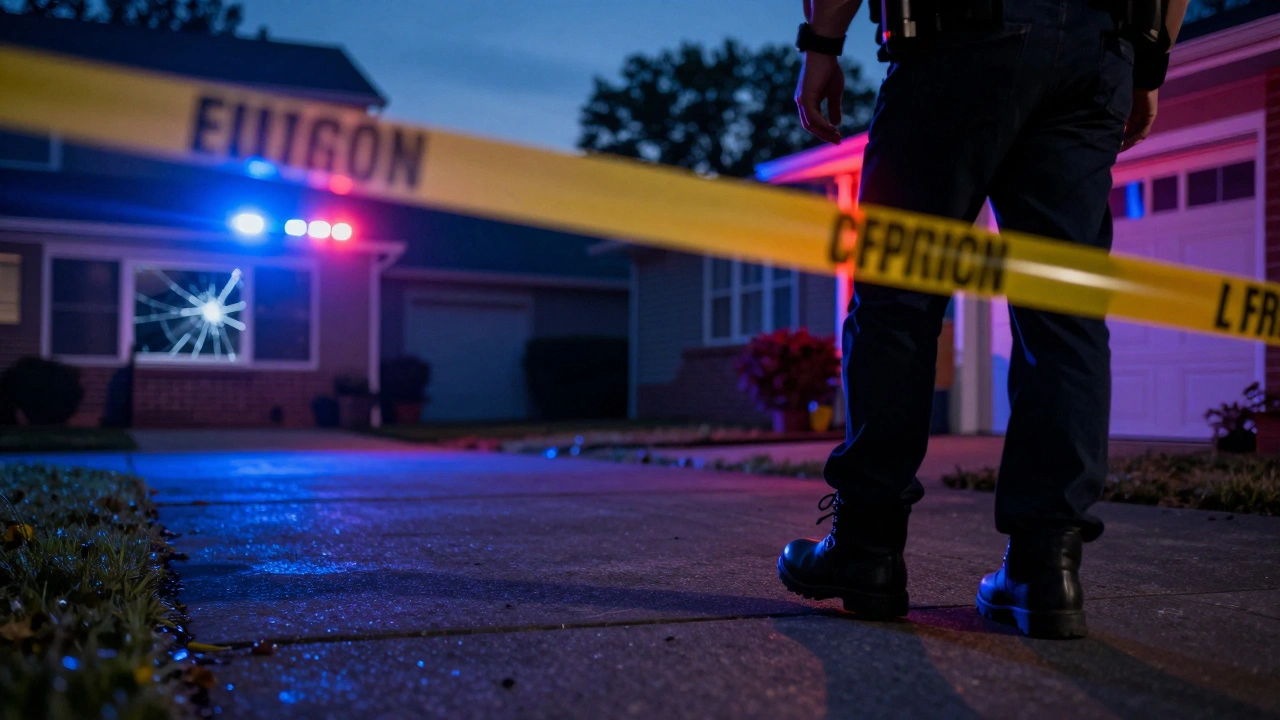
Walking into a fresh crime scene is a chaotic experience. You've got flashing lights, witnesses in shock, and a physical space that holds the only honest record of what actually happened. For most people, the goal is to "find the bad guy." But for a professional, the real goal is to build a theory of the crime-a working hypothesis that explains how the event unfolded, who was involved, and why it happened. Without a structured framework, an investigator is just guessing, and guessing is how cases fall apart in court.
Building a theory isn't about picking a suspect and trying to make the evidence fit. It's the opposite. It's a constant loop of gathering data, forming a theory, testing that theory against new evidence, and being willing to scrap everything when a new fact proves you wrong. This process turns a messy scene into a legal narrative that can actually hold up under cross-examination.
The Mental Map: Framing the Investigation
Think of an investigation as a process of "framing." Based on Goffman's frame analysis a theoretical approach to understanding how people organize experience and make sense of events, investigators don't just see facts; they see patterns. When you first arrive, you create an interpretive frame. For example, if you see a broken window and a missing jewelry box, your first frame is likely "burglary."
The trick is to never stick to just one frame. Expert investigators maintain a "leading" theory while keeping alternative frames in the background. If that same jewelry box was found hidden in the victim's own closet, the "burglary" frame is instantly replaced by a "staged crime" frame. By juggling multiple scenarios-like considering if a family member was involved even while chasing a lead on a known thief-you avoid the trap of tunnel vision, which is where most investigative failures happen.
Operational Skills vs. Analytical Thinking
There is a massive difference between knowing how to do a job and knowing why you're doing it. To build a solid theory, you need a mix of tactical task skills and strategic analytical thinking.
Task skills are the "boots on the ground" basics. This includes things like Crime Scene Management the process of securing a perimeter, documenting evidence, and preventing contamination of a physical location and the use of forensic tools to analyze DNA or fingerprints. These are essential, but they are just the raw materials. You can collect every piece of evidence perfectly, but if you can't analyze it, you have a collection of objects, not a case.
Analytical thinking is where the theory actually lives. This involves three types of reasoning:
- Deductive Reasoning: Starting with a general rule and moving toward a specific conclusion (e.g., "No one could have entered through the locked door without a key; therefore, the suspect had a key").
- Inductive Reasoning: Taking specific observations and creating a broad generalization (e.g., "The suspect left a specific type of cigarette butt at three different scenes; therefore, the suspect likely smokes this brand").
- Quantitative Reasoning: Using data, timing, and distances to prove or disprove a theory (e.g., "The suspect couldn't have driven from point A to point B in five minutes given the traffic patterns").
The goal is to move from "mere suspicion" (a gut feeling) to "reasonable grounds for belief." The latter is what allows an officer to legally justify an arrest.
| Skill Category | Focus Area | Practical Example |
|---|---|---|
| Tactical Task Skills | Evidence Preservation | Using a sterile swab to collect biological samples from a surface. |
| Analytical Thinking | Case Reconstruction | Determining the point of entry based on blood spatter and forced entry marks. |
| Strategic Response | Risk Assessment | Deciding whether to move in on a suspect immediately or conduct long-term surveillance. |
Structured Tools for Decision Making
Because human memory and bias are unreliable, modern law enforcement uses structured thinking tools to organize their mental maps. These aren't just checklists; they are graphic organizers that force an investigator to justify their logic.
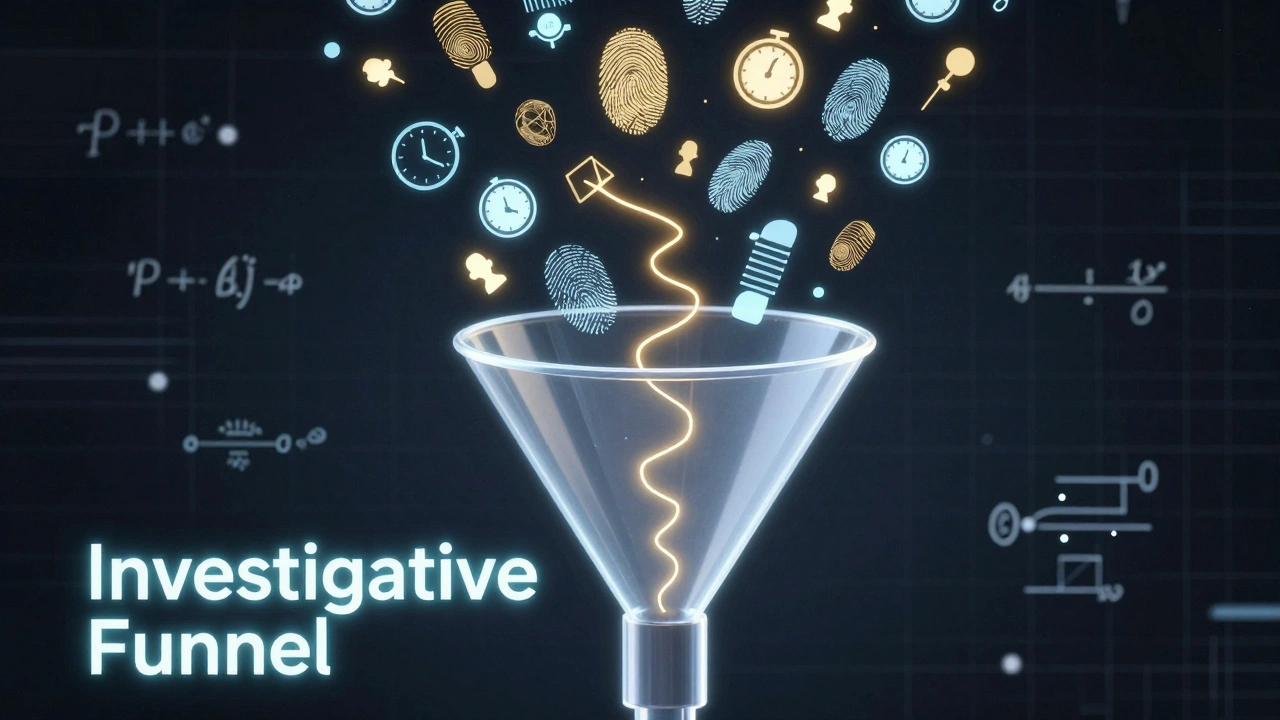
One common approach is the "Investigative Funnel." This starts with a wide opening-every possible suspect and every potential lead-and gradually narrows down through the application of evidence. As the funnel tightens, the "reasonable grounds" for suspecting a specific person increase. Other tools like the STAIR Tool help investigators delineate between the immediate tactical response (saving lives, securing the area) and the long-term strategic response (building the legal case for trial).
Using these tools ensures that when an investigator is asked in court, "Why did you arrest my client?" they don't answer with "I just had a feeling." Instead, they can point to a logical progression of evidence that led to the conclusion.
The Role of Investigative Psychology
A theory of the crime isn't just about the what and how; it's about the who. This is where Investigative Psychology the application of psychological principles to criminal investigation to analyze offender behavior and victimology comes into play. By analyzing the "signature" of a crime-the things the offender did that weren't necessary to complete the crime-investigators can build a psychological profile.
For instance, if a suspect meticulously cleans a crime scene, it suggests a high level of forensic awareness or a disciplined personality. If the scene is chaotic and impulsive, it suggests a different set of traits. This profiling doesn't give you a name, but it helps you narrow the "funnel" by telling you what kind of person to look for in databases like the National Crime Information Center (NCIC) the centralized database used by US law enforcement to track stolen property and wanted persons.

From Theory to Apprehension
Once the theory is solid and the suspect is identified, the focus shifts to the legal requirements for an arrest. In the US justice system, you cannot arrest someone just because your theory is "perfect." You need Reasonable Suspicion a legal standard that justifies the police to stop and frisk a person or conduct a brief detention to start a stop, and probable cause to make an arrest or obtain a warrant.
The final stage of the framework is the transition from the field to the courtroom. Every step of the theory development must be documented. If an investigator found a piece of evidence that contradicted their theory, but they ignored it, a defense attorney will find that gap. A truly successful investigative framework doesn't ignore contradictions; it incorporates them to make the final theory bulletproof.
What is the difference between a hunch and a theory of the crime?
A hunch is an intuitive feeling based on experience but lacks documented evidence. A theory of the crime is a formal hypothesis that links specific pieces of evidence, witness testimony, and behavioral analysis into a logical narrative that can be tested and proven in court.
What happens if the evidence contradicts the leading theory?
The investigator must pivot. A core part of the investigative framework is the ability to change the "definition of the situation." If new evidence emerges that makes the current theory impossible, the investigator must return to their alternative frames and rebuild the theory based on the new facts.
How does the "Investigative Funnel" work in practice?
It starts with a broad cast of all potential leads and suspects. As evidence is gathered (e.g., CCTV footage, DNA, alibis), the list is filtered. Only those who fit the evidence remain. This ensures the investigation doesn't prematurely focus on one person while ignoring others.
Why is Goffman's frame analysis relevant to police work?
It helps investigators recognize that they are "interpreting" a scene, not just seeing it. By understanding that they are creating a "frame," they can be more mindful of cognitive biases and consciously develop multiple competing theories to ensure the correct one is found.
What are "reasonable grounds for belief"?
These are the objective facts and logical deductions that would lead a reasonable person to believe a specific individual committed a crime. It is a higher standard than a hunch and is necessary to justify legal actions like arrests or search warrants.
Next Steps for Investigators
If you are currently managing a case, start by listing your primary theory and at least two "alternative frames" that could explain the evidence. If you find that your evidence only supports one narrative and you've stopped looking for others, you may be experiencing tunnel vision. Review your evidence using a tool like the Investigative Funnel to see if any suspects were filtered out too early. Finally, ensure your documentation explicitly links the evidence to the theory, rather than just listing the evidence itself.