When a gun is fired, it leaves behind more than just a bullet hole. Tiny particles of lead, barium, and antimony spray out from the primer, forming what forensic experts call gunshot residue (GSR). For decades, investigators used the pattern and density of this residue to estimate how far the shooter stood from the victim. Close range? A dense, circular pattern. Ten feet away? A scattered haze. But when a silencer is involved, all of that changes-and it’s not just about noise anymore.
What Silencers Do to Gunshot Residue
Silencers, or sound suppressors, don’t make guns silent. They slow down and cool the expanding gases that blast out when a bullet fires. Inside, a series of metal chambers called baffles redirect and trap those gases. What most people don’t realize is that this process also traps or alters the tiny particles of GSR that normally fly out with the bullet. Traditional distance calculations assume that GSR travels in a predictable cloud. But when a silencer is attached, that cloud shrinks. Studies from the University of Pavia showed that lead particles from suppressed shots spread over much smaller areas than unsuppressed ones. At five centimeters, the difference is obvious. At twenty, it’s still detectable with modern tools like X-ray fluorescence (XRF). That means a crime scene analyst might look at a victim’s shirt and think, “This was a contact shot,” when in reality, the shooter was standing three feet away-with a silencer on the barrel.The Iron Clue: Swarf from Machined Baffles
Here’s where it gets even more interesting. Researchers found something unexpected in the residue from suppressed firearms: iron. Not the kind you’d find in gunpowder. This iron came in the form of swarf-tiny metal shavings left behind during the machining of the silencer’s baffles. Most homemade or poorly made silencers are built from steel tubes and drilled metal plates. When those parts are cut, filed, or turned on a lathe, microscopic metal fragments get trapped inside. When the gun fires, those fragments get blown out along with the GSR. In one study, iron was found in 87% of suppressed shots but only 3% of unsuppressed ones. That’s not a fluke. It’s a fingerprint. Of course, a professionally made silencer from a licensed manufacturer might not leave this trace. High-quality machining, cleaning, and coating processes can remove swarf. But in the real world, most illegal suppressors are cobbled together in garages or basements. And those are the ones that leave behind the iron clue.XRF: The Tool That Changed Everything
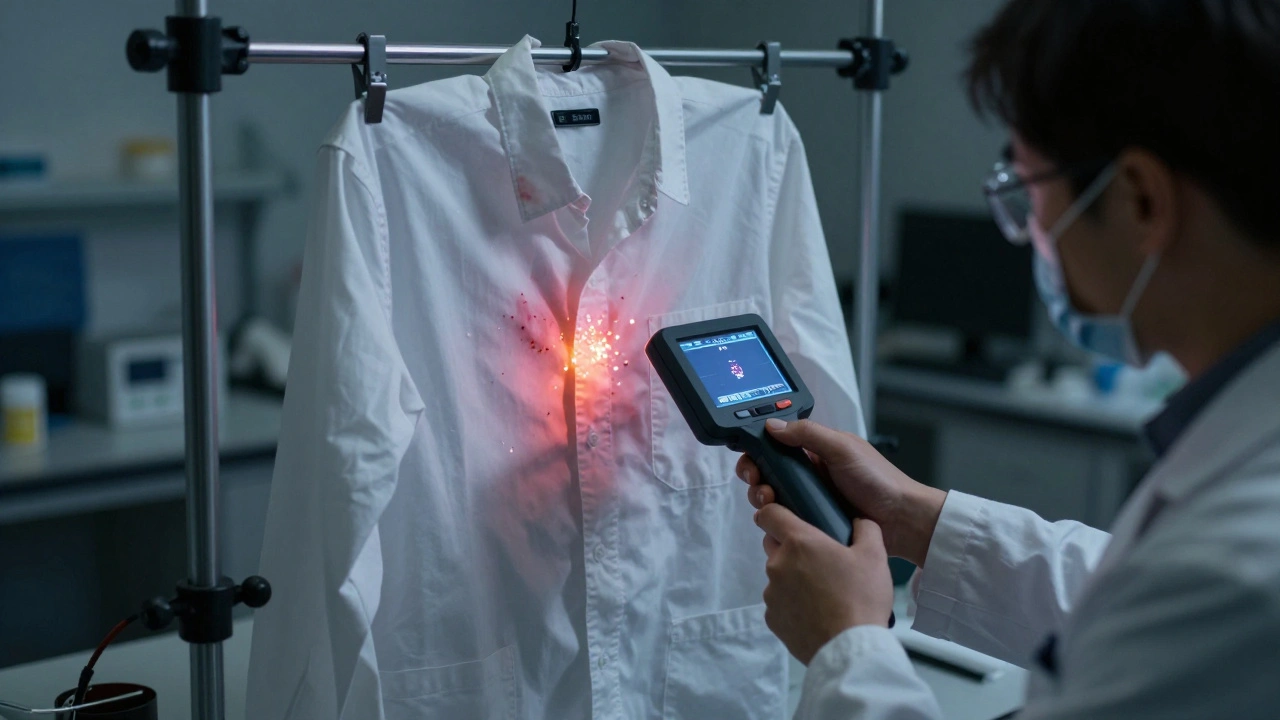
Before XRF, examiners relied on chemical tests-spraying sodium rhodizonate for lead, or dithiooxamide for copper. These methods were messy, destructive, and limited to certain fabrics. XRF changed all that. With X-ray fluorescence, you point a handheld device at a victim’s shirt, press a button, and get a real-time map of metal distribution. No washing. No cutting. No ruining the evidence. You can see exactly where lead, barium, and iron are clustered. And because XRF works on any fabric-black, bloodstained, or wet-it’s become the gold standard in European labs and is slowly gaining ground in the U.S. One lab in Germany used XRF to analyze 147 clothing samples from suppressed and unsuppressed shootings. They found that iron presence, combined with reduced lead spread, correctly identified suppressed firearms in 92% of cases. That’s not perfect, but it’s the best lead we’ve had in years.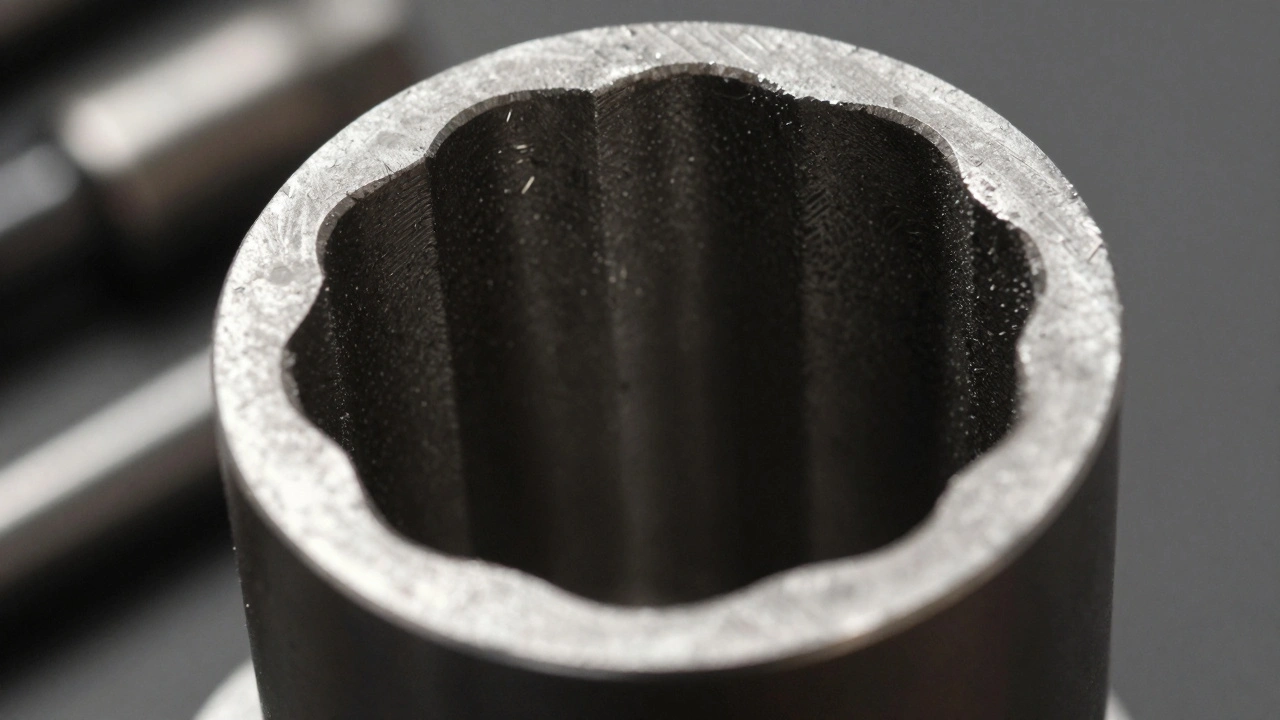
More Than Just Residue: Fingerprints and Toolmarks
Silencers aren’t just altering residue-they’re leaving behind other evidence too. The inside of a silencer, especially the baffles, can hold latent fingerprints. Sweat, oils, and even microscopic skin flakes cling to the metal surfaces. Forensic teams now use cyanoacrylate fuming (super glue vapor) and fluorescent powders to lift prints from the interior. In one case, a suspect’s thumbprint was lifted from the inside of a homemade suppressor found at a crime scene-linking him directly to the device. Then there’s toolmark analysis. Every silencer, even if mass-produced, has tiny imperfections. A drill bit leaves a unique spiral. A lathe cut leaves a pattern. Firearms examiners compare these marks to test-fired samples. If a silencer is recovered, they can match it to the bullet path, the casing, or even the barrel of the gun it was attached to. The National Institute of Standards and Technology (NIST) now has official guidelines for this. They recommend combining chemical residue analysis with toolmark comparison and fingerprint recovery as part of standard silencer forensics.Why This Matters in Court
Imagine a murder case where the defense claims the victim shot himself at close range. The prosecution says the shooter was standing across the room. Without knowing about the silencer, the GSR pattern looks like a contact shot. The jury believes the defense. Case closed. But if the forensic team uses XRF and finds elevated iron levels and a compressed lead pattern, they can prove the silencer was used. That changes the entire narrative. It shows intent, premeditation, and a deliberate effort to hide evidence. In 2024, a federal court in Oregon admitted XRF data from a suppressed firearm case as key evidence. The judge ruled that the methodology met the Daubert standard for scientific reliability. That’s a big deal. It means silencer forensics is no longer fringe science-it’s becoming courtroom-ready.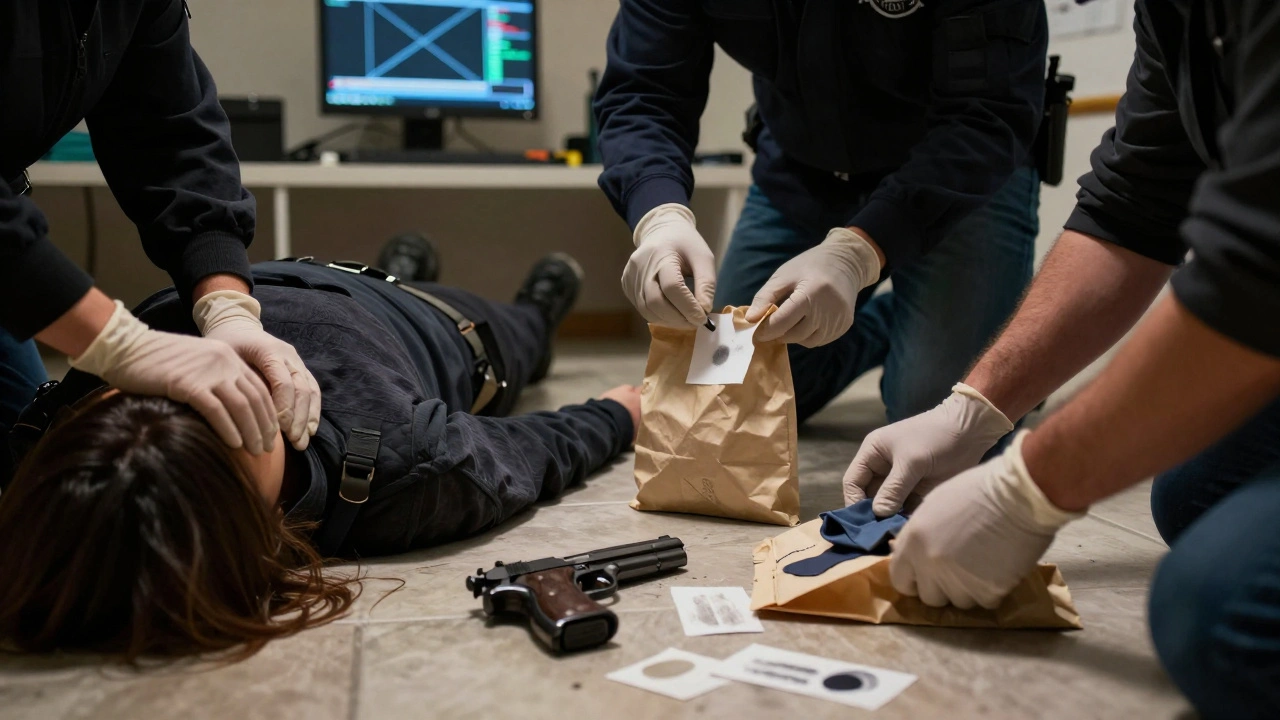
The Gaps Still Left
Not all studies agree. Some labs using ICP-OES (a different chemical analysis method) found that total amounts of lead and barium didn’t change with silencers. That’s true-but it misses the point. It’s not about how much residue is there. It’s about where it is. Pattern matters more than quantity. Also, we don’t have enough data on commercial silencers. Most research uses homemade devices. What about the .22 suppressors sold legally to hunters? Do they leave the same iron trace? Do they alter GSR the same way? We don’t know yet. And what about suppressors made from titanium or carbon fiber? Those materials don’t shed swarf. So the iron clue vanishes. That’s why forensic science can’t stop here. We need more testing, more samples, more diversity in silencer designs.What Investigators Should Do Now
If you’re at a shooting scene and suspect a silencer was used:- Don’t assume distance based on GSR alone. A tight pattern doesn’t mean contact.
- Look for physical signs: a tube-like device near the gun, unusual soot patterns, or a barrel that looks modified.
- Collect clothing and skin swabs. Don’t wash them. Don’t bag them in plastic. Use paper bags to preserve trace evidence.
- Send the silencer (if recovered) to a lab that uses XRF and has experience with toolmark analysis.
- Check for fingerprints on the baffles and inside the mounting threads.
Can a silencer completely eliminate gunshot residue?
No. A silencer doesn’t eliminate GSR-it changes how it’s distributed. The total amount of lead, barium, and antimony from the primer remains roughly the same, but the pattern becomes tighter and less spread out. In some cases, additional elements like iron from the silencer’s internal machining appear. This makes traditional distance estimation unreliable, but it doesn’t remove the evidence-it transforms it.
Is iron in gunshot residue a reliable indicator of a silencer?
It’s one of the strongest indicators we have right now, especially for homemade suppressors. Studies show iron particles (swarf) appear in over 80% of suppressed shots from improvised devices. But it’s not foolproof. Professionally manufactured silencers with polished interiors may not leave this trace. The presence of iron should be used alongside other evidence-like pattern analysis and toolmarks-not as a standalone proof.
Can XRF detect silencer use on any type of clothing?
Yes. X-ray fluorescence works on any fabric, regardless of color, thickness, or whether it’s stained with blood. Unlike chemical tests that require specific conditions, XRF can scan directly through layers of fabric and even minor contaminants. This makes it ideal for real-world crime scenes where evidence is often compromised.
Why aren’t all police departments using XRF for silencer detection?
Cost and access. XRF devices cost between $20,000 and $50,000, and require trained operators. Many smaller labs still rely on older chemical methods because they’re cheaper and easier to maintain. But as court rulings support XRF data, more agencies are investing in the technology. It’s a matter of time before it becomes standard.
Can fingerprints be recovered from inside a silencer?
Absolutely. The interior surfaces of baffles and tubes are prime locations for latent fingerprints. Even after firing, oils and skin cells cling to the metal. Forensic teams use cyanoacrylate fuming and fluorescent powders to lift prints from these surfaces. In multiple cases, these prints have directly linked suspects to the silencer used in a crime.