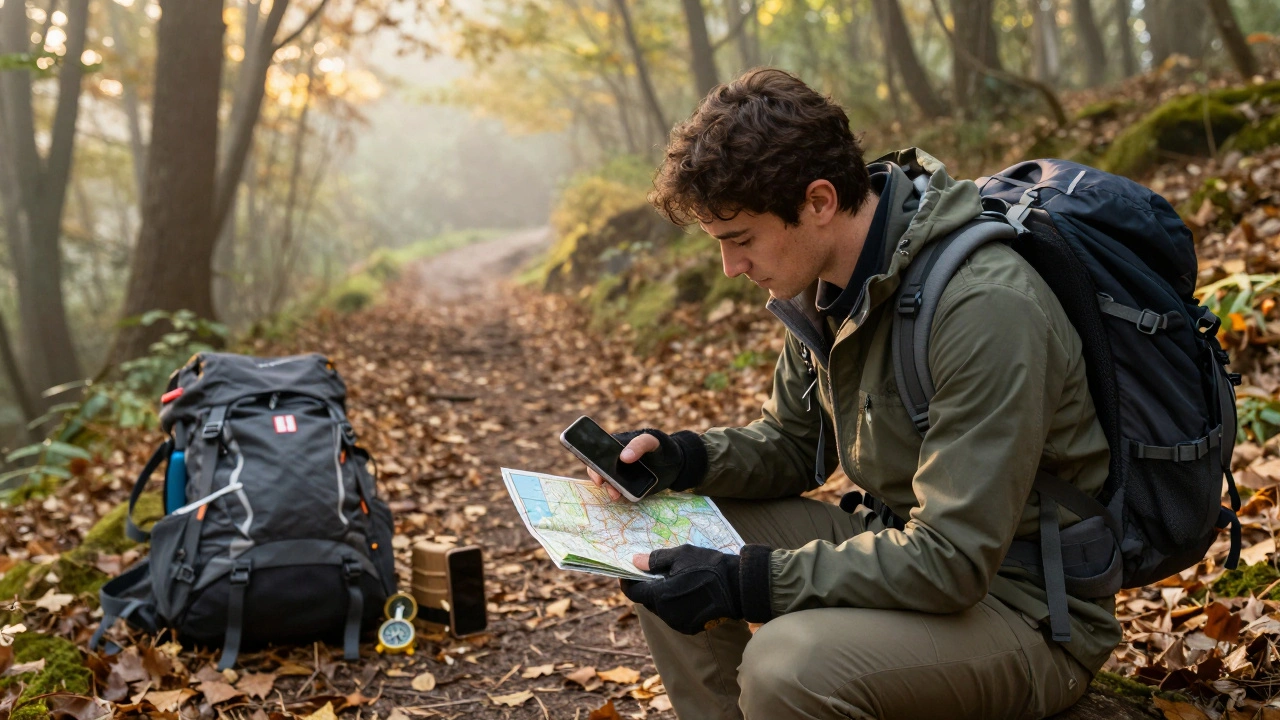
Every year, hundreds of hikers vanish into the woods - not because of bears or avalanches, but because they didn’t plan for the one thing that always happens: they get lost. And when that happens, the clock starts ticking. Rescue teams don’t show up in minutes. Helicopters can’t fly through storm clouds. Cell service? Gone. That’s why the difference between life and death isn’t luck - it’s preparation.
Why Most Missing Hikers Never Make It Home
Most missing hikers aren’t swept away by rivers or crushed by falling rocks. They’re found cold, dehydrated, and disoriented, often within a mile of the trail. Why? Because they ignored the basics. They thought, “I’ll just take a quick detour.” Or, “My phone has GPS, I’ll be fine.” But GPS dies. Batteries drain. Trails fade. And suddenly, you’re staring at a tree you swear you saw an hour ago.
Search and rescue teams don’t have magic tools. They rely on patterns. If you’re lost, you’re likely still on or near the trail - unless you panicked and started running. That’s why rescuers focus on the route you said you’d take. If you didn’t tell anyone where you were going? They’re searching blind.
The HikeSafe Code: 4 Rules That Save Lives
There’s a simple, proven system used by wilderness agencies across North America called the HikeSafe Hiker Responsibility Code. It’s not complicated. It’s not flashy. But it works.
- Be prepared - not just with gear, but with knowledge. Know your route. Know the weather. Know how long it takes to hike it - and double that time.
- Stay together - hiking alone is risky. Two people can share warmth, carry extra water, and call for help if one gets hurt.
- Turn back if necessary - if the weather turns, the trail disappears, or you’re tired, stop. Pushing forward when you’re unsure is how people vanish.
- Be informed - check the forecast. Know the terrain. Understand the risks. A 5-mile hike in summer is not the same as a 5-mile hike in November.
The 10 Essentials: What You Actually Need
Forget the fancy gadgets. What you need is simple, reliable, and lightweight. Carry these 10 things every time you step onto a trail:
- Navigation - a physical map and compass. Not just your phone. Download offline maps, but carry a paper backup. GPS fails. Paper doesn’t.
- Sun protection - sunglasses, sunscreen, hat. Even on cloudy days, UV exposure can cause heat exhaustion.
- Insulation - at least two synthetic layers. Avoid cotton. Cotton soaks up sweat, then freezes. Synthetic fabric wicks moisture and keeps you warm.
- First aid - not a full kit. Just the basics: bandages, gauze, tape, antiseptic wipes, pain relievers, and any personal meds.
- Fire - waterproof matches, lighter, and fire starter. You don’t need to build a bonfire. Just enough to stay warm overnight.
- Shelter - a lightweight tarp, emergency bivy, or even a space blanket. It’s not about comfort. It’s about stopping heat loss.
- Extra food - enough for 24 hours. Trail mix, energy bars, jerky. If you’re stuck, you’ll need calories to stay warm.
- Extra water - at least two liters. Plus a way to purify more: tablets, filter, or boil it. Dehydration kills faster than cold.
- Tools - multi-tool, knife, duct tape. You’ll use them to fix gear, make a splint, or cut branches for shelter.
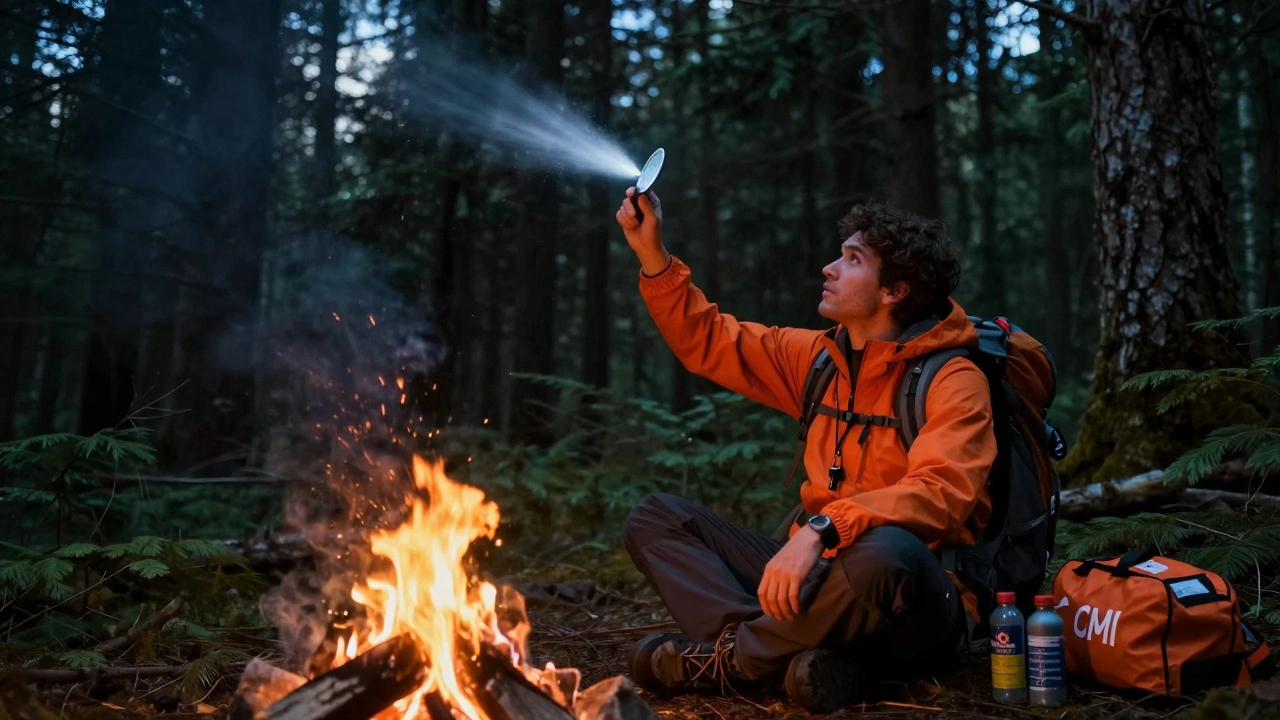
- Emergency signaling - a whistle and a mirror. A whistle carries farther than yelling. A mirror can flash a signal miles away.
How to Avoid Getting Lost in the First Place
Most hikers who go missing didn’t wander off on purpose. They got distracted. A bird flew by. A photo looked perfect. A shortcut looked easy. Then - one wrong turn - and the trail is gone.
Here’s how to stay on track:
- Check your map every 15 minutes. Even if you’re sure you’re on the right path, verify.
- Look for trail markers - painted blazes, cairns (stacked rocks), or carved signs. If they disappear, stop.
- Use landmarks. Note big trees, rock formations, or stream crossings. If you get turned around, you can retrace your steps using these.
- Download offline maps on Gaia GPS, AllTrails, or Google Maps. But test them before you leave. If they don’t work without cell service, they’re useless.
- Carry a satellite communicator - InReach, SPOT, or a Personal Locator Beacon (PLB). These send your exact GPS coordinates to rescuers, even in deep wilderness. They cost $200-$400. One device saved a hiker in Idaho after he passed out from hypothermia. He didn’t move. Rescuers found him in 22 minutes.
What to Do If You’re Lost
Stop. Breathe. Don’t panic. The worst thing you can do is run. You’ll get more lost. You’ll burn energy. You’ll get colder.
Here’s what to do next:
- Stay put - unless you’re in immediate danger (like a rockslide or flood). Rescuers find people who stay still 70% faster than those who wander.
- Signal for help - use your whistle. Blow three sharp blasts. Wait. Blow three again. Repeat every 10 minutes. Three is the universal distress signal.
- Use your mirror - find sunlight. Angle the mirror toward the sky. Flash it every 30 seconds. A pilot can see it from 10 miles away.
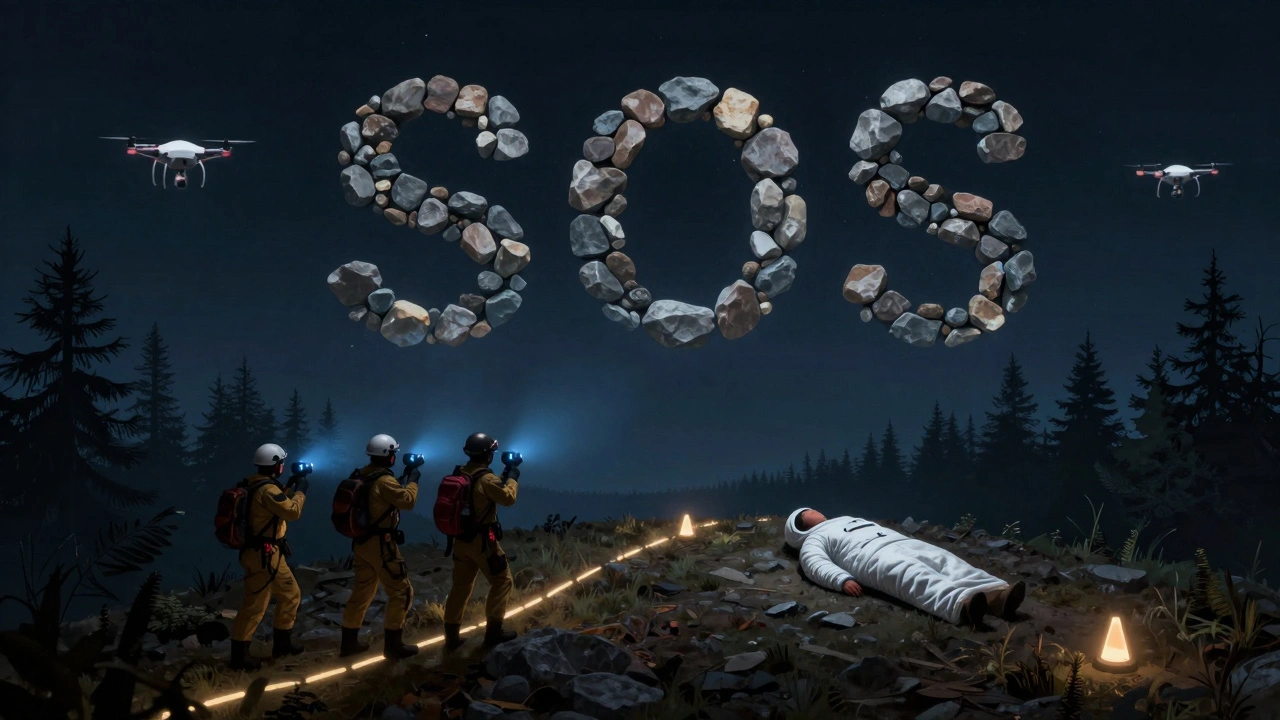
- Make a visible sign - lay out bright clothing in an X shape. Use rocks to spell SOS. Put your hat on a stick. Anything that stands out.
- Call 911 - even if you have one bar. Texting works better than calling. If you can’t get through, climb to higher ground. Try again. A weak signal can still send a text.
- Stay warm - if it’s cold, build a small fire. Use dry leaves, bark, or pine needles. Don’t burn your pack. Stay dry. Change into dry layers if you have them.
- Conserve energy - don’t hike uphill unless you have to. Don’t shout unless you’re signaling. Move as little as possible.
What Rescuers Look For - And How to Help Them Find You
Search teams don’t randomly comb forests. They use logic. If you didn’t leave a trip plan? They start at your car. They check trailheads. They interview other hikers. They look for signs of movement - broken branches, footprints, trash.
Here’s how to make their job easier:
- Leave a detailed trip plan with someone you trust - where you’re going, who you’re with, when you’ll be back, and what you’re wearing. Update them if your plans change.
- Wear bright colors - orange, red, yellow. Dark camo makes you invisible to drones and searchers.
- Carry a whistle. It’s louder than yelling. It uses less energy. Rescuers hear whistles from farther away.
- Use your phone’s flashlight at night - point it down, not up. A beam on the ground is easier to spot than one in the sky.
- Don’t move your gear. If you leave your pack, hat, or water bottle, leave them where they are. They’re clues.
First Aid for the Injured in the Wild
If someone’s hurt, don’t panic. Don’t try to carry them. Just do three things:
- Keep them dry - wrap them in a blanket, tarp, or even your jacket. Wet skin loses heat 25 times faster.
- Keep them warm - use body heat. Sit close. Share a sleeping bag. Put warm water bottles (not boiling) near their armpits and groin.
- Stop bleeding - press firmly with clean cloth. Elevate the wound. Don’t remove clothing stuck to the wound.
For broken bones - don’t try to realign them. Splint them in place with sticks and straps. A broken wrist? Tie it to your arm with a bandana. A sprained ankle? Use trekking poles as a brace.
And if you’re the one who’s hurt? Don’t try to walk out. Stay put. Signal. Wait. You’ll survive longer if you conserve energy.
How to Prepare Your Family and Friends
Most rescues fail because no one knew where the hiker was going. That’s why you need to tell someone - clearly - before you leave.
Give them this info:
- Your exact route - trail name, start point, end point
- Your planned return time - be specific: “Back by 6 PM on Saturday”
- Your phone number and emergency contact
- Your clothing - “Wearing a red jacket, black pants, blue hat”
- Your gear - “Carrying a PLB, satellite communicator, and 2 liters of water”
Set a reminder: if they don’t hear from you by your return time, they call 911. No waiting. No second thoughts. That’s how rescues start fast.
The Real Cost of Not Being Prepared
In 2024, over 2,300 hikers were reported missing in the U.S. alone. About 60% were found within 24 hours - because they had a plan. The rest? They spent days in the cold. Some didn’t make it.
It’s not about being brave. It’s about being smart. The wilderness doesn’t care how fit you are. It doesn’t care if you’ve hiked 100 trails. If you skip the basics, you’re gambling with your life.
Every year, the same mistakes happen. The same people die. Because they thought, “It won’t happen to me.”
It will. Unless you prepare.
What’s the most common mistake hikers make before getting lost?
The biggest mistake is assuming cell service will save them. Most remote trails have zero signal. Relying on GPS apps without offline maps or a backup compass leads to panic when the phone dies. The same people who carry fancy gear often skip the basics: a map, whistle, or extra layers.
Can I rely on a GPS watch or phone app to find my way?
No - not alone. GPS watches and apps are great tools, but they depend on battery life and satellite signals. In dense forests, canyons, or bad weather, signals drop. A GPS watch can die in 6 hours. A paper map and compass work forever. Always carry both.
Do I need a satellite communicator if I’m hiking near popular trails?
Yes. Even on busy trails, accidents happen. A twisted ankle, sudden storm, or heart issue can leave you stranded. A satellite communicator lets you send your exact location with one button. It’s not for adventure - it’s for survival. Thousands of hikers have been rescued because of one.
Why is cotton dangerous on a hike?
Cotton holds moisture and loses insulation when wet. If you sweat or get caught in rain, cotton traps cold against your skin. That’s how hypothermia starts - even in mild temperatures. Synthetic or wool layers wick sweat away and keep you warm. Always avoid cotton for base layers.
What’s the best way to signal for help if I’m injured and can’t move?
Use your mirror and whistle together. Flash the mirror every 30 seconds toward the sky - even if you don’t see a plane. Sound carries farther than sight. Blow your whistle in sets of three. Leave bright clothing on a rock or tree. If you have a PLB, activate it. Rescuers will track your signal, even if you’re unconscious.