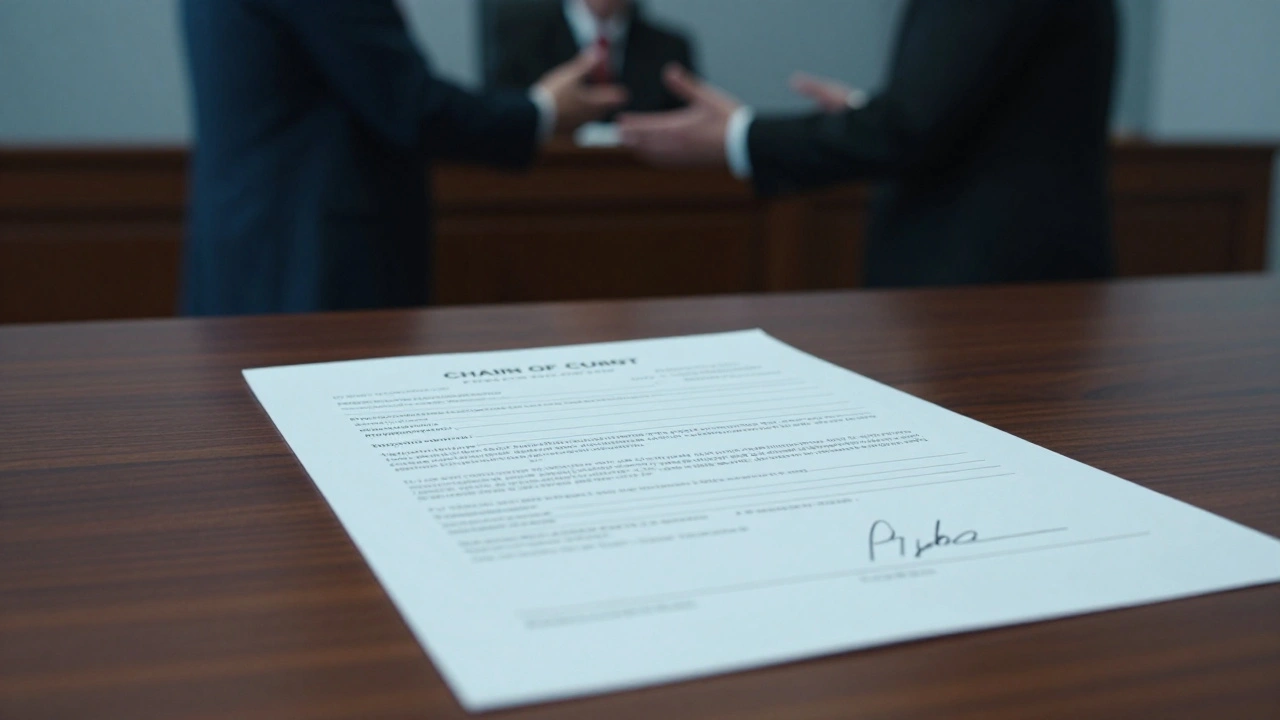
Imagine a high-stakes courtroom drama where a piece of critical evidence is tossed out not because it was fake, but because a single signature was missing on a piece of paper. It sounds like a movie plot, but in the real world, this happens all the time. Whether it is a blood sample in a medical malpractice suit, a drug test for a federal job, or a hard drive in a corporate fraud case, the evidence is only as good as the paper trail following it. If you can't prove exactly who touched it and when, the evidence is essentially useless.
The goal of a chain of custody is a chronological written record of the seizure, custody, control, transfer, analysis, and disposition of physical or electronic evidence. To make this record hold up in court or a regulatory audit, you need a seamless string of signatures. If there is a gap-a "broken chain"-defense attorneys or auditors will pounce on it, claiming the evidence could have been tampered with, swapped, or contaminated.
The Golden Rule of Custody Signatures
The fundamental rule is simple: if you touch it, you sign for it. Every single person who takes possession of a sample or piece of evidence must document their involvement. This isn't just a formality; it is a legal certification. When you sign a Chain of Custody Form , you are testifying that you received the item in a specific condition and that you maintained its integrity until you handed it off to the next person.
For a record to be auditable, every signature must be accompanied by a precise date and time. In high-precision environments, like anti-doping tests handled by WADA (World Anti-Doping Agency), the use of a 24-hour clock is often required to eliminate any confusion between AM and PM, leaving zero room for ambiguity about when a transfer happened.
Who Needs to Sign? A Role-by-Role Breakdown
Depending on the industry-be it forensic science, medicine, or election security-the list of signers varies. However, several key roles almost always appear on the form.
The Sample Collector
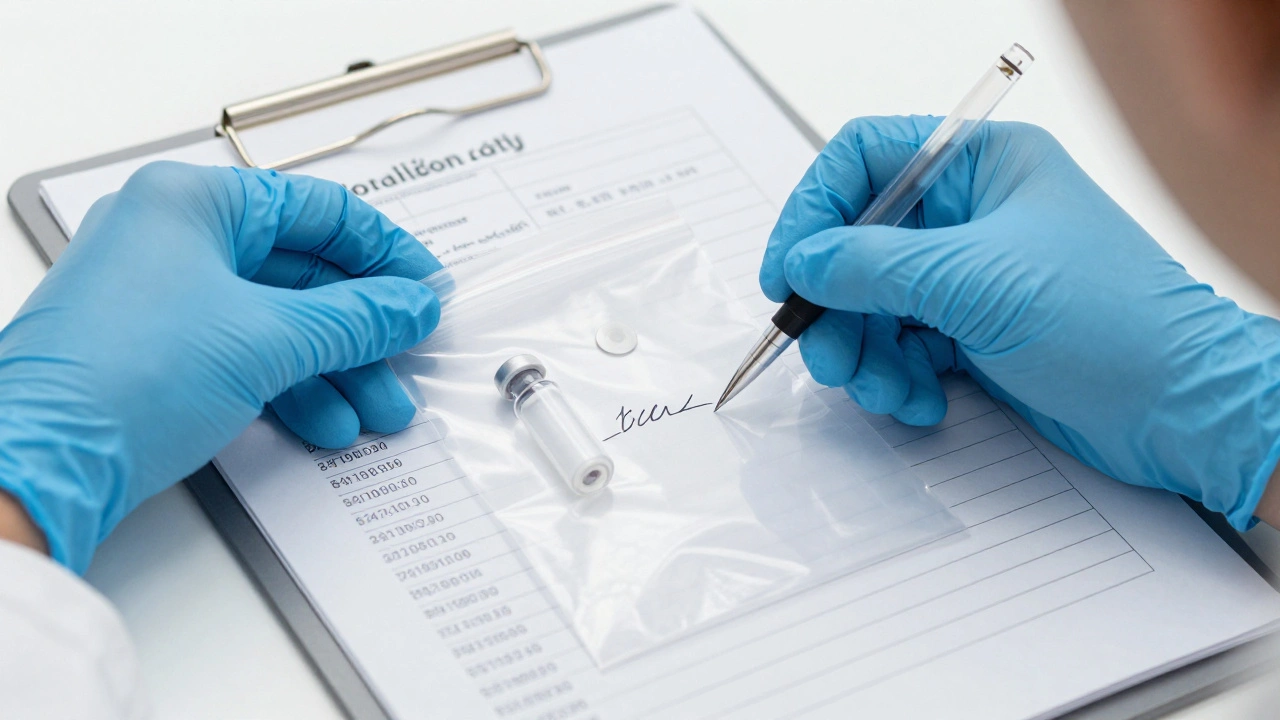
The person who first secures the evidence is the most critical link. The collector must provide their full name, signature, and often their official contact details. In medical settings, like those following NIH (National Institutes of Health) standards, the collector doesn't just sign the form; they often sign and date the physical seal of the container. This ensures that if the seal is broken, it's obvious that the chain was compromised.
The Donor or Subject
In specific cases, such as federal drug testing, the person providing the sample (the donor) must sign a certification statement. This is their way of confirming that the sample is theirs and was collected under supervised conditions. If a donor refuses to sign, the collector doesn't just leave it blank; they must document the refusal in the remarks section to maintain the record's integrity.
Transportation and Courier Personnel
A common mistake is assuming that a courier is "just the delivery guy" and doesn't need to be part of the chain. This is a huge error. Anyone who moves the evidence from point A to point B-whether it's a professional courier or a police officer-must sign. Documentation usually includes the courier company name, the waybill number, and the exact time of drop-off.
Laboratory and Analysis Staff
Once the evidence reaches the lab, the receiving technician signs to acknowledge they have taken possession. Later, the professional who actually performs the analysis signs a certification. They are essentially stating: "I received this specific sample, handled it according to protocol, and the results I'm reporting come from this exact item."
Witnesses
In legal or medical contexts, a witness is often required to watch the collection process. This prevents claims that the collector planted evidence or switched samples. The witness signs to attest that the event happened exactly as documented, providing an extra layer of authentication that is vital for court admissibility.
Comparing Signature Requirements Across Industries
Not all chains of custody are the same. A blood draw for a hospital is different from a ballot box transfer during an election.
| Role/Requirement | Medical/Clinical (NIH) | Anti-Doping (WADA) | Election/Voting (EAC) |
|---|---|---|---|
| Collector Signature | Required + Contact Info | Required + Role | Required (Official) |
| Donor/Subject | Optional/Case-by-case | Mandatory Certification | N/A |
| Courier/Transport | Required | Detailed Waybill + Sign | Required for all transfers |
| Witnesses | Common for legal samples | Required (Chaperones) | Mandatory for attesting |
| Time Format | Standard Date/Time | Strict 24-Hour Clock | Auditable Log Times |

Common Pitfalls That Invalidate Evidence
Even with a signature, a form can be thrown out if it isn't handled correctly. Here are the most frequent mistakes that lead to "lost" evidence:
- The "Blank Space" Gap: Leaving a section unsigned because the person "forgot" or "thought someone else would do it." A single missing signature creates a window of time where the evidence is unaccounted for.
- Vague Timing: Writing "Tuesday afternoon" instead of "Tuesday, Oct 12, 14:30." Vague entries are easily challenged in court as being reconstructed from memory rather than recorded in real-time.
- Incorrect Seals: Signing the form but failing to sign the actual evidence bag or seal. If the form says the bag was sealed, but there is no signature across the tape, there is no proof the bag wasn't opened and resealed.
- Using One Form for Multiple Items: Trying to track five different evidence bags on one sheet of paper. Best practice is a separate chain of custody form for each distinct item or bag.
How to Ensure a Bulletproof Chain of Custody
If you are responsible for managing evidence, follow these heuristics to ensure your documentation is legally defensible:
- Verify before you sign: Never sign for a package until you have verified that the seal is intact and the item ID matches the form.
- Real-time entry: Fill out the form the second the transfer happens. Waiting until the end of the day leads to errors and looks suspicious to auditors.
- Use indelible ink: Always use permanent ink. Pencil or erasable pens are a red flag for tampering and can lead to the form being rejected.
- No white-out: If you make a mistake, draw a single line through the error, initial it, and write the correction. Using correction fluid suggests you are trying to hide something.
What happens if someone refuses to sign the chain of custody form?
If a donor or subject refuses to sign, the person in charge (the collector) must not leave the field blank. Instead, they should write a clear note in the remarks or comments section stating that the individual refused to sign. This maintains the integrity of the document by showing that the signature was sought and the refusal was documented, rather than the signature simply being forgotten.
Can a digital signature replace a physical one on these forms?
Yes, provided the electronic system is validated and compliant with legal standards (such as 21 CFR Part 11 in the US for medical records). A digital system must provide a secure, time-stamped audit trail that proves who accessed the record and when. However, for physical seals and bags, a physical signature across the tape is still often required as a secondary security measure.
Does every person who touches the evidence need to sign, even if they just move it across a room?
Generally, yes. The chain of custody tracks "possession." If a piece of evidence is moved from a secure locker to an analyst's desk, the person performing that move has taken custody. To avoid any doubt about where the evidence was at any given second, every transfer of possession should be documented.
What is the difference between a witness and a collector?
The collector is the person actively performing the seizure or sampling of the evidence. The witness is a neutral third party who observes the process to ensure the collector follows protocol and does not tamper with the sample. The collector certifies the action; the witness certifies that the action was observed correctly.
Why is the 24-hour clock used in some custody forms?
The 24-hour clock (e.g., 14:00 instead of 2:00 PM) is used to eliminate any possibility of AM/PM confusion. In legal cases where minutes matter-such as determining if a sample was stored in a freezer within a specific timeframe-this precision is necessary to avoid disputes during cross-examination.