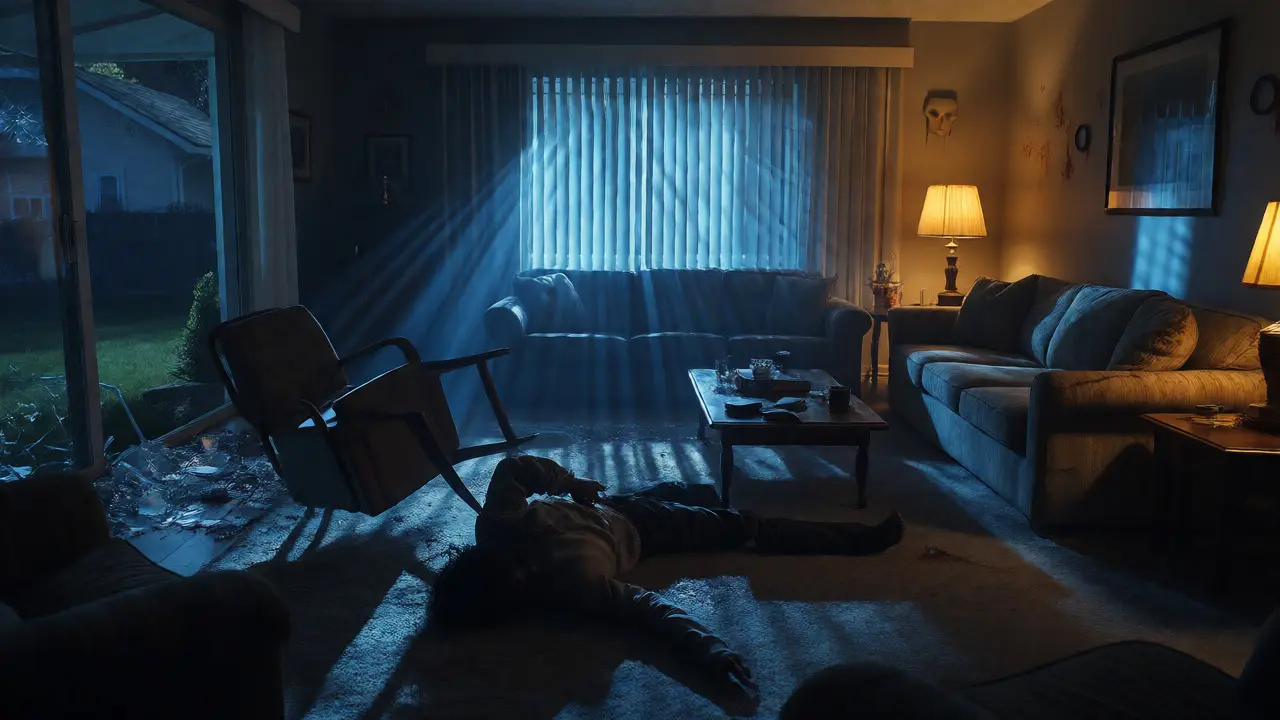
You walk into a living room. A body lies on the floor. There’s shattered glass, an overturned chair, and a wallet missing from the coffee table. It looks like a classic burglary gone wrong. But something feels off. The blood spatter is too symmetrical. The broken window has no glass on the carpet inside. This isn’t just bad luck for the victim; it’s a performance. Crime scene staging is the deliberate alteration of a crime scene by a perpetrator to mislead investigators about the true nature of the crime. It’s not just hiding evidence; it’s creating a lie in physical form.
Detectives and forensic experts spend their careers learning to read these scenes like books. When someone stages a scene, they’re writing a story with props. Your job is to find the plot holes. Whether you’re a student of criminal profiling, a writer researching for a novel, or just fascinated by how detectives catch liars, understanding staging is crucial. It changes everything from how police collect DNA to how juries interpret motive.
Why Do Criminals Stage Scenes?
People don’t stage crimes because they’re lazy. They do it out of fear, shame, or calculation. The primary goal is always to shift blame or obscure the truth. If a husband kills his wife during an argument, he might stage it as a suicide to avoid prison. If a burglar murders someone during a break-in, they might make it look like a random act of violence rather than a targeted hit.
Psychology plays a huge role here. Most perpetrators aren’t masterminds. They are people panicking in the moment. They grab what’s nearby-a rope, a knife, a cleaning spray-and try to patch up the reality. This lack of expertise often leads to obvious mistakes. A professional killer might clean a scene meticulously. An amateur who staged a scene often leaves behind traces that contradict their own narrative. They might wear gloves but forget to remove their shoe prints. They might move a body but leave the blood trail intact.
Consider the difference between a genuine accident and a staged fall. In a real fall down stairs, injuries appear at multiple points along the descent. In a staged fall, the injuries might all be concentrated at the bottom, suggesting the body was dropped there after death. The intent isn’t just to hide the murder; it’s to provide a plausible alternative explanation that requires less investigation.
The Red Flags of Manipulated Evidence
How do you spot a fake? You look for contradictions between the physical evidence and the proposed scenario. Investigators call this "scene consistency." If the story doesn’t match the physics, someone changed the script.
Inconsistent Blood Spatter
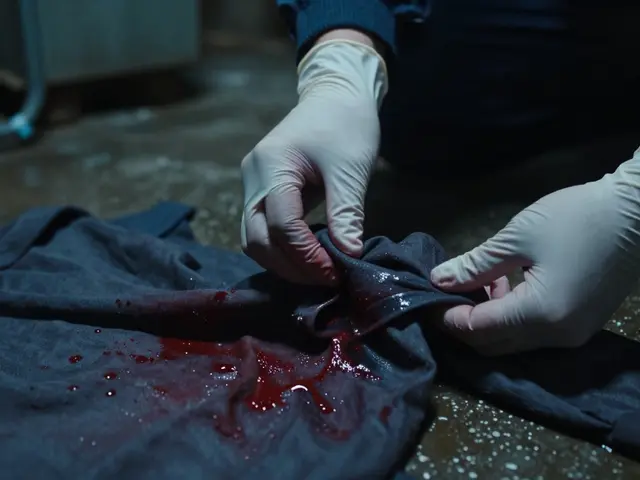
Blood behaves according to gravity and velocity. If a victim was stabbed while standing, you expect cast-off patterns from the weapon and drip trails leading away. If the scene is staged to look like a struggle, but the blood pools perfectly under the body without any directional splatter, it suggests the body was placed there after bleeding stopped. Or worse, the blood was poured.
Unnatural Positioning
Rigor mortis stiffens muscles hours after death. If a body is found in a position that defies rigor-like arms raised when they should be locked straight-it was moved after death. Also, look for "livor mortis," the pooling of blood due to gravity. If the livor marks are on the back, but the body is face down, the body was rolled over recently.
Cleanliness vs. Chaos
A violent struggle creates chaos. Furniture gets knocked over, drawers pulled out, things scattered. But if the chaos looks too neat-if the overturned chair is balanced perfectly, or the scattered papers are only on one side of the room-it’s theatrical. Real messes are messy. Staged messes are curated.
Missing Elements
Sometimes, what’s missing tells the story. If a burglary scene lacks signs of forced entry, check the locks. Was the key used? Did the intruder know where the spare key was? If a suicide note is present but the pen ink is fresh and wet, while the paper is old and dusty, the note was written recently. These small discrepancies unravel the whole web.
Common Types of Crime Scene Staging
Staging usually falls into specific categories based on the crime being disguised. Knowing the type helps predict what evidence to look for.
| Staged Scenario | Perpetrator's Goal | Key Forensic Contradictions |
|---|---|---|
| Suicide | Avoid homicide charges | Weapon angle inconsistent with hand dominance; defensive wounds on hands; gun powder residue distance mismatch. |
| Burglary | Disguise personal motive | No forced entry; valuable items left behind; blood pattern suggests attack before movement; lack of footprints outside. |
| Accident | Cover negligence or intent | Trauma inconsistent with fall height; bruising pattern indicates restraint; clothing undisturbed despite claimed struggle. |
| Sexual Assault | Hide consensual encounter or identity | Lack of biological evidence (semen/DNA) despite claim; injury patterns inconsistent with assault; clean skin under fingernails. |
Let’s dig deeper into the burglary example. Burglaries are opportunistic. Thieves want speed and low risk. They take cash, electronics, jewelry. If a "burglary" scene shows the TV still plugged in, the laptop open on the desk, and only the family photo album taken, that’s weird. Why steal memories instead of money? That’s a clue. The thief wasn’t looking for profit; they were looking for something specific, or they were making it look like a theft to hide why they were really there.
The Role of Criminal Profiling in Detecting Staging
Forensics gives you the physical data. Criminal profiling gives you the behavioral context. Profilers analyze the offender’s actions to infer their psychological state. Staging is a behavior. It reveals how much the offender cares about public perception versus legal consequences.
If a scene is heavily staged, the offender likely knows the victim well. Strangers rarely care enough to stage a scene thoroughly. They kill and run. Partners, spouses, or close relatives stage scenes because they have to live with the aftermath. They need neighbors and police to believe their story. Profilers look for "signature behaviors"-actions unnecessary for the crime but satisfying for the killer. If the signature contradicts the staged narrative, the profiler flags it.
For instance, a killer who overpowers a victim might stage a struggle to show resistance. But if the victim was actually sedated or asleep, the lack of defensive wounds contradicts the staged struggle. Profilers use this disconnect to narrow down suspect lists. It shifts the focus from "who had opportunity?" to "who needed this story to work?"
Techniques Used to Alter Scenes
Offenders use simple tools to rewrite reality. Understanding these techniques helps investigators anticipate what to test.
- Repositioning: Moving the body to change blood flow interpretation or hide the point of impact. This often leaves transfer stains on carpets or furniture.
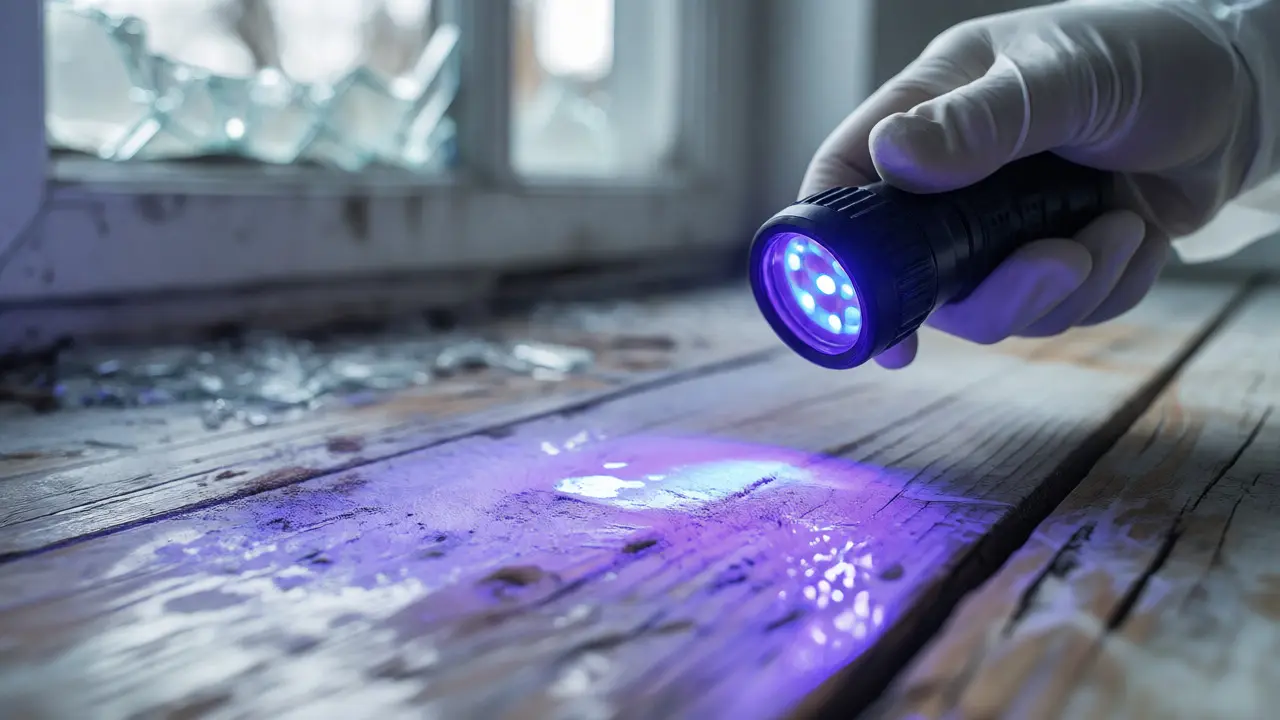
- Cleaning: Using bleach or hydrogen peroxide to destroy DNA. However, luminol can still detect blood traces even after cleaning. Over-cleaning is itself a red flag.
- Adding Props: Placing a weapon in the victim’s hand to simulate suicide. Forensic experts check grip strength and rigor. If the fingers are locked around the handle but the hand is cold, it was done post-mortem.
- Simulating Entry: Breaking a window from the inside so glass falls outward. In a real break-in, glass falls inward. This is a classic rookie mistake.
Investigators also look for "trace contamination." If the suspect wore gloves, they might miss microscopic fibers. If they cleaned the floor, they might disturb dust layers. Every action leaves a reaction. The more they try to fix, the more they often break.
Case Studies: When Staging Fails
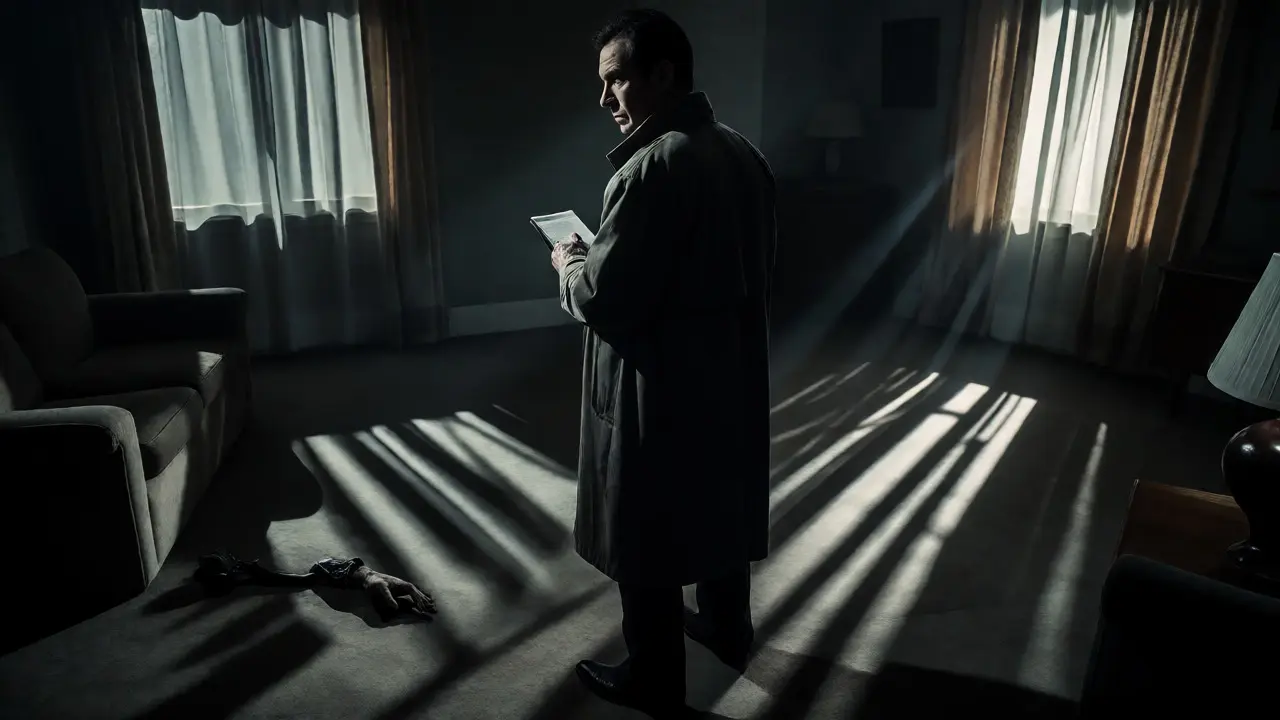
Real-world cases highlight how fragile these deceptions are. Take the case of a woman who reported her husband murdered by intruders. She described a violent struggle. Police found blood everywhere. But the blood spatter analysis showed high-velocity impacts consistent with a gunshot, not a blunt force trauma she claimed. Furthermore, the "intruder's" footprints stopped abruptly at the threshold, never entering fully. It turned out she shot him and staged the scene to look like a home invasion gone wrong.
Another common failure involves time-of-death estimation. A suspect claims to have discovered the body at 8 AM. But forensic entomology-the study of insects on corpses-shows larvae development indicating death occurred two days prior. The suspect’s timeline collapses under biological evidence. No amount of staging can fool the life cycle of blowflies.
How Investigators Counter Staging
Fighting staging requires a multi-disciplinary approach. You can’t rely on one piece of evidence.
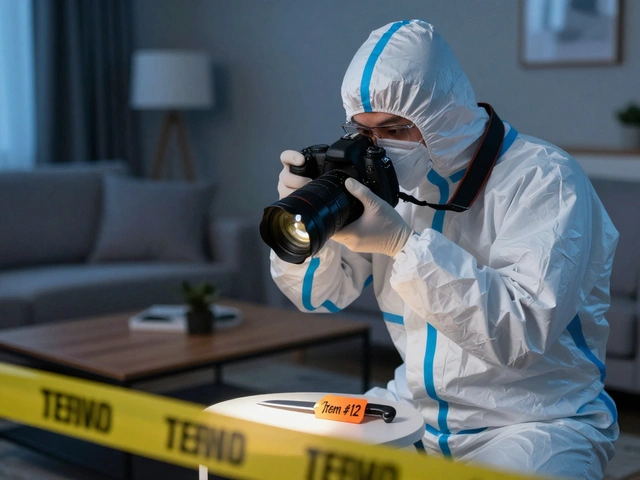
- Scene Documentation: Photograph every angle before anything moves. Context matters. A knife on the floor means different things if it’s near the body or across the room.
- Interdisciplinary Review: Pathologists, bloodstain analysts, and fingerprint experts must talk. If the pathologist says the wound direction is upward, but the bloodstain analyst says the source was higher than the body, someone moved the corpse.
- Behavioral Interviews: Ask the reporter of the crime detailed questions. "What did you see first?" Liars often rehearse the big picture but fail on small details. "Where exactly was the lamp? Which way was the door facing?" Inconsistencies here build probable cause.
- Lab Analysis: Use advanced techniques like mass spectrometry to identify cleaning agents. Finding industrial-strength bleach in a home with no history of its use is suspicious.
It’s a chess match. The offender makes a move; the investigator counters with science. The key is patience. Stagers often get cocky. They think they’ve covered their tracks. But physics doesn’t lie. Biology doesn’t lie. And eventually, the truth leaks out through the cracks in the performance.
What is the most common sign of a staged crime scene?
The most common sign is inconsistency between the physical evidence and the reported narrative. For example, blood spatter patterns that don't match the claimed sequence of events, or signs of forced entry that appear to be made from the inside (glass falling outward).
Can cleaning a crime scene completely remove evidence?
No. While cleaning removes visible blood and fingerprints, modern forensics can detect latent traces. Luminol reacts with hemoglobin even after washing, and chemical tests can identify cleaning agents like bleach or hydrogen peroxide, which themselves become evidence of tampering.
How does rigor mortis help detect staging?
Rigor mortis causes muscles to stiffen after death. If a body is found in a position that contradicts the stiffness pattern (e.g., limbs bent when they should be rigid), it indicates the body was moved after rigor set in. This proves the scene was altered after the initial event.
Do professional killers stage scenes differently than amateurs?
Yes. Amateurs often over-stage, adding too many props or creating unnatural chaos. Professionals may minimize staging, relying on the absence of evidence or simple repositioning. However, professionals are rarer; most staged scenes are created by panicked individuals with limited forensic knowledge.
Is crime scene staging considered obstruction of justice?
In many jurisdictions, altering a crime scene to mislead investigators constitutes obstruction of justice or tampering with evidence. This charge can apply even if the underlying crime (like murder) is difficult to prove, providing prosecutors with another avenue for conviction.