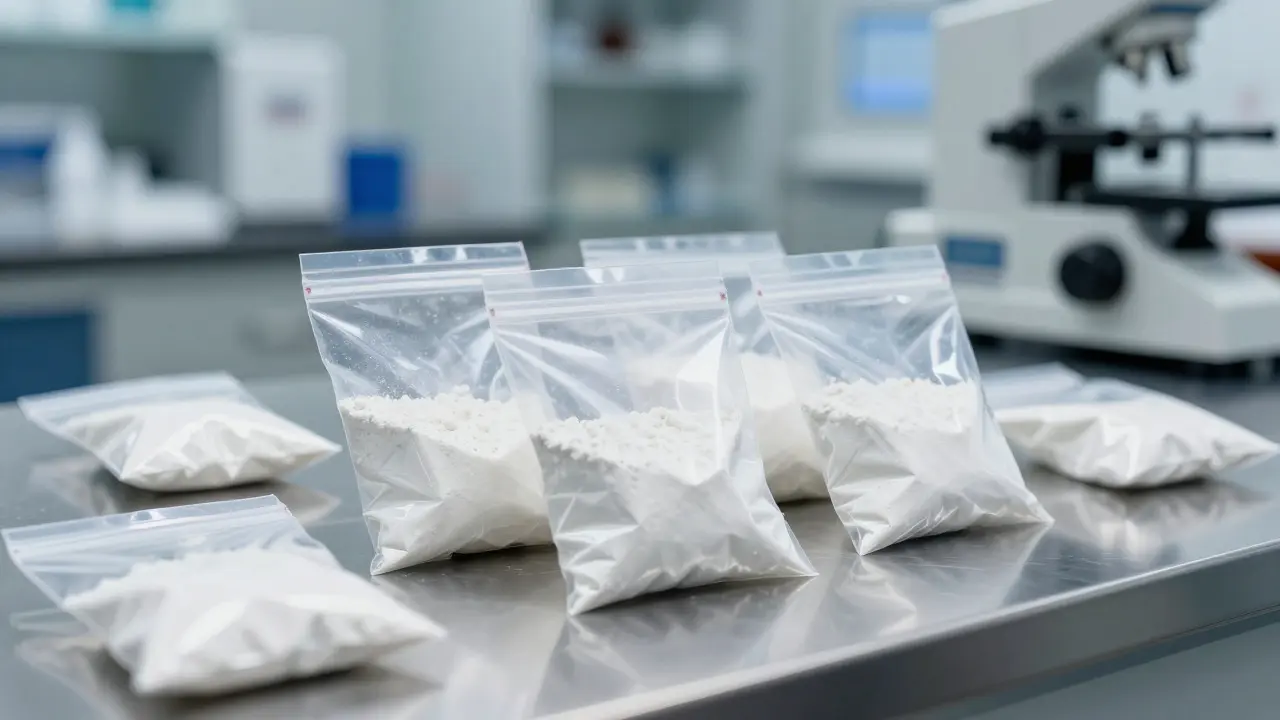
Walk into any crime lab and you’ll see a stack of white powder bags waiting for analysis. The label says "suspected cocaine," but that’s just a starting point. In reality, pure cocaine is rare on the street. What analysts deal with is a complex mixture where the actual drug might make up only 10 to 30 percent of the total weight. The rest? It’s a cocktail of adulterants, diluents, and sometimes other active drugs. Getting this right isn’t just about chemistry; it’s about justice. If you misidentify the bulk as cocaine, you skew dosage estimates, affect sentencing, and potentially waste resources. So, how do we separate the real thing from the filler?
The Reality of Street Cocaine Composition
Cocaine is a tropane alkaloid derived from the leaves of the Erythroxylum coca plant, primarily used as a local anesthetic and stimulant. However, when it hits the black market, its purity drops significantly. Adulterants are substances added to increase volume or alter effects, including diluents like mannitol and stimulants like caffeine. Understanding what’s in the bag is the first step before any sophisticated instrument touches the sample.
Common fillers vary by region and source. Mannitol, a sugar alcohol, is one of the most frequent diluents because it looks exactly like cocaine under a microscope and dissolves similarly. Benzoylecgonine, a metabolite, often appears in high concentrations if the batch was recycled or if the extraction process was sloppy. Then there are the active adulterants: lidocaine (a numbing agent), phenacetin (an old painkiller), and caffeine. Each of these has a different chemical fingerprint, which is why relying on visual inspection alone is a recipe for disaster.
Presumptive Testing: The First Line of Defense
Before sending samples to expensive mass spectrometers, field officers and intake labs use presumptive tests. These are quick, cheap, and designed to give a probable answer within minutes. The gold standard here is the Marquis reagent test. When applied to a small amount of the sample, cocaine turns a bright purple color. But here’s the catch: many other substances also turn purple, so a positive result isn’t proof. It’s a flag to proceed.
- Marquis Test: Turns purple with cocaine. False positives can occur with amphetamines or barbiturates.
- Romans Test: Uses iodine-potassium iodide. Cocaine forms a yellow precipitate. This is less specific but useful in the field.
- Colorimetric Kits: Commercial kits often combine multiple reactions. They are fast but prone to user error and cross-reactivity.
The key takeaway with presumptive tests is speed versus accuracy. You’re not looking for a definitive ID here; you’re looking for a reason to keep the sample alive for further analysis. If the powder doesn’t react at all, you might be dealing with something entirely different, like talcum powder or lactose, which are common non-active diluents.
Microscopic Examination: Seeing the Difference
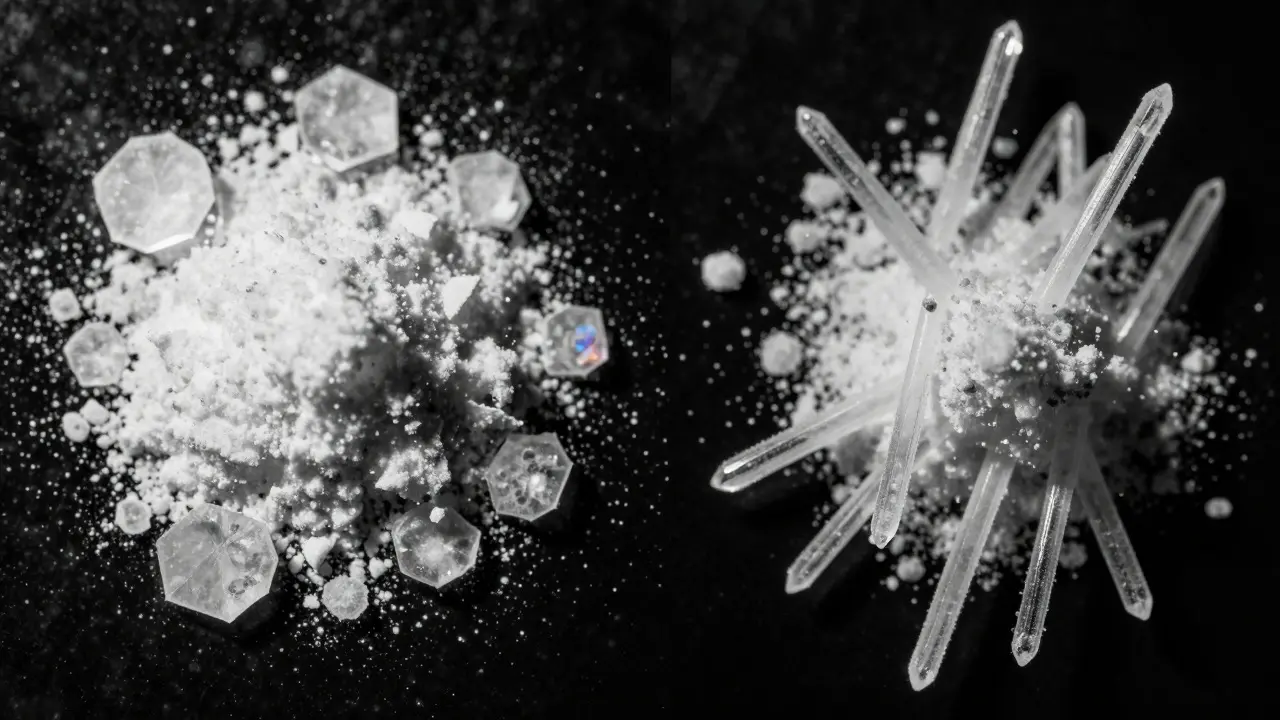
Once you’ve got a presumptive hit, microscopy becomes your best friend. Under a polarizing light microscope, cocaine crystals have a distinct appearance. They typically form flat plates or prisms. Now, compare that to mannitol. Mannitol crystals are usually long, needle-like structures. If you see a mix of flat plates and needles, you know you have a mixture.
This visual distinction is crucial for estimating purity without running a full quantitative analysis. A technician can estimate the percentage of cocaine based on the ratio of crystal shapes observed in a random field of view. It’s not exact, but it gives you a ballpark figure that helps prioritize which samples need urgent GC-MS analysis. For example, a sample with 80% visible cocaine crystals likely has a higher potency than one where the crystals are sparse and mixed with amorphous dust.
Confirmatory Analysis: GC-MS and HPLC
Presumptive tests and microscopy get you close, but they don’t tell you the whole story. To distinguish cocaine from its look-alikes with legal certainty, you need instrumental analysis. Gas Chromatography-Mass Spectrometry (GC-MS) is the industry standard for volatile and semi-volatile compounds like cocaine.
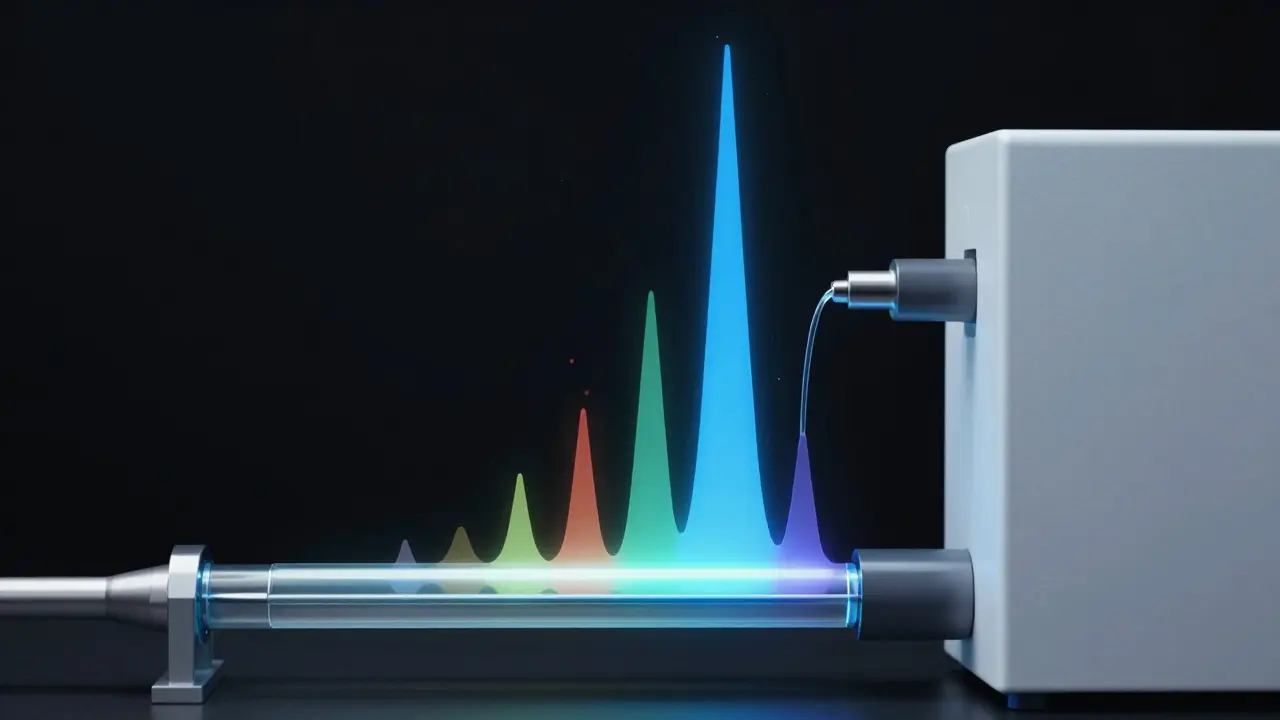
In a GC-MS run, the sample is vaporized and separated based on volatility. The mass spectrometer then fragments the molecules and records their masses. Cocaine has a unique fragmentation pattern, specifically a prominent peak at m/z 303 (the molecular ion) and characteristic fragment ions at m/z 182 and 171. If you see those peaks matching a reference standard, you have a confirmatory ID.
| Substance | Role in Mixture | Visual Appearance (Microscopy) | Key Chemical Identifier |
|---|---|---|---|
| Cocaine | Active Drug | Flat plates/prisms | m/z 303, 182, 171 |
| Mannitol | Diluent | Long needles | No UV absorption, high melting point |
| Lidocaine | Anesthetic Adulterant | Amorphous/powder | m/z 234, 119 |
| Benzoylecgonine | Metabolite/Impurity | Similar to cocaine | m/z 290, 182 |
| Caffeine | Stimulant Adulterant | Small rhombic prisms | m/z 194, 109 |
High-Performance Liquid Chromatography (HPLC) is another powerful tool, especially for quantifying the exact percentage of cocaine in the mixture. Unlike GC-MS, which requires the compound to be volatile, HPLC works well with larger molecules and can separate components based on their interaction with a stationary phase. This is particularly useful when you need to report the precise weight of cocaine for court documents.
Why Adulterants Matter in Court
You might wonder why we bother distinguishing between cocaine and mannitol if the defendant is guilty either way. The answer lies in sentencing and public health data. Many jurisdictions base penalties on the *weight* of the controlled substance. If a kilogram of powder is 50% cocaine and 50% mannitol, reporting it as "1kg of cocaine" inflates the perceived quantity. Accurate identification ensures that the legal system punishes the actual drug content, not the filler.
Furthermore, knowing the adulterants helps track supply chains. A batch with high levels of benzoylecgonine suggests a particular manufacturing method or recycling practice. A mix containing lidocaine might indicate a specific regional distribution network. By mapping these chemical signatures, investigators can connect disparate seizures to a single source.
Common Pitfalls and How to Avoid Them
Even experienced analysts make mistakes. One common error is assuming that a negative Marquis test means no cocaine. Some batches contain high levels of impurities that interfere with the reaction. Always follow up a negative presumptive test with a second method or instrumental analysis if clinical suspicion remains high.
Another pitfall is contamination. White powders are notorious for picking up residues from previous samples. Using clean glassware and running blank samples regularly is non-negotiable. If your blank shows a tiny peak at m/z 303, your results are compromised. Finally, don’t ignore the solvent. Residual solvents from extraction processes can create artifacts in GC-MS runs that mimic minor adulterants. Proper drying of samples before injection saves hours of troubleshooting.
Frequently Asked Questions
What is the most common adulterant found in cocaine?
Mannitol is widely considered the most common diluent due to its physical similarity to cocaine. Other frequent additives include benzoylecgonine, lactose, and lidocaine, depending on the production method and region.
Can you identify cocaine just by looking at it?
No. Visual inspection can suggest the presence of cocaine based on crystal shape under a microscope, but it cannot confirm identity or exclude look-alike substances like mannitol or quinine. Confirmatory testing with GC-MS or HPLC is required for legal certainty.
How does GC-MS distinguish cocaine from other stimulants?
GC-MS separates compounds based on volatility and then identifies them by their unique mass spectra. Cocaine has a specific molecular weight (303 g/mol) and fragmentation pattern that differs from amphetamines, methamphetamine, or MDMA, allowing for clear differentiation.
Why is benzoylecgonine significant in cocaine analysis?
Benzoylecgonine is the primary metabolite of cocaine. Its presence in large quantities indicates that the sample may contain recycled material or that the extraction process was inefficient. It serves as a marker for the quality and origin of the cocaine batch.
What is the difference between a presumptive and confirmatory test?
A presumptive test (like Marquis reagent) provides a rapid, low-cost indication of possible cocaine presence but has a higher rate of false positives. A confirmatory test (like GC-MS) uses complex instrumentation to provide a definitive identification with very low false-positive rates, suitable for courtroom evidence.