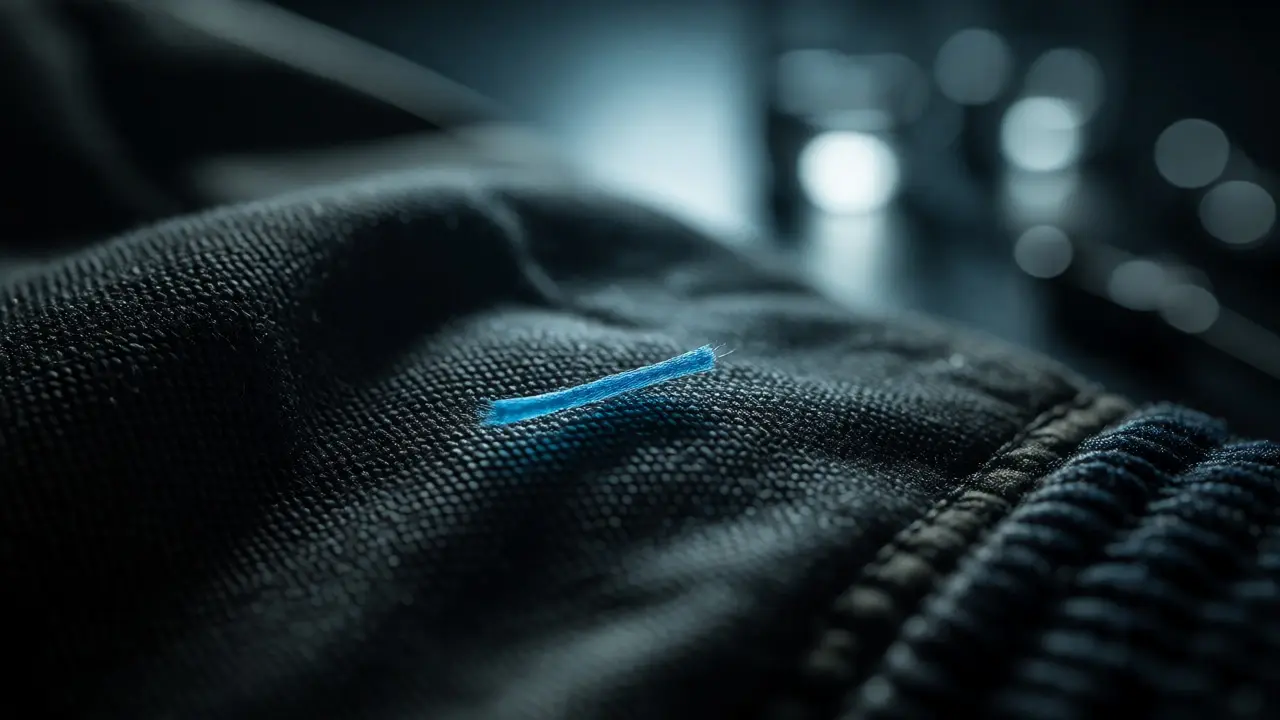
Imagine you find a single blue fiber on a suspect’s jacket. It looks identical to the carpet in the victim’s living room. But is it? To the naked eye, yes. To a chemist, maybe not. This is where chemical analysis becomes the difference between a guess and a conviction.
Trace materials are tiny fragments-fibers, glass, paint, soil, or gunshot residue-that transfer during contact but are often overlooked by casual observers. Their power lies in their uniqueness. Unlike DNA, which can sometimes be degraded or mixed, the chemical signature of a material is robust. If you understand how to extract and interpret that signature, you unlock a level of detail that visual comparison simply cannot match.
Why Visual Comparison Isn’t Enough
For decades, forensic scientists relied on microscopic examination. You’d look at two fibers under a microscope, compare their color, diameter, and surface texture, and call it a match if they looked alike. The problem? Manufacturers produce millions of fibers that look exactly the same. Two shirts from different factories might have indistinguishable polyester threads. Visual matching has a high false-positive rate because it lacks molecular specificity.
Chemical analysis solves this by looking at what the material is made of, not just what it looks like. It answers questions like: Does this paint contain titanium dioxide or calcium carbonate? Is this glass soda-lime or borosilicate? These distinctions matter because they narrow down the source population from "millions" to "a few thousand." That shift in probability changes everything in court.
The Core Toolkit: GC-MS and FTIR
You don’t need a billion-dollar lab to do this work, but you do need precision instruments. Two technologies dominate modern trace evidence labs: Gas Chromatography-Mass Spectrometry (GC-MS) and Fourier Transform Infrared Spectroscopy (FTIR).
GC-MS is the gold standard for volatile organic compounds. Think of it as separating a smoothie back into its individual fruits. The gas chromatograph separates the mixture into components based on how they interact with a column, while the mass spectrometer identifies each component by its unique fragmentation pattern. It’s incredibly sensitive, capable of detecting parts per billion levels of chemicals. This makes it perfect for analyzing accelerants in arson cases or drug residues on surfaces.
FTIR works differently. Instead of breaking molecules apart, it shines infrared light through them and measures how much energy they absorb. Different chemical bonds absorb specific wavelengths, creating a spectral fingerprint. If the spectrum of a questioned paint chip matches the reference sample peak-for-peak, you have strong evidence they share a common origin. FTIR is non-destructive, meaning you can often recover the sample after testing-a huge plus when evidence is scarce.
| Technique | Best For | Destructive? | Sensitivity |
|---|---|---|---|
| Microscopy | Initial screening, morphology | No | Low (visual only) |
| FTIR | Polymers, paints, drugs | No (usually) | Moderate |
| GC-MS | Volatiles, oils, explosives | Yes | High |
| SEM-EDX | Elemental composition, glass | Yes | High |
Case Study: The Paint Chip Puzzle
Let’s walk through a real-world scenario. A hit-and-run occurs at night. The victim finds a small fleck of white paint on their car bumper. They claim the suspect’s vehicle was involved. The suspect’s car is white, but so are half the cars in Portland. Visual inspection says "maybe." Chemical analysis says "yes" or "no." The analyst takes the paint chip and uses a cross-section technique. They embed the chip in resin, polish it flat, and examine the layers under a microscope. Most automotive paints have four distinct layers: primer, base coat, clear coat, and potentially a repair patch. By comparing the layer structure and thickness, we get a physical profile. Then, we use FTIR to analyze the binder in each layer. If the suspect’s car has an acrylic enamel base coat, but the victim’s chip contains polyurethane, the link breaks. If both show the exact same polyurethane formulation and pigment ratio, the link strengthens significantly. This isn’t just about matching colors. It’s about matching manufacturing batches. Modern automotive paints are produced in specific lots. If the chemical markers align, you’re likely looking at vehicles manufactured within the same timeframe and region.
Glass Fragments: Refractive Index Matters
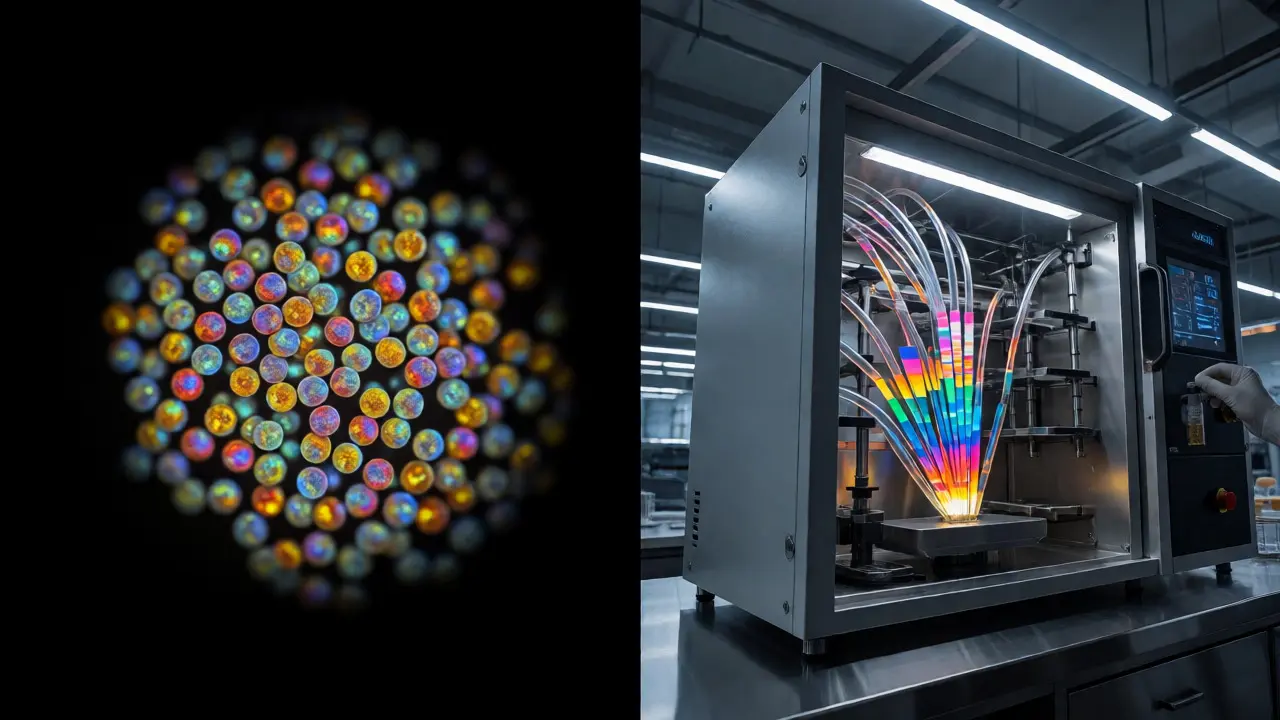
Glass is another classic trace material. When a window breaks, shards fly everywhere. Some stick to clothing, some land on shoes. Recovering these fragments requires care because they’re fragile and easily contaminated. Once collected, analysts measure the refractive index (RI). Glass bends light at a specific angle depending on its chemical composition. Tempered glass used in side windows has a different RI than laminated windshield glass. More importantly, even within the same type of glass, slight variations in sodium and calcium content create unique RI values. Using a hot-stage microscopy method, analysts heat the fragment until it melts, measuring the temperature at which it matches a liquid immersion medium. If the RI of the crime scene glass matches the suspect’s broken headlight glass to within 0.001 units, the probability of coincidence drops dramatically. According to ASTM E1410 standards, this level of agreement provides strong evidentiary support.
Gunshot Residue: The Microscopic Clue
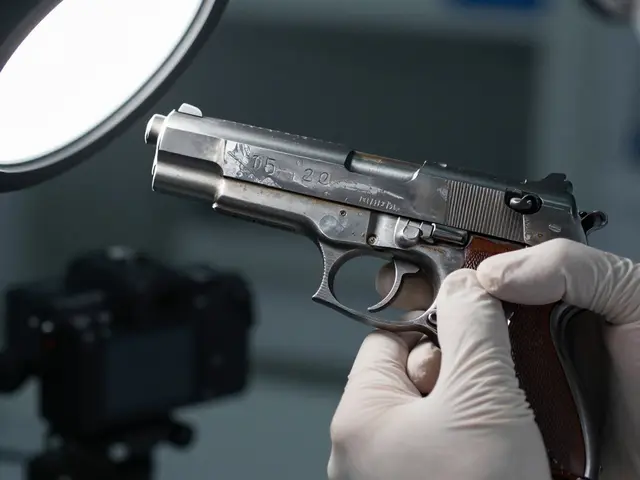
When a gun fires, it ejects particles that settle on the shooter’s hands and nearby surfaces. These particles, known as Gunshot Residue (GSR), consist mainly of lead, barium, and antimony. While GSR alone doesn’t prove someone fired a gun-it could come from touching a surface where GSR landed-the presence of characteristic spherical particles is telling. Scanning Electron Microscopy with Energy Dispersive X-ray spectroscopy (SEM-EDX) is the tool of choice here. It scans the particle’s surface and identifies the elemental makeup. Finding a particle containing all three elements (lead, barium, antimony) in a spherical shape is highly indicative of firearm discharge. However, context is key. Brake dust also contains lead and antimony. Industrial workers may have barium on their hands. Analysts must rule out environmental contamination before reporting a positive result. This nuance is critical in legal proceedings; overstating certainty can lead to wrongful convictions.
Soil and Vegetation: The Geographic Fingerprint
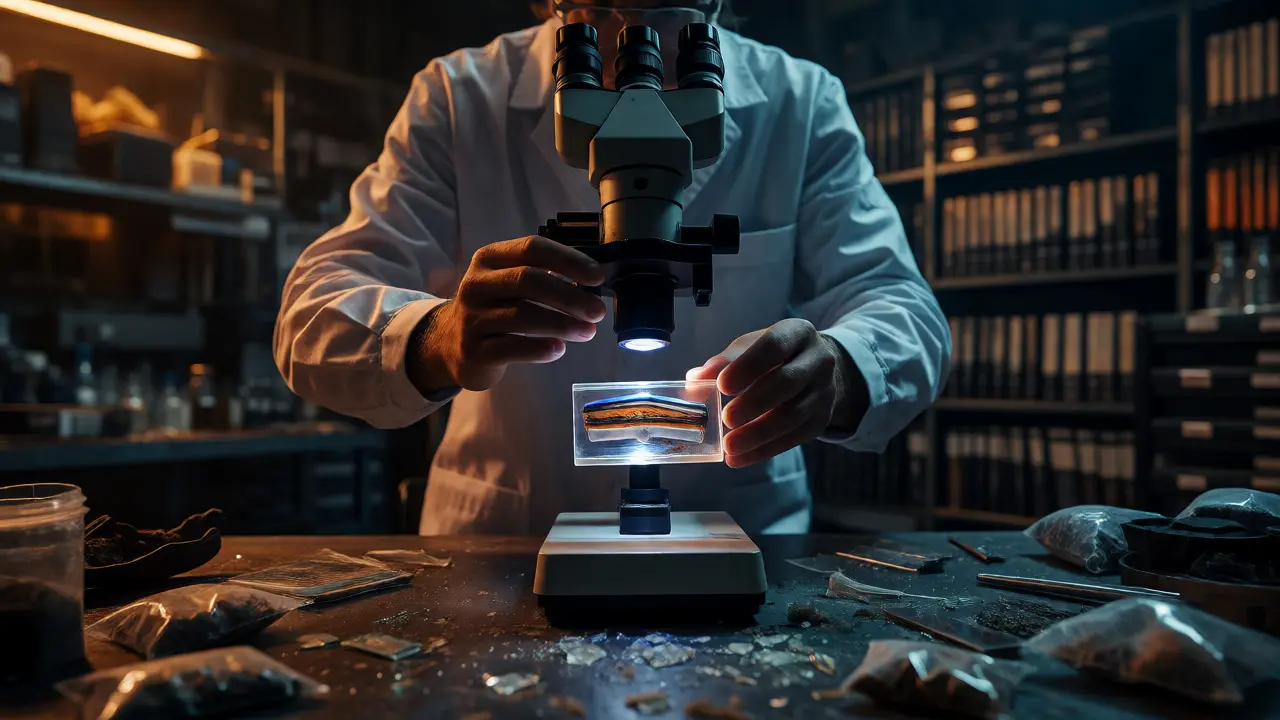
People underestimate soil. We carry it on our shoes without thinking. Soil composition varies wildly over short distances due to local geology, moisture, and plant life. Chemical analysis of soil involves examining mineral content, pH levels, and organic matter. If a suspect claims they were never at the crime scene, but their shoe treads contain soil with a rare mineral found only in that specific creek bed, the alibi crumbles. Pollen grains trapped in the soil add another layer. Pollen is durable and species-specific. Identifying pollen from a particular tree species that only grows in one part of Oregon can place a suspect in a precise location. This interdisciplinary approach combines botany and chemistry to build a geographic timeline.
Common Pitfalls in Trace Analysis
Even with advanced tools, mistakes happen. Contamination is the biggest enemy. If you handle evidence with dirty gloves, you introduce foreign fibers or oils. Chain of custody errors can render results inadmissible. Another pitfall is confirmation bias. If an investigator expects a match, they might unconsciously select data points that support that view while ignoring discrepancies. To avoid these issues, labs follow strict protocols. Blanks are run alongside samples to check for background noise. Duplicate analyses ensure reproducibility. And peer review is mandatory before reports go to prosecutors. Remember, science is about falsifiability. A good analyst tries to disprove their hypothesis, not just confirm it.
What Happens Next? Interpreting Results
So you’ve got your spectra, your RI values, and your elemental maps. Now what? You report findings in terms of association, not identity. You say, "The questioned fiber is consistent with the known fiber," rather than "It came from the known sweater." Why? Because you can’t guarantee uniqueness unless you have a database of every fiber ever made. Consistency means the chemical properties match. Identity implies exclusivity, which is rarely provable with trace amounts.
Juries often misunderstand this distinction. Clear communication is vital. Explain that while the evidence supports a connection, it doesn’t prove intent or action alone. It’s one piece of the puzzle. Combined with eyewitness accounts, video footage, or DNA, it creates a compelling narrative. Without it, the case might rest on shaky ground.
Can trace evidence be faked?
Yes, but it’s difficult. Someone could plant a fiber or glass shard, but replicating the complex chemical matrix of natural materials like soil or aged paint is hard. Sophisticated analysis can often detect inconsistencies, such as fresh cuts on old glass or mismatched oxidation states in metals.
How long does chemical analysis take?
Simple tests like microscopy take minutes. Complex analyses like GC-MS runs can take hours per sample, plus preparation time. A full case report typically takes one to three weeks, depending on lab backlog and complexity.
Is trace evidence admissible in court?
Generally, yes. Methods like FTIR and SEM-EDX are widely accepted under Daubert or Frye standards because they rely on reproducible scientific principles. However, the interpretation of statistical significance varies by jurisdiction.
What is the smallest amount needed for analysis?
Modern instruments are incredibly sensitive. FTIR can analyze particles as small as 10 microns (visible to the naked eye). GC-MS requires microgram quantities. Often, a single speck of paint or a few fibers suffice.
Does cleaning remove trace evidence?
Not always. Cleaning removes loose debris but often fails to eliminate embedded particles. Fibers weave into fabric; glass dust lodges in shoe treads; GSR settles in skin crevices. Proper collection techniques can still recover significant evidence post-cleaning.