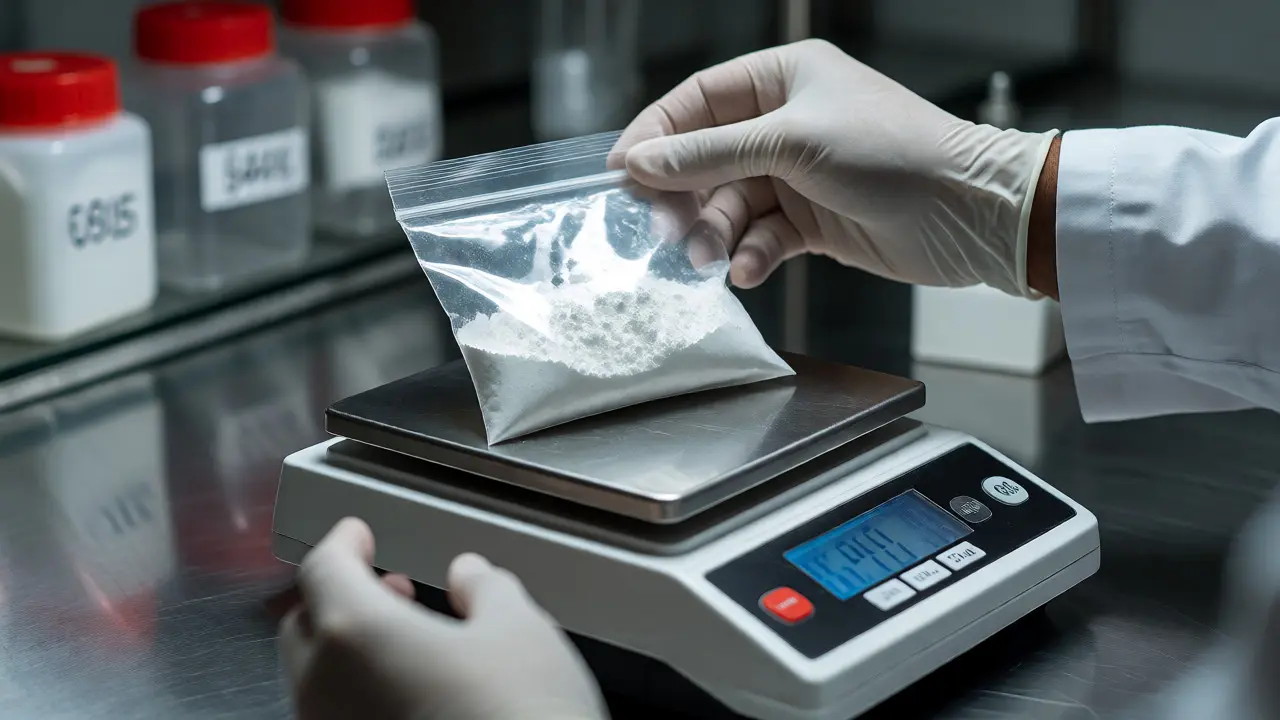
You walk into a lab with a bag containing three pounds of white powder. The suspect claims it is baking soda. The field test says cocaine. But you cannot put three pounds of powder under a microscope or run every single grain through a gas chromatograph. You need to know if the Bulk Drug Evidence is uniformly illicit or a mix of cutting agents. This is where sampling and subdivision become critical. If you mess up how you take the sample, the entire case falls apart in court.
Think about the stakes. A defense attorney will ask, "How do you know the rest of the bag wasn't flour?" Your answer must be backed by a rigorous, documented protocol. It’s not just about grabbing a pinch; it’s about statistical confidence and legal defensibility. Let’s break down how professionals handle bulk quantities without wasting precious evidence or compromising integrity.
Why Uniformity Matters in Bulk Samples
The core challenge with Bulk Drug Evidence is heterogeneity. In small amounts, like a few grams of marijuana, visual inspection might suffice. But when you have kilograms of heroin or hundreds of pills, the composition can vary wildly within the same package. One section might be pure fentanyl, while another is mostly caffeine.
If you only sample one corner and it tests negative, but the center was positive, you’ve made a fatal error. Conversely, if you assume uniformity without proof, you risk overcharging a defendant based on a total weight that includes inert fillers. The goal of Sampling Protocols is to determine the probability that the entire population shares the characteristics of the sample. We aren’t looking for certainty-we’re looking for a high degree of confidence that aligns with legal standards.
The Standard: ASTM E1413 and SWGDRUG
You don’t invent your own rules here. Most labs follow guidelines from organizations like the Scientific Working Group for Drug Analysis (SWGDRUG) or ASTM International standards. These bodies provide the framework for how many samples are needed based on the number of units or total weight.
For example, if you have a single large package of powder, you might need to subdivide it multiple times to ensure the final analytical sample represents the whole. For discrete units, like pill bottles, the standard often dictates sampling a percentage of the total count. If you have 100 pills, you might analyze 10% randomly selected. If they all match, you can extrapolate to the rest. If one differs, you expand the sample size until you identify the variance.
Step-by-Step Subdivision Process
Subdivision isn’t random scooping. It’s a methodical reduction of volume while maintaining representativeness. Here is how a typical workflow looks for a non-uniform powder:
- Mixing: Before taking anything out, the analyst thoroughly mixes the contents of the original package. This homogenizes the material as much as possible without altering its chemical structure.
- Initial Reduction: Using clean spatulas, the analyst removes a portion of the mixture. This is the first "quartering" step.
- Quartering Technique: The remaining pile is divided into four equal quadrants. Two opposite quadrants are discarded back into the main container (or set aside), and the other two are mixed together. This reduces the volume by half while keeping a representative cross-section.
- Iterative Sampling: Repeat the quartering process until the desired sample size is reached-usually enough for testing plus retention.
- Documentation: Every step is logged. Photos are taken before and after mixing. The exact weights at each stage are recorded.
This method ensures that even if the drugs were layered (e.g., pure product on top, cut product below), the sampling process captures that variation rather than missing it.
| Quantity Type | Recommended Action | Rationale |
|---|---|---|
| Single Package (<50g) | Homogenize and take representative aliquot | Small volume allows thorough mixing; low risk of stratification. |
| Multiple Units (Pills/Capsules) | Random selection of 10-20% of units | Discrete units allow for individual identification; sampling detects outliers. |
| Liquid Mixtures | Vortex/shake thoroughly before pipetting | Liquids separate over time; agitation ensures uniform concentration. |
| Large Bulk (>1kg) | Systematic grid sampling or coning and quartering | High potential for heterogeneity; requires multiple subsamples from different zones. |

Handling Discrete Units: Pills and Capsules
Pills present a unique problem. They look identical, but their internal composition can differ. Two tablets from the same bottle might have different active ingredient levels due to manufacturing variances. When dealing with Discrete Drug Units such as tablets or capsules, analysts often crush them individually or in groups.
A common approach is to weigh each unit separately. If the weights vary significantly, it suggests inconsistent filling. Then, the analyst selects a subset for instrumental analysis. If the subset shows consistent results, the remaining units are assumed to be similar. However, if there’s a discrepancy-say, one pill has a different color imprint or weight-the analyst must investigate further, potentially analyzing more units to define the distribution.
The Role of Chain of Custody in Sampling
Every time you open a bag, you touch the evidence. Each touch point is a potential link in the Chain of Custody documenting who handled the evidence, when, and why. During subdivision, this becomes complex because you are creating new items from the original source.
When you take a sub-sample, it needs its own label and identifier. The original package must be resealed securely. If you fail to document the weight of the original package versus the sum of the sub-samples, discrepancies arise. Courts scrutinize these numbers. A missing gram isn’t just a rounding error; it’s a question of whether evidence was lost or tampered with.
Analysts must also account for loss during processing. Some material sticks to spatulas or containers. Best practice involves recording "processing losses" explicitly. If you start with 100 grams and end up with 98 grams of retained evidence, those 2 grams are accounted for in the report as consumed during testing and handling.
Common Pitfalls and How to Avoid Them
Even experienced technicians make mistakes. The most frequent issue is inadequate mixing. Analysts sometimes rush this step, assuming the powder is already uniform. Always mix. Another trap is using contaminated tools. If your spatula still has residue from a previous methamphetamine sample, your next cocaine test could show false positives. Clean instruments between every sample.
Also, beware of hygroscopic materials. Some drugs absorb moisture from the air, changing their weight. If you leave a sample out too long during subdivision, the weight data becomes unreliable. Work quickly and seal samples immediately after weighing.
Legal Implications of Sampling Errors
Defense attorneys love to attack sampling methodology. If your protocol deviates from accepted standards without justification, they will argue that the sample doesn’t represent the whole. This can lead to reduced charges or dismissals.
For instance, if you claim a 500-gram brick is 100% cocaine based on a single spot test, a competent defense expert will demand more rigorous sampling. They might argue that the brick contained significant filler. By following strict Subdivision Protocols that adhere to scientific best practices, you protect the prosecution’s case. You demonstrate that the conclusion was derived from a statistically sound basis, not a guess.
Do I need to analyze every single pill in a bottle?
No, usually not. Standards like SWGDRUG suggest analyzing a representative sample (often 10-20%) if the units appear homogeneous. If the sample results are consistent, you can extrapolate to the remainder. However, if there are visible differences in color, shape, or weight among the pills, you must analyze more units to ensure no distinct populations exist within the batch.
What happens if my sub-samples don't match?
If initial sub-samples yield different results, you must increase the sample size. You continue subdividing and testing until you either find a pattern (e.g., 90% contain drug X, 10% contain drug Y) or exhaust the available evidence. Reporting should reflect this variability rather than claiming uniformity.
Can I use the same spatula for different packages?
Only if you clean it thoroughly between uses. Cross-contamination is a major risk in forensic labs. Ideally, use disposable tips or dedicated tools for each package. If reusable tools are used, they must be cleaned with solvent and dried completely before contacting the next sample to prevent false positives.
How do I handle liquid bulk evidence?
Liquids require vigorous shaking or vortexing to ensure the solute is evenly distributed throughout the solvent. Take multiple aliquots from different parts of the container (top, middle, bottom) after mixing. Analyze these separately to confirm consistency. If layers form, the mixture may be unstable, requiring careful documentation of phase separation.
Is visual inspection enough for small amounts?
Visual inspection is preliminary. Even small amounts should undergo presumptive chemical testing followed by confirmatory instrumental analysis (like GC-MS) if charged. Visual cues can be misleading; many white powders look alike. Instrumental confirmation provides the definitive identification required for court.