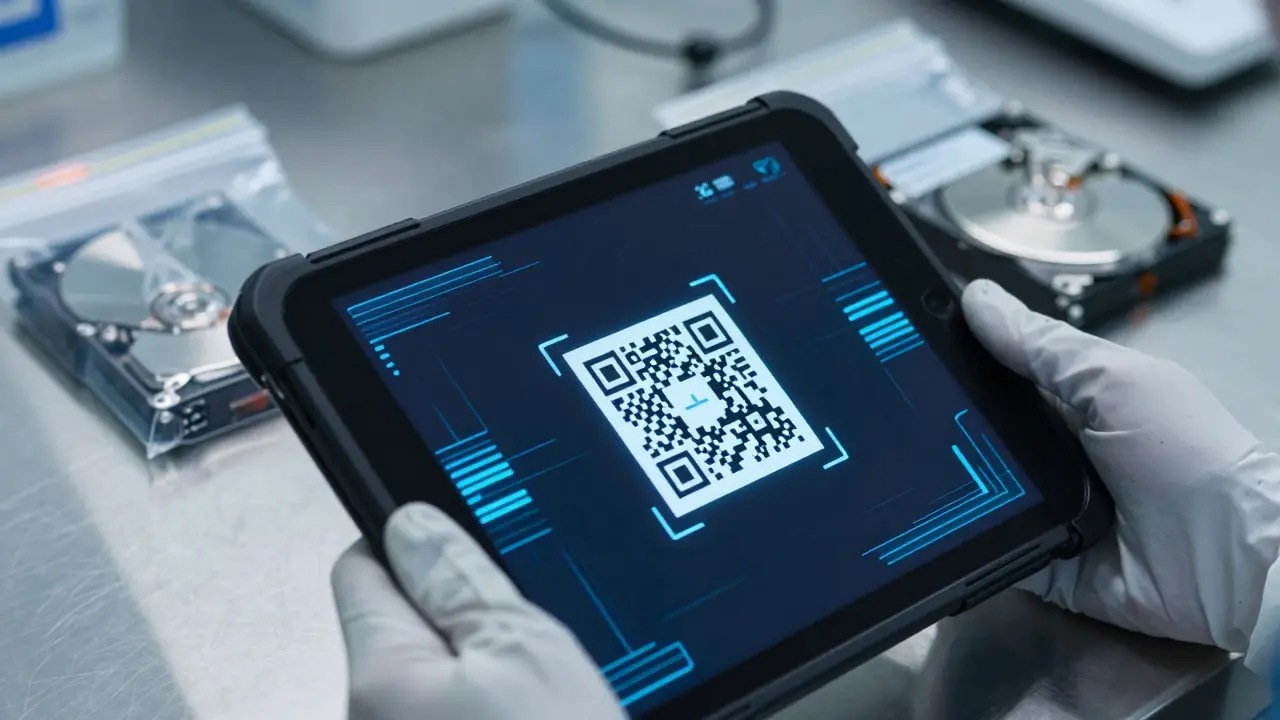
Imagine a detective in Seattle trying to prove that a hard drive seized from a suspect’s office hasn’t been tampered with since Tuesday. In the old days, this meant a thick binder full of paper logs, signatures, and sticky notes. If one signature was missing or a log entry was smudged by coffee, defense attorneys had a field day. Today, that same detective might use a Virtual Chain of Custody system. This is a cloud-based platform that digitizes and automates the tracking of physical and digital evidence, ensuring every handoff is recorded with cryptographic precision. It replaces paper trails with immutable digital records, making it nearly impossible to alter history without leaving a trace.
The Problem with Paper Trails
Traditional Chain of Custody procedures rely heavily on human discipline. Every time an item moves from a police officer to a lab technician, or from a storage vault to a courtroom, someone has to write down who took it, when, and why. Sounds simple, right? But in high-volume cases, mistakes happen. A form gets lost. A timestamp is written incorrectly. Or worse, a piece of evidence sits unattended for hours because no one updated the log.
These gaps create vulnerabilities. Defense lawyers love to poke holes in weak chains of custody. If they can suggest that DNA samples were left in a warm car or that a phone was plugged into an unsecured computer, the entire case can crumble. The cost of a single error isn't just administrative; it's the difference between justice and a dismissed charge. This is why law enforcement agencies are increasingly looking at technology to solve a very human problem.
How Cloud-Based Platforms Work
A virtual chain of custody platform works by turning every interaction with evidence into a data point. Instead of signing a paper form, officers scan a QR code or RFID tag attached to the evidence bag. Their mobile device connects to the cloud server, verifying their identity through multi-factor authentication. The system then logs the transfer with a precise timestamp, location via GPS, and the user’s digital signature.
But the real magic happens in the background. These platforms often use Blockchain Technology or similar distributed ledger technologies to create an immutable record. Once a transaction is recorded, it cannot be deleted or changed without changing all subsequent blocks. This creates a level of trust that paper simply cannot offer. If you try to backdate a signature in a digital ledger, the hash value changes, and the discrepancy becomes immediately visible to auditors.
| Feature | Traditional Paper Logs | Cloud-Based Virtual System |
|---|---|---|
| Data Integrity | Low (susceptible to alteration) | High (cryptographically secured) |
| Searchability | Poor (manual filing) | Excellent (instant keyword search) |
| Real-Time Visibility | No (requires physical check) | Yes (live dashboard access) |
| Cost per Case | High (printing, storage, labor) | Lower long-term (subscription model) |
| Legal Risk | Moderate to High | Low (audit trail is robust) |
Digital Forensics and Data Integrity
For digital evidence, like smartphones, laptops, or CCTV footage, the stakes are even higher. Unlike a fingerprint, digital data can be copied perfectly. If a suspect’s phone is examined using the wrong tools, metadata can be altered, destroying its evidentiary value. Virtual custody platforms integrate directly with Digital Forensics workflows. When a device is imaged, the platform calculates a hash value (like MD5 or SHA-256) of the file. This hash acts as a fingerprint for the data. Any tiny change to the file alters the hash, signaling tampering.
This integration ensures that from the moment a device is seized to the moment it enters the expert witness stand, its integrity is mathematically proven. Agencies in major cities like Portland have started piloting these systems to handle the surge in cybercrime cases. The result? Fewer disputes over whether the data presented in court matches what was originally seized.

Benefits for Law Enforcement and Legal Teams
Why are prosecutors and detectives embracing this tech? Speed and transparency. With a cloud dashboard, a prosecutor can see exactly where a blood sample is at any given second. No more calling the lab to ask if they received the package. No more waiting three days for a paper report to be scanned and emailed. Everything is accessible from a laptop or tablet, provided there is internet connectivity.
There is also a significant reduction in administrative burden. Officers spend less time filling out forms and more time investigating. Lab technicians spend less time organizing files and more time analyzing samples. According to recent efficiency reports from mid-sized police departments, adopting digital custody systems has reduced evidence processing time by up to 40%. That’s time saved that can be redirected toward solving crimes rather than managing paperwork.
Challenges and Considerations
It’s not all smooth sailing. Moving sensitive case details to the cloud raises questions about data privacy and security. Who owns the data? What happens if the provider goes bankrupt? These are valid concerns. Most reputable platforms offer Data Encryption both in transit and at rest, but agencies must still vet providers carefully. Look for vendors that comply with federal standards like NIST Guidelines for information security.
Another challenge is the learning curve. Older officers may resist new technology, preferring the tactile feel of a paper log. Training is crucial. Agencies need to ensure that every member of the team understands not just how to scan a tag, but why the digital process matters legally. Without buy-in from the ground level, even the best software will fail. You can’t force adoption; you have to demonstrate value.

Implementation Strategy for Agencies
If your department is considering a switch, start small. Don’t try to migrate your entire evidence room overnight. Pick one type of evidence-maybe narcotics or digital devices-and run a pilot program. Track the metrics: How much time did you save? Were there any errors? Did the legal team find the reports easier to understand?
Once the pilot succeeds, expand gradually. Ensure that your existing hardware, like barcode scanners and tablets, is compatible with the chosen platform. Budget for ongoing support, not just initial setup. The goal is seamless integration into daily operations, not a separate, cumbersome task. When the system feels like a natural extension of the workflow, adoption rates soar.
Frequently Asked Questions
Is a virtual chain of custody legally admissible in court?
Yes, provided the system maintains a complete audit trail and complies with local evidence rules. Courts generally accept electronic records if they are reliable and authenticated. Using cryptographic hashes and secure login methods strengthens admissibility significantly compared to paper logs.
What happens if the internet goes down during a transfer?
Most modern platforms allow offline mode. The device stores the transaction locally and syncs automatically once connectivity is restored. The timestamp is based on the device’s clock, which should be synchronized with a network time protocol (NTP) server to ensure accuracy.
Can defendants challenge the authenticity of digital records?
They can, but it is difficult. To successfully challenge a digital record, the defense would need to prove that the system was compromised, that the hash values were altered, or that the user authentication was bypassed. Because these systems are designed with redundancy and encryption, such challenges rarely succeed unless there was gross negligence.
How does this compare to traditional barcoding systems?
Traditional barcoding systems track items but often lack deep integration with case management and legal reporting. Virtual chain of custody platforms go further by linking evidence to specific cases, suspects, and lab results, creating a holistic view of the investigation. They also add layers of security like biometric verification that simple barcodes don’t have.
What is the typical cost of implementing such a system?
Costs vary widely depending on the size of the agency and the number of users. Small departments might pay a few thousand dollars annually for a subscription service. Larger metropolitan agencies may invest tens of thousands for enterprise-level solutions with custom integrations. However, these costs are often offset by savings in labor and reduced litigation expenses.