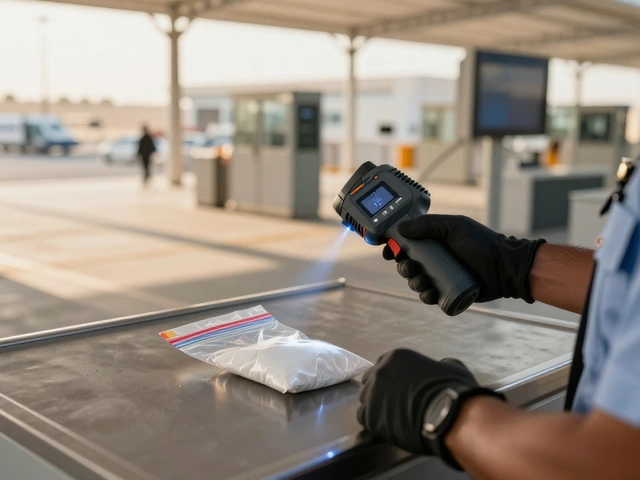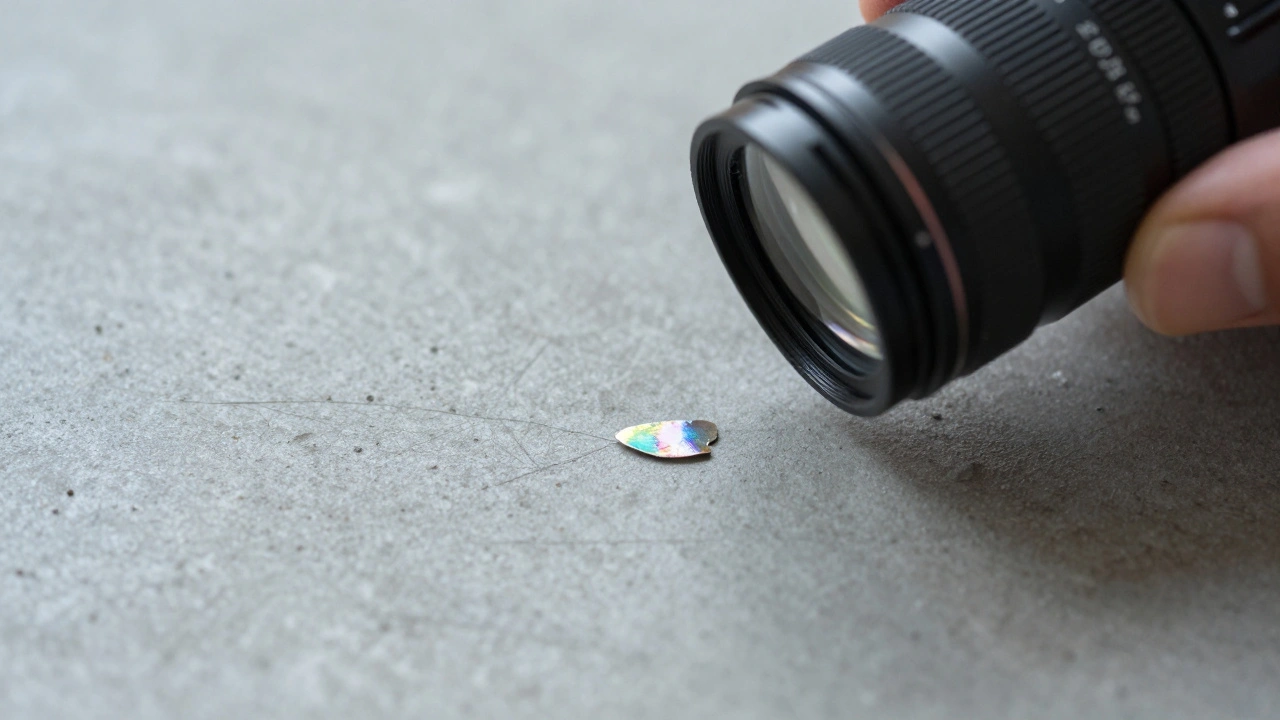
Imagine you're processing a crime scene and find a tiny, crucial piece of evidence-maybe a flake of paint or a partial fingerprint on a textured surface. You bring in your macro lens to document it, but as soon as you snap the photo, you realize only a tiny sliver of the object is sharp. The rest is a blur. In the world of depth of field is the area in front of and behind the point of focus that appears sharp in a photograph, and in macro work, that area shrinks to a frustratingly small size. For forensic investigators, a blurry photo isn't just a technical error; it's a failure to document evidence accurately.
The Macro Struggle: Why Everything Goes Blurry
In standard photography, you can usually get a decent amount of a scene in focus by simply adjusting your aperture. But when you move into Macro Photography-shooting subjects at a 1:1 magnification ratio or higher-the rules change. At this level, your depth of field might be measured in mere millimeters. This happens because magnification is the primary driver of DOF. The closer you get to the evidence, the thinner that slice of focus becomes.
Most forensic teams use specialized lenses like the Nikon 105mm Macro or similar Canon offerings. While these are incredible for detail, they are essentially telephoto lenses. This optical design, combined with the extreme proximity to the subject, creates a shallow DOF that is almost impossible to overcome with aperture settings alone. You might think, "I'll just use a smaller aperture (like f/22) to get more in focus," but that leads us straight into a different technical trap.
The Diffraction Trap
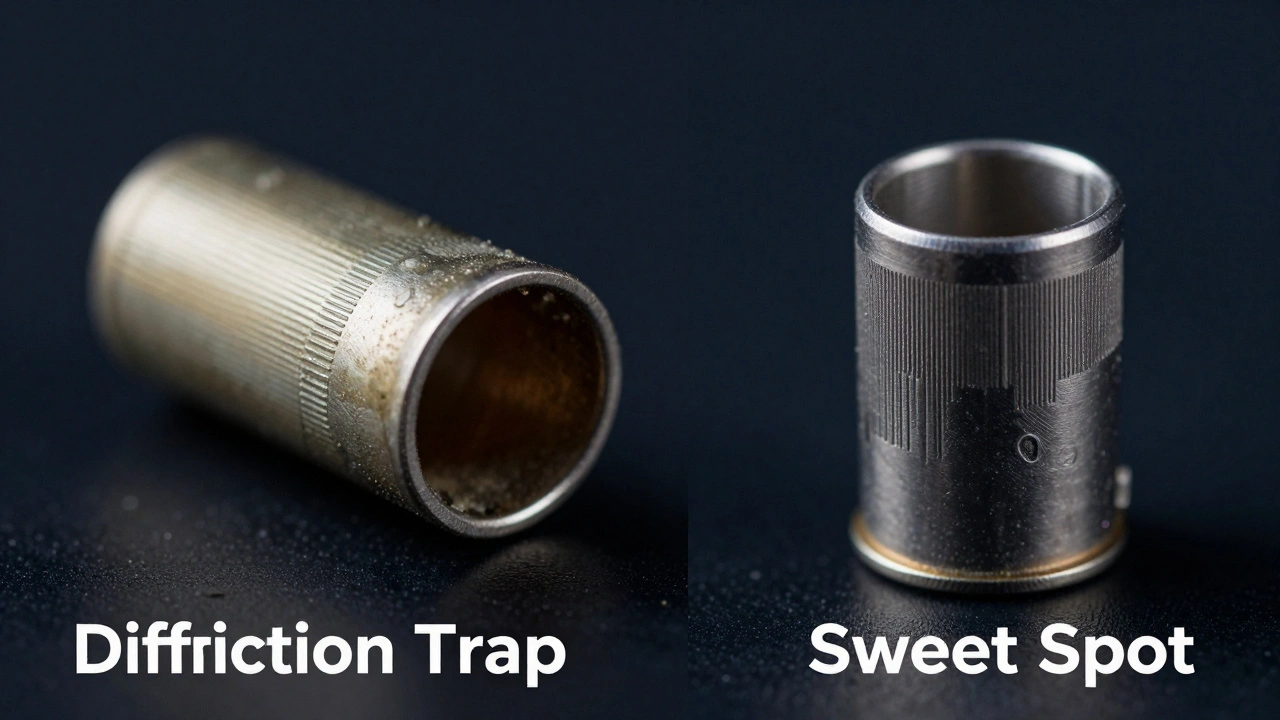
There is a tempting belief that stopping down your lens to a very high f-stop will solve all your focus problems. In theory, f/22 provides a deeper field of view than f/2.8. However, in the high-magnification world of evidence shots, you run into Diffraction. This is an optical phenomenon where light waves bend as they pass through a tiny aperture, causing a general softness across the entire image.
If you push your aperture too far, you might get more of the object "in focus," but the image loses its crispness. You end up with a photo that is technically in focus but looks muddy and soft. For a court of law, you need absolute clarity. This means you have to find the "sweet spot"-the aperture that provides enough DOF without triggering diffraction. Usually, this is found between f/8 and f/11 for many macro lenses.
| Setting | Effect on Depth of Field | Risk Factor | Forensic Result |
|---|---|---|---|
| Wide Aperture (f/2.8 - f/5.6) | Extremely Shallow | Missing critical evidence details | High detail, low coverage |
| Mid Aperture (f/8 - f/11) | Moderate | Balanced | Optimal sharpness and depth |
| Narrow Aperture (f/16 - f/22) | Deeper | Diffraction / Softness | Full coverage, loss of crispness |
Solving the Puzzle with Focus Stacking
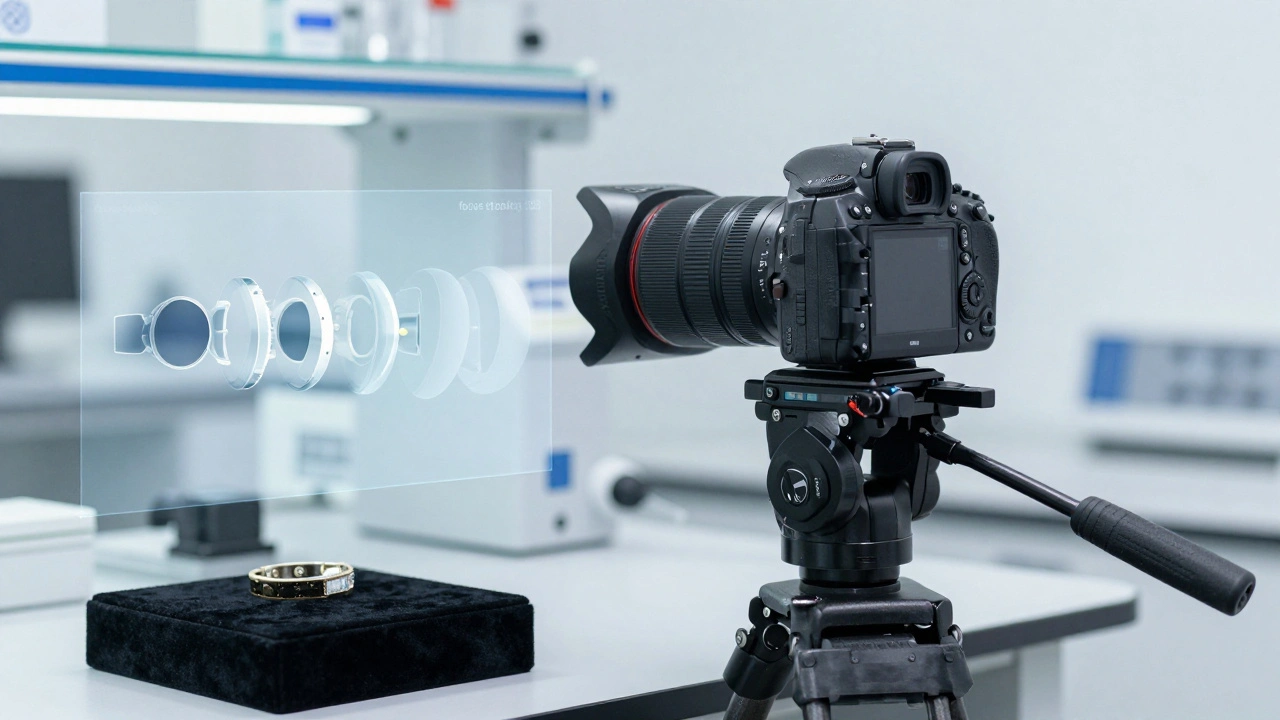
When a single shot simply isn't enough to capture the entire piece of evidence in focus, professionals turn to Focus Stacking. Instead of trying to force the lens to do something it physically can't, you take a series of photos. In the first shot, you focus on the very front of the evidence. In the second, you shift the focus slightly deeper, and so on, until you've captured the entire depth of the object.
These individual slices are then combined using software to create a single, composite image where everything is sharp. While this is more time-consuming than a single snap, it is the gold standard for high-magnification forensic work. It allows you to maintain a wide-open aperture (avoiding diffraction) while achieving a deep depth of field. If you're documenting a 3D object like a shell casing or a piece of jewelry, this is the only way to ensure the entire object is documented with forensic precision.
The Cropping Alternative
If you don't have the time or equipment for stacking, you can use a method called "shoot wide and crop." Here's how it works: you move the camera farther away from the subject. By increasing the distance, you naturally increase the depth of field. You lose the 1:1 magnification in the original shot, but you gain a much larger area of focus.
This is where Full-Frame Sensors become a huge advantage. A camera with a larger sensor captures significantly more pixel data. If you have a 45-megapixel sensor, you can crop a small portion of the image and still have enough resolution to match the detail of a true macro shot. This is a faster workflow and often provides a more reliable result for investigators who need to document evidence quickly on-site.
Practical Rules of Thumb for the Field
Managing DOF doesn't have to be a guessing game if you follow a few logical steps. First, always stabilize your camera. At macro distances, even the slightest shake looks like an earthquake in your photo. Use a tripod and a remote shutter release.
Second, align your focus plane. If your subject is flat, try to keep the lens sensor perfectly parallel to the evidence. This ensures that the thin slice of focus covers as much of the surface as possible. If the object is curved, this is where you'll need to either tilt the object or use the stacking method mentioned earlier.
Finally, remember that the closer you get, the more the DOF disappears. If you find yourself struggling to get a specific part of the evidence sharp, don't just keep cranking the aperture. Back off a few centimeters, check your focus, and see if a slight crop in post-production gets you the result you need without sacrificing image quality.
Why is the depth of field so shallow in macro shots compared to normal photos?
In macro photography, magnification is the dominant factor. As you increase the magnification ratio (approaching 1:1), the depth of field decreases proportionally. Because the lens is physically much closer to the subject, the range of acceptable sharpness becomes incredibly thin, often just a few millimeters, regardless of the aperture used.
Will using f/22 give me the most detail for evidence?
Not necessarily. While f/22 increases the depth of field, it often introduces diffraction, which causes the entire image to look soft. For the highest level of detail in forensic evidence, it's usually better to stay between f/8 and f/11 and use focus stacking to achieve depth without losing sharpness.
Is a full-frame camera better for macro evidence work?
Yes, primarily because of the pixel density and sensor size. Full-frame sensors allow you to shoot from a slightly farther distance (increasing DOF) and then crop the image while maintaining enough resolution and detail for forensic analysis.
What is the fastest way to get a deep DOF without a tripod?
The fastest way is to increase the subject distance. By moving the camera back, you widen the depth of field. You can then crop the image later to achieve the desired magnification, provided your sensor has enough resolution to support the crop.
How does focus stacking work in practice?
You take multiple photos of the same subject, shifting the focus point slightly further into the object for each shot. You then use software to merge these "slices" into one image. This allows you to keep a sharp aperture (like f/8) while getting the total depth of field usually associated with much smaller apertures.