When a fire burns in a room, it doesn’t just consume what’s in front of it. It follows invisible paths shaped by air. Open a door. Crack a window. Turn on a fan. And suddenly, the fire behaves in ways no one expects. For decades, fire investigators misread these changes as signs of arson. They saw deep charring, V-patterns, or unusual burn lines and assumed someone had poured accelerant. But the real culprit? ventilation.
How Airflow Changes Everything
Fire needs three things: heat, fuel, and oxygen. Most people think the fire burns until the fuel runs out. But in modern homes, that’s rarely true. Instead, the fire burns until the oxygen runs out. And that’s where ventilation comes in. A closed room with a fire inside quickly uses up the available oxygen. Without fresh air, flames die down-not because there’s no more wood or furniture to burn, but because there’s no more air to feed them. This is called an oxygen-limited fire. But open a door, and everything changes. Suddenly, fresh air rushes in. The fire roars back to life. And the damage pattern shifts in ways that look suspicious to the untrained eye. Research from Underwriters Laboratories (UL) and the Fire Safety Research Institute (FSRI) showed this clearly. In tests with full-scale homes, fires in rooms with closed windows and doors self-extinguished after flashover. But when the front door was opened-even just a little-the fire reignited. Not everywhere. Only near the doorway. The rest of the room, even if it had been fully involved moments before, stopped burning. That’s not arson. That’s physics.The Three Phases of a Ventilation-Controlled Fire
Fire doesn’t just go from low to high. It moves through stages, and ventilation controls each one.- Phase 1 (0-120 seconds): The fire burns the same way it would in open air. It hasn’t yet filled the room with hot, toxic gases. Ventilation rate doesn’t matter yet.
- Phase 2 (120-300 seconds): This is where things get wild. The room fills with hot gases. Flames start flickering, pulsing, and surging. Burning rates spike unpredictably. Sometimes they double. Sometimes they dip. This phase lasts about three minutes and is full of chaotic behavior. It’s the most dangerous time for misinterpretation.
- Phase 3 (300+ seconds): The fire settles into a steady burn. But here’s the key: the level of that burn depends on how much air is coming in. Low ventilation? The fire burns slowly, weakly. High ventilation? It burns hot and long. But if ventilation is too low? The fire dies out entirely.
What does this mean for investigators? A fire that burns only near a doorway doesn’t mean the arsonist started it there. It means the fire was starved of oxygen everywhere else. The damage pattern is a map of airflow-not a trail of gasoline.
Why Modern Homes Are Different
Fires today aren’t like fires 30 years ago. Older homes had small rooms, thick walls, and wood furniture. Modern homes? Open floor plans, synthetic carpets, foam-filled couches, and large windows. These materials burn faster and produce more smoke. They also choke off oxygen quicker. A 2023 UL study showed that in a modern two-story home with an open floor plan, a single sofa fire could reach flashover in under five minutes. But if the front door was closed? The fire burned for 12 minutes before dying. Open the door? The fire exploded across the entire main floor. The damage wasn’t random. It followed the path of the air. Investigators who don’t understand this will see a large, intense burn area and assume it was intentional. But the truth? The fire did it all by itself-because the door was left open.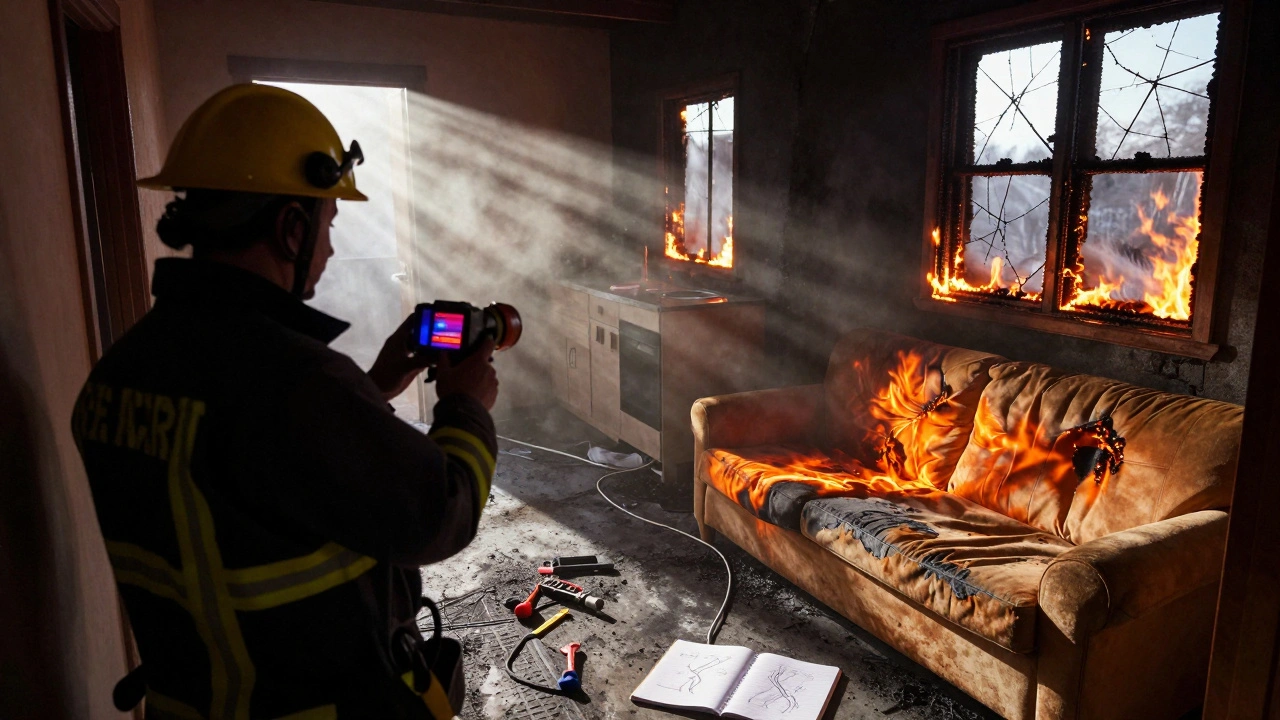
Where the Fire Burns Tells You Where the Air Came From
One of the biggest mistakes in arson investigations is assuming the deepest charring equals the point of origin. That used to be true. Now? It’s often wrong. In a fire with poor ventilation, the area of origin might be the most damaged. But in a ventilation-controlled fire? The most damaged area is often the one closest to the air source. A fire near a window might look like it started there. But if the window is on the opposite side of the room from the couch that caught fire, the origin is still the couch. The window just fed the flames. UL’s experiments showed this repeatedly. In one test, a fire started in a living room chair. The only ventilation was a single window in the kitchen. After flashover, the fire burned intensely along the hallway leading to the kitchen-leaving deep, uniform charring. Investigators without training would have called that the origin. But it wasn’t. It was just the path the air took.The Gas Evidence: CO and CO₂ Tell the Real Story
Fire doesn’t just leave burn marks. It leaves chemical traces. In a well-ventilated fire, carbon monoxide (CO) levels drop steadily because there’s enough oxygen to burn cleanly. But in a ventilation-controlled fire? CO spikes during the unsteady phase (Phase 2). That’s when the fire is fighting for air. The gases are incomplete. The chemistry changes. This matters because lab tests on debris can show high CO residue. Some investigators mistake that for accelerant use. But accelerants don’t produce the same gas signature. A fire that’s starved for oxygen produces more CO-not because something was poured on it, but because it couldn’t breathe.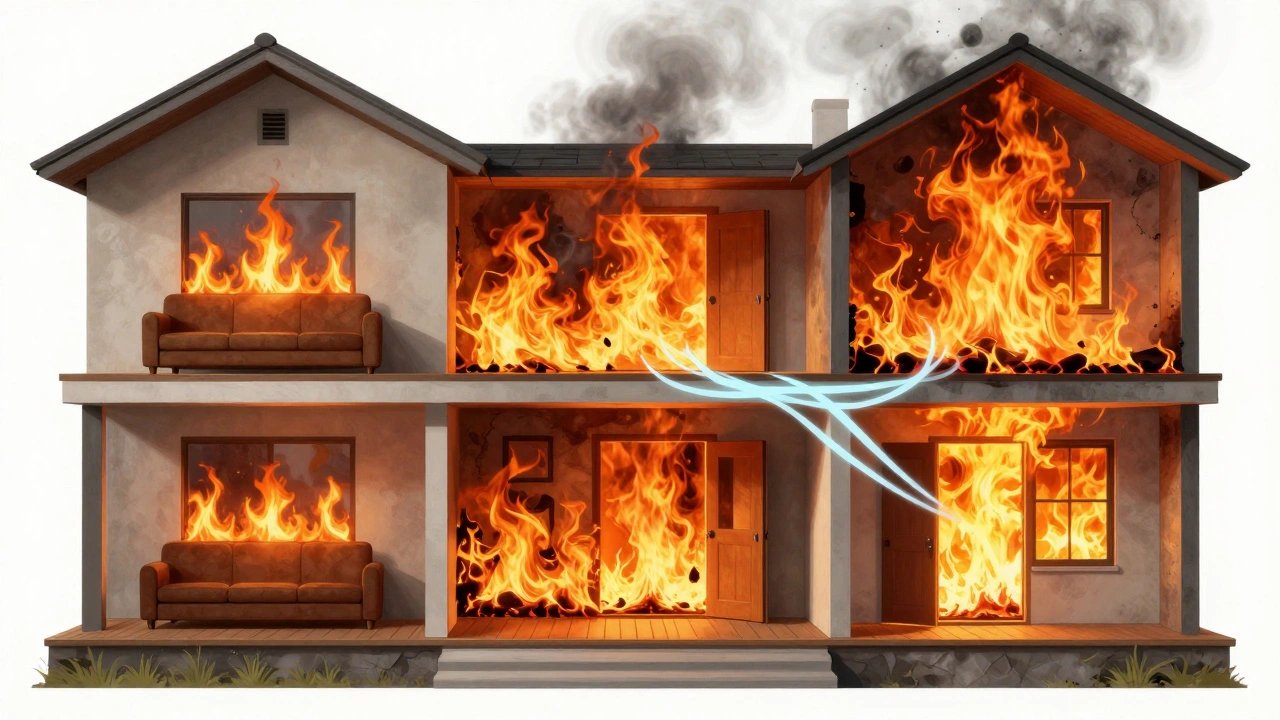
When Misunderstanding Ventilation Leads to Wrongful Convictions
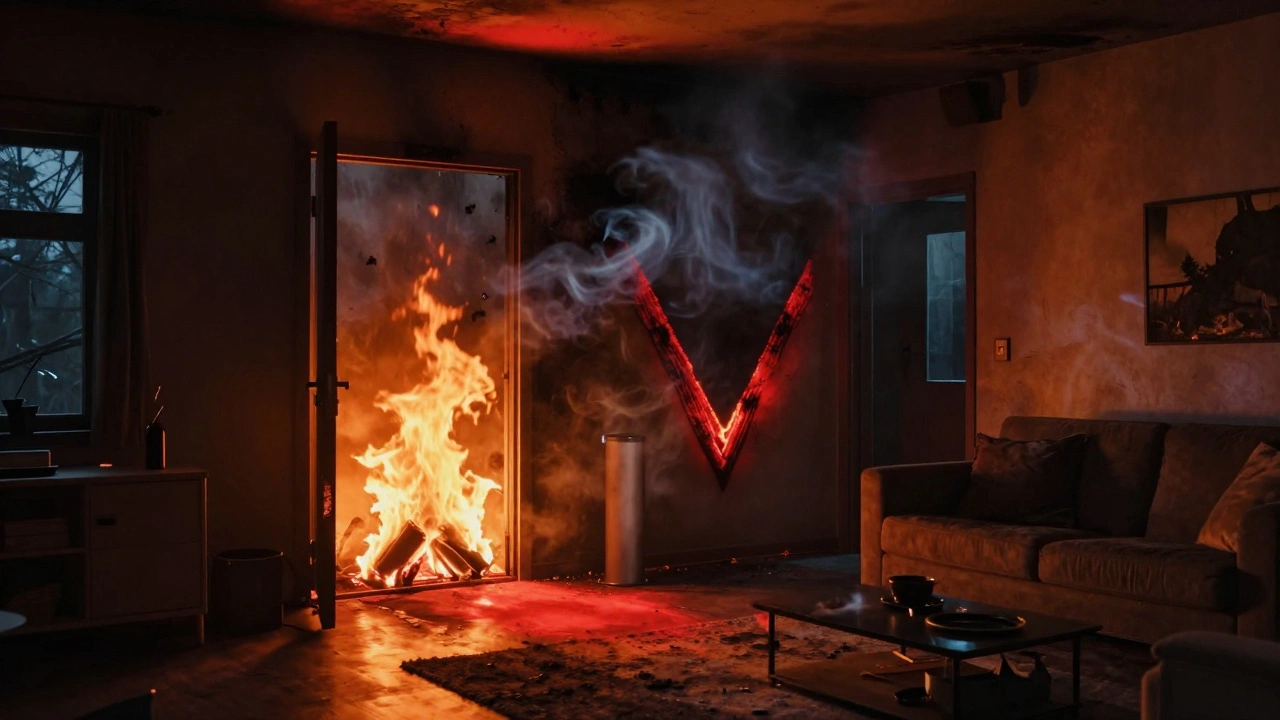
This isn’t just theory. People have gone to prison because of it. In the 1990s and early 2000s, several arson convictions were based on “patterns” that are now known to be ventilation artifacts. A homeowner’s fire burned in a V-shape on a wall. Investigators said it looked like a liquid accelerant was poured. The homeowner was convicted. Later, UL research proved the V-pattern formed because the fire was ventilated through a nearby door-exactly as the science predicted. The National Institute of Justice documented at least 17 cases where ventilation effects were misread as arson. In some, the fire was caused by an electrical fault. In others, a cigarette. But the damage patterns told a different story. And investigators believed the pattern over the facts.What Investigators Should Do Now
The good news? Training is catching up. The UL Fire Safety Research Institute now offers a course called Impact of Ventilation on Fire Damage Patterns. It’s required for federal fire investigators. Many state agencies have adopted it. Key practices now include:- Mapping all ventilation openings before documenting damage
- Measuring air flow paths-windows, doors, HVAC vents, attic openings
- Using thermal imaging to see where hot gases traveled
- Comparing burn depth and pattern to experimental data from UL/FSRI
- Never assuming the deepest burn = the origin
If you’re investigating a fire, ask: Where did the air come in? Not: Where did the fire start? The answer to the first question often reveals the second.
The Future of Fire Investigation
Fire behavior is no longer a mystery. It’s a science. And ventilation is at the center of it. Building codes are starting to change too. New homes are designed with fire containment in mind-not just smoke alarms. Fire departments are training crews to expect ventilation-controlled behavior. And investigators? They’re finally learning to read the fire’s story-not rewrite it. The truth is simple: fires don’t lie. But people do-when they don’t understand how they burn. The science is clear. The patterns are predictable. And the cost of ignorance? Too high.Can ventilation cause a fire to spread without accelerant?
Yes. Ventilation introduces oxygen into a fire that was previously oxygen-starved, causing it to reignite and spread rapidly. This often creates intense burn patterns that mimic the effects of an accelerant. Experiments by UL and FSRI have shown that opening a single door can cause flames to surge across an entire room-even when no flammable liquid was used.
Why do fires sometimes burn only near a door or window?
When a fire becomes ventilation-controlled, it only burns where fresh air enters. Oxygen flows in through openings like doors or windows, mixing with hot gases and reigniting flames right at that point. The rest of the room may be fully involved but lacks oxygen, so combustion stops. This creates localized, intense damage that looks intentional but is purely physics-driven.
Does a V-shaped burn pattern always mean arson?
No. V-patterns were once considered definitive proof of liquid accelerant use. But modern research shows they form naturally when a fire is ventilated from one side. Airflow pushes flames upward along walls, creating a V-shape even when the fire started in the center of a room. Investigators must now consider ventilation location before drawing conclusions.
How does ventilation affect flashover?
Ventilation controls whether flashover occurs and how the fire behaves after it. In a sealed room, flashover may happen, but the fire dies quickly due to oxygen depletion. With ventilation, flashover triggers a massive surge in burning, and the fire continues to grow. The timing and location of flashover are directly tied to airflow, not just fuel load.
Can a fire self-extinguish even if there’s still fuel?
Absolutely. In ventilation-limited fires, the fire can burn out even when half the furniture remains. This happens when oxygen consumption exceeds supply. UL experiments showed fires in closed rooms extinguishing after flashover-even with sofas, beds, and curtains still intact. The fire didn’t run out of fuel. It ran out of air.