You walk into a room. You touch the doorknob. You sit on a chair. You leave. Simple, right? But you didn't just occupy space; you changed it. And the room changed you. This isn't philosophy-it's the bedrock of modern forensic science. It is known as Locard's Exchange Principle, and it dictates that "every contact leaves a trace." If you understand this single concept, you understand why investigators spend hours sifting through dust and why your fingerprint on a glass might solve a murder.
The Core Concept: Every Contact Leaves a Trace
Locard's Exchange Principle states that whenever two objects come into contact, there is always a cross-transfer of material between them. Dr. Edmond Locard, a French criminologist who founded the first police laboratory in Lyon in 1910, formulated this idea based on observation. He realized that humans are messy biological machines. We shed skin cells, we pick up fibers from carpets, and we deposit oils from our fingers onto surfaces. The principle asserts that no one can enter or exit a crime scene without taking something with them or leaving something behind.
Think about it like walking through fresh snow. You leave footprints (material left behind), but the snow also clings to your boots (material taken away). In a crime scene, the "snow" could be soil, pollen, hair, blood, or microscopic fibers. The investigator's job is to find those transfers and match them back to their source. It turns the chaotic aftermath of a crime into a puzzle where every piece has a potential origin.
How Transfer Evidence Works in Practice
Transfer evidence is the physical manifestation of Locard's Principle. It falls into two main categories: direct transfer and indirect transfer. Direct transfer happens when materials move immediately from one object to another during contact. For example, if a suspect wipes their bloody hand on a wall, the blood moves directly from the hand to the paint. Indirect transfer is sneakier. Imagine a suspect walks through mud outside, then steps onto a clean rug inside. The mud doesn't go directly from the shoe to the rug via a handshake; it travels via the shoe sole. Both are valid under Locard's rule because the chain of contact is intact.
Investigators look for three types of trace evidence:
- Particulate Matter: Soil, pollen, spores, or gunpowder residue. These are often unique to specific geographic locations. A grain of sand found on a victim's jacket might link them to a beach five miles away.
- Fibers: Clothing sheds fibers constantly. A wool fiber from a suspect's sweater might end up on a victim's coat. While common, matching the dye, weave, and chemical composition can provide strong circumstantial links.
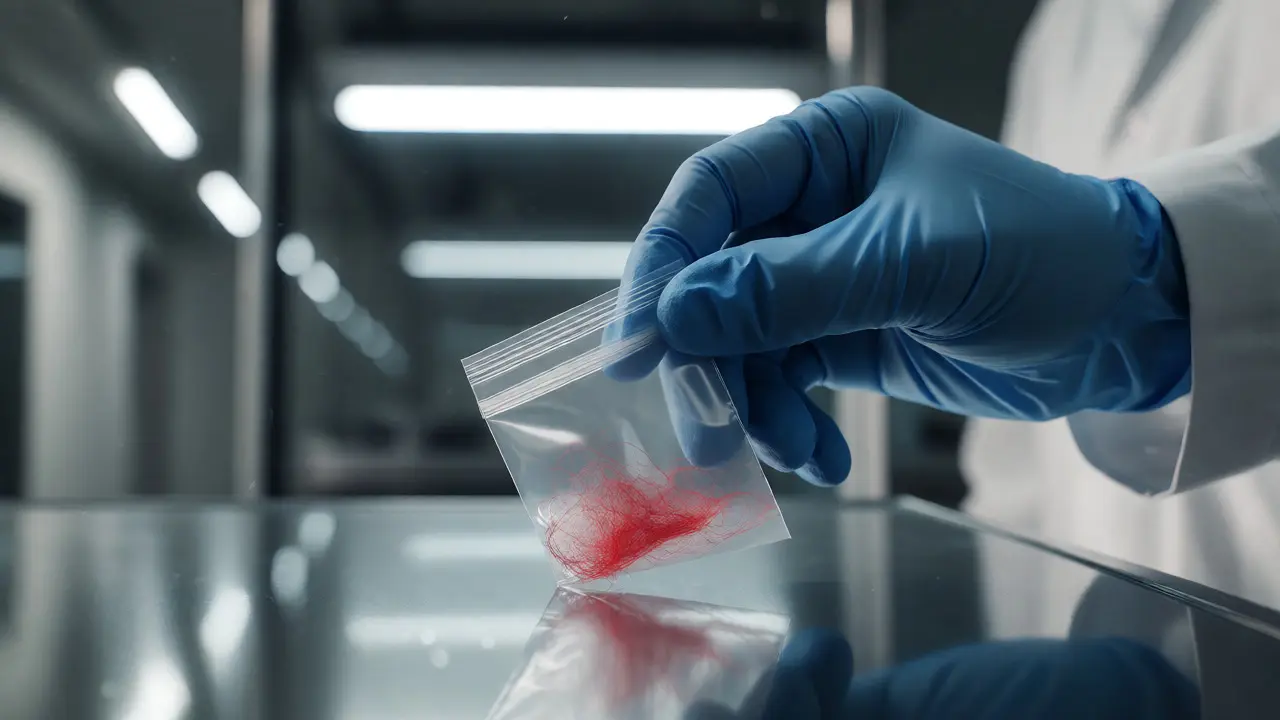
- Biological Material: Hair, saliva, sweat, and skin cells (touch DNA). Even if a suspect wears gloves, they might drop a hair or breathe out droplets containing DNA.
The Role of Forensic Laboratories in Verification
Finding a fiber on a shirt is step one. Proving it came from a specific suspect's wardrobe is step two. This is where forensic laboratories play a critical role. They use tools like microscopes, spectrometers, and DNA sequencers to analyze the transferred material. The goal is to establish a probabilistic link, not necessarily a definitive proof, unless the evidence is highly unique (like a full DNA profile).
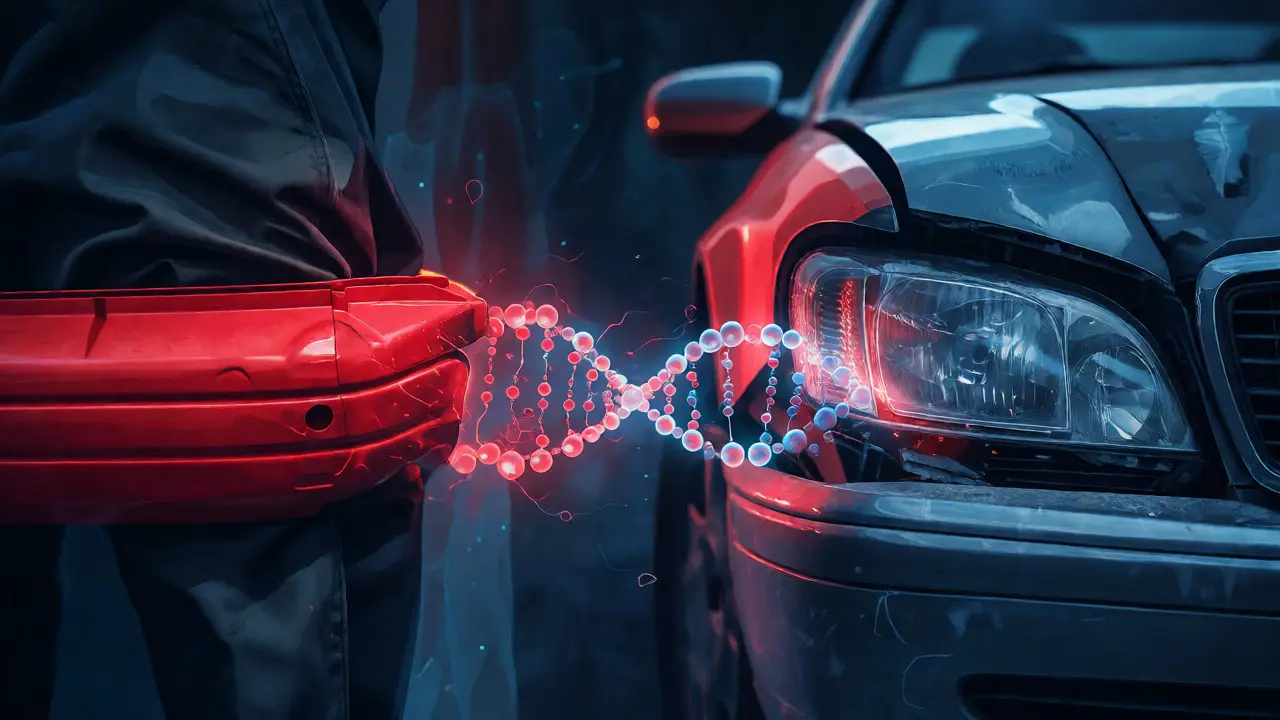
Consider a case involving a hit-and-run. The driver flees, but a fragment of red plastic is found embedded in the victim's clothing. The lab analyzes the plastic's chemical composition. Later, they recover a car with a missing bumper piece. If the fracture lines match perfectly and the chemical signature is identical, the probability that this happened by chance drops to near zero. That is Locard's Principle in action: the car touched the person, and the person kept a piece of the car.
| Evidence Type | Typical Source | Collection Method | Analysis Goal |
|---|---|---|---|
| Fibers | Clothing, upholstery, carpets | Tape lifting, vacuuming | Match dye and polymer type |
| Soil/Pollen | Shoes, tires, clothing hems | Scraping, sieving | Geographic profiling |
| Glass Fragments | Windows, headlights, bottles | Picking, brushing | Refractive index matching |
| Touch DNA | Handles, phones, weapons | Swabbing | Genetic identification |
Limitations and Misconceptions
TV shows make forensics look instant. You find a hair, and ten minutes later, the computer says, "It belongs to John Doe!" Reality is slower and messier. Locard's Principle guarantees that a transfer occurred, but it doesn't guarantee the transfer is relevant or preserved. This is the biggest hurdle for investigators.
First, there is the issue of background noise. Everyone carries dirt, pollen, and fibers from their daily lives. Finding a blue cotton fiber on a victim's body doesn't prove the suspect was there if the suspect works at a denim factory and everyone else in the city does too. Investigators must rule out innocent transfers. Did the victim ride the bus? Did they hug a friend? Context is everything.
Second, evidence degrades. Rain washes away soil. Sunlight breaks down DNA. Wind scatters pollen. If investigators arrive late, the "trace" might have vanished or moved. This is why securing the scene quickly is vital. Once the perimeter is set, nothing enters or exits without being documented. This prevents new traces from contaminating old ones-a process called cross-contamination.
Real-World Application: Beyond the Obvious
Locard's Principle extends beyond violent crimes. It applies to fraud, arson, and even digital footprints. In arson cases, accelerants like gasoline leave chemical residues on flooring and walls. The fire burns the house, but the fuel pattern remains. Arson investigators map these patterns to determine where the fire started. The "contact" here is between the liquid fuel and the porous building materials.
In cybercrime, the principle adapts metaphorically. When a hacker accesses a server, they leave logs (digital traces) and take data (digital extraction). Just like physical evidence, these digital traces can be wiped or corrupted, requiring careful preservation techniques like write-blockers to ensure integrity.
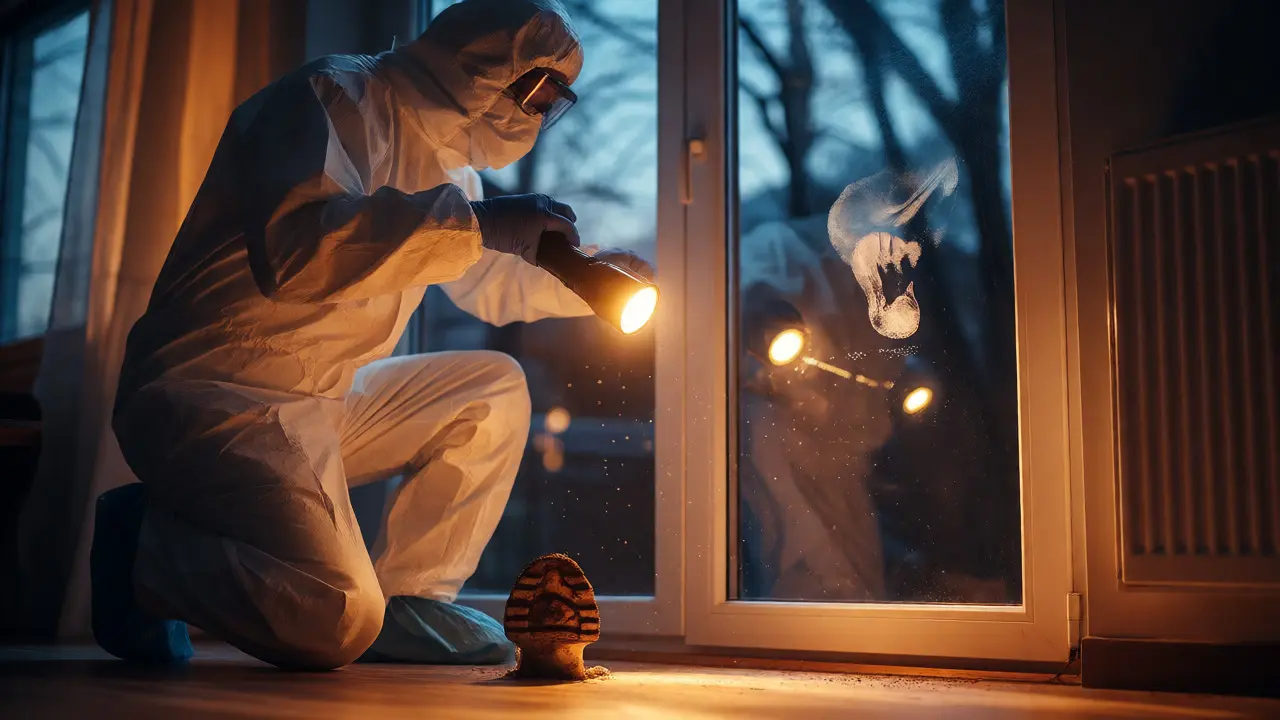
A classic example involves burglary. A thief enters through a window. They cut the screen, leaving metal shavings. They climb in, leaving shoe prints in the dust. They steal jewelry, touching each item. When police examine the jewelry box, they might find latent fingerprints or skin oils. When they check the thief's home, they might find the same brand of shoe polish or the same type of metal shavings in their carpet. The connection is built entirely on small, overlooked exchanges.
Why This Matters for Justice
Without Locard's Exchange Principle, crime scene investigation would lack its scientific foundation. It transforms intuition into methodology. It tells investigators exactly what to look for: anomalies. Anything that doesn't belong in the environment is suspect. A piece of grass in a concrete basement? Suspicious. A synthetic fiber on a wool coat? Noteworthy.
This principle also protects the innocent. If a suspect claims they were never at the scene, but no trace evidence links them, that absence supports their alibi. Conversely, finding unexpected evidence can exonerate someone. If the blood at the scene doesn't match the suspect, the principle forces investigators to look elsewhere. It demands humility and precision. You can't ignore the trace, but you can't overstate its significance either.
Does Locard's Principle apply to all crimes?
Yes, it applies universally to any interaction between people, objects, and environments. However, the visibility and persistence of the trace vary. In white-collar crimes, the "traces" might be paper documents or digital logs rather than physical particles.
Can evidence be destroyed before it is collected?
Absolutely. Weather conditions, time, and human interference (such as first responders or bystanders) can degrade or remove trace evidence. This is why rapid response and strict scene control are critical in preserving the integrity of Locard's exchanges.
Is trace evidence enough to convict someone?
Rarely on its own. Trace evidence usually provides corroboration rather than definitive proof. Because many materials are common, investigators combine trace analysis with other evidence like eyewitness accounts, video surveillance, and motive to build a compelling case.
What is cross-contamination?
Cross-contamination occurs when foreign material is introduced to a crime scene after the event, often by investigators or equipment. For example, if an officer touches a weapon without changing gloves, their own DNA might mix with the suspect's, confusing the analysis.
Who was Edmond Locard?
Edmond Locard (1877-1966) was a Swiss-born criminologist who pioneered forensic science. He established the first criminalistics laboratory in Lyon, France, and formalized the exchange principle that bears his name, earning him the title of the "Sherlock Holmes of France."