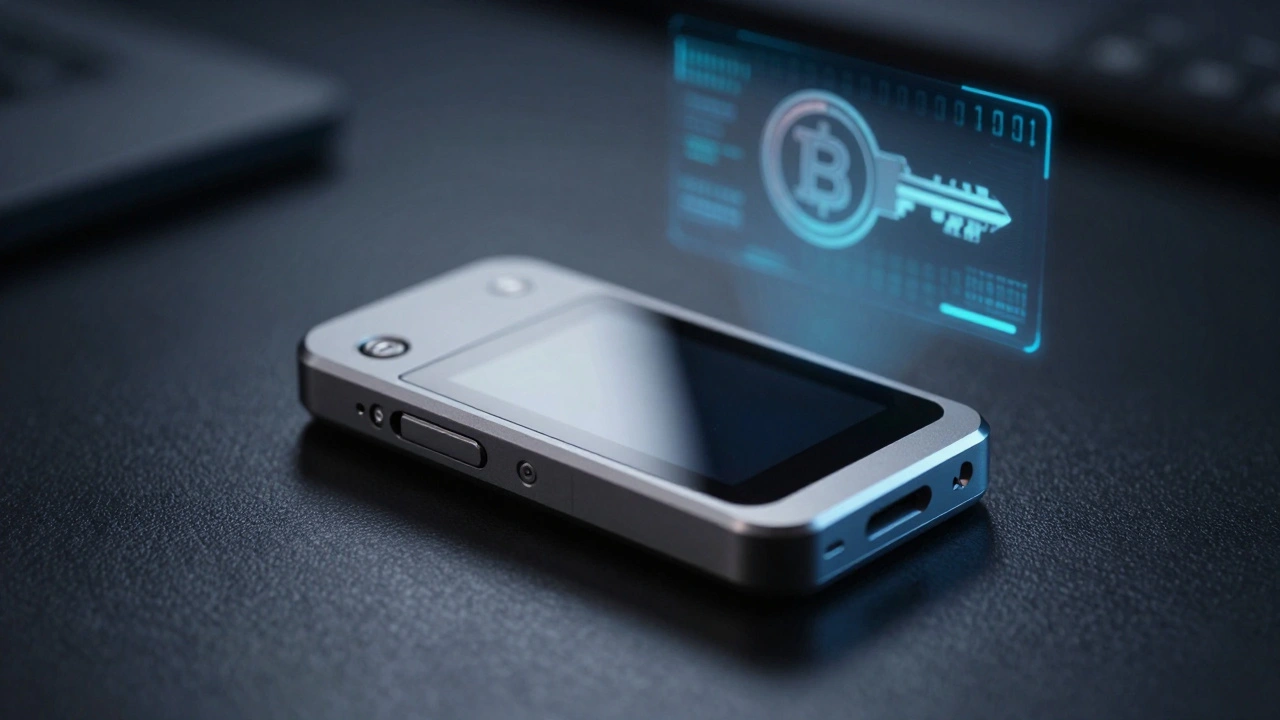
When people think about Crypto Assets are digitally native bearer instruments secured by public-key cryptography and recorded on distributed ledgers, they often imagine total anonymity. The reality is quite different. Every transaction sits permanently on a public ledger, creating a detailed financial trail that forensic investigators can follow with precision. Understanding how wallets store keys and how transactions move across blockchains is no longer just technical knowledge-it is a critical skill for law enforcement, compliance officers, and anyone recovering stolen funds.
The Anatomy of Crypto Keys and Wallets
To trace crypto assets, you first need to understand what you are actually tracking. At the core of every transaction is a pair of cryptographic keys. The Private Key is a 256-bit secret number that controls spending authority over specific addresses. Think of this as your signature and password combined. If someone gets this key, they own your funds. The Public Key is the address derived from the private key that others use to send you funds. This is like your bank account number; it’s safe to share, but it doesn’t give anyone control over the money inside.
Wallets do not hold coins in a physical sense. Instead, a Crypto Wallet is software or hardware that stores private keys and manages interactions with the blockchain. Most modern wallets use a Seed Phrase (also known as a mnemonic phrase) which consists of 12 to 24 words following the BIP39 standard. This seed generates all your private keys deterministically. Losing this phrase means losing access forever, because there is no central authority to reset it. Conversely, if an investigator obtains this seed, they can reconstruct every address associated with that user.
- Hot Wallets: Connected to the internet (e.g., MetaMask, exchange wallets). High risk of hacking, high convenience.
- Cold Wallets: Offline storage (e.g., Ledger Nano S, Trezor One). Private keys never touch the internet, making them highly secure against remote attacks.
- Custodial Wallets: The provider holds the keys (e.g., Coinbase, Binance). Easier for users, but creates a single point of failure and regulatory oversight.
- Non-Custodial Wallets: You hold the keys. Greater privacy and control, but higher responsibility for security.
How Transaction Tracing Works
Blockchain transparency is both its greatest strength and its biggest vulnerability for criminals. Unlike traditional banking, where records are siloed behind firewalls and require subpoenas to access, blockchains like Bitcoin and Ethereum broadcast every transaction to thousands of nodes globally. Tools like Etherscan is a blockchain explorer for Ethereum that allows anyone to view transaction hashes, timestamps, and amounts make this data accessible instantly.
Transaction tracing involves mapping the flow of funds from a known starting point-often called an "anchor"-through various intermediate steps to their final destination. Investigators look for patterns such as:
- Peeling Chains: A method where a criminal moves small amounts out of a large wallet repeatedly, leaving a diminishing balance behind. This leaves a clear trail of decreasing UTXOs (Unspent Transaction Outputs).
- Clustering: Grouping multiple addresses together because they likely belong to the same entity. For example, if several addresses send change back to the same output address, they are probably controlled by one person.
- Exchange Deposits: Funds eventually need to be converted to fiat currency. When crypto hits a centralized exchange that performs KYC (Know Your Customer) checks, the pseudonymity breaks down.
Professional firms like Chainalysis is a leading blockchain analytics platform used by law enforcement and financial institutions to trace illicit flows maintain massive databases of labeled addresses. They know which addresses belong to darknet markets, ransomware groups, or mixing services. By cross-referencing a suspect’s transactions against these labels, investigators can attribute activity to specific entities with high confidence.

Custodial vs. Non-Custodial: Implications for Forensics
The type of wallet used drastically changes the investigative approach. In custodial settings, such as exchanges, the provider holds the private keys in omnibus wallets. While this simplifies life for the user, it creates a golden opportunity for investigators. Exchanges are required under regulations like the FATF Travel Rule to collect identity documents. Therefore, linking a blockchain address to an exchange account often reveals the real-world identity of the user.
Non-custodial wallets present a harder challenge. Since there is no intermediary holding ID documents, investigators must rely entirely on on-chain analysis and off-chain intelligence (OSINT). They might find a victim posting their scammer’s address on social media, or they might discover a hacker accidentally reusing an address linked to a previous incident. Without these external links, non-custodial addresses remain pseudonymous, though not truly anonymous.
| Feature | Custodial (Exchange) | Non-Custodial (Self-Held) |
|---|---|---|
| Key Control | Provider | User |
| ID Linkage | Direct (KYC required) | Indirect (requires OSINT/heuristics) |
| Traceability Difficulty | Low | High |
| Recovery Possibility | Yes (via support/legal freeze) | No (unless seed/key obtained) |
Advanced Obfuscation Techniques
Criminals are aware of these tracing capabilities and employ sophisticated methods to hide their tracks. One common technique is using Mixers (or tumblers) are services that pool funds from multiple users and redistribute them to break the link between sender and receiver. Services like Tornado Cash have been sanctioned by the US Treasury for facilitating money laundering. However, even mixers leave traces. Analysts can study timing patterns, deposit sizes, and exit behaviors to de-anonymize users.
Another hurdle is cross-chain movement. Criminals often bridge assets from Bitcoin to Ethereum, then to a privacy-focused chain like Monero. Monero is a privacy coin that uses ring signatures and stealth addresses to obscure transaction details. Standard blockchain explorers cannot see who sent what in Monero transactions. This makes tracing extremely difficult once funds enter such networks. However, many criminals slip up during the entry or exit phases when they interact with transparent chains or unregulated exchanges.
Multisignature wallets add another layer of complexity. A 2-of-3 multisig setup requires two keys to authorize a transaction. On-chain, this looks like a complex script rather than a simple address. Advanced analytics tools can still track these flows, but they require deeper heuristic modeling to identify the participants involved.

Real-World Success Stories
The effectiveness of crypto tracing is proven by major law enforcement operations. In 2021, the DOJ recovered $2.3 million in Bitcoin paid as ransom by Colonial Pipeline. Investigators traced the funds from the victim’s wallet to the DarkSide ransomware group’s wallet, and ultimately seized the keys through court-authorized access to a server in the US.
In 2022, authorities seized nearly 95,000 BTC linked to the 2016 Bitfinex hack. This operation took years of meticulous tracing across thousands of transactions, identifying peel chains, and monitoring darknet market activities. The suspects had tried to launder the money through various channels, but the immutable nature of the blockchain allowed investigators to connect the dots.
These cases demonstrate that while crypto offers more mobility than cash, it lacks the true anonymity of physical currency. Every movement leaves a mark, and with the right tools and persistence, those marks can lead directly to the perpetrator.
Best Practices for Security and Compliance
If you are handling crypto assets, whether for personal investment or business, understanding these forensic realities should inform your security strategy. For individuals, this means prioritizing self-custody with hardware wallets and securely backing up your seed phrases offline. Never store your seed phrase digitally. Use metal backups to protect against fire or water damage.
For businesses, integrating blockchain analytics into your compliance workflow is essential. Regularly screen incoming and outgoing addresses against sanctions lists and known illicit clusters. Implement automated alerts for suspicious behavior, such as rapid layering or interactions with high-risk mixers. Stay updated on regulatory changes like MiCA in Europe or IRS reporting requirements in the US, as these shape the legal landscape for asset recovery and liability.
Remember, the goal isn't just to avoid detection-it's to ensure legitimate operations are transparent and defensible. Clear records, proper KYC procedures, and regular audits build trust and protect you from being inadvertently linked to illicit flows.
Can cryptocurrency transactions be completely anonymized?
While privacy coins like Monero offer strong anonymity, most cryptocurrencies like Bitcoin and Ethereum are pseudonymous, not anonymous. Transactions are publicly visible on the blockchain. Although addresses don't inherently reveal identities, advanced analytics, clustering techniques, and linkage to KYC-compliant exchanges can often de-anonymize users. True complete anonymity is rare and usually compromised by user error or operational security lapses.
What is the difference between a hot wallet and a cold wallet?
A hot wallet is connected to the internet, making it convenient for frequent transactions but vulnerable to online hacks. Examples include mobile apps and browser extensions. A cold wallet stores private keys offline, typically on hardware devices like Ledger or Trezor. This provides much higher security against remote attacks but is less convenient for daily use. Cold wallets are ideal for long-term storage of significant assets.
How do investigators trace stolen crypto?
Investigators start with an anchor point, such as the victim's address or a transaction hash. They use blockchain explorers and analytics platforms to map inbound and outbound flows. They look for patterns like peeling chains or clustering of addresses. Eventually, funds often hit a centralized exchange where KYC data links the blockchain address to a real-world identity. Law enforcement then works with the exchange to freeze accounts and seize assets.
Is my seed phrase enough to recover my wallet?
Yes, if you have your 12-24 word seed phrase, you can restore your wallet on any compatible software or hardware device. The seed phrase generates all your private keys deterministically. However, if you lose the seed phrase and have no backup, your funds are irrecoverable. There is no customer service that can reset it. Protecting this phrase is the most critical aspect of crypto security.
What role do mixers play in crypto tracing?
Mixers attempt to break the link between sender and receiver by pooling funds from multiple users and redistributing them. While this complicates tracing, it does not eliminate it. Investigators analyze timing, amounts, and exit behaviors to identify patterns. Many mixers are now sanctioned, meaning legitimate exchanges will block deposits from mixer-associated addresses, effectively trapping the funds or flagging the user for investigation.