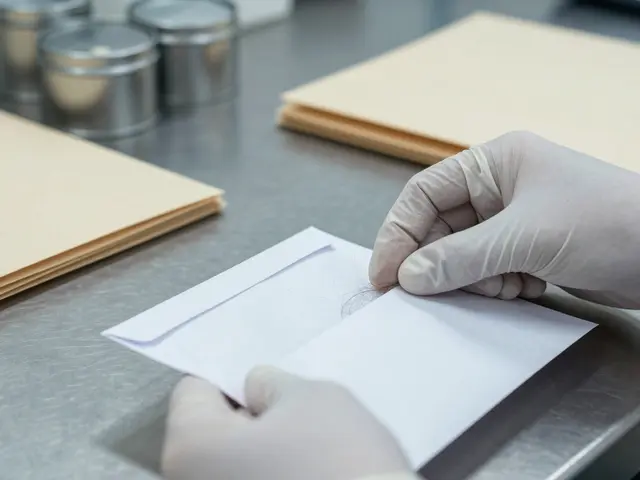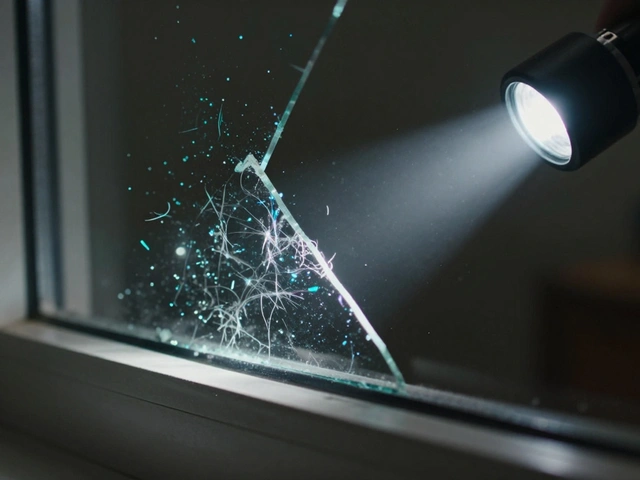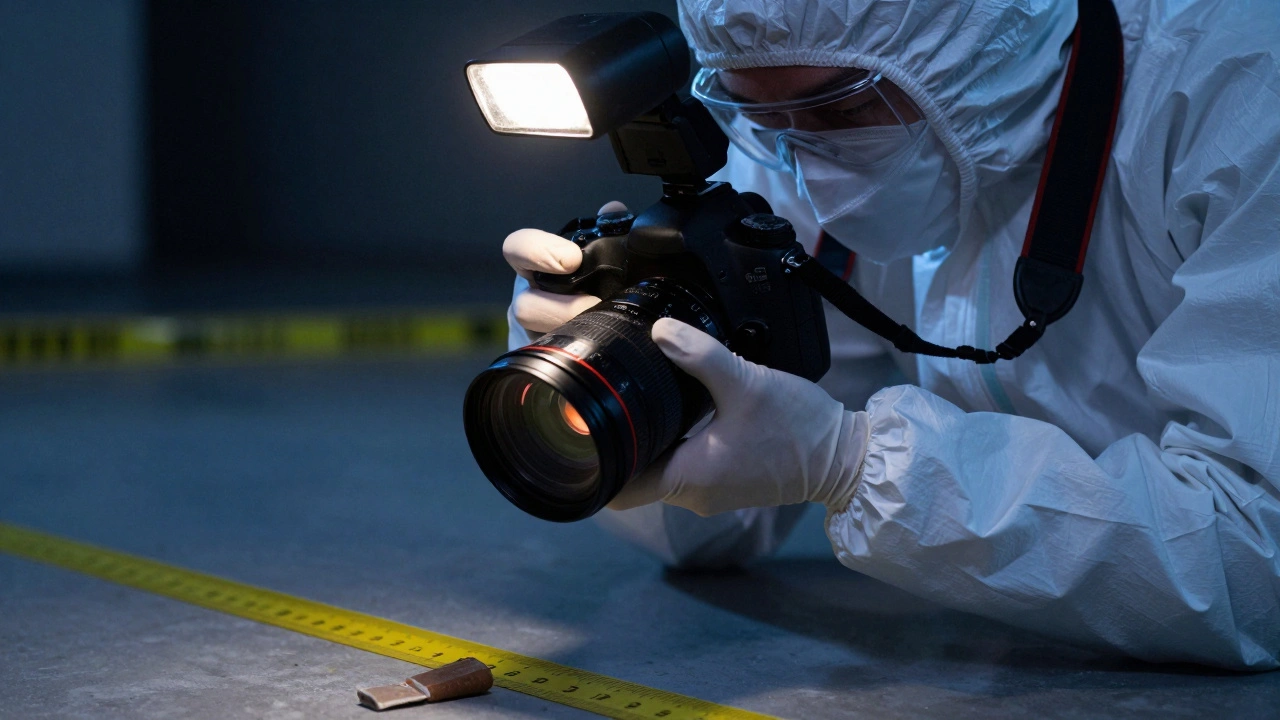
Imagine this: you’ve captured the perfect shot at a crime scene. The lighting is right, the evidence is clear, and the image looks undeniable. But six months later, in a courtroom, a defense attorney asks one simple question: "Who took this photo, when exactly was it taken, and what lens was used?" If your photographic log doesn’t have that answer recorded precisely, that photo might not just be ignored-it could be thrown out entirely.
This isn't just about keeping good records; it’s about legal survival. In forensic work, conservation, and high-stakes investigations, the image itself is only half the story. The other half is the documentation that proves the image hasn’t been tampered with, altered, or mislabeled. We call this photographic log maintenance. It’s the backbone of evidentiary integrity. Without it, even the clearest photo is just a guess.
The Core Elements of a Compliant Photographic Log
You can’t wing a photographic log. Vague notes like "took pics of the body" won’t hold up under scrutiny. Standards from organizations like the Scientific Working Group on Digital Evidence (SWGDE) and various municipal police departments dictate specific fields that must be present in every entry. Think of these as non-negotiable requirements.
Here are the critical data points you need to record for every single session or case:
- Date and Time: Use military time (24-hour format) to avoid ambiguity. Record both start and end times.
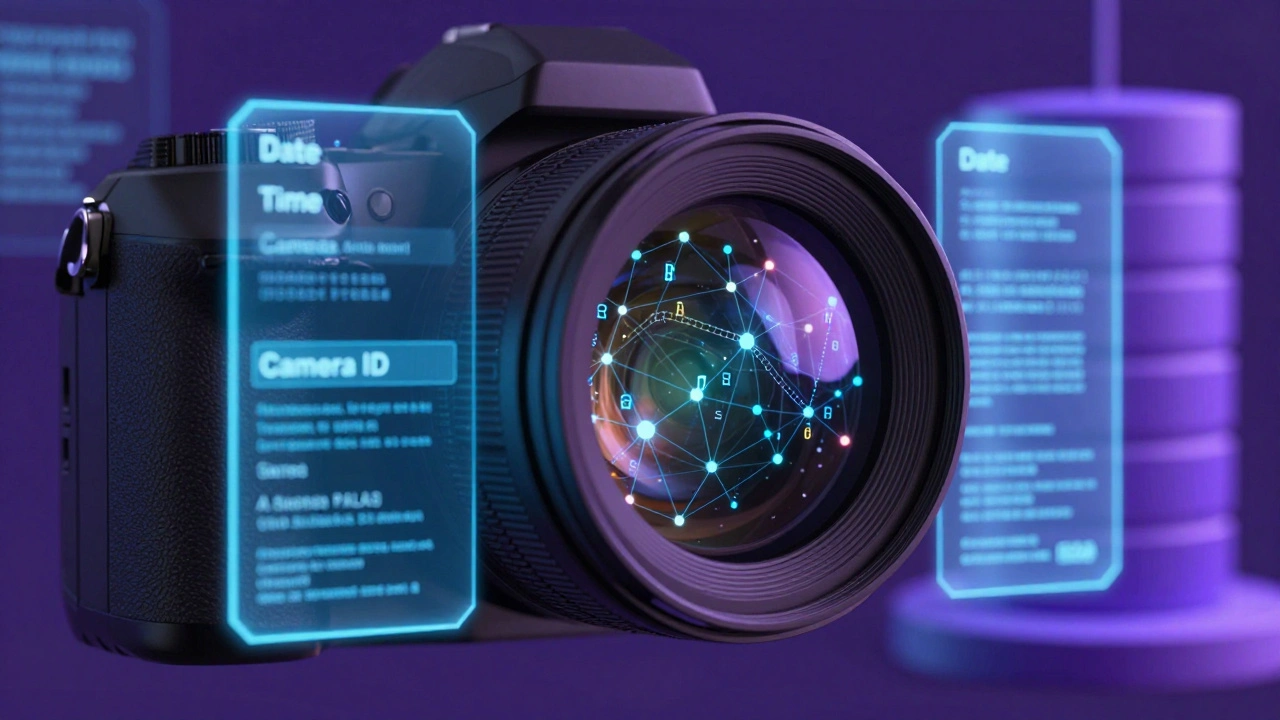
- Camera Identification: Include the make, model, and unique serial number or ID assigned to the device.
- Operator Name: Who held the camera? This establishes accountability.
- Location: Be specific. Not just "the house," but "123 Main St, Kitchen, North Wall."
- Purpose of Use: Why were you shooting? Documenting blood spatter? Cataloging inventory?
- Sequential Tracking Number: Each photo needs a unique identifier. This often matches the file name or frame counter.
- Equipment Status: Note any issues with the gear, such as sensor cleaning performed that day or lens changes.
- Remarks: A space for contextual details, like weather conditions or unusual lighting setups.
The City of Orlando’s Forensic Photography policy (updated February 2024) adds another layer: you must document the placement of measurement scales and ensure a unique identifier label is visible within the field of view. This ties the digital file directly to the physical object being photographed.
Why Context Matters More Than Resolution
We often obsess over megapixels and sharpness, but in the eyes of the law, context is king. Dr. Laura Holton, a forensic science professor at George Washington University, highlighted a startling statistic in a 2023 article in the Journal of Forensic Sciences: 78% of photographic evidence challenges in court between 2018 and 2022 weren’t about blurry images. They were about insufficient documentation in the logs.
If you don’t log the distance from the subject, the focal length used, or the presence of a scale bar, the jury has no way to verify the proportions shown in the photo. Was that wound really two inches long, or did a wide-angle lens distort it? Your log provides the mathematical proof. Dr. John Vanderkolk, author of Forensic Photography: A Practitioner's Guide, notes that incomplete logs are the second most common reason for evidence exclusion, right behind broken chain of custody.
This applies beyond crime scenes. In art conservation, as noted by the Winterthur Museum standards, pre- and post-treatment photos must be logged with detailed condition reports. If you restore a painting but don’t log the exact lighting conditions and angle of the 'before' photo, you can’t prove you didn’t alter the original appearance digitally.
Digital vs. Paper Logs: The Shift to Integrity
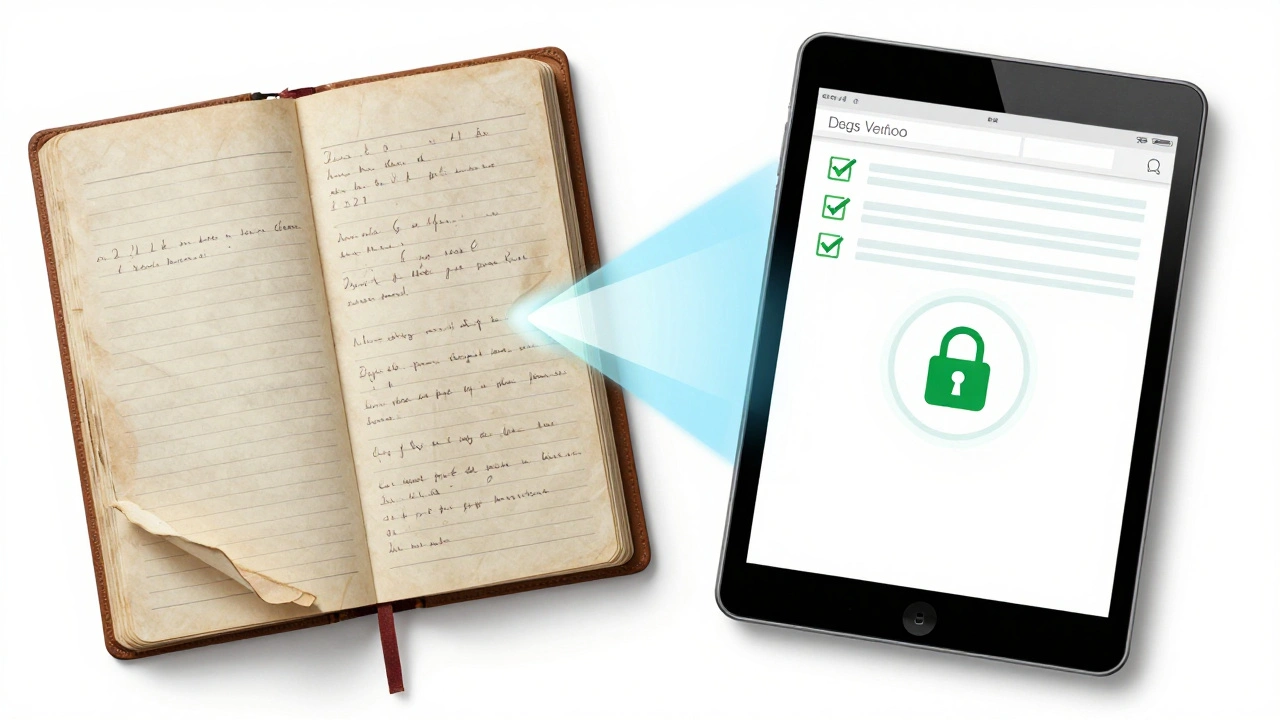
Gone are the days when a leather-bound notebook was enough. While paper logs still exist, the industry is rapidly moving toward digital systems. By 2026, we expect 85% of major law enforcement agencies to use digital log management systems. Why? Because paper can be erased, pages can be torn out, and handwriting can be illegible.
Digital logs offer audit trails. When you enter data into a compliant system, it records who accessed the file, when they viewed it, and if they made changes. This version control is vital for preventing tampering. The Los Angeles County Sheriff's Department reported a 42% reduction in documentation errors after switching to digital templates. They also saved an average of 22 minutes per scene because automated fields filled in dates and times instantly.
However, digital isn't foolproof. You still need to ensure the software maintains a secure backup. A corrupted database is worse than a lost notebook. Most jurisdictions now require logs to be maintained in both formats during the transition period, or at least have encrypted cloud backups that meet ISO/IEC 17025 standards for forensic laboratories.
| Feature | Paper Logs | Digital Systems |
|---|---|---|
| Tamper Resistance | Low (can be erased/altered) | High (audit trails/version control) |
| Searchability | Poor (manual review required) | Excellent (instant keyword search) |
| Time Efficiency | Slow (handwriting takes time) | Fast (auto-fill fields) |
| Error Rate | Higher (human error in writing) | Lower (validated inputs) |
| Backup Requirement | Physical storage security | Encrypted cloud/local redundancy |
Common Pitfalls and How to Avoid Them
Even experienced photographers slip up. Based on surveys from the International Association for Identification, here are the most frequent mistakes and how to fix them.
The Time Pressure Trap: At a chaotic crime scene, you’re rushing. You snap ten photos and forget to log the exact minute each was taken. Solution: Use cameras with embedded metadata logging that writes time stamps directly to the file header. Then, transfer that data to your log immediately. Don’t rely on memory later.
Inconsistent Lighting Notes: Conservationists often forget to log lighting conditions. If you take a photo of a artifact under UV light today and white balance light tomorrow, future researchers won’t know why the colors look different. Always note the light source type, intensity, and angle in your remarks section.
Missing Scale Bars: SWGDE guidelines mandate that measurement scales be placed in the same plane as the evidence. If you log the photo but don’t mention the scale bar, or if the scale bar is blurred, the image loses its metric value. Make "Scale Bar Present/Visible" a checkbox in your daily routine.
Ignoring Equipment Calibration: Did you clean the sensor before shooting? Was the lens calibrated? The City of Orlando requires documentation of sensor calibration data for all digital evidence. If your lens had a known distortion issue and you didn’t log it, your photos could be challenged as misleading.
Training and Accountability Standards
Maintaining a log isn’t just a task; it’s a skill that requires training. New personnel typically need 8-12 hours of dedicated instruction to achieve proficiency. Field tests show that new hires have a 30% error rate in their first logs, which drops to under 5% after 30 days of supervised practice.
Supervisors play a crucial role. According to standard operating procedures (SOPs), supervisors must review logs at the end of every shift. This isn’t just a formality; it’s a quality control checkpoint. If a supervisor signs off on an incomplete log, they share the liability if that evidence is excluded in court.
Refresher training should happen annually. Technology changes, standards update (like the SWGDE’s 2024 updates on AI-enhanced images), and habits degrade. Regular audits help keep everyone sharp. Government forensic labs currently maintain a 95% completeness rate in their logs, compared to 78% in private security firms, largely due to stricter supervisory oversight.
Future Trends: AI and Blockchain in Logging
The next few years will bring significant changes. By 2027, the National Institute of Justice predicts that 60% of law enforcement agencies will use AI-assisted log completion. These systems will automatically populate standard fields-date, time, camera ID-based on metadata, leaving humans to verify critical contextual elements. This reduces the cognitive load on officers at stressful scenes.
Blockchain technology is also entering the fray. Pioneered by the NYPD’s Evidence Management Unit in 2022, blockchain creates an immutable ledger for log entries. Once a log entry is hashed and added to the chain, it cannot be altered without breaking the entire chain. This provides ultimate proof of integrity. Currently, about 15% of major agencies are adopting this, but the trend is accelerating.
Additionally, new guidelines address deepfakes and AI-generated imagery. If you use software to enhance contrast or remove noise, you must log that process explicitly. The SWGDE’s 2024 guidelines require documentation of any post-processing steps to distinguish between raw capture and enhanced evidence.
What happens if I forget to fill out the photographic log?
If you fail to complete the log, the associated photographs may be deemed inadmissible in court. As noted by Dr. John Vanderkolk, incomplete logs are a leading cause for evidence exclusion. Without the log, you cannot prove the chain of custody, the time of capture, or the equipment used, making the image vulnerable to claims of tampering or fabrication.
Do I need to log every single photo I take?
Yes, especially in forensic and conservation contexts. Every image that serves as evidence or documentation must have a corresponding entry. This includes sequential tracking numbers to link the digital file to the log entry. Skipping entries creates gaps in the chain of custody that defense attorneys or auditors will exploit.
Is a digital log better than a paper log?
Generally, yes. Digital logs offer superior tamper resistance through audit trails and version control. They are also faster to complete and easier to search. However, they require robust backup systems to prevent data loss. Many agencies still use paper logs as a secondary backup during the transition to fully digital systems.
What specific information must be included in a forensic photographic log?
A compliant forensic log must include: date and time (military format), camera ID/model, operator name, location, purpose of use, sequential photo tracking number, equipment status/calibration, and remarks regarding lighting or scale bars. SWGDE guidelines also require noting if a unique identifier label is visible in the field of view.
How does AI affect photographic log maintenance?
AI is expected to automate the population of standard fields like date, time, and camera metadata, reducing human error and saving time. However, humans must still verify contextual details. Additionally, if AI tools are used to enhance images, the log must document these processing steps to maintain transparency and admissibility.