When a system locks you out, it’s not always because you forgot your password. Sometimes, someone else is trying to get in-and they’re not giving up. Password cracking isn’t science fiction. It’s happening right now, every second, to businesses, government agencies, and individuals who think their passwords are safe. The truth? Most passwords aren’t. And the tools to break them are faster, cheaper, and more accessible than ever.
How Passwords Get Broken
There’s no magic trick to cracking passwords. It’s all math, patterns, and exploiting human habits. Attackers don’t guess randomly. They use smart, automated methods that turn weak passwords into open doors.
Brute force attacks try every possible combination. Sounds slow? Not anymore. With modern GPUs, tools like Hashcat is a cracking/password recovery utility that supports five unique modes of attack for over 300 highly-optimized hashing algorithms can test over 2 billion guesses per second. A six-letter lowercase password? Cracked in under a minute. A twelve-character password with letters, numbers, and symbols? Maybe years. But if you use "Summer2024!"? That’s a common pattern-and it falls in seconds.
Dictionary attacks are smarter. Instead of trying every combination, they use lists of real words: names, birthdays, company terms, and common passwords like "password123" or "admin". These lists aren’t static. Attackers build custom dictionaries based on what they know about you. If your company is called "Cascade Tech", they’ll try "Cascade2026", "Cascadetech", "C@scade2026". Rule-based tools automatically apply these transformations, turning "password" into "P@ssw0rd!" or "passw0rd123".
Rainbow tables are precomputed databases of hashed passwords. Instead of computing hashes on the fly, attackers look up a hash in a table and instantly get the original password. But there’s a catch: they only work on unsalted hashes. If a system adds a random string (a salt) before hashing, rainbow tables become useless. That’s why modern systems salt passwords-but many still don’t.
The Real Threat: Credential Stuffing and Password Spraying
You might think your password is unique. But if you’ve reused it anywhere-even on a site that got breached five years ago-your account is at risk.
Credential stuffing uses leaked usernames and passwords from past breaches. Attackers buy these databases on dark web marketplaces. Then they use bots to test them against popular sites: banks, email, cloud storage. One attacker tested 8 billion credential pairs in a single campaign. Even a 0.1% success rate means 8 million compromised accounts.
Password spraying flips the script. Instead of trying many passwords on one account, they try one password on many accounts. For example, they test "Winter2026!" against every employee email in a company. Why? Because most systems lock you out after five failed tries on one account. But they don’t track failed attempts across hundreds of users. So they move slowly-just enough to avoid detection.
These methods work because people reuse passwords. A 2025 study by the National Institute of Standards and Technology found that 68% of users reuse passwords across multiple services. And 43% of breaches in 2025 started with credential stuffing.
Tools of the Trade
Security professionals and attackers use the same tools. The difference? One group fixes the problem. The other exploits it.
- John the Ripper is a widely used open-source password cracking tool known for its speed and versatility. The tool supports various cracking techniques, including dictionary attacks, brute force, and rainbow tables. John the Ripper operates as a multiplatform password cracker with support for 15 different operating systems and hundreds of hashes and cipher types - Used for offline cracking of password hashes. Great for testing password strength after a data breach.
- Hashcat is a cracking/password recovery utility that supports five unique modes of attack for over 300 highly-optimized hashing algorithms - Leverages GPU power to crack hashes at incredible speeds. Supports NVIDIA, AMD, and even cloud GPU instances.
- Hydra specializes in online attacks, such as brute force and dictionary attacks on various network protocols, including SSH, FTP, and HTTP. It is described as a versatile and powerful password cracking tool valued for testing the security of network services - Targets live login pages. Used to attack web forms, routers, and remote access systems.
- Cain and Abel functions as a Windows-based password recovery tool that supports a wide range of cracking techniques, including dictionary attacks, brute force, and cryptanalysis attacks. It is often used for auditing Windows passwords and recovering lost or forgotten ones - Popular for recovering Windows LAN Manager (LM) and NTLM hashes.
These aren’t hidden tools. They’re open-source, free, and documented. You can download them in minutes. That’s why defense isn’t about hiding-it’s about making cracking impossible.
How to Protect Yourself
The best defense isn’t a stronger password. It’s a smarter system.
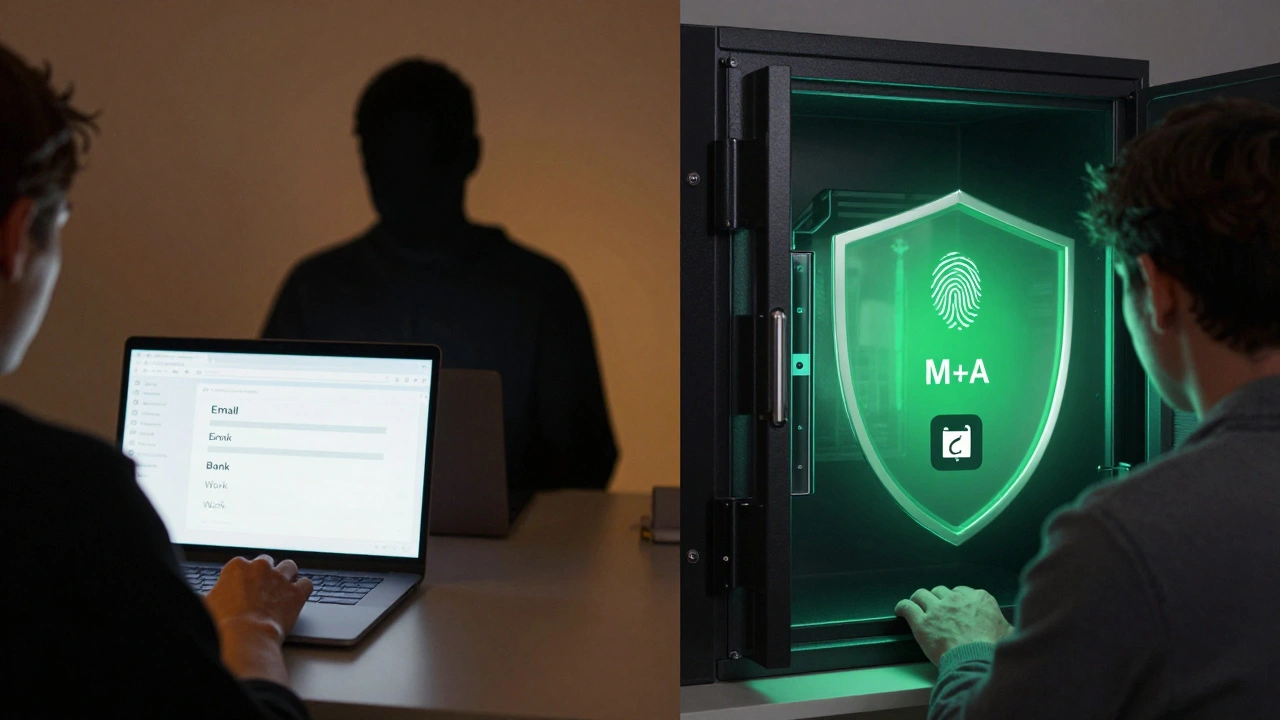
- Use multi-factor authentication (MFA) - This is the single most effective step. Even if your password is cracked, MFA blocks access unless the attacker has your phone, fingerprint, or hardware token.
- Enable account lockouts - Lock accounts after five failed attempts. This stops brute force and password spraying cold.
- Enforce password length and complexity - Require at least 12 characters. Allow spaces and symbols. Ban common words. The longer the password, the harder it is to crack.
- Use password managers - They generate and store unique, random passwords for every account. No more "Password123" across five sites.
- Monitor for breaches - Services like Have I Been Pwned let you check if your email appears in known leaks. Act fast if it does.
- Salting and hashing matter - If you manage a system, use bcrypt, Argon2, or PBKDF2. Never store passwords in plain text. Never use MD5 or SHA-1. They’re broken.
Why This Matters in Digital Forensics
In forensics, cracking passwords isn’t about breaking in. It’s about getting out.
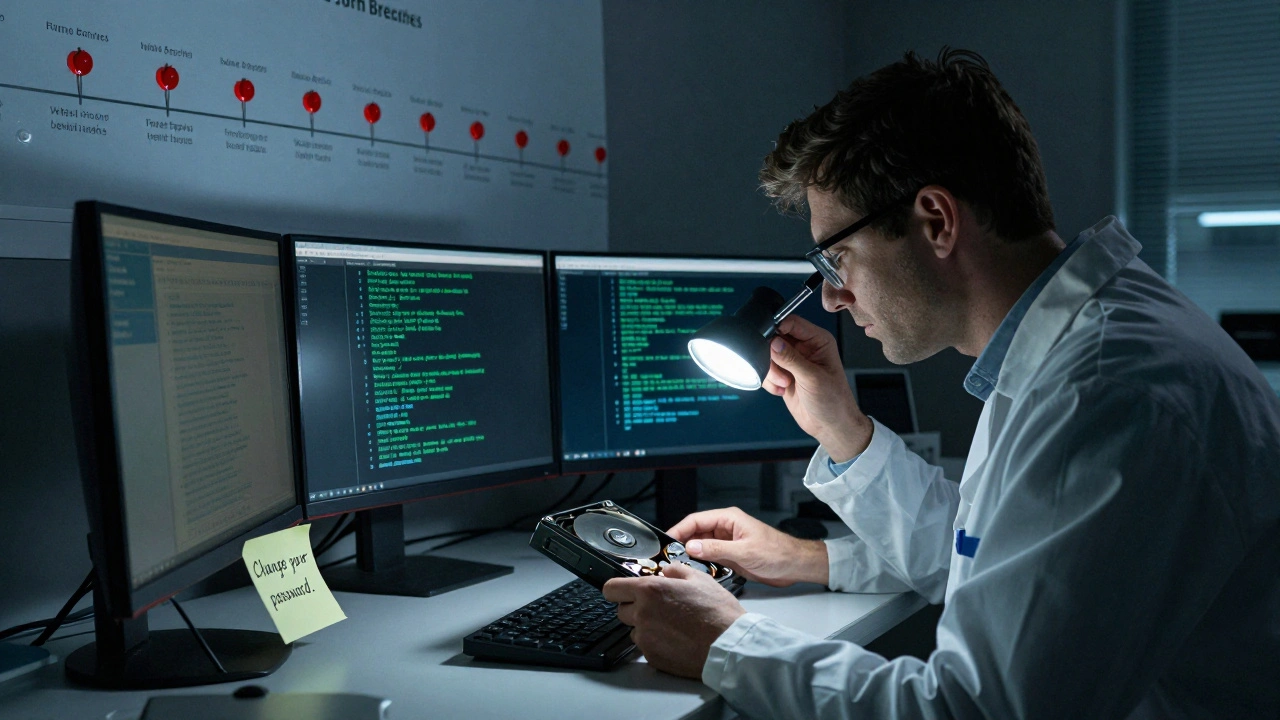
When investigating a breach, forensic teams need to access encrypted drives, locked devices, and protected logs. They use the same tools attackers use-but legally, with warrants. A forensic analyst might use Hashcat is a cracking/password recovery utility that supports five unique modes of attack for over 300 highly-optimized hashing algorithms to crack a suspect’s encrypted hard drive. Or use John the Ripper is a widely used open-source password cracking tool known for its speed and versatility. The tool supports various cracking techniques, including dictionary attacks, brute force, and rainbow tables. John the Ripper operates as a multiplatform password cracker with support for 15 different operating systems and hundreds of hashes and cipher types to recover passwords from a seized laptop.
But here’s the key insight: the same techniques that help investigators also expose systemic weaknesses. If a suspect’s password was "Company2025", that tells you the organization never trained employees on password hygiene. That’s not just a personal failure-it’s a policy failure.
The Bottom Line
Passwords are broken. Not because they’re hard to crack. But because we treat them like locks when they’re really just paper doors.
Stop relying on complexity alone. Stop reusing passwords. Stop thinking "it won’t happen to me." It already has. And it will again.
The solution isn’t more passwords. It’s fewer passwords-and better protection. MFA. Password managers. Training. Monitoring. These aren’t optional. They’re the baseline.
If you’re still using a password you typed yourself, you’re already behind. Time to change it.
Can brute force attacks crack any password?
Not practically. A 12-character password with uppercase, lowercase, numbers, and symbols has over 10^20 possible combinations. Even with powerful hardware, cracking that could take centuries. But most people don’t use passwords like that. Weak passwords-like "password123" or "Summer2026"-are cracked in seconds. The issue isn’t the tool. It’s the human.
Is password cracking illegal?
It depends on permission. Cracking your own password to recover access? Legal. Cracking someone else’s system without authorization? Illegal under the Computer Fraud and Abuse Act (CFAA) in the U.S. and similar laws globally. Security professionals use these tools under legal contracts and penetration testing agreements. Outside that, it’s a felony.
Do password managers really help?
Yes. They generate long, random passwords for every site and store them encrypted. You only need to remember one master password. Even if one site is breached, your other accounts stay safe. Studies show users with password managers are 70% less likely to have their accounts compromised in credential stuffing attacks.
Why is salting passwords important?
Salting adds a unique random string to each password before hashing. This means two users with the same password get different hashes. Rainbow tables become useless because they’re built for unsalted hashes. Without salting, attackers can crack thousands of passwords with one lookup. With salting, they have to crack each one individually-making attacks thousands of times slower.
Can MFA be bypassed?
Yes-but not easily. Advanced attacks like SIM swapping or phishing for MFA codes can work. But these require more effort than just guessing a password. MFA still reduces compromise risk by over 99% compared to passwords alone. The goal isn’t perfection. It’s making attacks too hard to be worth it.
What’s the best password length?
At least 12 characters. Longer is better. A 12-character password with mixed case, numbers, and symbols takes about 100,000 years to crack with current tech. A 16-character password? Over 100 million years. The real win? Use a passphrase like "BlueDragon$RidesTheWind!2026"-it’s long, memorable, and hard to guess.