When police question someone about a homicide, what they say can change the course of a case-maybe even end a trial. But what happens if there’s no record of what was said? That’s where legal standards for recording custodial interrogations become critical. In homicide cases, where lives hang in the balance and confessions can make or break prosecutions, the way an interrogation is captured matters more than most people realize.
Some states require that every word spoken during a homicide suspect’s interrogation be recorded-video and audio, from start to finish. Others only require it for certain types of murders. A few don’t require it at all. And federal agencies? They’ve got their own rules. There’s no single national law. Instead, you’ve got a patchwork of policies shaped by court rulings, state legislatures, and departmental guidelines.
What Gets Recorded, and Where?
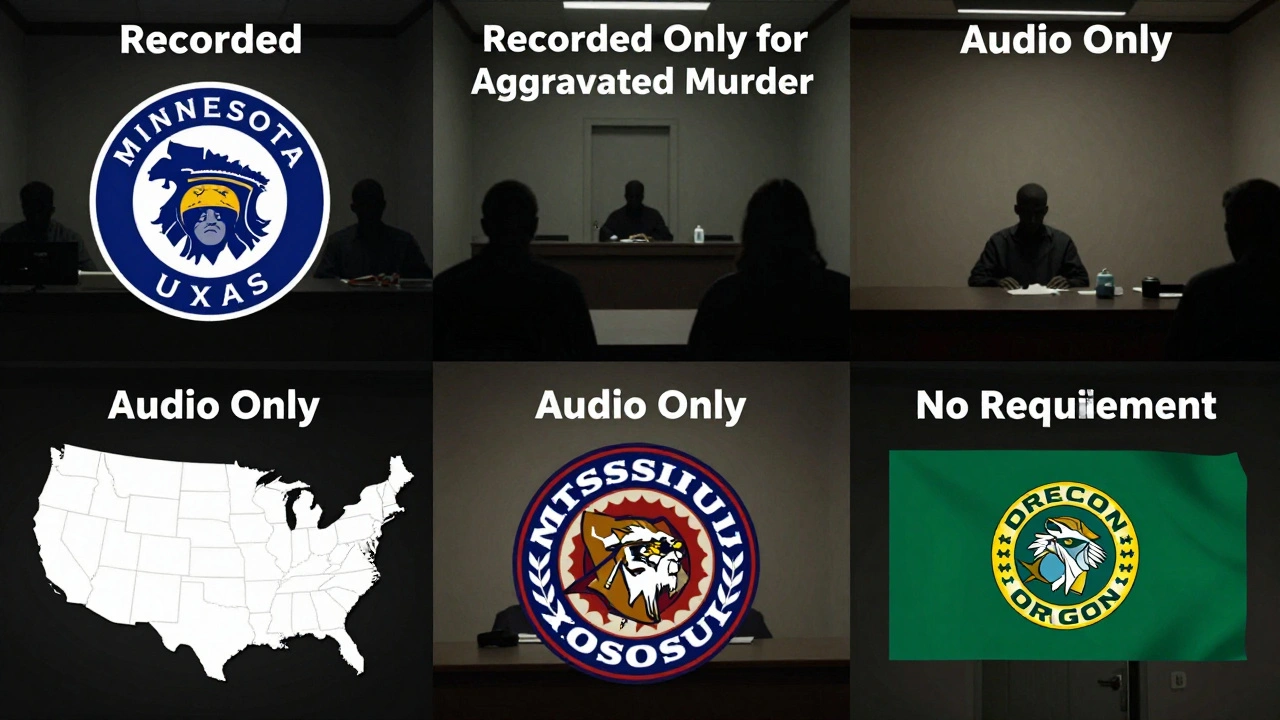
Not every state treats homicide interrogation recording the same way. Four states-Alaska, Arkansas, Minnesota, and Montana-require recording for all custodial interrogations, no matter the crime. That means even if someone is being questioned about a theft, it still has to be recorded. It’s a strict standard, born from court decisions that saw recording as a due process issue, not just a best practice.
Then there are states like Indiana, New Mexico, Utah, and Wisconsin, which require recording for all felony charges. Homicide falls under that umbrella, so it’s covered. But so do armed robbery, burglary, and drug trafficking. These states took a broader approach because they saw how easily false confessions can happen-even in non-homicide cases.
The majority of states, though, limit the requirement to serious crimes. That includes Colorado, Connecticut, Illinois, Michigan, New Jersey, New York, and Texas. In these places, recording is mandatory only for crimes like capital murder, rape, aggravated assault, or kidnapping. Oregon, for example, only requires it for aggravated murder or when a juvenile is tried as an adult. California? Only when a minor is suspected of murder.
And then there’s Missouri. It passed a law that didn’t demand fancy video equipment. It just said: record it somehow. Agencies could use cheap microcassette recorders if that’s all they could afford. The goal wasn’t perfection-it was accountability. The law covers first-degree murder, second-degree murder, arson, and child kidnapping. It applies only to stationhouse interviews, not on-scene questioning.
What Does "Custodial Interrogation" Even Mean?
Not every conversation with police counts. The legal term custodial interrogation means the suspect is in police custody and being questioned about a crime. That’s different from a casual chat on the street or a voluntary interview at the station. If someone isn’t under arrest or isn’t being detained in a way that a reasonable person would feel they can’t leave, then recording rules usually don’t kick in.
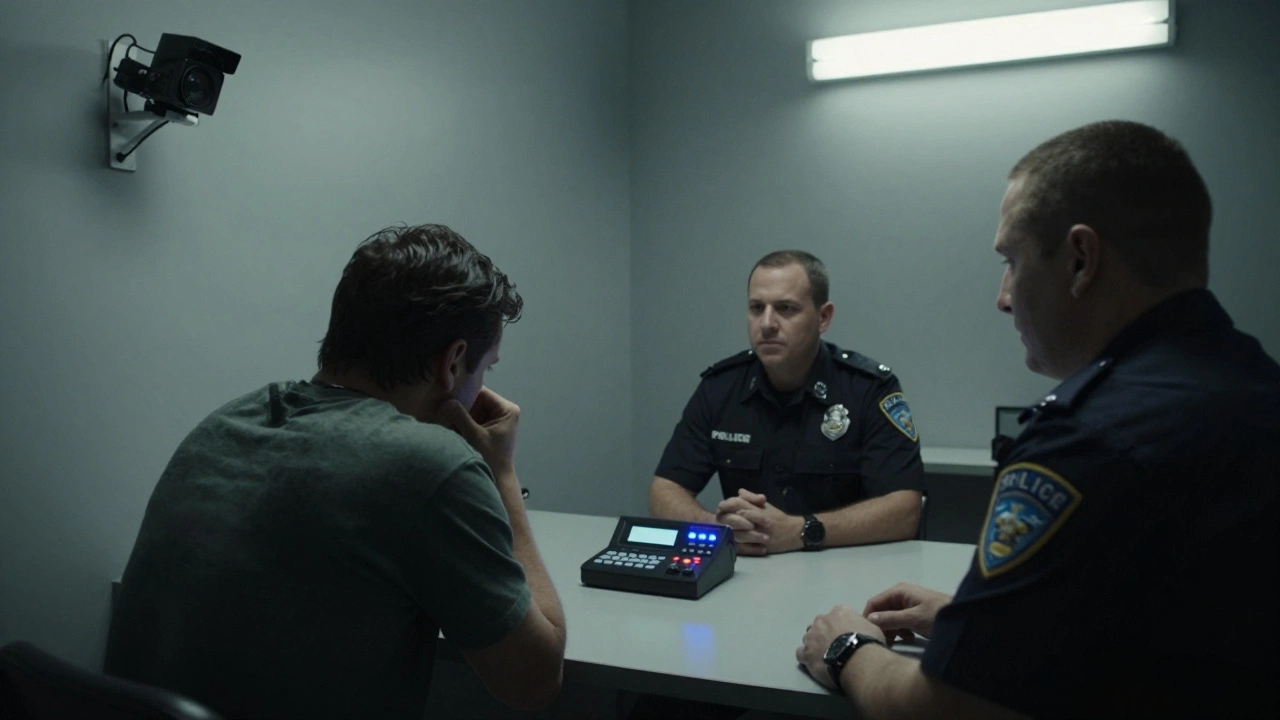
But once someone is read their Miranda rights and begins answering questions about a homicide, the clock starts. In New Jersey, they call it the "stem-to-stern" rule: recording must begin the moment Miranda rights are delivered and continue until the interview ends-no breaks, no cuts. That’s the gold standard. Other states are less strict. Some only require recording after a suspect confesses. Others don’t require anything at all.
Federal Rules and the Department of Justice
At the federal level, the U.S. Department of Justice has required electronic recording since at least 2014. Agencies like the FBI, DEA, and ATF must record interrogations when they have the equipment. Video is preferred. Audio is acceptable if video isn’t possible. The recording starts when the suspect enters the interview room and stops when the interview ends.
There are exceptions. If officers are asking questions under the "public safety exception"-like where a bomb is hidden or where a victim might be-recording isn’t required. Same goes for national security investigations where revealing sources could endanger lives. But those are narrow exceptions. For the vast majority of homicide cases, federal agents are expected to record.
Why Recording Matters-Beyond the Law
It’s not just about legal compliance. Recording protects everyone: suspects, officers, prosecutors, and the public.
Think about this: a suspect claims they were threatened into confessing. The officer says they were calm and professional. Without a recording, it’s one person’s word against another. With a recording? You see the body language, hear the tone, catch the pauses. You can tell if the suspect was exhausted, confused, or pressured.
Research from the American Psychological Association shows that suspects don’t change their behavior when they know they’re being recorded. They don’t talk less. They don’t refuse to waive Miranda rights. They don’t confess less. Recording doesn’t scare people into silence. It just gives the truth a clearer path to light.
It also stops bad interrogation tactics. Some officers use deception, lies, or intimidation to get confessions. A recording exposes that. It doesn’t just protect the innocent-it protects honest officers from false accusations.
What Happens If It’s Not Recorded?
When a homicide interrogation isn’t recorded, the consequences vary wildly by state.
In Minnesota and Alaska, courts have ruled that unrecorded statements can be thrown out if the failure to record was substantial. That doesn’t mean every unrecorded confession gets suppressed. But if the state had the means to record and didn’t, the judge has to weigh whether the lack of recording hurt the suspect’s rights.
In North Carolina and Nebraska, judges must consider the absence of recording when deciding whether to admit a confession. And if it’s admitted anyway, the jury gets a special warning: "You should be cautious about this statement because it wasn’t recorded."
In states without recording laws, there’s no automatic penalty. But defense attorneys can still argue that the lack of recording makes the confession unreliable. And juries? They often doubt confessions that come with no video.
The Cost Myth
One reason some agencies resist recording? Cost. They say video equipment is too expensive. But that’s outdated thinking.
Modern digital recorders cost less than $200. Many smartphones can record audio and video with high quality. Some departments use body cams. Others use dashcams in patrol cars. Missouri’s law was built on this idea: if you can afford a radio, you can afford a recorder.
And the savings? They’re real. Fewer false confessions mean fewer wrongful convictions. Fewer wrongful convictions mean fewer lawsuits, fewer appeals, fewer overturned verdicts. One study found that after recording was implemented, the number of contested confessions dropped by 60% in some jurisdictions.
What’s Missing? Consistency.
The biggest problem isn’t the technology. It’s the chaos. A suspect in Oregon might be recorded. A suspect in Texas might be recorded. But if the same suspect is questioned in Alabama? No recording required. That’s not justice. That’s geography.
There’s no constitutional right to have an interrogation recorded. The U.S. Constitution doesn’t mention cameras or microphones. But state constitutions? Many have been interpreted to require it. That’s why New Jersey and Minnesota have strong rules. It’s not about federal law-it’s about state courts deciding that fairness demands more.
And yet, most states still don’t require it. Even in homicide cases. Even though homicide is the most serious crime on the books.
What Should You Do?
If you’re a law enforcement officer: record everything. Use audio if video isn’t possible. If you can’t record at all, write down every detail immediately and have a second officer verify it. Don’t rely on memory.
If you’re a suspect: ask if you’re being recorded. If you’re not, say so. It doesn’t hurt. It might help.
If you’re a prosecutor or defense attorney: know your state’s rules. If a confession wasn’t recorded, challenge it. Don’t assume it’s admissible just because it’s signed.
If you’re a citizen: demand better standards. Ask your local police chief: "Do you record homicide interrogations?" If they say no, ask why. The system works better when it’s transparent.
Recording isn’t about catching criminals. It’s about making sure the right ones are caught-and that the wrong ones aren’t punished.
Is it legal to record a homicide interrogation without the suspect’s knowledge?
Yes, in most states, law enforcement can record custodial interrogations without the suspect’s knowledge or consent. The key legal standard is whether the recording was done lawfully under state policy, not whether the suspect agreed. States like Missouri, New Jersey, and Minnesota explicitly allow covert recording as long as it’s done during a lawful custodial interrogation. Federal agencies also operate under this principle. However, if the recording violates state wiretapping laws (which is rare in custodial settings), it could be challenged in court.
What if the recording cuts off during the interrogation?
If a recording stops unexpectedly-due to a device failure, battery drain, or human error-the admissibility of the confession depends on the state. In states like New Jersey and Minnesota, courts may still allow the confession if the interruption was minor and unintentional, but they’ll likely give the jury a cautionary instruction about reliability. If the recording was stopped deliberately or the officer failed to restart it, the defense can argue the statement should be suppressed. The burden falls on the prosecution to prove the recording failure wasn’t intentional or negligent.
Can a suspect refuse to be recorded?
No, a suspect cannot legally refuse to be recorded during a custodial interrogation. Recording is a policy or legal requirement for law enforcement, not a right of the suspect. Even if the suspect says, "Don’t record me," officers are still required to record under state or federal rules. The suspect’s refusal doesn’t override the agency’s obligation. However, the suspect can still refuse to speak. That right remains protected under the Fifth Amendment.
Do all homicide interrogations need to be recorded if the suspect is a juvenile?
In some states, yes. California requires recording for juveniles suspected of murder. Oregon requires it if a juvenile is processed in adult court. Other states like Illinois and New York extend recording requirements to juveniles in all serious felony cases. But in states without specific juvenile protections, recording isn’t mandatory unless the crime itself triggers the requirement (like aggravated murder). The federal government doesn’t have a special rule for juveniles-it follows the same policy as for adults.
What’s the difference between audio and video recording?
Audio recording captures what was said. Video recording captures what was said and how it was said-the body language, facial expressions, environment, and behavior of both the suspect and the officers. Video is more reliable for detecting coercion, fatigue, or manipulation. The American Psychological Association and Major Cities Chiefs Association both recommend video over audio. But audio is still legally acceptable in most jurisdictions where video isn’t available. The key is having some objective record, not necessarily the best one.
For homicide cases, the stakes couldn’t be higher. A single unrecorded statement can lead to a wrongful conviction-or let a guilty person walk free. Recording isn’t a luxury. It’s the baseline for justice.