Ever wondered why some people can pass a drug test a few days after use while others stay "hot" for weeks? It usually comes down to the detection windows-the specific timeframe where a substance or its metabolites stay in your body at levels high enough for a lab to spot. There is no single "magic number" for every drug because your body isn't a static beaker; it's a complex biological system where weight, habits, and even how much water you drink change the game.
The Core Mechanics of Drug Clearance
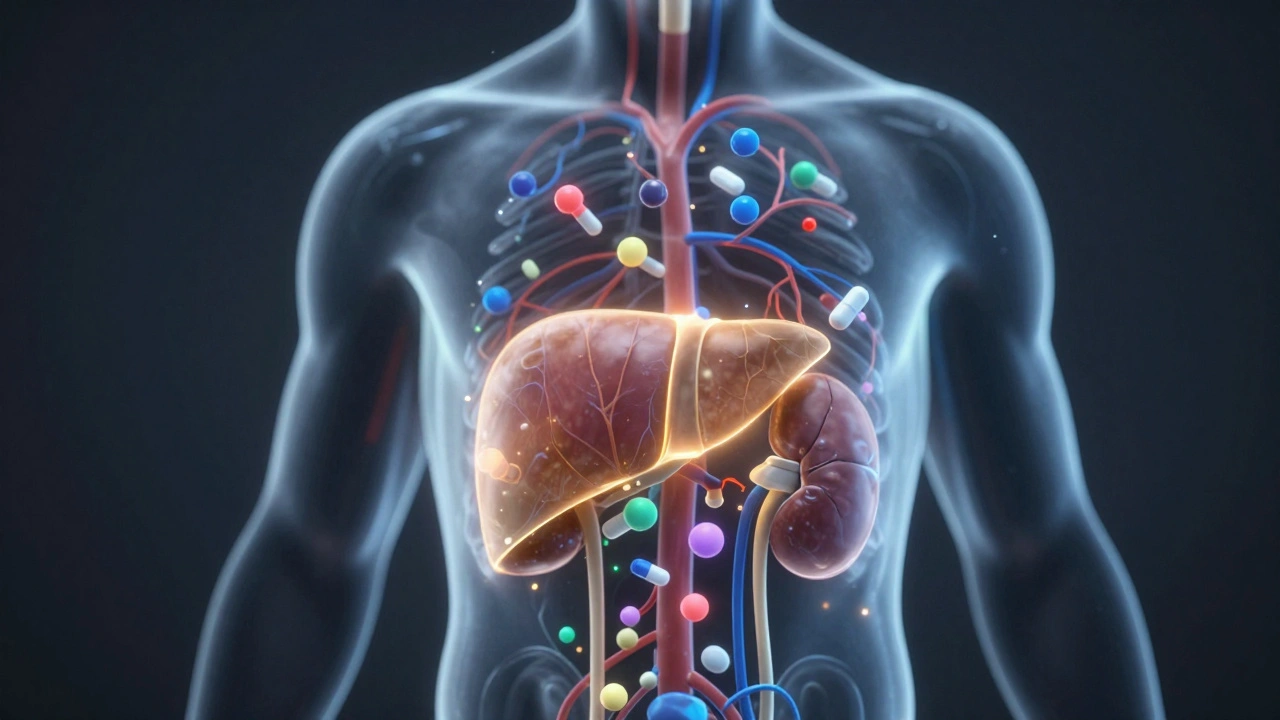
To understand detection windows, you first have to understand Half-Life is the time it takes for the concentration of a drug in your bloodstream to reduce by half. If a drug has a short half-life, it clears quickly. If it's long, it lingers. But half-life is only part of the story. Your Liver and the primary organ responsible for metabolizing drugs into water-soluble metabolites decide how fast a substance is processed, while your kidneys handle the actual exit strategy.
Individual physiology plays a massive role here. Someone with a higher body mass index (BMI) might store fat-soluble drugs, like THC, in their adipose tissue, leaching them back into the blood over a longer period. Meanwhile, a highly active person with an efficient metabolism might clear a dose faster than someone who is sedentary. Even your hydration levels matter; if you're dehydrated, the concentration of metabolites in your urine increases, potentially making a substance easier to detect even if the total amount in your body is low.
Testing Methods and Their Timelines
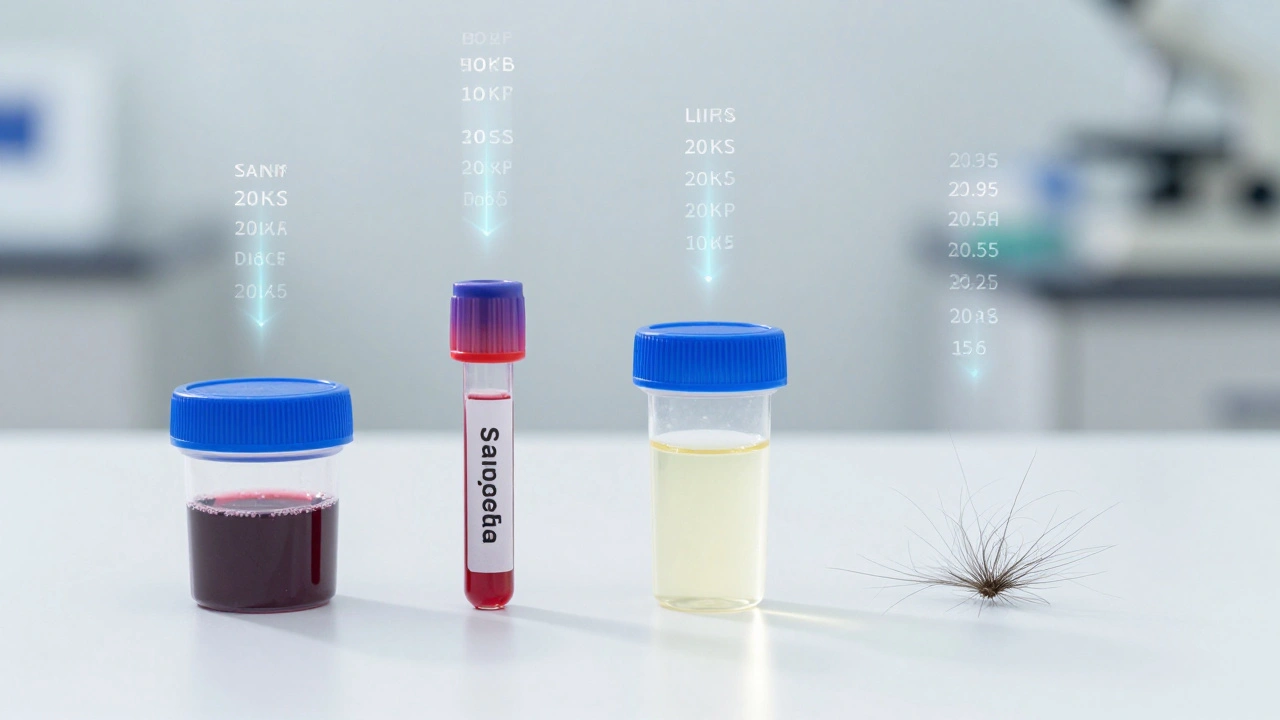
The "window" depends entirely on what the lab is looking at. Different biological fluids act as different types of records-some are like a live news feed, while others are like a history book.
- Saliva (Oral Fluid): This is your "recent use" indicator. It's great for catching someone who is currently under the influence or used a substance within the last few hours to a couple of days. It's convenient for on-site testing but has the shortest window.
- Blood: Highly accurate for pinpointing impairment at a specific moment. Most drugs clear the blood quickly, often within hours or a few days, making this the go-to for post-accident investigations.
- Urine: The industry standard. Urine tests capture metabolites that have already been processed by the liver. This extends the window significantly, often from a few days up to a month depending on the substance.
- Hair Follicles: The ultimate historical record. As hair grows, it traps drug metabolites. A standard 1.5-inch sample can provide a lookback period of 90 days or more.
| Fluid Type | Typical Window | Primary Use Case | Detection Strength |
|---|---|---|---|
| Saliva | Hours to ~3 Days | Random/On-site tests | Immediate recent use |
| Blood | Hours to ~4 Days | Impairment/Medical | High accuracy for current state |
| Urine | 2 to 28 Days | Employment/Clinical | Balanced historical window |
| Hair | 90+ Days | Legal/Long-term monitoring | Comprehensive history |
Breakdown by Drug Class
Not all substances behave the same way. The chemistry of the drug determines how it binds to tissues and how the body flushes it out.
Stimulants and Amphetamines
For things like Methamphetamine, which is a potent central nervous system stimulant and MDMA, urine tests typically spot them within 2 to 4 days. However, chronic users-people who use daily for months-can sometimes be detected for much longer because the drug builds up in the system.
Opioids and Pain Medications
Opioids vary by type. Natural opioids like morphine and heroin usually show up in urine for 2 to 3 days. Synthetic options, such as Oxycodone, often linger slightly longer, around 3 to 4 days. Suboxone (Buprenorphine) is a bit of an outlier, showing up in saliva for up to eight days, which is significantly longer than most other opioids.
Benzodiazepines
This group has some of the widest variation. A single dose of Xanax (Alprazolam) might be gone from your urine in five days, but Valium (Diazepam) is a different beast. Because of its long half-life, Valium can be detected in urine for up to six weeks. If someone is taking these medications chronically, the window for most benzodiazepines can stretch to 30 days.
Cannabinoids
THC is the most discussed substance in toxicology because of its fat-solubility. For a casual user (once a week), urine detection is usually 1 to 3 days. For a daily user, that window jumps to 5 to 10 days, and in some heavy users, it can persist for 30 days. This is why hair tests are often used for cannabis; they bypass the fluctuations of urine and provide a steady 90-day window.
The Impact of Drug Purity and Adulterants
In the modern market, "pure" drugs are rare. Most street samples are cocktails. When Fentanyl is mixed into heroin, the lab isn't just looking for one window-they're looking for two. Fentanyl has its own metabolic pathway and clearance rate, which can complicate the timeline.
The same goes for synthetic cannabinoids like K2 or Spice. These are designed to mimic THC but are chemically different, often evolving to evade standard tests. They clear the system very quickly-sometimes detectable in saliva for only an hour-but urine tests remain more reliable for these synthetic compounds, typically lasting up to 72 hours.
Regulatory Standards and the "Cut-Off"
It's important to realize that a drug is technically in your system until every last molecule is gone, but that doesn't mean a test will find it. Labs use "cut-off levels." In the U.S., the Department of Transportation (DOT) establishes standards under Rule 49 CFR Part 40 Section 40.87.
If the concentration of a drug is below the cut-off, the result is reported as negative, even if a tiny amount is present. This prevents "false positives" from things like eating a poppy seed bagel (which can trigger a low-level opioid result) or using a legal prescription. The detection window is effectively the time it takes for the drug concentration to drop below that specific regulatory threshold.
Practical Applications in Forensics and Law
Knowing these windows is critical for different professionals. A forensic toxicologist uses this data to reconstruct a timeline of events in a criminal case. If a driver has a high concentration of a drug in their blood but no metabolites in their urine, it suggests very recent use. If the urine is positive but the blood is negative, the use happened days ago.
In workplace safety, employers choose the test based on their goal. If they want to know if an employee is high right now, they use saliva. If they want to know if the employee has been using drugs over the last month, they go with urine. For high-security roles, hair testing is the only way to ensure a long-term clean record.
Can drinking a lot of water "flush" drugs out of the detection window?
Drinking water can dilute your urine, which might lower the concentration of a drug below the lab's cut-off level. However, modern labs test for "creatinine levels" and "specific gravity." If your urine is too diluted, the lab will mark the sample as "dilute" and require a re-test. It doesn't actually remove the drug from your tissues; it just changes the concentration in the fluid.
Why is Valium detectable for so much longer than Xanax?
It comes down to the chemical structure and the half-life. Valium (Diazepam) has a much longer half-life and active metabolites that stay in the body significantly longer than the shorter-acting Alprazolam (Xanax). This makes it linger in biological fluids for weeks rather than days.
Does exercise help shorten the detection window?
Exercise can speed up metabolism and increase kidney filtration, which may help clear some water-soluble drugs faster. However, for fat-soluble drugs like THC, exercise can actually release stored metabolites from fat cells into the bloodstream, potentially causing a temporary spike in detectability.
Can a hair test detect drugs if I shave my head?
Shaving your head removes the sample source, but it doesn't "clear" the drugs from your system. In legal or employment scenarios, if a hair sample cannot be obtained, the testing body will usually pivot to urine or blood testing.
Are synthetic drugs like K2 harder to detect?
Yes, because the chemical formulas of synthetic cannabinoids change constantly to stay ahead of testing kits. While standard THC tests won't find them, specialized laboratory screens can detect them, though the window is quite short-usually up to 72 hours in urine.