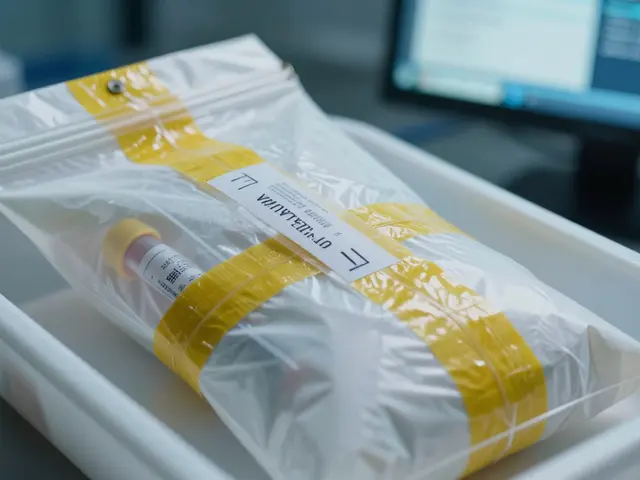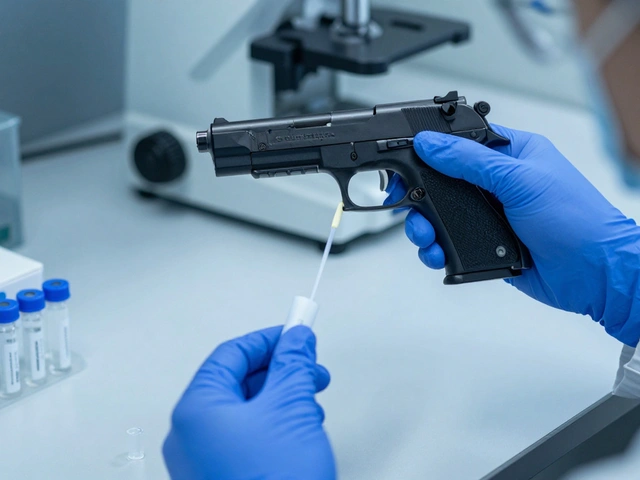
Imagine a crime scene where the victim is found dead from an overdose. To a casual observer, it looks like a tragic accident. But to a detective, the presence of a specific substance or a known associate nearby transforms the scene into a drug-related homicide investigation. This isn't just about who sold the drugs; it's about a complex web of systemic violence, chemical triggers, and a legal landscape that is rapidly shifting to hold suppliers accountable for the deaths of their customers.
The Invisible Links in Homicide Cases
When investigators dig into homicide files, they find that drugs are almost always lurking in the background. In fact, evidence suggests a link to drugs in roughly 86% of homicide cases. It is rarely a simple one-to-one relationship. Instead, investigators see overlapping patterns: about 66.7% of these cases involve a police record of drug use for either the suspect or the victim, and 64.2% involve records of drug sales.
The most telling sign of a high-risk environment is the "triple threat"-cases where drug use, heavy use, and active dealing all intersect. This combination appears in 39% of investigations. When you see this pattern, you aren't just dealing with an isolated crime; you're looking at a lifestyle of high-risk behavior and affiliation with organized drug groups, which are present in over 40% of these investigations.
Four Ways Drugs Lead to Murder
Not every drug-related killing happens for the same reason. To build a solid case, law enforcement must categorize the "how" and "why" behind the violence. Most experts use a framework that breaks these down into four primary mechanisms:
- Systemic Violence: This is the "business" side of crime. It involves territorial disputes, gang wars, or a dealer killing someone to steal drug proceeds. Here, the murder is a tool for market control.
- Psychopharmacological Effects: This occurs when the drug itself changes the brain. A suspect under the influence of a stimulant or hallucinogen may become unexpectedly violent, committing a crime due to the direct chemical impact on their behavior.
- Economic Compulsive Motives: The drive to fund an addiction can push a user to commit violent robberies. In these cases, the murder is a byproduct of the desperate need for money to buy the next dose.
- Victimization: This recognizes that users-particularly those using heroin-often find themselves in dangerous environments, making them easy targets for violent crime regardless of the suspect's drug status.
The Rise of Drug-Induced Homicide (DIH) Laws
In recent years, a controversial legal tool has emerged: Drug-Induced Homicide (or DIH), which is a legal charge where the distribution of a controlled substance results in the death of the user. These laws were originally designed to take down kingpins, but the reality on the ground is different.
Today, DIH statutes are frequently used against low-level dealers, friends, or even co-users. The danger here is that these laws often strip away the traditional requirement of mens rea (the intent to kill). Instead of proving the suspect wanted the victim dead, prosecutors only need to prove the suspect provided the drug that caused the overdose.
| Feature | Traditional Homicide | Drug-Induced Homicide |
|---|---|---|
| Intent (Mens Rea) | Must prove specific intent to kill or cause harm | Often relaxed or eliminated |
| Causation | Direct physical cause must be established | Proximate cause (distribution) is sufficient |
| Target Profile | Direct assailants | Suppliers, friends, or co-users |
| Typical Charge | First or Second Degree Murder | DIH or Involuntary Manslaughter |
The Fentanyl Shift and the "Supplier vs. User" Debate
The opioid epidemic has fundamentally changed how these cases are prosecuted. With the rise of Fentanyl, a potent synthetic opioid, overdose deaths have skyrocketed, particularly in the Midwest and Northeast. This has led to a spike in DIH charges.
A critical point of contention in court is the distinction between a "supplier" and a "co-user." For instance, if two people buy heroin from a street dealer and then use it together, is the person who handled the transaction a "dealer" or just a friend sharing a drug? Courts, such as the New Jersey Supreme Court in the Morrison case, have had to grapple with whether joint possession of a drug constitutes distribution. This distinction is the difference between a light sentence and a potential life term.
Unintended Consequences of Aggressive Enforcement
While the goal of law enforcement is to stop the flow of drugs, aggressive disruption can sometimes backfire. Some research indicates that large-scale opioid seizures can actually lead to an increase in fatal overdoses in the surrounding area for about three weeks following the bust. Why? Because when the usual, "reliable" supply is cut off, users may turn to unknown sources or more potent, adulterated batches to satisfy their cravings, leading to a wave of accidental deaths.
This suggests that the link between drug markets and murder isn't always about violence-it's often about the instability of the market itself. When the supply chain is disrupted, the vulnerability of the user increases, and the likelihood of overdose-related deaths rises.
Moving Toward Fairer Prosecutions
Because DIH laws can be overly broad, many legal scholars argue that Involuntary Manslaughter is a more appropriate charge. Charging a young adult or a fellow addict with murder for a mistake-even a deadly one-without evidence of a specific intent to kill is increasingly seen as a policy failure. Organizations like Fair and Just Prosecution argue that unless there is clear evidence the seller intended to kill the buyer, the harshest homicide charges should be avoided.
What is the difference between a drug-related murder and a drug-induced homicide?
A drug-related murder is a broad term covering any killing linked to drugs, such as a gang hit over territory or a robbery gone wrong. Drug-induced homicide (DIH) is a specific legal charge where the act of distributing a drug is treated as the cause of death, even if the death was an accidental overdose.
Do all drug-related homicides involve professional dealers?
No. While systemic violence involves professional dealers, many DIH cases involve "social dealers"-friends, family members, or co-users who provide drugs to others without running a formal business.
How does the psychopharmacological hypothesis explain murder?
This theory suggests that certain drugs directly alter a person's brain chemistry, reducing inhibitions or inducing paranoia and aggression, which leads them to commit a violent act they wouldn't normally consider.
Why are DIH laws considered controversial?
They are controversial because they often lower the standard for "intent." In traditional murder cases, you must prove the killer wanted the victim dead. In DIH cases, simply selling the drug can be enough to trigger a homicide charge, potentially leading to life imprisonment for low-level offenders.
Can police seizures of drugs actually increase death rates?
Yes, evidence suggests that when a major supply is seized, the resulting market disruption can push users toward more dangerous, unregulated sources, leading to a temporary spike in fatal overdoses in that area.