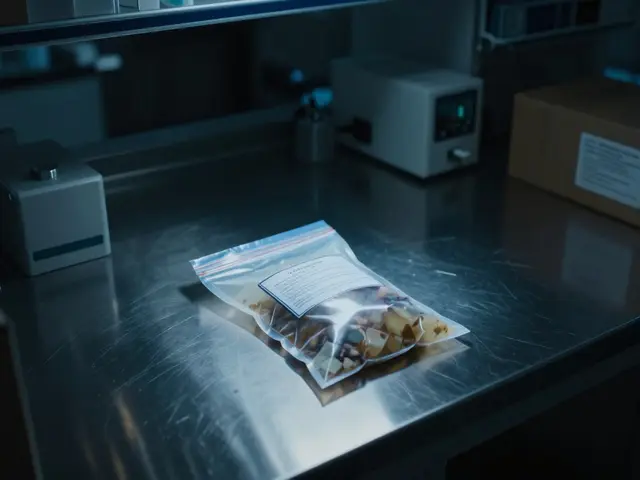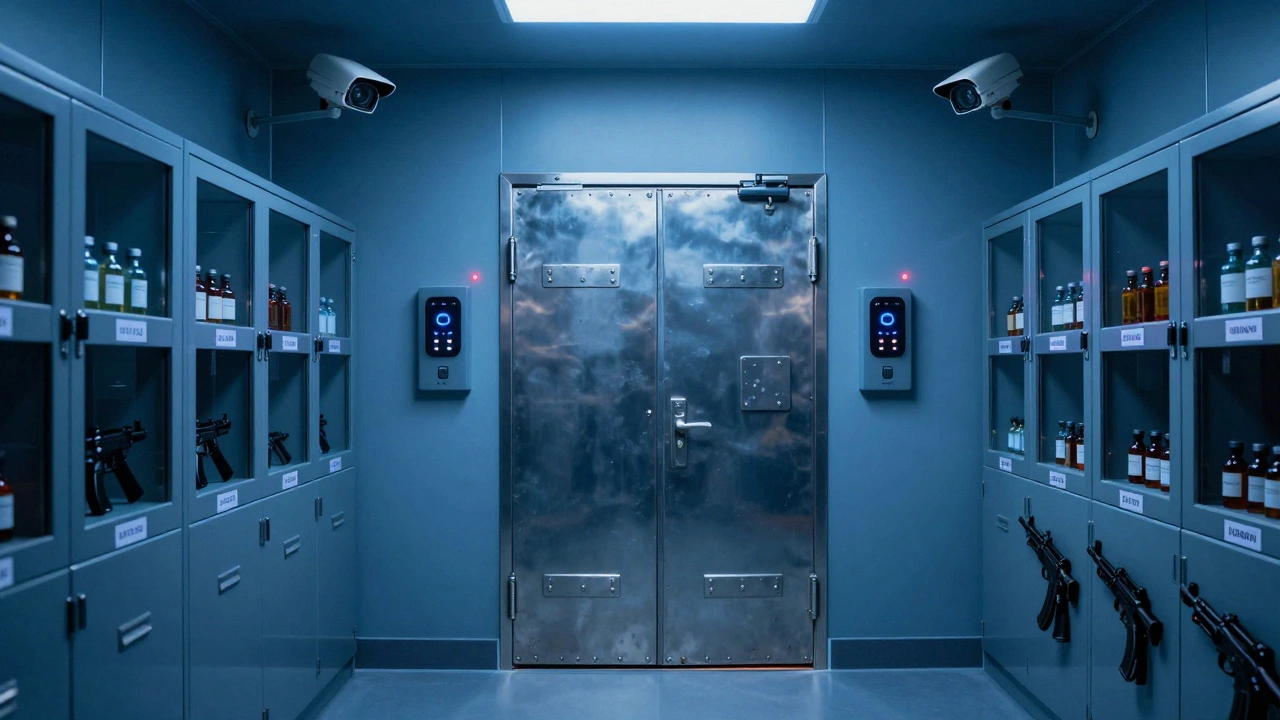
When it comes to forensic labs, the chain of custody doesn’t end with paperwork. If someone can walk into your evidence room and swap a DNA sample, tamper with a drug sample, or steal a firearm log, no amount of digital tracking will save your accreditation. Evidence security starts with locks, cameras, and guards - not software. Physical controls are the first and last line of defense for any accredited lab. Skip this, and your entire case could be thrown out in court.
Why Physical Security Matters in Forensic Labs
Think about it: your lab handles evidence that could decide someone’s freedom, or even their life. A single breach - a stolen blood vial, a switched fingerprint card, an unlogged item - can destroy a prosecution, trigger a wrongful conviction lawsuit, or make your entire lab look incompetent. Accreditation bodies like ASCLD/LAB and ISO 17025 don’t just ask if you have policies. They check if your physical space can prove those policies are real. Physical security isn’t optional. It’s the foundation of integrity. Without it, digital logs are just files on a server. Anyone with access to the room can override them. That’s why inspectors show up unannounced, walk straight to your evidence storage, and ask: “Who else has a key? When was the last time this door was opened? Can you show me the camera footage from last Friday?”Layered Physical Controls: The Three Lines of Defense
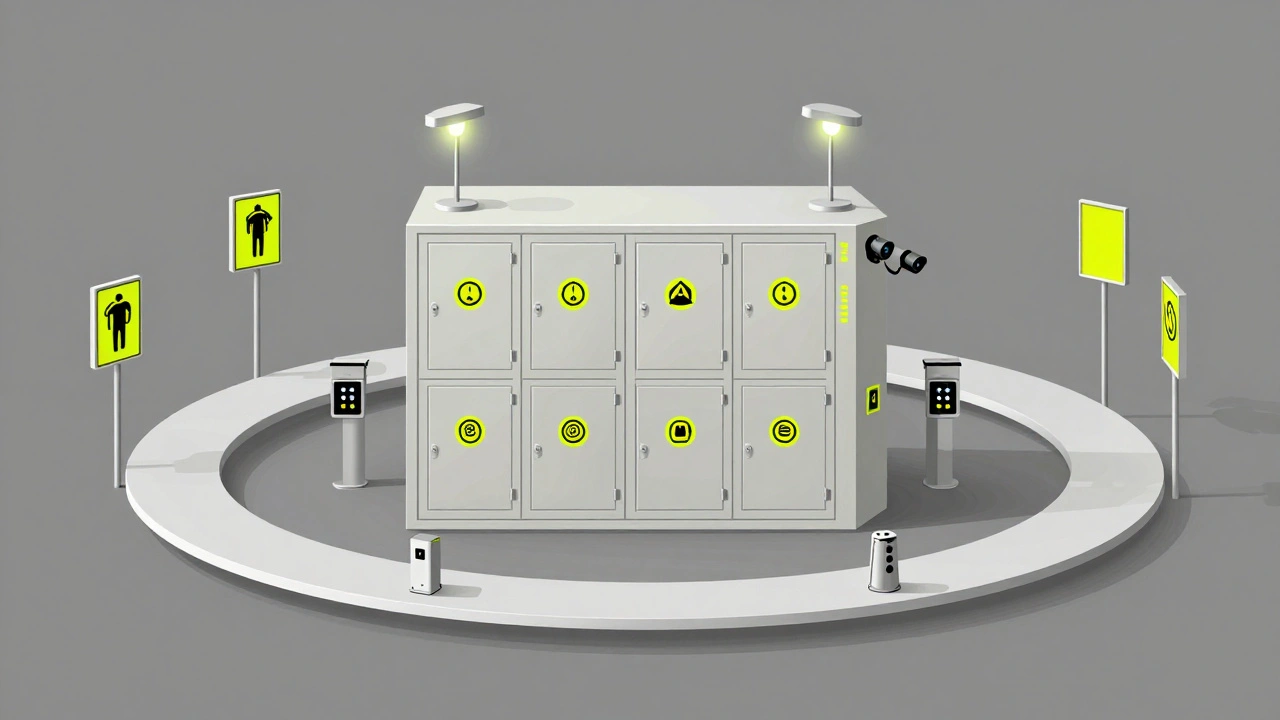
Good physical security doesn’t rely on one thing. It uses layers - like an onion. Each layer serves a different purpose.- Deterrent controls - These are the obvious ones. Security cameras mounted above doors, signs that say “24/7 Surveillance,” motion-sensor lights. They don’t stop someone, but they make them think twice. In a forensic lab, even a fake camera can deter an insider who’s considering a swap.
- Preventive controls - These are the barriers. Locked doors with electronic locks, biometric scanners that only open for authorized personnel, reinforced walls, and bollards to stop vehicles from crashing into evidence storage. These stop access before it happens.
- Detective controls - These catch what slips through. Motion detectors inside evidence rooms, glass-break sensors on display cases, door contact switches that log every opening, and CCTV systems that record 24/7. If someone opens a drawer at 3 a.m., the system doesn’t just flash a light - it sends an alert to the on-call supervisor and starts recording.
Access Control: Who Gets In, and How Do You Know?
In a forensic lab, access isn’t about convenience. It’s about accountability. Every person who enters the evidence storage area must be tracked - not just logged in a notebook, but digitally recorded.- Biometric scanners - Fingerprint or iris recognition ensures the person entering is the same person authorized. No sharing badges. No borrowing keys. One person, one biometric profile.
- RFID access cards - These are fine, but only if they’re tied to a user ID and time-stamped. A card left on a desk? That’s a vulnerability. Cards should auto-lock after 30 seconds of inactivity.
- Two-factor authentication - For high-security areas (like controlled substance storage), require both a badge and a PIN, or a badge and a fingerprint. This prevents someone from stealing a badge and walking in.
- Access logs - Every entry and exit must be stored for at least seven years. Not just “John Doe entered.” But “John Doe, badge #4821, entered Evidence Room B at 09:17:03, accessed Cabinet 3, Item #E-2025-088.”
Physical Barriers and Environmental Controls
It’s not just about who gets in. It’s about what happens once they’re inside.- Reinforced walls and doors - Evidence rooms should have steel-reinforced doors with deadbolts and strike plates. Drywall won’t stop a sledgehammer.
- Temperature and humidity control - DNA degrades. Drugs spoil. Paper evidence gets moldy. Your storage room must maintain 68-72°F and 40-50% humidity. Logs of this must be kept daily. If the AC fails at night and no one notices until morning? That’s a compliance failure.
- Fire suppression - Water sprinklers? Fine. But not near paper evidence. Clean-agent systems (like FM-200) are better - they suppress fire without damaging samples.
- Virtual fencing - For perimeter security, underground vibration sensors can detect someone digging under a fence or climbing over. No visible wires. Just silent alerts.
Surveillance and Monitoring
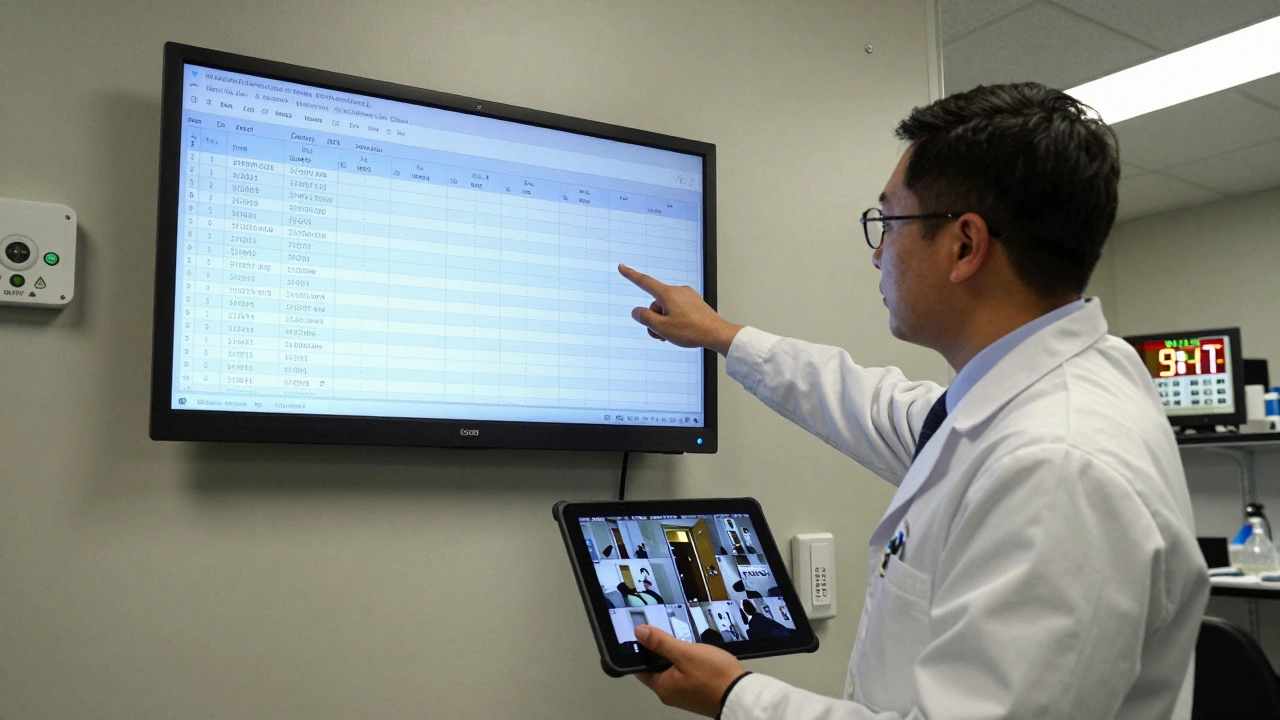
CCTV isn’t just for catching burglars. It’s for proving your procedures work.- Cameras must cover every entrance, storage cabinet, and corridor leading to evidence areas.
- Footage must be stored for at least 90 days - longer if you’re handling homicide cases.
- Recordings must be time-stamped and watermarked so they can’t be edited.
- Live monitoring? Not always needed. But someone must review logs weekly. If a door opens at 2 a.m. every Tuesday - investigate why.
Administrative Controls: Policies That Actually Work
You can have the best locks in the world, but if your staff doesn’t follow procedure, you’re still at risk.- Visitor logs - Every non-staff member must sign in, wear a temporary badge, and be escorted. No exceptions. Even other cops.
- Key control - Keys should be kept in a locked key cabinet. Each key must be checked out and returned with a log. No duplicates.
- Training - New staff get trained on physical security during orientation. Annual refresher? Mandatory. If someone doesn’t know how to report a broken lock, they’re a liability.
- Incident response - What happens if someone breaks in? Who do you call? Who shuts down the system? Who preserves the scene? These steps must be written, practiced, and documented.
Integration with Cyber Systems
Physical and digital security aren’t separate anymore. They’re linked.- Access cards are tied to your LIMS (Laboratory Information Management System). If someone accesses evidence, the system logs it.
- Door sensors trigger alerts in your SIEM (Security Information and Event Management) system.
- Temperature logs auto-upload to your compliance dashboard.
What Accreditation Inspectors Look For
They don’t ask if you have cameras. They ask:- “Show me the last 30 days of access logs for Evidence Room A.”
- “Can you prove no unauthorized person entered during the holiday break?”
- “What’s your procedure if a camera fails?”
- “Who last calibrated your humidity sensor?”
- “When was the last time you tested your door locks?”
Common Mistakes That Cost Labs Accreditation
- Using the same key for multiple rooms - easy to lose, hard to track.
- Letting staff keep access cards after leaving the job.
- Not testing locks or alarms for six months.
- Storing evidence in a room with no climate control.
- Not reviewing surveillance footage for over a year.
- Allowing visitors to walk alone through evidence areas.
Next Steps: Building a Compliant Physical Security System
Start here:- Map every room where evidence is stored or handled.
- Identify the highest-risk items (DNA, firearms, narcotics).
- Install biometric access on those areas.
- Set up 24/7 recording with 90-day retention.
- Install environmental sensors with auto-alerts.
- Train every staff member - no exceptions.
- Review logs weekly.
- Test locks and alarms monthly.
What happens if my lab fails a physical security audit?
Failing a physical security audit doesn’t just mean a warning. It can lead to suspension of your accreditation. Without accreditation, your evidence is no longer admissible in court. Prosecutors will refuse to use your reports. Your lab loses credibility, funding, and contracts. Some labs never recover. Fixing the issue takes time - and often costs more than building it right the first time.
Can I use a standard office security system for my forensic lab?
No. Office systems are designed to stop casual intruders. Forensic labs need to protect evidence that could be targeted by insiders - staff, contractors, even law enforcement. Standard locks can be picked. Generic cameras don’t record time-stamped, tamper-proof footage. You need systems built for forensic integrity, not convenience. ISO 17025 and ASCLD/LAB require specialized controls.
Do I need a security guard in my lab?
Not necessarily - but you need something equivalent. A guard is one option. Another is 24/7 remote monitoring with live response. Or automated alerts that trigger police dispatch if a breach is detected. The key is real-time response capability. If your system only logs an entry and waits for someone to check it the next day, you’re vulnerable.
How often should I test my physical security systems?
Locks and alarms should be tested monthly. Cameras and sensors should be checked quarterly. Environmental controls (temperature, humidity) need daily logs and monthly calibration. Annual full-system audits by an external expert are required for accreditation. Don’t wait until inspection day to find out your system doesn’t work.
What’s the biggest threat to evidence security?
It’s not a burglar. It’s an insider - someone who knows how the system works. A lab tech who bypasses the log because they’re in a hurry. A supervisor who lets a colleague borrow a badge. A janitor who’s never trained on evidence protocols. Most breaches happen because of human error, not technical failure. That’s why training and culture matter more than expensive hardware.