
Imagine a detective presenting a crucial piece of physical evidence in court. The defense attorney asks one simple question: "Who touched this item between the crime scene and today?" If the prosecution cannot provide a perfect, unbroken record of every handoff, storage location, and inspection, that evidence might be thrown out. It doesn't matter how damning the evidence is if its history is unclear. This is why evidence access logs are not just administrative paperwork; they are the backbone of legal admissibility.
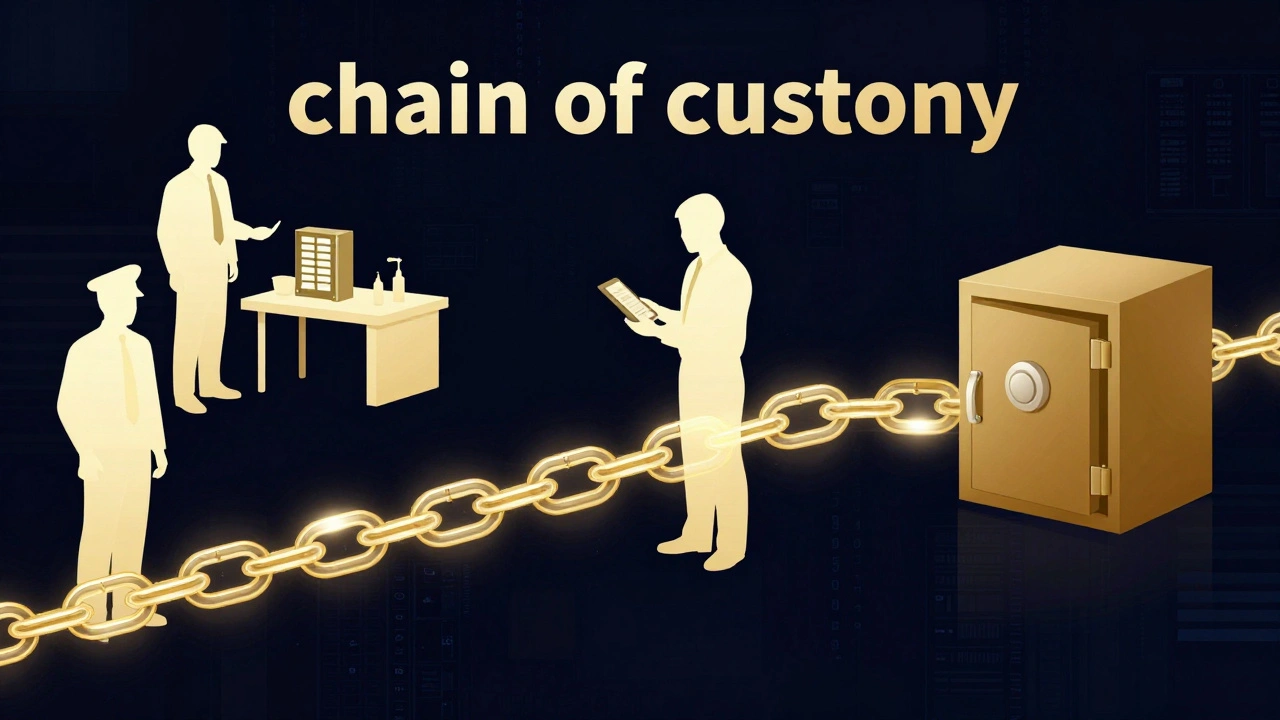
The movement of evidence-whether it’s a blood-stained shirt, a seized hard drive, or a weapon-is governed by a strict protocol known as the chain of custody. For years, this process relied on paper forms and manual entries, which were prone to human error, loss, and tampering. Today, sophisticated systems track every interaction with evidence, creating an immutable digital trail. Understanding how these logs work, what data they capture, and how modern technology enforces compliance is essential for anyone involved in law enforcement, forensic science, or legal proceedings.
The Core Purpose of Evidence Tracking
At its heart, an evidence tracker is a specialized system designed to monitor, log, and manage the lifecycle of evidence from the moment it is collected until it is presented in court or disposed of. The primary goal is to create a verifiable record that proves the evidence has been continuously controlled and remains uncompromised.
When you look at the foundational components of these systems, several critical elements emerge. First, the system records collection and intake information. This includes who collected the evidence, where it was found, and exactly when it was secured. Second, it securely stores digital files or physical items with strict access controls. Third, and perhaps most importantly, it documents every single person who accesses, moves, or shares the evidence. These updates form the chain of custody. Finally, the system provides audit trails and reporting features. These reports are what attorneys and judges review to determine if the evidence is trustworthy.
Without this rigorous documentation, the integrity of an investigation collapses. Courts require proof that no unauthorized individual altered, contaminated, or substituted the evidence. The access log serves as that proof, detailing who had the key to the locker, who viewed the file, and who signed for the transfer.
Step-by-Step: Building the Chain of Custody
The chain of custody process follows a structured sequence. It begins the second evidence is identified at a scene. Here is how the documentation unfolds:
- Initial Documentation: From the moment evidence is collected, comprehensive record-keeping starts. The initial entry captures the date, location, and a detailed description of the item. This forms the foundation for all subsequent records.
- Unique Identification: Each piece of evidence is assigned a unique identifier. This typically includes a case number, an exhibit number, and a brief description. Sometimes, barcodes or RFID tags are attached to physical items to ensure they can be scanned quickly and accurately.
- Transfer Logging: As evidence moves from the field to the lab, or from the lab to storage, each transfer is meticulously documented. The log records the date, time, location, and names of both the person releasing the item and the person receiving it. The recipient must acknowledge receipt, often via a digital signature.
- Observation and Remarks: Individuals handling evidence may note changes in condition, special precautions taken, or other relevant observations. For example, if a digital drive is imaged, the technician notes the hash value generated to prove the copy is identical to the original.
- Storage and Access Control: Proper storage is maintained through logs that document when evidence is placed in secure storage and when it is accessed. Every time someone opens a safe or views a file, the system records the date, time, reason for access, and the identity of the user.
Consistent and detailed documentation at each of these steps is essential. A gap in any link of this chain can lead to serious legal challenges.
Digital Evidence and Metadata Integrity
In the modern era, much of the evidence is digital. This introduces unique challenges. Digital files can be copied, altered, or deleted without leaving physical traces. To combat this, metadata plays a critical role. Metadata provides important information about digital files, such as who created them, when they were last modified, and whether they have been changed since ingestion.
In the context of chain of custody, metadata helps prove continuity of handling and data integrity. For instance, when a forensic analyst creates a bit-for-bit copy of a suspect's hard drive, they generate a cryptographic hash (like SHA-256). This hash acts as a digital fingerprint. If even one bit of data changes, the hash changes completely. By logging this hash in the evidence access log, investigators can prove that the evidence examined in court is identical to the evidence seized at the scene.
Access logs also track interactions with hosting environments like email servers or cloud storage. They record who viewed, copied, or modified data. This demonstrates that only authorized users handled the evidence, helping to maintain the authenticity required for legal admissibility.
Modern Technology Solutions for Tracking
Traditional paper-based systems are increasingly being replaced by advanced technology solutions. These tools reduce human error and enhance security. Here are some of the key innovations transforming evidence management:
| Technology | Function | Benefit to Chain of Custody |
|---|---|---|
| RFID & GPS Sensors | Real-time location monitoring | Tracks physical movement and storage conditions continuously |
| Blockchain | Tamper-proof documentation | Creates an immutable record that cannot be altered retrospectively |
| AI-Powered Logging | Automated verification | Reduces human input errors and flags inconsistencies automatically |
| Digital Signatures | Secure transfers | Provides legal proof of who accepted custody at specific times |
For example, blockchain-enabled evidence tracking ensures that every interaction is recorded on a distributed ledger. Once a block is added, it cannot be changed without altering all subsequent blocks, which would be immediately detectable. This creates a level of trust that paper logs simply cannot match. Similarly, AI-driven compliance checks can scan logs for missing fields or irregular patterns, alerting administrators before a problem becomes a courtroom disaster.
Software Systems and Operational Efficiency
Evidence tracking software solutions provide comprehensive management capabilities across the entire evidence lifecycle. Platforms like those offered by NiCE Public Safety or Tracker Products’ SAFE system allow users to log detailed information about each item, including its description, location, condition, and relevant case details.
These systems establish a digital chain of custody that automatically documents every interaction. From the moment an officer logs an item into the system, an immutable custody record is created. Real-time location tracking ensures staff always know where evidence is stored and who currently has custody. This visibility enables agencies to quickly identify missing or misplaced items and prevent tampering.
Furthermore, these systems support batch processing for multiple items, photo documentation with automatic metadata, and customizable evidence categories. This flexibility allows different types of agencies-from small municipal police departments to large federal laboratories-to tailor the system to their specific needs. The ability to access complete transfer history via mobile and desktop interfaces means that officers and analysts can update logs in real-time, right from the scene or the lab bench.

Legal Importance and Court Admissibility
The legal importance of evidence access logs cannot be overstated. When cases proceed to court, the chain of custody documentation serves as evidence of continuous control. It establishes the authenticity and reliability of the evidence. Prosecutors present this documentation as proof of proper handling.
Court systems increasingly scrutinize these records. Any breaks, inconsistencies, or gaps in the documented chain can result in evidence being deemed inadmissible. This is known as a "break in the chain." If a defense attorney can show that there was a period during which the evidence was unaccounted for, or that an unauthorized person had access, they can argue that the evidence may have been tampered with. Even if the actual evidence is genuine, the lack of a clear history undermines its credibility.
This legal reality has driven the adoption of sophisticated tracking systems. Agencies recognize that investing in robust evidence management infrastructure reduces liability risks and strengthens their cases. Regular audits and compliance checks verify that all procedures are being followed correctly and that documentation is complete and accurate.
Best Practices for Implementation
Implementing an effective evidence access logging system requires more than just buying software. Organizations must establish comprehensive protocols and train personnel accordingly. Here are some best practices to follow:
- Adopt Automated Logging: Use a Digital Evidence Management System (DEMS) with automated logging features. This ensures consistent, error-free documentation without relying on memory or manual note-taking.
- Use Unique Identifiers: Assign barcodes, QR codes, or digital hash values to each item. This creates foolproof tracking mechanisms that minimize misidentification.
- Centralize Storage: Implement centralized, access-controlled storage systems with permission-based visibility. Only authorized personnel should be able to see or access specific evidence items.
- Train Personnel: Regular training on evidence handling procedures is essential. Staff must understand their responsibilities in maintaining chain of custody integrity and how to use the tracking system correctly.
- Conduct Regular Audits: Perform routine audits to verify that logs are complete and accurate. Identify any discrepancies early and correct them before they impact a case.
By following these guidelines, organizations can ensure that their evidence management operations meet forensic and legal standards. The goal is to create a seamless, transparent process that withstands the toughest scrutiny.
What happens if there is a break in the chain of custody?
A break in the chain of custody means there is a gap in the documentation of who handled the evidence and when. This can lead to the evidence being deemed inadmissible in court because its integrity cannot be verified. Defense attorneys may argue that the evidence could have been tampered with or substituted during the unaccounted period.
How does blockchain improve evidence tracking?
Blockchain creates an immutable, tamper-proof record of every interaction with evidence. Once data is entered into the blockchain, it cannot be altered or deleted without detection. This provides a higher level of security and trust compared to traditional databases or paper logs, ensuring that the history of the evidence is authentic.
Why is metadata important for digital evidence?
Metadata contains information about the file itself, such as creation dates, modification times, and user identities. In evidence tracking, metadata helps prove that the digital file has not been altered since it was collected. Cryptographic hashes derived from metadata are used to verify the integrity of digital copies against originals.
What is the role of RFID in evidence management?
RFID (Radio Frequency Identification) tags allow for real-time tracking of physical evidence. They enable automatic logging of when an item enters or leaves a secure area, reducing manual entry errors and providing precise location data. This enhances security and ensures that every movement of the evidence is recorded instantly.
Can paper logs still be used for chain of custody?
While paper logs can still be used, they are increasingly discouraged due to their susceptibility to loss, damage, and tampering. Digital systems offer greater accuracy, searchability, and security. However, if paper logs are used, they must be meticulously maintained and cross-referenced with other records to ensure completeness and integrity.