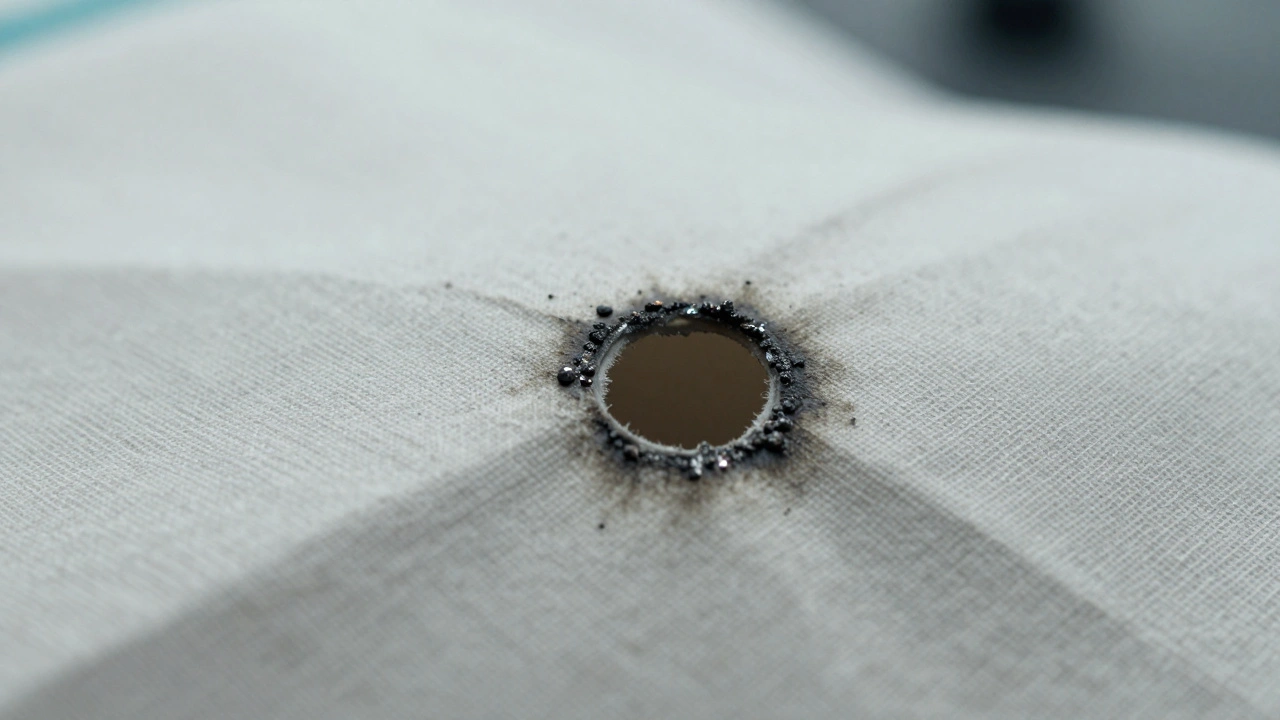
When a bullet leaves the barrel, it isn't "clean." It carries a cocktail of residues-lead, copper, brass, and burnt gunpowder. As the projectile hits a surface, it literally wipes these contaminants onto the target. This creates a dark ring that can tell us if the bullet was unjacketed lead or if it had a copper coat. It also helps us distinguish between the first target the bullet hit and subsequent surfaces it passed through. If you see a clear, heavy ring of residue, you're likely looking at the primary point of impact.
The Chemistry of Metal Transfer
Metal transfer happens because the friction of the barrel and the heat of the explosion leave microscopic particles on the bullet's surface. When that bullet strikes a target, those particles are transferred. In a typical casework scenario, forensic labs look for specific elements to determine the ammunition type. For example, vaporous lead (often described as lead smoke) and particulate metals like shavings of brass or copper are common markers.
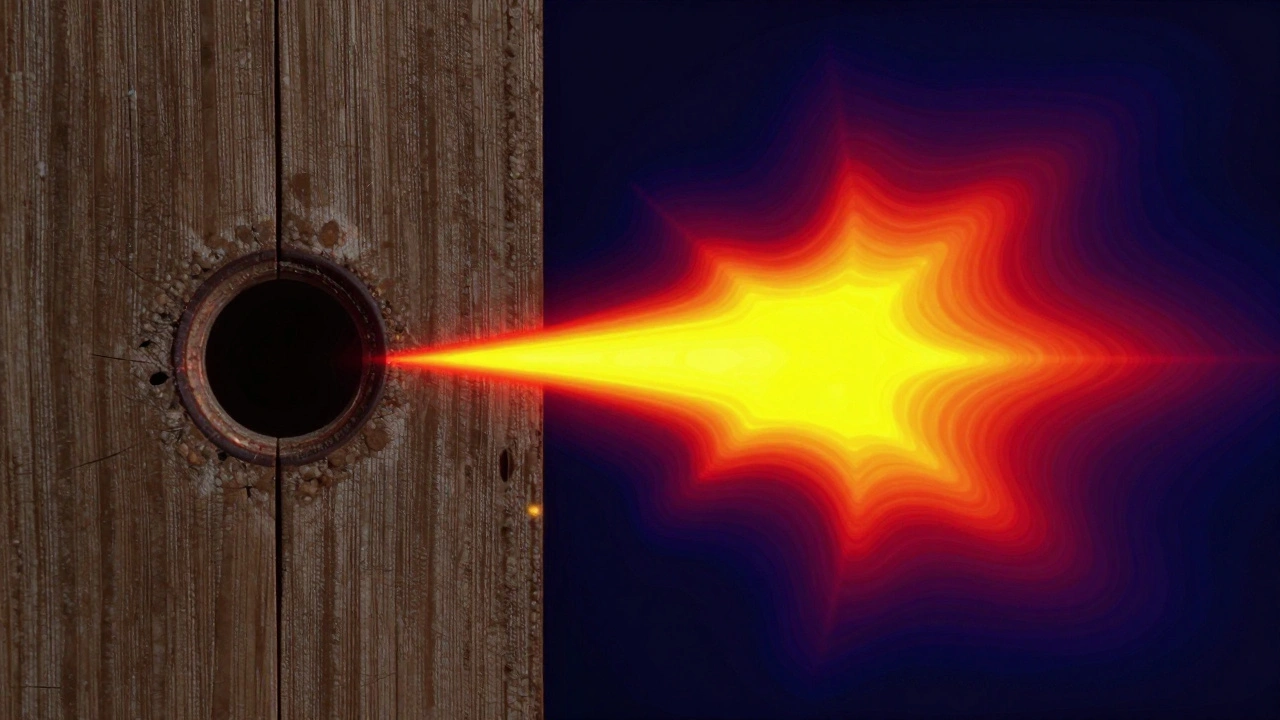
To get a precise read, examiners use X-ray fluorescence (XRF) analysis. This tool allows them to map the elemental composition of the wipe. If the XRF map shows a dense central ring of lead (Pb), it is a smoking gun that a lead projectile was used. This is a critical step in linking a recovered bullet to a specific piece of evidence, like a blood-stained shirt or a damaged wall.
The Complication of Polymer Wipe
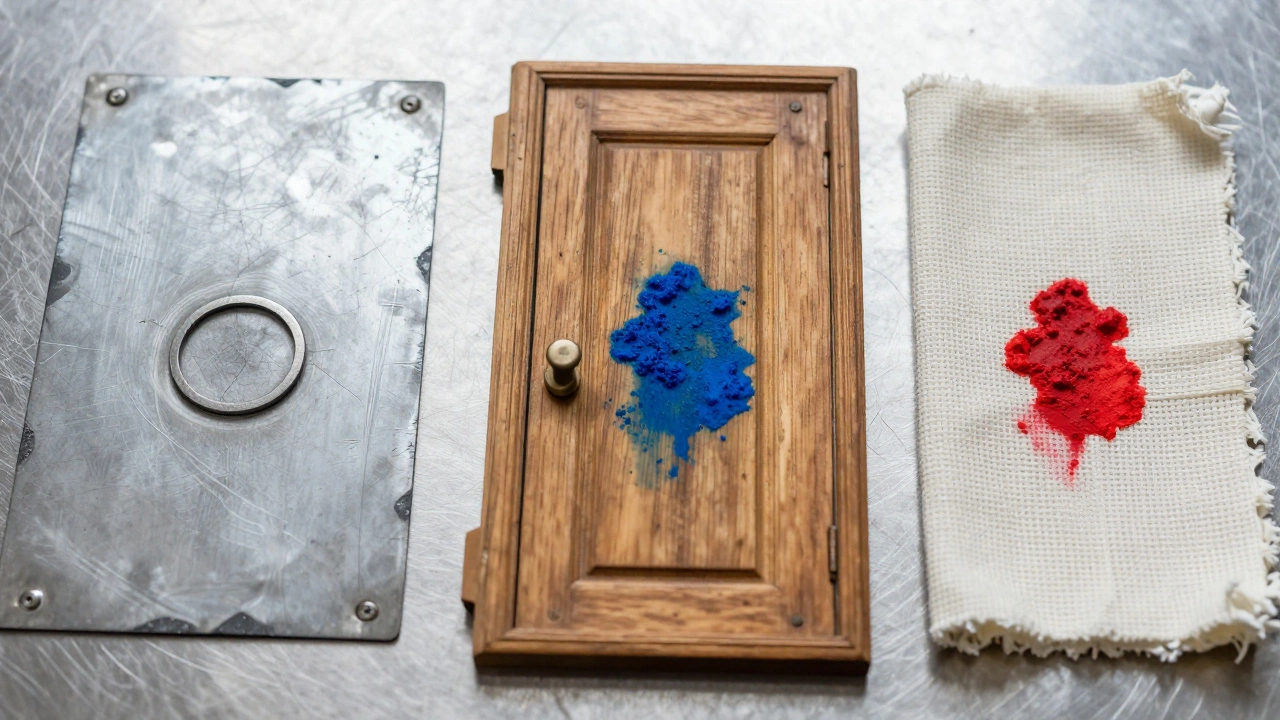
Not all bullets are made of metal. The rise of polymer-jacketed ammunition, such as Syntech® TSJ, has introduced a new variable: polymer wipe. Unlike the metallic grey or black of traditional wipe, polymer wipe leaves distinct colored marks. Research shows that polymer wipe appears on about 68% of wood substrates after discharge, making it a fairly reliable marker when using these specific rounds.
Here is where it gets tricky for investigators. Polymer fragments are expelled from the muzzle at incredibly high velocities. Because they have more mass than standard gunshot residue (GSR), these fragments can actually punch through woven cloth. This means you might find polymer residue on both sides of a fabric target. If an examiner isn't careful, they might misidentify which side was the entry point. Understanding the behavior of these polymers is the difference between a correct trajectory reconstruction and a flawed one.
| Feature | Metal Bullet Wipe | Polymer Wipe (e.g., TSJ) |
|---|---|---|
| Composition | Lead, Copper, Brass, Carbon | Synthetic Polymers/Plastics |
| Visual Appearance | Dark/Grey/Black ring | Distinct colored smearing |
| Target Behavior | Usually stays on entry side | Can penetrate through cloth targets |
| Primary Detection | XRF Mapping / Elemental Analysis | Visual Inspection / Chemical Analysis |
Determining Muzzle-to-Target Distance
Distance determination is one of the most requested tasks in ballistics casework. Examiners don't just guess; they use a combination of GSR patterning and bullet hole morphology. When a firearm is discharged close to a target, the fabric catches not only the bullet wipe but also the propellant residues. By comparing the pattern on the evidence to "test fires" from the suspect weapon using the same ammunition, they can narrow down the distance.
Interestingly, the type of gunpowder used can be a fingerprint. Some law enforcement agencies use propellants "doped" with specific trace elements. By using elemental imaging, forensic scientists can identify these chemical signatures, potentially linking a shooting to a specific agency's ammunition supply.
Advanced Lead Association Techniques
Sometimes the goal isn't just to find the distance, but to prove that a specific fragment found in a victim's body came from a specific bullet. This requires moving beyond basic visual checks. Modern labs use Inductively Coupled Plasma Mass Spectrometry (ICP-MS) to create a chemical signature of the lead.
While older methods like the FBI's Compositional Analysis of Bullet Lead (CABL) required larger samples, MC-ICP-MS (Multi-Collector ICP-MS) can analyze lead isotopes using tiny amounts of material. This is a game-changer because it doesn't damage the evidence. Lead isotopes are far more discriminating than simple elemental ratios. While this won't necessarily link a bullet to a specific box of cartridges, it can definitively exclude a candidate bullet or prove that a fragment in a wound track matches a recovered projectile.
Practical Application in Case Reconstruction
In a real-world casework scenario, the process is systematic. An examiner will start by checking the feed ramp and bore of the suspect firearm, often using bore brushes to clear residues for a clean inspection. They then look for bullet wipe on various substrates. It's not just about fabric; bullet wipe has been identified in wood perforations and even in ricochet marks on automotive sheet metal or concrete.
The presence or absence of this wipe is the key to directionality. If you have a hole in a piece of plywood and the wipe is on the front side, the bullet entered from the front. If there is a smudge on the back but no ring on the front, you might be dealing with a ricochet or a secondary impact. When combined with the bullet wipe data, these observations allow investigators to build a 3D model of how the event unfolded.
Does bullet wipe occur at all firing distances?
Yes, bullet wipe is caused by the residue already present on the bullet as it exits the barrel. Unlike gunpowder soot or stippling, which disappear as the distance increases, the residue on the bullet's surface travels with it, meaning a wipe ring can form regardless of how far the shooter was from the target.
How can you tell if a bullet was lead or copper-jacketed using wipe?
Elemental imaging, specifically X-ray fluorescence (XRF), is used. A lead projectile will leave a distinct lead (Pb) signature in the central ring of the wipe, whereas a copper-jacketed round will show high concentrations of copper (Cu) and potentially zinc (for brass jackets).
Why is polymer wipe potentially misleading for entry-side determination?
Polymer fragments from jackets like Syntech® TSJ are ejected at high speeds and have more mass than standard GSR particles. This allows them to pass completely through thin materials like clothing, leaving residue on both the entry and exit sides of the fabric.
What is the difference between ICP-MS and MC-ICP-MS in lead analysis?
ICP-MS is used to analyze minor and trace elements to create a chemical signature. MC-ICP-MS (Multi-Collector) goes a step further by analyzing lead isotopes. Isotopic analysis is significantly more precise and can discriminate between bullets and fragments more effectively than elemental ratios alone.
Can bullet wipe be found on hard surfaces?
Absolutely. While most common in fabric and wood, bullet wipe is frequently documented in cases involving ricochets off automotive sheet metal and concrete materials, providing critical clues about the angle of impact.
Next Steps for Investigation
If you are processing a scene and suspect bullet wipe is present, the first priority is preservation. Do not scrub or chemically treat the target material before it is documented by a forensic photographer. For labs, the next step is usually a transition from visual inspection to XRF mapping to confirm the elemental makeup of the residue.
If you encounter residue on both sides of a target, stop and consider the ammunition type. If the projectiles were polymer-jacketed, the "exit side" residue might actually be fragments that punched through. In these cases, look for the morphology of the hole-the way the fabric is pushed or torn-to confirm the direction of travel.