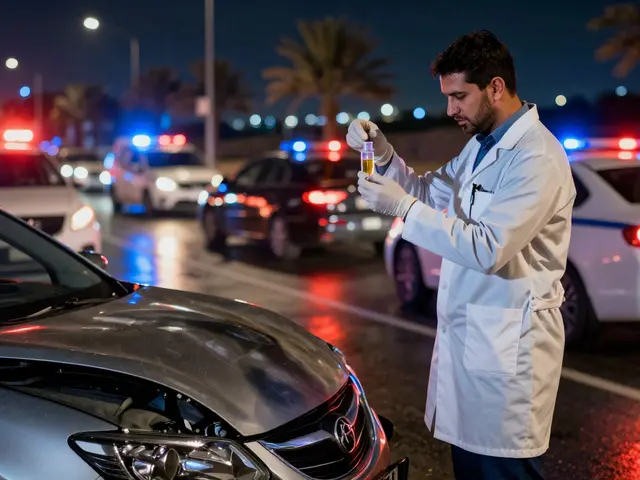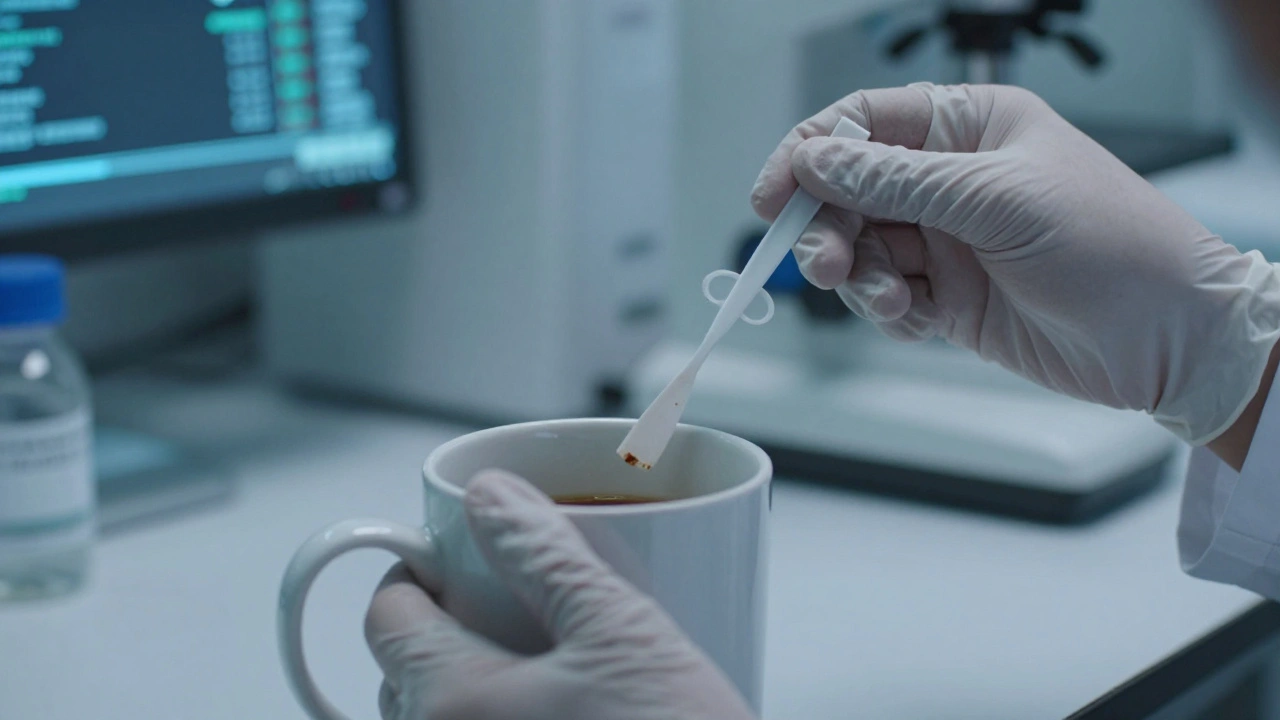
Imagine you pick up a coffee mug at a crime scene. You swab it, run the sample through the lab, and get a full DNA profile. Now imagine doing the exact same thing with a mug held by someone else for the same amount of time, and getting nothing but background noise. This isn't a glitch in the machine. It is shedding propensity, defined as the individual variation in how much DNA a person deposits on surfaces they touch. For decades, forensic scientists have known that people differ wildly in how much genetic material they leave behind, but understanding exactly why-and what it means for a case-is still one of the trickiest parts of modern forensics.
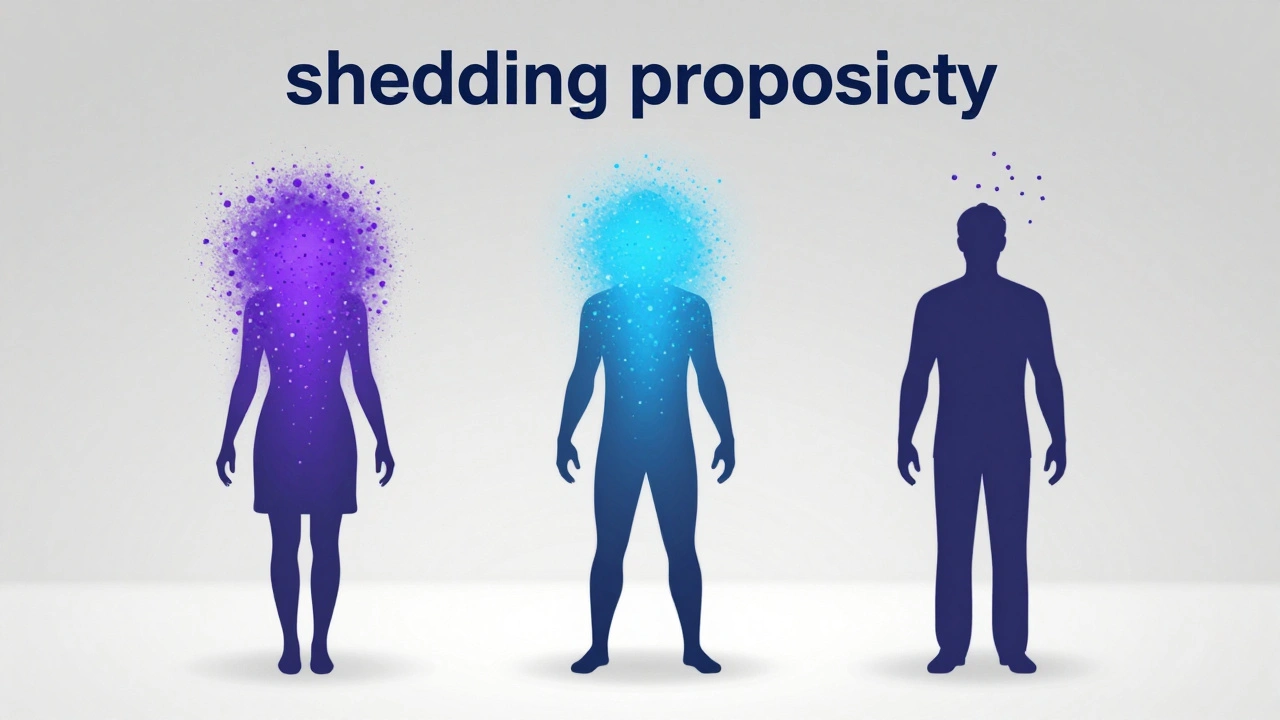
The concept emerged from early research into "touch DNA," which proved we could recover usable profiles from fingerprints and touched surfaces long after the fact. Since those initial discoveries, the idea that some people are "good shedders" while others are "poor shedders" has become common shorthand in labs. But recent data shows this label is far too simple. Shedding isn't just a fixed trait like eye color; it is a fluid, context-dependent behavior influenced by your habits, your skin, and even how often you touch your own face.
Defining Shedding Propensity in Forensic Science
To measure shedding propensity, researchers need a standardized baseline. They don't just ask volunteers to "touch something." They create controlled environments where variables are locked down. A typical protocol involves donors washing their hands with a specific soap, waiting a set period (often 30 to 60 minutes), and then touching a test object-like a glass slide or metal handle-for a fixed duration under controlled pressure.
After the touch, the surface is swabbed, and the DNA is extracted and quantified using techniques like quantitative PCR (qPCR). The result is measured in picograms or nanograms of human DNA. The National Institute of Justice (NIJ) and collaborators have released datasets, such as the ICPSR study 38648, specifically designed to map these population distributions. These studies reveal that shedding propensity is not a binary switch. It is a continuous spectrum. Some individuals consistently deposit high amounts of DNA, while others leave traces so faint they fall below the detection limit of current technology.
This variability is staggering. In standardized experiments, a single touch can yield anywhere from zero detectable DNA to roughly 150 nanograms. That range covers everything from a blank result to enough material for a full Short Tandem Repeat (STR) profile. The key takeaway for investigators is that the absence of DNA does not prove absence of contact, and the presence of DNA does not automatically prove direct handling.
Good Shedders vs. Poor Shedders: The Myth of Fixed Categories
In the early days of touch DNA research, scientists grouped people into two camps: "good shedders" and "poor shedders." Good shedders were those who consistently left multiple nanograms of DNA per swab. Poor shedders left little to nothing, often below 0.1 nanograms. These categories were useful for explaining outliers in small studies, but they have significant limitations.
Recent expert commentary, including reviews by Meakin and Jamieson, highlights that these labels are protocol-dependent. A "good shedder" in one lab's experiment might appear average in another if the touch duration or surface type changes. More importantly, intra-individual variability-the difference in DNA left by the same person on different days-often rivals inter-individual variability. This means you cannot reliably predict how much DNA someone will leave based solely on their historical "shedder status."
| Category | Typical DNA Yield | Key Characteristic | Limitation |
|---|---|---|---|
| Good Shedder | > 1 ng per swab | Consistently leaves detectable profiles | Can vary significantly day-to-day |
| Poor Shedder | < 0.1 ng per swab | Often yields no profile | May shed heavily under different conditions |
| Intermediate | 0.1 - 1 ng per swab | Variable results | Hard to classify definitively |
Relying on these static categories can lead to misinterpretation in court. If an expert claims a suspect is a "poor shedder" and therefore unlikely to have left DNA, they are ignoring the possibility that behavioral factors on the day of the incident changed that status. Modern forensic practice is moving away from rigid labels toward probabilistic models that account for this fluidity.
Biological and Behavioral Drivers of DNA Transfer
If shedding isn't just genetics, what drives it? Researchers have looked at epidermal turnover rates, skin dryness, sweating, and even hormonal status. While these biological factors play a role, they are hard to quantify and rarely tell the whole story. A more surprising driver is behavior.
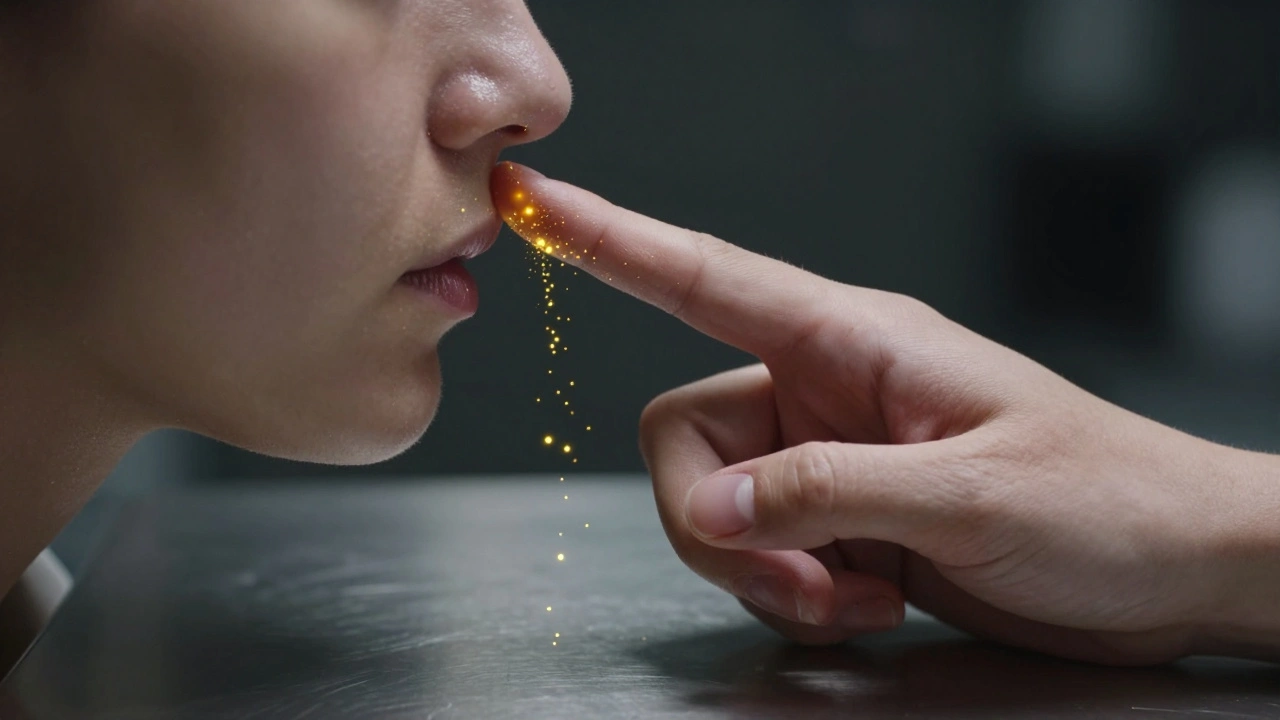
A pivotal 2021 study published in a leading forensic genetics journal (PubMed ID 34781198) proposed that the amount of self-DNA on our hands is heavily influenced by facial touching. We touch our faces dozens of times an hour-rubbing our noses, scratching our chins, adjusting glasses. The face acts as a primary reservoir of self-DNA. When we touch our face, we transfer cells to our fingertips and palms. Subsequent touches of objects then deposit that accumulated DNA.
This finding shifts the focus from intrinsic biology to habitual action. An individual who frequently touches their face may have a higher "shedding propensity" on a given day simply because their hands are loaded with facial cells. Conversely, someone who avoids touching their face might appear to be a poor shedder, even if their skin physiology suggests otherwise. This behavioral link explains why shedding levels can fluctuate so dramatically within the same person over short periods.
The Impact of Time, Handwashing, and Environment
Time is a critical variable in shedding propensity. Studies assessing temporal dynamics show that handwashing can temporarily reduce the amount of DNA on hands. However, re-accumulation happens quickly. Within tens of minutes of engaging in normal daily activities, many individuals return to pre-wash DNA levels due to environmental recontamination and self-touching.
Environmental conditions also dictate how much DNA persists once it is deposited. The NIJ notes that cool, dry indoor environments preserve touch DNA far better than hot, humid outdoor settings. UV exposure, temperature fluctuations, and microbial activity degrade DNA outdoors, sometimes rendering it undetectable within hours. Indoors, partial profiles can sometimes be recovered from surfaces days or even weeks after deposition.
Surface type matters equally. Non-porous, smooth surfaces like stainless steel and glass tend to yield higher recovery rates. Porous materials, such as fabric or wood, absorb cells, making them harder to swab effectively. This interaction between surface, environment, and time means that a "good shedder" might leave no trace on a sun-bleached wooden railing, while a "poor shedder" leaves a clear profile on a refrigerated steel door.
Implications for Forensic Interpretation and Court
How should this complexity translate to the courtroom? Experts like Gill and Taylor argue that we must move beyond categorical statements about shedder status. Instead, interpretations should rely on empirically derived transfer and persistence probabilities. This means asking: "Given the surface type, the time elapsed, and the nature of the contact, what is the probability of observing this DNA profile if the suspect did touch the item versus if they did not?"
This approach requires robust statistical modeling, often using likelihood ratios. It acknowledges uncertainty rather than hiding behind simplistic labels. Courts in the UK and Australia have seen cases where touch DNA was misinterpreted as proof of direct contact without accounting for secondary transfer or variable shedding. Recent guidance from bodies like the UK Forensic Science Regulator emphasizes that experts must clearly communicate these limitations to juries.
For practitioners, this means documenting context meticulously. Did the suspect wear gloves? How long did they hold the item? Was the surface exposed to the elements? These details are often more valuable than a generalized assessment of whether a person is a "good" or "poor" shedder. The goal is to build a narrative supported by data, not assumptions.
Future Directions in Shedding Research
As of 2026, the field is looking toward more granular solutions. Large-scale population studies aim to capture diverse demographic representations, moving beyond small volunteer groups. Researchers are also exploring advanced biomarkers, such as methylation patterns or RNA markers, to distinguish between self-shed cells and secondary transfers. These technologies could help clarify the origin of mixed DNA profiles, reducing ambiguity in complex cases.
Standardization remains a hurdle. Labs need agreed-upon protocols for measuring shedding-consistent touch durations, pressures, and surfaces-to allow cross-laboratory comparability. Until then, shedding propensity will remain a powerful but messy tool. It explains the chaos of touch DNA, but it demands careful, probabilistic handling to ensure justice is served accurately.
What is shedding propensity?
Shedding propensity is the individual variation in how much DNA a person deposits on surfaces they touch. It varies widely between people and even within the same person over time, influenced by behavior, biology, and environmental factors.
Can you predict if someone is a good or poor shedder?
Not reliably. While some people consistently leave more DNA than others, shedding is highly context-dependent. Factors like recent handwashing, frequency of facial touching, and skin condition can change a person's shedding level from day to day.
Does touching your face increase DNA shedding?
Yes. Research shows that frequent facial touching transfers cells from the face to the hands, acting as a reservoir for self-DNA. This behavioral habit can significantly increase the amount of DNA available for transfer to other surfaces.
Which surfaces retain touch DNA best?
Non-porous, smooth surfaces like stainless steel and glass generally yield higher recovery rates. Porous materials like fabric or wood absorb cells, making them harder to detect. Indoor, cool, and dry environments also preserve DNA better than outdoor conditions.
Does the absence of DNA mean a person didn't touch an item?
No. Due to high variability in shedding propensity, a "poor shedder" or temporary low-shedding state can result in no detectable DNA despite direct contact. Absence of evidence is not evidence of absence in touch DNA analysis.
How do forensic experts interpret shedding propensity in court?
Modern experts avoid rigid labels like "good" or "poor" shedder. Instead, they use probabilistic models and likelihood ratios that account for specific case conditions, such as surface type, time elapsed, and contact duration, to evaluate the strength of the DNA evidence.