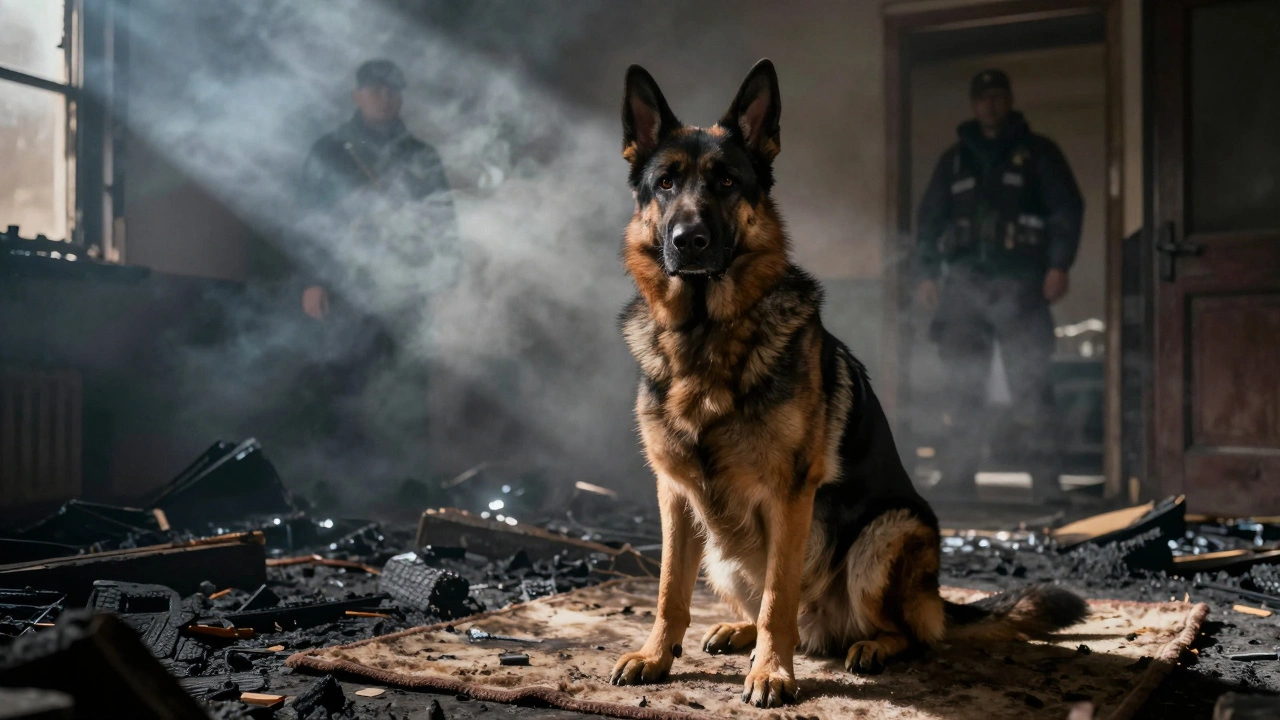
Imagine standing in the charred remains of a house. The air is thick with smoke residue, the floorboards are warped, and every surface looks identical to the naked eye. To an untrained investigator, finding the specific spot where gasoline was poured hours ago seems impossible. But then, a German Shepherd trots into the room, sniffs the air, and sits firmly on one particular square foot of carpet. That single action can mean the difference between a closed case and a convicted arsonist.
This isn't magic; it's science. Canine Accelerant Detection (CAD) is a forensic methodology using specially trained dogs to identify trace residues of flammable liquids at fire scenes. Since its operational introduction in 1996, this technique has become a cornerstone of modern arson investigations. Yet, despite their effectiveness, these teams face rigorous scrutiny. How do we know the dog didn't just guess? How does a biological nose hold up in a courtroom against electronic sniffers or lab results? Understanding the deployment and validation of these units requires looking past the cute factor and diving into the strict protocols that keep this evidence admissible.
The Science Behind the Snout
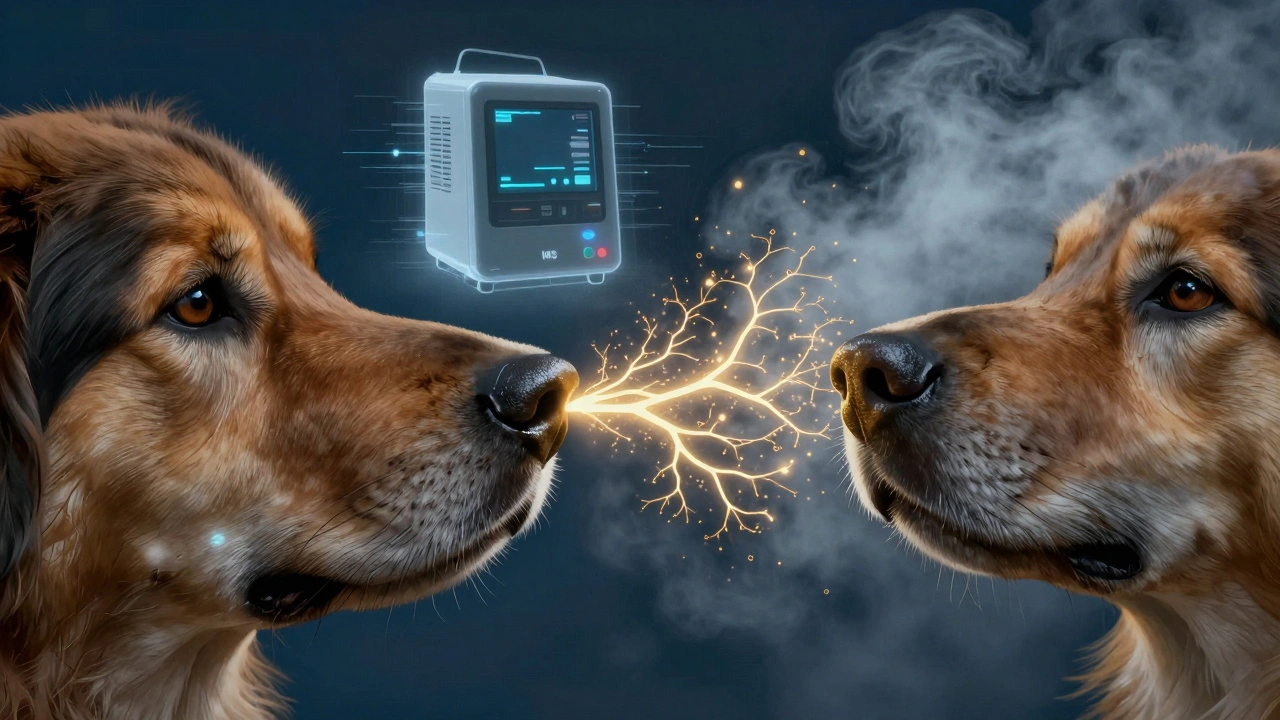
You might wonder if a dog’s nose is actually better than high-tech equipment. In many cases, yes. Electronic sniffers-devices like the Ion Mobility Spectrometer-are handy tools, but they have blind spots. They struggle with humidity, extreme temperatures, and background chemical noise from burning plastics. A dog, however, operates differently.
Research published in PubMed highlights just how sensitive these animals are. In controlled evaluations, accelerant detection canines reliably identified potential accelerants at amounts as low as 0.01 microliters of gasoline, kerosene, or isopars. To put that in perspective, 0.01 microliters is roughly the size of a grain of sand. This sensitivity matches or even exceeds the limits of purge-and-trap recovery methods used in professional laboratories.
The study tested two canines across sample paths ranging from 25 to 40 feet. The dogs were asked to find traces applied to both burned and unburned wood and nylon carpeting. Both dogs alerted correctly on spots containing 0.01 microL or more of all three accelerants studied. This proves that the canine’s olfactory system acts as a highly sophisticated, portable analytical instrument capable of detecting minute quantities of fuel residues that would otherwise vanish into the background chaos of a fire scene.
| Feature | Accelerant Detection Canine | Electronic Sniffer (IMS) |
|---|---|---|
| Detection Threshold | ~0.01 microliters | Variable, often higher |
| Environmental Impact | Minimal (adapts to conditions) | High (affected by humidity/temp) |
| Background Interference | Low (trained to ignore styrene/pyrolysis) | High (false positives common) |
| Cost per Use | Handler salary + maintenance | Device purchase + battery/replacement |
It’s not perfect, though. Dogs can occasionally alert on background materials, such as styrene residues found in carpets or compounds formed during partial pyrolysis. This is why handler training is just as critical as the dog’s ability. The handler must interpret the behavior correctly and distinguish a true positive from a false alarm caused by environmental contaminants.
Training for Precision and Adaptability
A well-trained CAD team doesn’t just smell "gasoline." They are imprinted to recognize a complex spectrum of accelerants. Providers like Adlerhorst International, LLC train canines to detect everything from diesel and jet fuel to charcoal lighter fluid and turpentine. The goal is to match the agency’s regional needs. If your area sees more propane tank explosions, your dog trains for propane. If it’s mostly residential arson with lighter fluid, the training shifts accordingly.
The core philosophy here is continuous reinforcement. You don’t want a dog fixated on just one scent profile. Handlers use advanced imprinting techniques to introduce complex scent mixtures. This ensures the canine can distinguish target accelerants from the thousands of other odors present at a fire scene. Think of it like teaching someone to find a specific voice in a crowded stadium. The dog learns to ignore the crowd (background smells) and focus only on the target (accelerant).
Crucially, modern training avoids aversive methods. Aversive training-using shock collars or physical correction-can create anxiety or unreliable behaviors. Instead, handlers use positive reinforcement exclusively. When the dog alerts correctly, they get a reward. This builds confidence and consistency, which is vital when the stakes are legal prosecution.
Certification Standards and Blind Testing
If you’re going to use a dog’s nose as evidence in court, you need proof that the dog is reliable. This is where organizations like the Canine Accelerant Detection Association (CADA) come in. CADA serves as the primary professional body maintaining standards for handler certification and team validation. They ensure that teams across jurisdictions, from Hertfordshire Fire and Rescue to US-based departments, operate under the same rigorous guidelines.
Certification isn’t a one-time event. It’s a multi-layered process. The Bureau of Alcohol, Tobacco, Firearms, and Explosives (ATF) established testing protocols in 2010 that outline three main goals for Phase 2 certification:
- The canine must detect the odors to which it was imprinted.
- The ADC team must search and clear an area systematically, exposing the dog to all zones.
- The handler must accurately interpret the canine’s change in behavior upon final response.
Teams must achieve a 100% test score to pass. There is no room for error in certification. But the most critical part of this process is blind testing. In a blind test, the handler does not know where the accelerant is hidden. This eliminates handler bias. If the handler knows the location, they might unconsciously cue the dog through body language or tone. Blind testing ensures the dog’s response is based purely on its detection ability.
Recertification happens regularly. Skills degrade over time, and new accelerants enter the market. Regular drills replicate real arson investigations, complete with environmental distractions. These drills allow handlers to evaluate search efficiency and provide immediate feedback, reinforcing the learning cycle.
Legal Admissibility: Daubert vs. Frye
Getting a dog to sit on a piece of carpet is one thing. Getting a judge to accept that sit as evidence is another. For CAD evidence to be admitted in court, it must satisfy judicial standards for scientific evidence. Depending on the jurisdiction, this means passing either the Daubert standard or the Frye standard.
The Daubert standard is more common in federal courts. It asks five key questions:
- Has the methodology been tested?
- Has it been peer-reviewed?
- What is the known error rate?
- Are there standards controlling the technique?
- Is it generally accepted in the scientific community?
To meet Daubert criteria, fire investigation dog teams must maintain comprehensive training records. Every session, every proficiency test, and every improvement must be documented. Judges want to see a paper trail that proves the dog wasn’t just guessing that day. The Frye standard, used in some state courts, is slightly simpler: it requires that the method be generally accepted in the relevant scientific community. CADA certification and adherence to NFPA 921 standards help satisfy this requirement.
However, there’s a catch. According to FEMA documentation citing NFPA 921 (2011), unconfirmed laboratory canine alerts should not be considered validated. This means the dog’s alert is a starting point, not the finish line. It flags an area for further investigation, but it doesn’t stand alone as conclusive proof of arson.
Validation Through Laboratory Confirmation
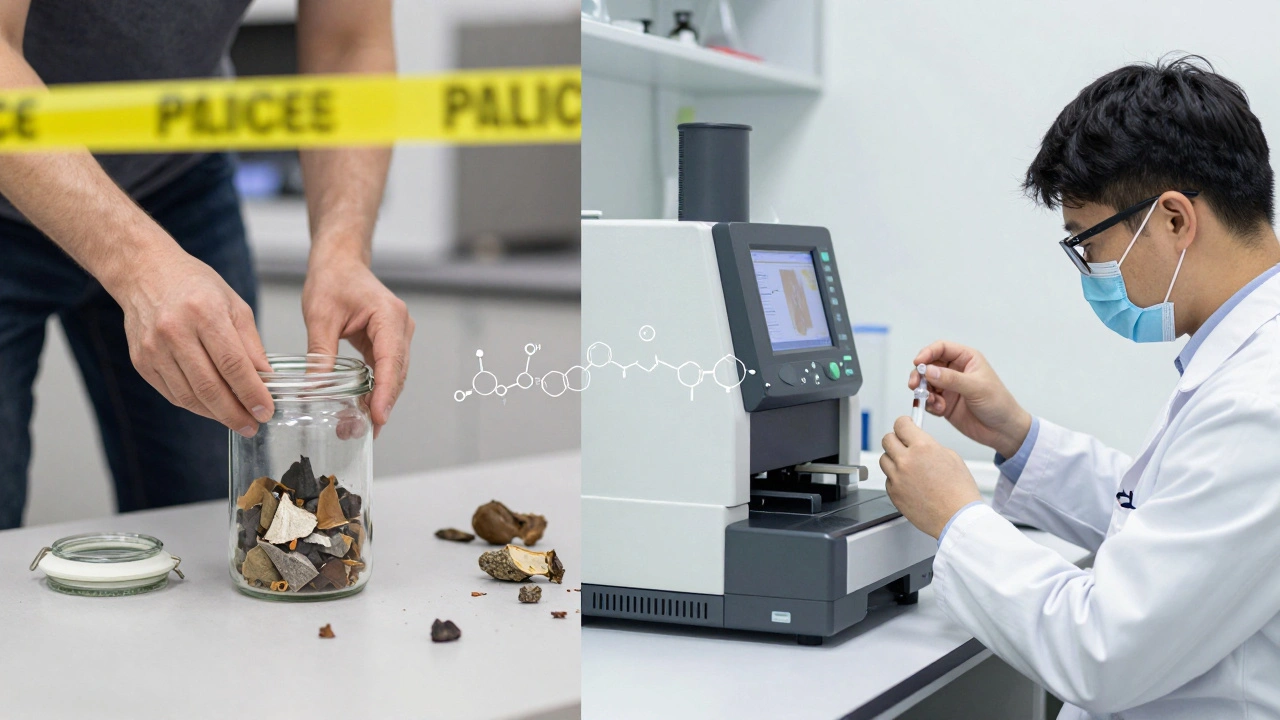
This brings us to the dual-verification system. Once a canine alerts to a specific area, investigators collect fire debris samples from that exact spot. These samples are sent to a forensic laboratory for Gas Chromatography-Mass Spectrometry (GC-MS) analysis. GC-MS is the gold standard for identifying chemical compounds. It separates the mixture of chemicals in the debris and identifies the specific accelerant.
It is highly preferable-and often legally necessary-that fire debris evidence be confirmed by the laboratory before it is entered into evidence. The dog narrows the search area from hundreds of square feet to a few inches. The lab confirms the presence of the accelerant chemically. This integration creates a robust forensic conclusion.
In some cases, handheld electronic devices are used as secondary verification. After a canine alerts, a handler might run an IMS device over the same spot. If the device also registers a spike in hydrocarbons, it adds another layer of reliability. However, because electronic devices have higher false-positive rates, the combination of canine alert + lab confirmation remains the strongest approach.
Multiple canines can also be deployed simultaneously at complex scenes. If two independent dogs, trained by different handlers, alert to the same general area, the cross-verification strengthens the investigative foundation significantly. This reduces the likelihood of a single dog making a mistake or being influenced by a specific handler’s bias.
Practical Deployment Strategies
Deploying a CAD team isn’t just about letting the dog off the leash. It requires careful planning. Handlers walk the scene systematically, ensuring the dog is exposed to all areas without missing spots. The search pattern depends on the structure’s layout. In open spaces, grid patterns work best. In cluttered rooms, linear searches along walls are more effective.
Handlers also use data from previous investigations to tailor their approach. If trends show certain accelerants are more common in local arson cases, those scents are emphasized in pre-scene preparation. This keeps the dog sharp on the most likely targets.
One major pitfall to avoid is rushing the process. A dog needs time to orient itself to the environment. Introducing the dog too quickly can cause stress, leading to missed alerts or false positives. Patience is key. The handler must read the dog’s body language-changes in ear position, tail wagging, or breathing rate can indicate a developing alert long before the dog sits.
How sensitive are accelerant detection dogs compared to lab tests?
Accelerant detection dogs can detect residues as low as 0.01 microliters, which matches or exceeds the sensitivity of standard laboratory purge-and-trap methods. This makes them highly effective for initial screening of large fire scenes.
Is a dog's alert enough to convict an arson suspect?
No. Under NFPA 921 standards, a canine alert alone is not considered validated evidence. It must be confirmed by laboratory analysis, such as GC-MS, to be admissible in most criminal proceedings.
What is the difference between Daubert and Frye standards?
The Daubert standard evaluates whether the methodology is tested, peer-reviewed, has known error rates, and follows standards. The Frye standard simply requires that the method be generally accepted in the scientific community. Daubert is more detailed and common in federal courts.
Why is blind testing important for certification?
Blind testing ensures the handler does not know where the accelerant is hidden. This prevents unconscious cues from the handler influencing the dog’s behavior, proving the dog’s detection ability is genuine and unbiased.
Can electronic sniffers replace detection dogs?
Not entirely. Electronic sniffers are affected by humidity, temperature, and background interference, leading to higher false-positive rates. Dogs offer superior sensitivity and adaptability in complex fire environments, though electronics can serve as useful secondary verification.