When a body is found in the woods, burned beyond recognition, or scattered across a disaster site, standard identification methods fail. Fingerprints are gone. Dental records don't match because the teeth are destroyed. DNA might be degraded by heat or time. In these moments, law enforcement turns to a specialist who speaks the language of bone. This is the work of a forensic anthropologist, a scientist trained to extract identity and history from the human skeleton when all else is lost.
You might think this job is just about picking bones for TV crime shows. The reality is far more rigorous. It involves deep anatomical knowledge, archaeological precision, and statistical analysis. These specialists help solve cold cases, identify victims of mass disasters, and document human rights abuses. If you are curious about what it takes to become one, or how they actually read a skeleton like a book, here is the breakdown.
The Core Job: Building a Biological Profile
The primary goal of a forensic anthropologist is not to determine cause of death-that is the job of a forensic pathologist. Instead, their main task is to create a biological profile. Think of this as a missing person poster made from bone data. They analyze the remains to estimate four key traits: age at death, sex, stature (height), and ancestry.
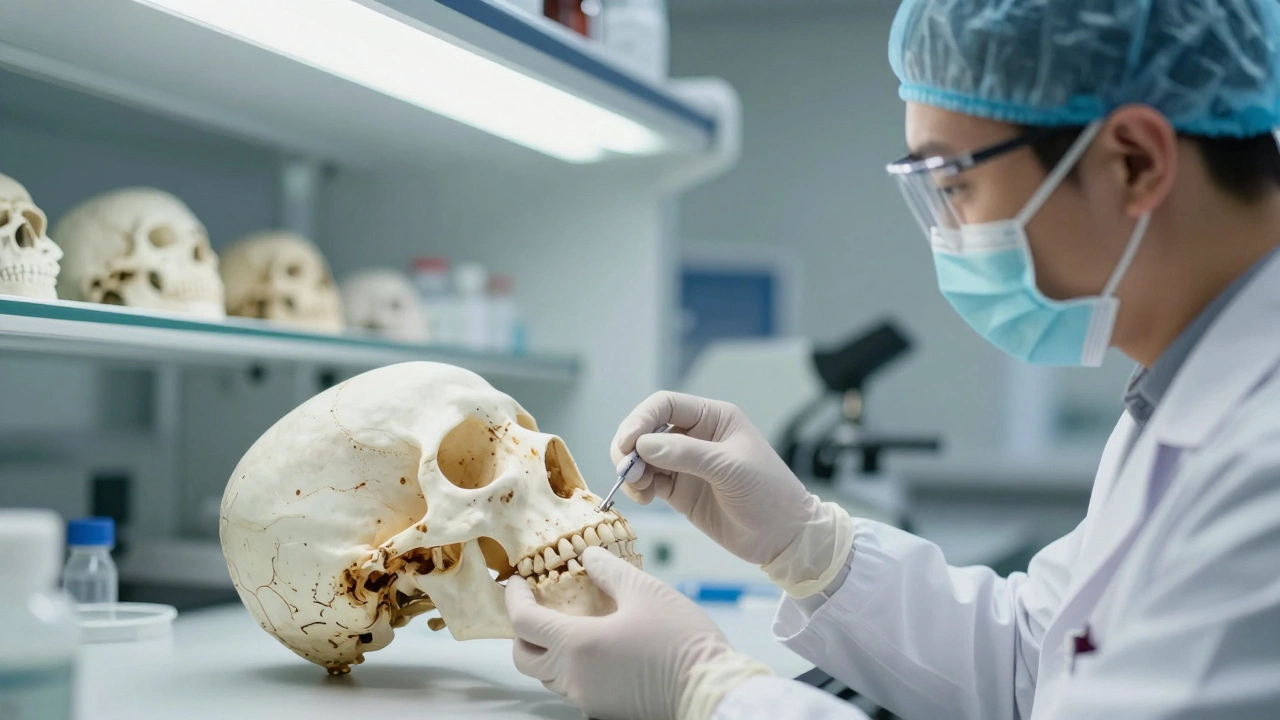
- Sex Determination: The pelvis is the most reliable indicator. The shape of the pelvic inlet and the subpubic angle differ significantly between males and females due to childbirth adaptations in women. The skull also offers clues, such as brow ridge prominence and mastoid process size.
- Age Estimation: For children, dentists look at tooth eruption patterns. For adults, scientists examine the pubic symphysis (where the hip bones meet) and the auricular surface of the ilium. These areas change predictably as cartilage ossifies and degrades over decades.
- Stature Calculation: Long bones like the femur, tibia, and humerus correlate strongly with height. Forensic anthropologists use regression formulas based on population-specific databases to calculate living height from skeletal length.
- Ancestry Assessment: Features like nasal aperture shape, facial projection, and zygomatic arch structure can suggest ancestral background. This helps narrow down missing persons lists in databases like NamUs (National Missing and Unidentified Persons System).
This profile transforms an unknown set of bones into a specific person description. Investigators can then cross-reference this data with local missing persons reports to find potential matches.
Reading Trauma and Time Since Death
Beyond basic identification, these specialists analyze trauma. They distinguish between injuries that happened before death (ante-mortem), during death (peri-mortem), and after death (post-mortem). A healed fracture indicates past trauma, while a fresh break suggests violence at the time of death. Bullet holes, cut marks, and blunt force impacts leave distinct signatures on bone that can reconstruct the events leading to death.
They also assess taphonomy, which is the study of what happens to remains after death. Was the body buried? Did animals scatter the bones? Was it exposed to fire or water? By analyzing soil composition, insect activity, and bone weathering stages, a forensic anthropologist can estimate the postmortem interval (PMI)-how long the person has been dead. This timeline is crucial for alibi verification and suspect interrogation.
The Toolkit: Science Meets Archaeology
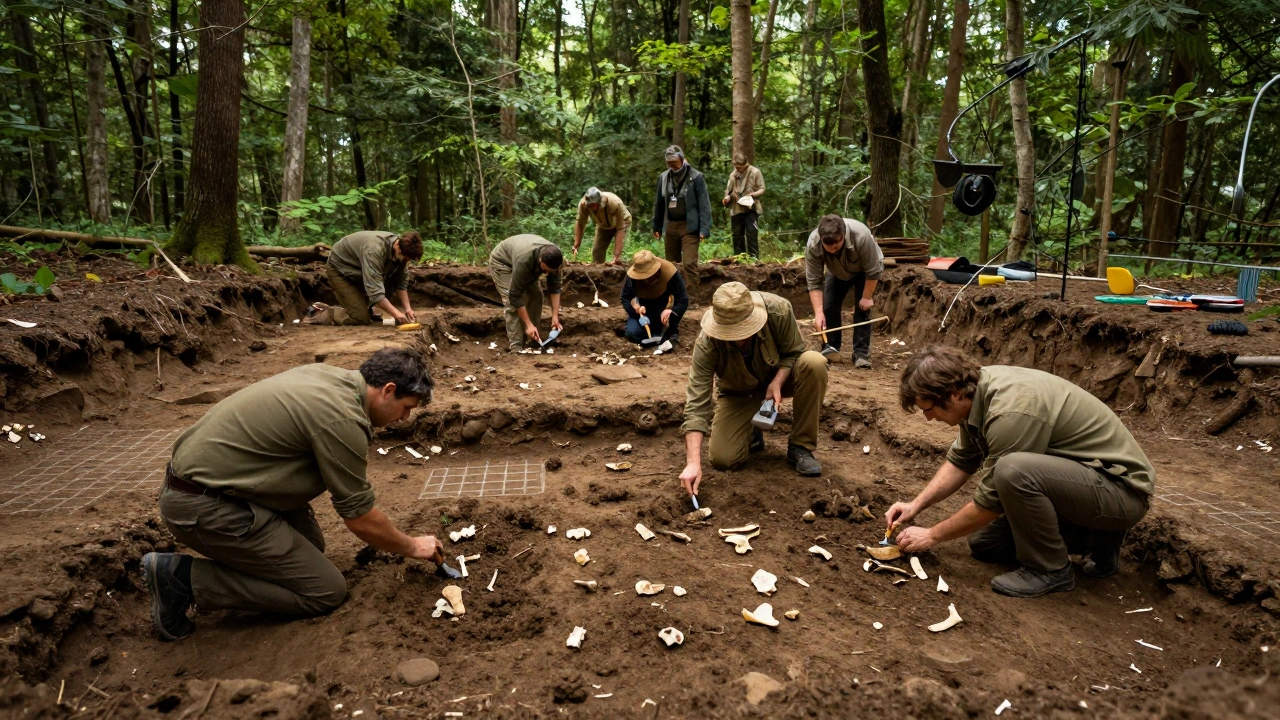
A forensic anthropologist’s toolkit is a mix of high-tech instruments and old-school field gear. You won’t find them only in a lab; often, they are the first ones at a remote excavation site.
| Tool/Skill | Purpose | Application Context |
|---|---|---|
| Osteology Reference Collections | Comparative anatomy | Identifying subtle bone variations against known samples |
| Archaeological Excavation Techniques | Evidence recovery | Recovering fragile remains without contamination |
| Statistical Software | Data analysis | Calculating probability ranges for age and stature |
| 3D Scanning & Modeling | Digital preservation | Creating virtual replicas for facial reconstruction |
| Radiographic Comparison | Positive ID | Matching antemortem X-rays with postmortem bones |
Fieldwork requires meticulous documentation. Every bone fragment must be mapped, photographed, and recorded. This archaeological approach ensures that even if the bones themselves are destroyed later, the spatial context remains as evidence. In mass fatality incidents, like plane crashes or natural disasters, this systematic recovery prevents commingling of remains from different individuals.
Education and Career Path
Becoming a forensic anthropologist is academically demanding. There is no undergraduate degree specifically in "forensic anthropology." Most professionals start with a bachelor’s in physical anthropology, biology, or archaeology. From there, they pursue a master’s or Ph.D. in physical anthropology with a focus on osteology and forensic applications.
Training involves hundreds of hours of hands-on experience with skeletal collections. Universities maintain curated bone sets where students practice identifying features. Field schools teach excavation methods. Internships with medical examiners’ offices provide real-world case exposure.
Certification is available through the American Board of Forensic Anthropology (ABF). To become board-certified, candidates must have advanced degrees, significant case experience, and peer-reviewed publications. They must pass rigorous exams testing their ability to interpret complex skeletal data under pressure.
Work Environments and Challenges
Where do these specialists work? Many are employed by universities, government agencies, or private consulting firms. Some work directly for medical examiner offices or federal bodies like the FBI. Others serve as independent contractors called in for specific cases.
The work environment varies wildly. One day might involve quiet lab analysis under bright lights; the next could mean hiking into dense forest terrain to excavate a shallow grave. Physical stamina is essential. Lifting heavy equipment, kneeling for hours, and working in extreme weather are common realities.
Emotional resilience is equally critical. Dealing with decomposed, mutilated, or unidentified human remains takes a psychological toll. Professionals develop coping mechanisms and support networks to handle the trauma inherent in their work. They often collaborate with forensic pathologists, odontologists, and law enforcement to piece together the full story.
Facial Reconstruction and Public Impact
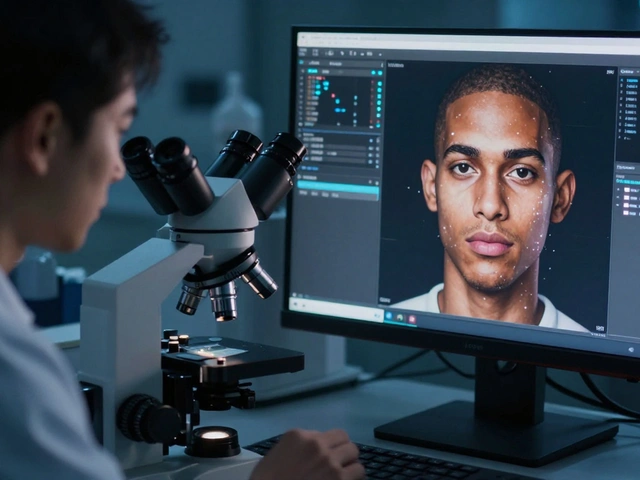
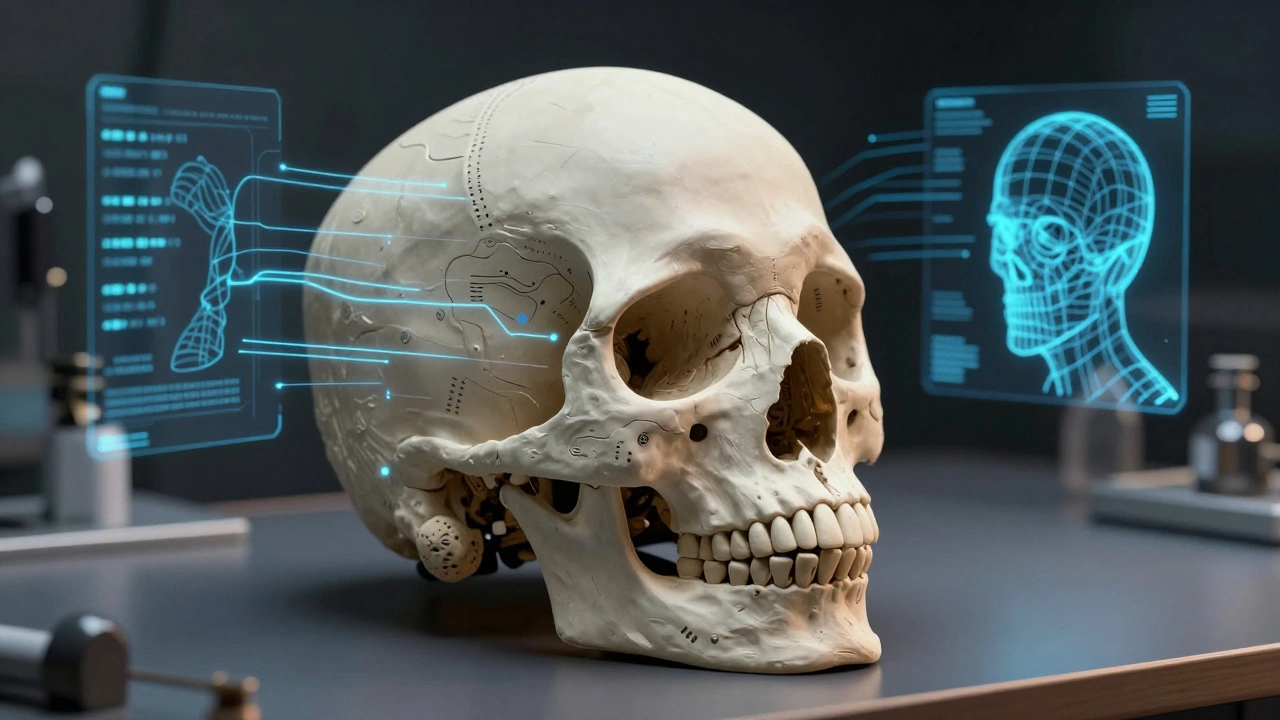
When skeletal analysis cannot yield a direct ID, forensic anthropologists may assist with facial reconstruction. Using tissue depth markers placed on the skull, artists build up layers of clay or digital models to approximate the person’s appearance. This image is released to the public via media outlets, hoping someone recognizes the face.
This technique has solved countless cold cases. A relative sees the reconstruction online and realizes it looks like their missing cousin. Suddenly, an anonymous skeleton becomes a named individual with a family waiting for closure. This human connection underscores why this field matters-it brings justice and peace to grieving families.
Future Trends in the Field
Technology is reshaping forensic anthropology. 3D printing allows for precise replication of bone fragments for study or courtroom display. Virtual reality simulations help trainees practice excavation scenarios without disturbing actual graves. AI algorithms are being developed to automate certain aspects of trait estimation, though human expertise remains irreplaceable for nuanced interpretation.
Research continues to refine database accuracy. New studies focus on diverse populations to improve ancestry and stature estimates for groups previously underrepresented in reference samples. As globalization increases migration, accurate identification tools become even more vital.
Climate change also presents new challenges. Rising sea levels threaten coastal burial sites, while wildfires destroy remains in ways never before documented. Forensic anthropologists adapt by studying novel decomposition patterns caused by environmental shifts.
Can a forensic anthropologist determine exact cause of death?
No. While they can identify traumatic injuries like gunshot wounds or blunt force trauma, determining the physiological cause of death (e.g., poisoning, cardiac arrest) falls under the purview of forensic pathologists. Anthropologists focus on skeletal evidence, not internal organ pathology.
How long does it take to become a certified forensic anthropologist?
It typically takes 7-10 years after high school. This includes a 4-year bachelor’s degree, followed by a 2-5 year graduate program (Master’s or Ph.D.), plus several years of supervised case experience before applying for board certification.
Do forensic anthropologists work on ancient skeletons?
Yes, but those are usually bioarchaeologists rather than forensic anthropologists. However, the skills overlap significantly. Forensic techniques can be applied to historical remains to understand past health, diet, and trauma, especially in legal contexts involving war crimes or genocide.
Is forensic anthropology a well-paying career?
Salaries vary widely. University professors and government employees earn moderate salaries, while private consultants can charge higher rates per case. According to recent data, median salaries range from $60,000 to $90,000 annually, depending on experience and location.
What is the difference between a forensic anthropologist and a forensic archaeologist?
Forensic anthropologists specialize in analyzing human skeletal remains to build biological profiles. Forensic archaeologists focus on the methods used to locate and recover those remains from various environments. They often work together, with archaeologists handling the excavation and anthropologists interpreting the bones.