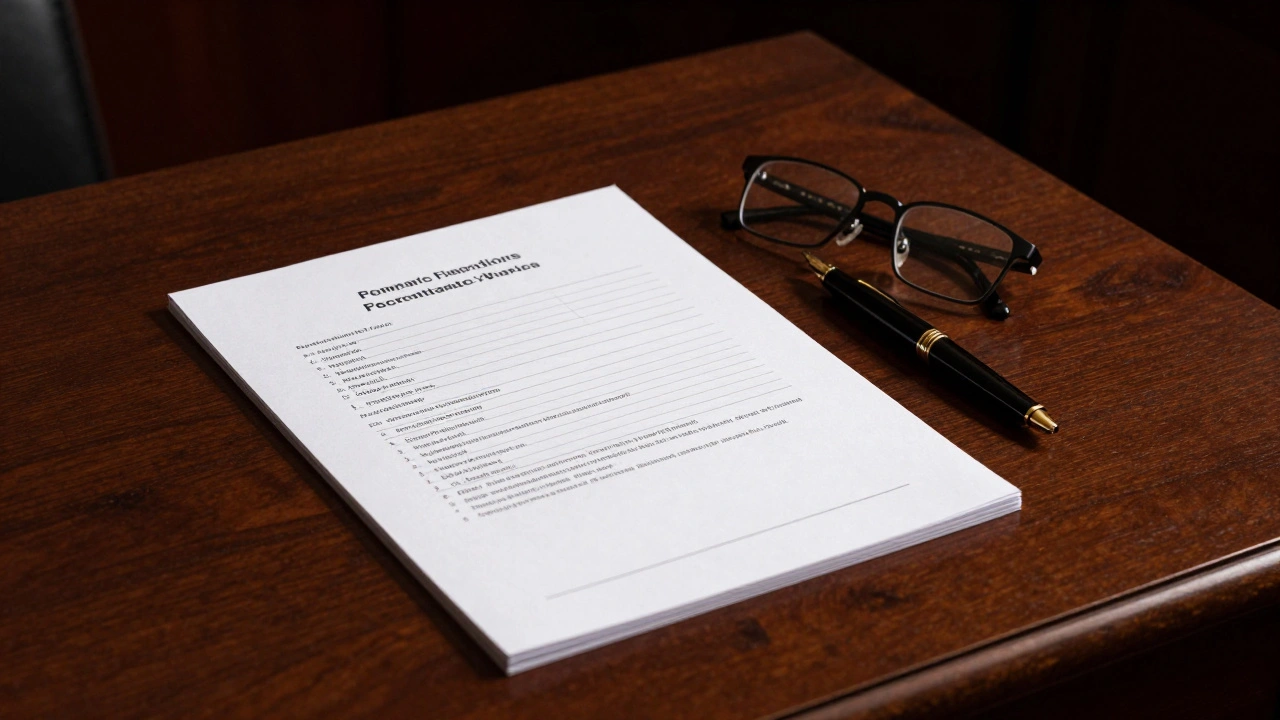
Imagine standing in a courtroom. You've spent months meticulously analyzing evidence, but the opposing counsel is tearing your report apart-not because your science is wrong, but because you used three different date formats and forgot to page-number your exhibits. In the world of forensics, a great investigation can be completely undone by a sloppy document. That is why forensic report templates aren't just about saving time; they are about survival in a legal environment where any inconsistency is treated as a red flag for incompetence.
Whether you are dealing with a collapsed building or a breached server, your report is the only thing the judge or jury will actually see of your work. If the document lacks a logical flow or contains subjective language, the credibility of your entire investigation vanishes. The goal is to move from raw data to a professional, legally sound narrative that anyone-from a seasoned attorney to a confused juror-can understand.
The Core Pillars of a Professional Template
A solid template ensures you don't forget the critical details when you're exhausted after a long case. While different disciplines have different needs, most high-standard reports follow a similar skeletal structure. For example, the American Society of Civil Engineers (ASCE) suggests five basic elements: introductory info, a description of the issues, supplied information, results, and final conclusions.
If you are building your own framework, make sure it includes these essential sections:
- Cover Page & Table of Contents: Immediate identification of the case, date, and author.
- Executive Summary: A high-level overview for non-experts.
- Scope of Work: A clear definition of what you were asked to do (and what you weren't).
- Methodology: The exact tools and steps used, ensuring the process is repeatable.
- Findings & Discussion: The facts of the case, separated from your interpretation.
- Conclusions: Direct answers to the core investigative questions.
- Exhibits & Appendices: Raw data, logs, and photographs.
Writing for the Jury: The Art of the Executive Summary
The executive summary is the most read part of your report. Most stakeholders will read this and nothing else. If you bury your main finding on page 42, you've failed. This section should be a gateway, stripped of heavy technical jargon, and focused on outcomes.
Think of it as a "TL;DR" for the legal system. You should concisely state the scope of the investigation, the primary findings, and the objective conclusion. Avoid words like "probably" or "seemingly" here. Instead of saying "The evidence suggests the server might have been accessed remotely," say "Analysis of the logs confirms unauthorized remote access occurred on April 12th at 14:00 UTC." This clarity prevents the reader from having to dig through twenty pages of technical logs just to find the answer.
| Feature | Digital Forensics | Forensic Engineering | Forensic Accounting |
|---|---|---|---|
| Primary Evidence | Disk images, RAM dumps, Logs | Physical debris, Site photos | Ledgers, Bank statements |
| Key Metric | Hash values (MD5/SHA-256) | Material stress/Load limits | Financial discrepancies |
| Critical Section | Tool versioning & Analysis steps | Site observation/Conditions | Transaction tracing |

Maintaining Objectivity and Precision
One of the fastest ways to lose a case is to include "editorial commentary." In a forensic report, you are a witness to the facts, not a storyteller. Subjective descriptors like "shocking," "obvious," or "negligent" are dangerous because they imply a bias.
Consider the difference in these two approaches. An amateur might write: "Witness Three claimed he saw the incident, but he was standing behind a pillar, so he's clearly lying." That's a disaster. A professional uses the template to separate evidence from analysis. They write: "Witness Three stated he saw the incident. Site photographs (Exhibit B) show a concrete pillar between the witness's stated position and the incident location." You provide the facts; let the court draw the conclusion that the witness is lying.
To keep your language clean, follow these rules of thumb:
- Use the active voice for actions you took ("I analyzed the drive") but keep descriptions factual.
- Avoid speculation. If the data doesn't support a conclusion, state that the information is unavailable.
- Define technical terms. If you mention Volatility (the state of RAM), explain it briefly for the layperson.
The Legal Backbone: Chain of Custody
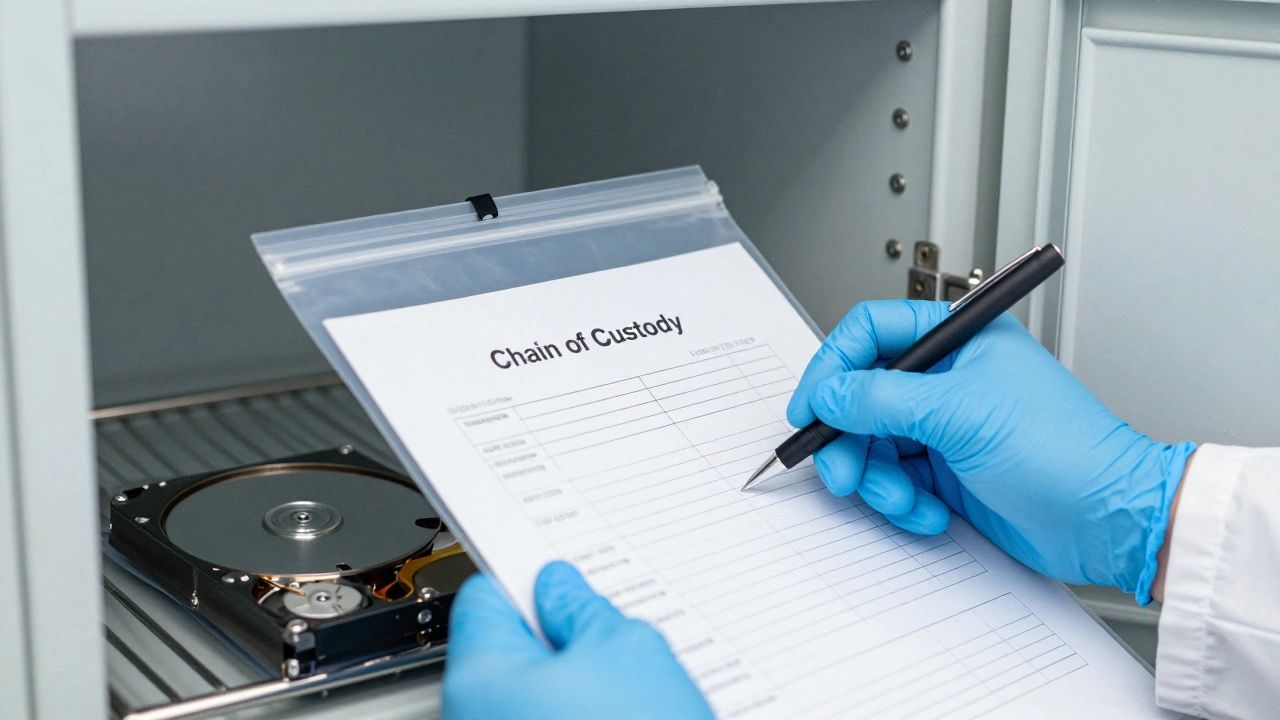
You can have the most brilliant analysis in the world, but if you can't prove where the evidence was for two hours on a Tuesday, the evidence is useless. Chain of Custody is the chronological documentation that records the sequence of custody, control, transfer, and analysis of physical or electronic evidence.
Your template must have a dedicated section or a linked log for this. It should track:
- Who collected the evidence.
- When (exact date and time) it was collected and transferred.
- Where it was stored (e.g., "Secure Locker 4, Temperature Controlled").
- How it was handled (e.g., "Write-blocker used during imaging").
If a page is missing from this log, the integrity of the entire investigation is questioned. This is why professional templates use a total page accountability system, such as "Page 4 of 12." If a lawyer sees "Page 4," they wonder what happened to Page 5. If they see "Page 4 of 12," they know exactly where they are in the document.
Handling Limitations and Errors
It feels counterintuitive to admit that your methods have limitations, but doing so actually makes you more credible. No measurement is perfect. Whether it's a margin of error in a chemical test or the fact that some data was overwritten on a hard drive, being transparent about constraints proves you are a rigorous scientist, not a "hired gun" for the defense or prosecution.
Create a "Limitations" section in your template. Explicitly state any gaps in the evidence or constraints of the tools used. This prevents the opposing side from "discovering" these limitations during cross-examination and making it look like you tried to hide them.
Can I use a generic template for different types of forensic cases?
While the foundational structure (Introduction, Findings, Conclusion) remains the same, you should adapt the specific sections. A digital forensics report needs detailed tool versions and hash values, whereas an engineering report needs site observations and weather conditions. Use a master template and create specialized "modules" for each discipline.
How do I handle conflicting evidence in a report?
Do not ignore conflicting evidence. Document both pieces of evidence objectively in the findings section. In the discussion or conclusion section, explain why one piece of evidence carries more weight than the other based on empirical data or validated methodology.
Is it okay to use passive voice in forensic reports?
Passive voice is common in scientific writing ("The sample was tested"), but overusing it can make the report vague. Use active voice when describing your specific actions ("I performed the analysis") to maintain clear accountability and a direct narrative.
What is the best way to organize exhibits?
Organize exhibits chronologically or by relevance. Each exhibit should be clearly labeled (e.g., "Exhibit A: Site Photo 1") and referenced directly in the text. In digital reports, using hyperlinks to navigate from the text to the specific exhibit page is highly recommended for professionalism.
Why is a personal style guide necessary?
A style guide ensures that terminology remains uniform. If you call a piece of evidence a "device" on page 2 and a "computer" on page 10, a lawyer can argue that you are talking about two different things. Consistency in naming, units of measure, and formatting removes these vulnerabilities.
Next Steps for Consistent Reporting
If you're starting from scratch, don't try to build the perfect template in one day. Start by auditing your last three reports. Look for where you repeated yourself or where you struggled to explain a concept. Use those pain points to create your first set of standardized headers.
For those in a firm, the next step is to implement a peer-review checklist. Before any report leaves the office, a second examiner should check the "Consistency Trinity": formatting, pagination, and terminology. This ensures that the final document is not just a collection of facts, but a cohesive, defensible piece of legal evidence.