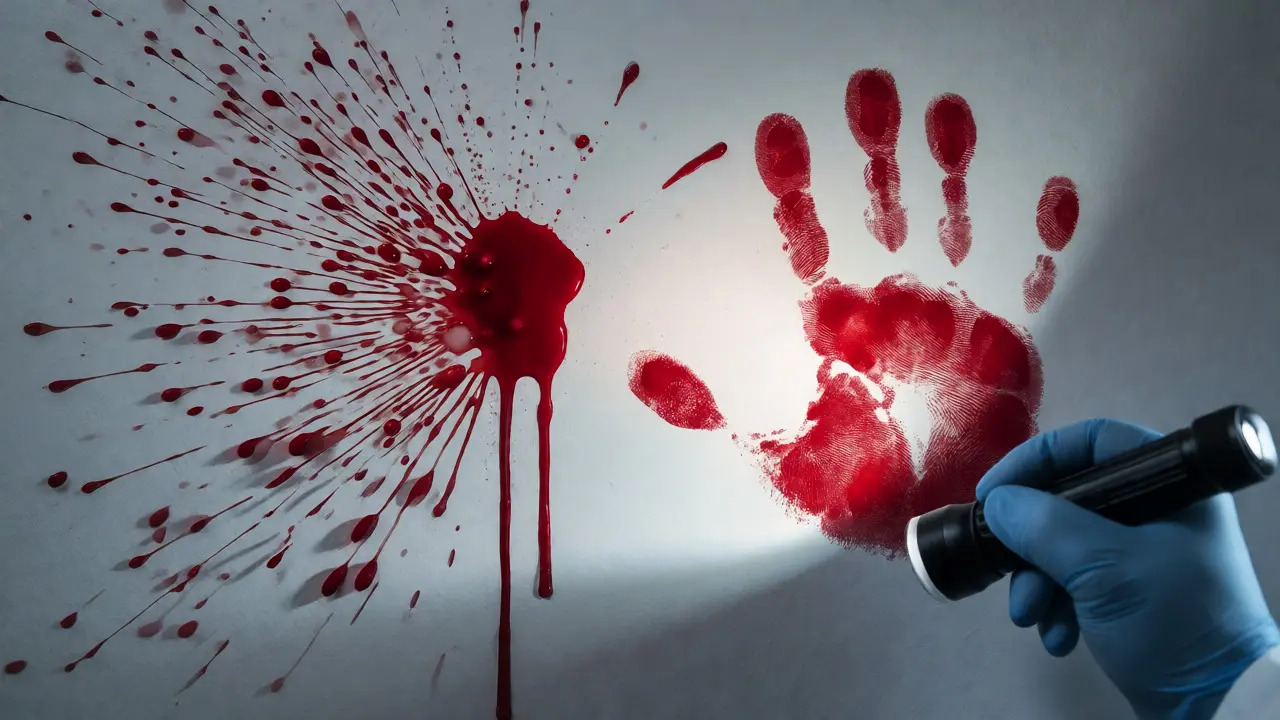
You walk into a room and see blood on the wall. Is it a spray from a gunshot? Or did someone lean against the drywall with a bleeding arm? To the untrained eye, both look like red smears. But in bloodstain pattern analysis, the scientific interpretation of bloodstain patterns to reconstruct events, these two marks tell completely different stories about what happened, who was there, and how they moved.
Misidentifying one for the other can derail an entire investigation. If you mistake a transfer stain for high-velocity impact spatter, you might assume a firearm was discharged when, in reality, a victim just fell onto a carpet. This guide breaks down exactly how to tell them apart, using real-world scenarios and clear visual cues that any investigator or curious reader can spot.
The Core Difference: Mechanism of Creation
To distinguish evidence, you first need to understand how it got there. Every bloodstain is created by a specific force. Impact patterns are formed when blood is subjected to mechanical force greater than gravity, such as a blunt object striking a head or a bullet passing through tissue. The energy shatters the liquid into droplets, creating a mist or spray.
Transfer stains happen when a wet, bloody surface touches another surface. Think of a handprint left on a doorframe or the sole of a shoe stepping on a pool of blood. There is no spray here. The shape of the stain mirrors the shape of the object that made it. If you see a fingerprint in blood, that’s a transfer stain. If you see a fine mist radiating from a point, that’s likely impact.
This distinction matters because it dictates the narrative. Impact tells you about violence and velocity. Transfer tells you about contact and movement. Mixing them up means mixing up the timeline of the crime.
Anatomy of Impact Spatter
When we talk about impact, we’re usually talking about three types of spatter, categorized by the size of the droplets. The smaller the droplet, the higher the energy involved.
- Low-Velocity Impact: Droplets larger than 4mm. This usually comes from gravity or minor bumps, like a person falling over while bleeding. It looks like large drops with little tailing.
- Medium-Velocity Impact: Droplets between 1mm and 4mm. This is common in stabbings or beatings. You’ll often see directional tails pointing away from the source.
- High-Velocity Impact: Droplets smaller than 1mm. This is typical of gunshots or heavy machinery accidents. It creates a fine, almost airbrushed appearance on surfaces.
A key feature of impact spatter is its randomness within a directional flow. The droplets spread out in a cone shape. If you draw lines back through the long axes of the elliptical droplets, they should converge at a single point-the area of origin. Transfer stains don’t do this. They don’t have a "point of origin" in the same geometric sense; they have a point of contact.
Reading Transfer Stains
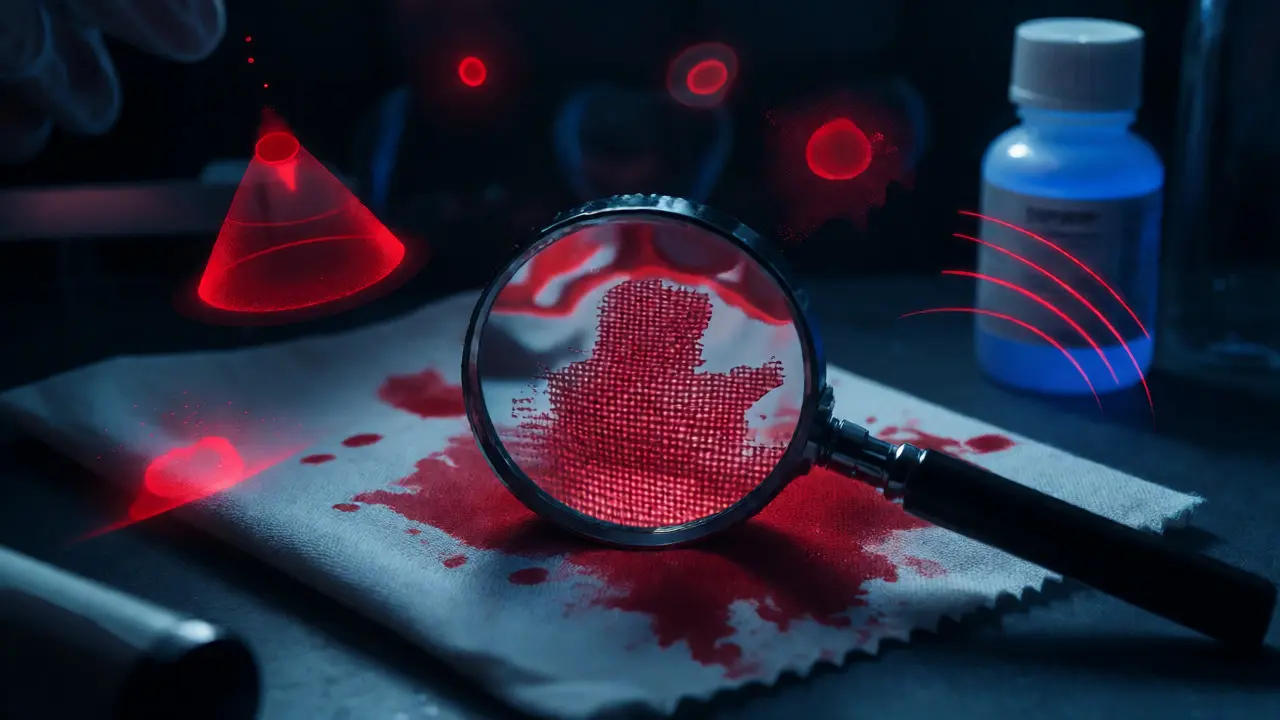
Transfer stains are essentially molds. If a bloody shirt rubs against a white wall, the fabric weave might be visible in the stain. If a bloody glove grabs a railing, you might see the texture of the leather. These are called pattern transfers.
There are two main subtypes you need to watch for:
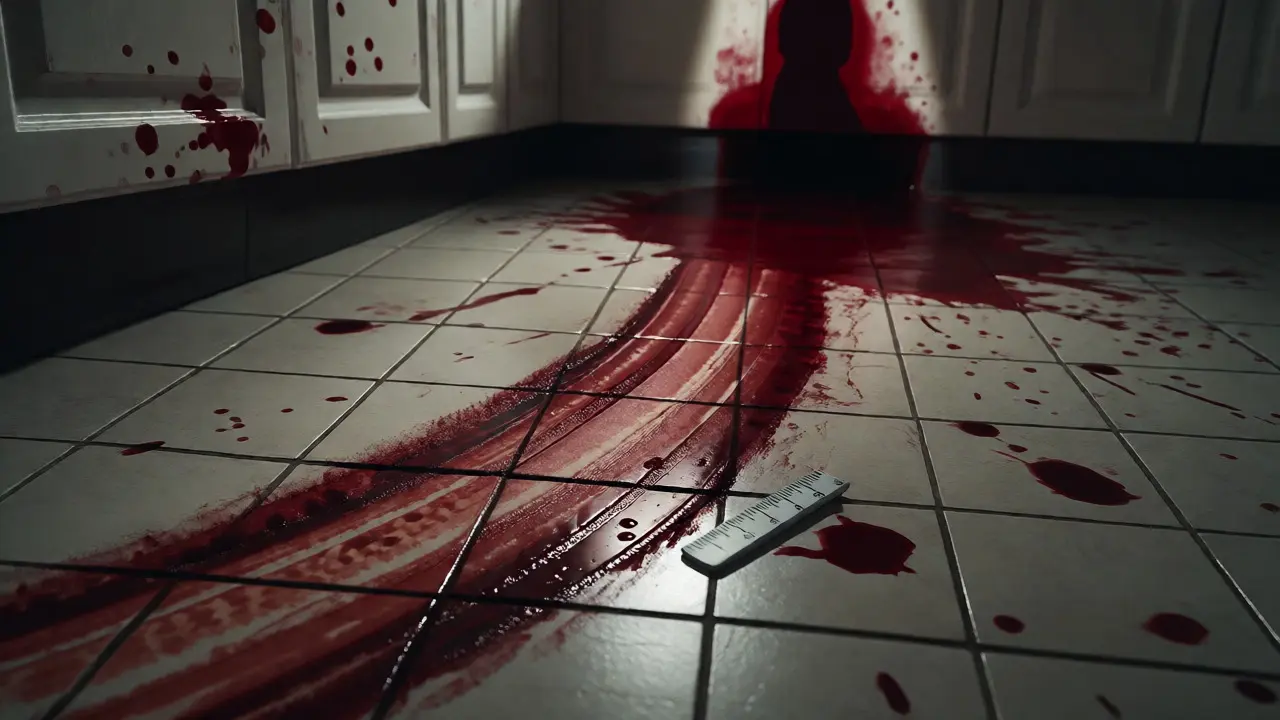
- Wipe Patterns: This happens when a wet object moves across a wet surface. Imagine dragging a bloody finger across a table. You get a smeared line where some blood is removed and some remains. Wipes indicate movement after the blood was already present.
- Swipe Patterns: This is the opposite. A dry (or semi-dry) object moves through a wet stain. For example, walking through a puddle of blood. The resulting mark shows the trail of the walker, but the original puddle remains largely intact underneath.
Why does this matter? Because wipes and swipes prove sequence. If you find a swipe pattern over a dried drip, the person walked through the blood after the initial injury occurred. If you find a wipe pattern that disrupts a fresh spatter, the contact happened during or immediately after the impact event.
Visual Comparison: Spotting the Clues
Let’s put these side-by-side. When you’re standing at a crime scene, look for these specific attributes. Don’t rely on gut feeling; look for physical characteristics.
| Feature | Transfer Stains | Impact Patterns |
|---|---|---|
| Droplet Size | Variable, often large and irregular | Consistent range based on velocity (e.g., <1mm for high) |
| Shape | Mirrors the object (fingerprint, shoe, cloth) | Circular to elliptical with tails |
| Directionality | Indicates path of movement/contact | Converges to a point of origin |
| Texture | May show surface details (weave, tread) | Smooth edges, no texture imprint |
| Context | Found on floors, walls, objects touched | Found on vertical surfaces near trauma site |
Notice the "Texture" row. That’s your best friend. If you see a distinct grid pattern in the blood on the floor, ask yourself: is there a rug nearby? A mesh bag? If yes, it’s a transfer. If the blood is smooth and splashed, it’s likely impact.
Common Pitfalls and Misinterpretations
Even experienced analysts make mistakes. Here are the traps to avoid.
Confusing Cast-off Patterns with Transfer: When a weapon is swung, blood flies off it in a linear arc. This is a type of impact-related pattern, but it can look like a smear if the motion is slow. However, cast-off patterns usually have distinct, evenly spaced droplets along a line. A transfer smear is continuous and uneven.
Overlooking Void Patterns: Sometimes, a body blocks the blood spray, leaving a clean silhouette on the wall behind it. This is a void. If you see a void inside an impact pattern, you know something stood there during the shooting. If you see a void in a transfer stain, it might mean the object didn’t touch that part of the surface. Analyzing voids helps reconstruct who was standing where.
Assuming All Smears are Transfers: Not all smears are transfers. A high-volume bleed running down a wall can create a drip pattern that looks smeared due to gravity. Look for the leading edge. Drips have a rounded bottom. Transfers have the shape of the contacting object.
Practical Application: Reconstructing the Scene
Imagine a scenario: A victim is found on the kitchen tile. There is a large pool of blood under the head. On the cabinet doors, there are small, fine dots. On the floor, there is a long, dragged smear leading to the hallway.
Here’s how you break it down:
- The Pool: Likely passive staining from gravity. Indicates the victim stayed there for a while.
- The Cabinet Dots: These are medium-velocity impact spatter. The force came from below or level with the cabinets. Someone struck the victim while they were low, or the victim was struck while kneeling.
- The Dragged Smear: This is a wipe pattern. Someone moved the body after the initial bleeding started. The direction of the smear tells you which way they pulled the victim.
By separating these elements, you build a timeline: Injury occurred -> Victim bled on floor -> Attack continued (spatter on cabinets) -> Body was moved (wipe).
Tools of the Trade
You don’t need fancy gadgets to start distinguishing these, but professionals use specific tools to confirm their eyesight.
Raking Light: Shining a flashlight at a low angle across the stain reveals depth and texture. It highlights the ridges in a transfer stain or the tails of an impact drop.
Scales and Protractors: Used to measure angles of impact. For transfer stains, you use scales to match the size of the stain to the suspected object (e.g., measuring a shoe print).
Chemical Enhancers: Luminol reacts with hemoglobin, making faint transfer stains glow blue. This is crucial for finding wiped-up footprints that are invisible to the naked eye.
Final Thoughts on Evidence Integrity
Never rush the identification process. Blood dries quickly, and environmental factors like heat or humidity can alter appearance. Always document before touching. Photograph every stain with a scale included. Your notes should explicitly state why you believe a stain is transfer versus impact. Did you see a tread pattern? Did the droplets converge? Write it down.
Remember, the goal isn’t just to label the stain. It’s to explain the human behavior that created it. Was it a struggle? A fall? A cleanup attempt? The difference between a transfer stain and an impact pattern is often the difference between an accident and an assault. Get it right, and you let the evidence speak for itself.
Can a single stain be both transfer and impact?
Yes, complex scenes often have overlapping patterns. For example, a person might be shot (impact spatter) and then fall onto a bloody floor (transfer/wipe). Analysts must dissect the layers. Usually, the underlying layer is older. If the transfer is on top of the spatter, the contact happened after the impact.
How do I tell if a stain is old or new?
Color and texture change over time. Fresh blood is bright red and fluid. As it oxidizes, it turns dark brown or black. Dried blood may crack or flake. However, lighting and substrate color can trick you. Chemical tests like Kastle-Meyer can confirm the presence of blood, but dating the stain precisely requires more advanced lab analysis.
Do animals leave different bloodstain patterns?
The physics is the same, but the biology differs. Animal blood contains different proteins, requiring species-specific serological tests for confirmation. Visually, fur can trap blood, creating unique transfer patterns that differ from human skin or clothing. Paw prints are classic transfer examples.
What is a 'cast-off' pattern?
Cast-off occurs when blood is flung off a moving object, typically a weapon. It appears as a series of linear, elongated stains. Unlike random impact spatter, cast-off patterns follow the arc of the swing. They are technically a form of impact-related distribution but are distinct from the immediate blow's spatter.
Can cleaning remove transfer stains completely?
Rarely completely. Cleaning agents often dilute blood rather than remove it, spreading it into fibers or porous materials. Even if visually gone, chemical enhancers like luminol can reveal residual hemoglobin. In fact, improper cleaning can create artificial transfer patterns, confusing the scene.