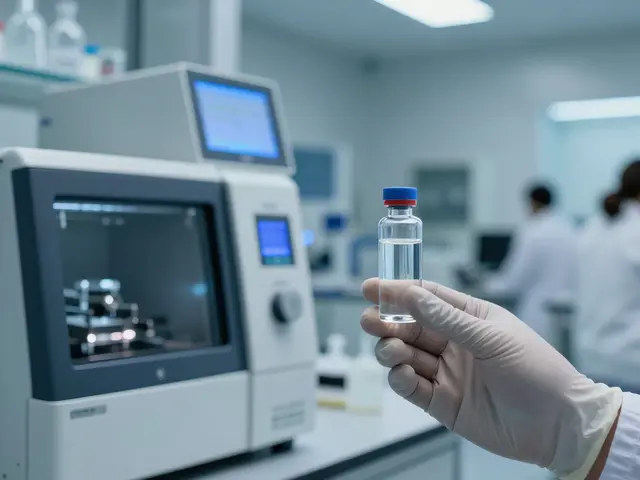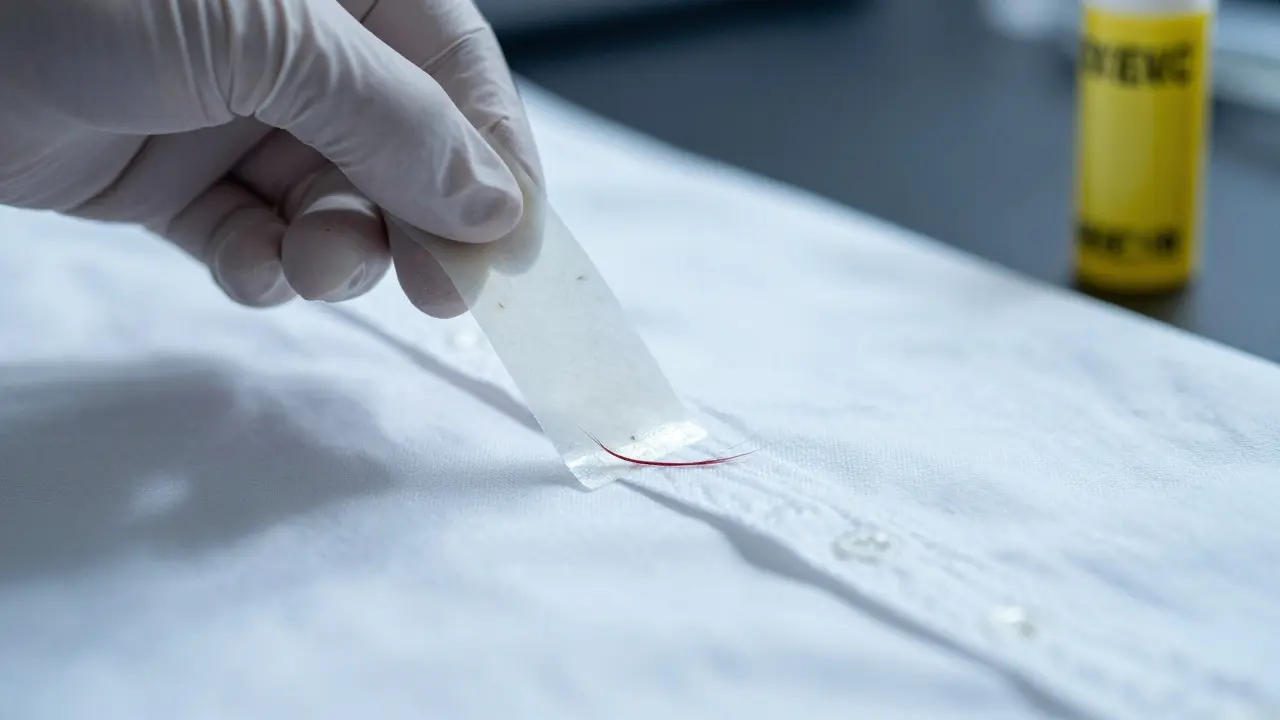
Imagine finding a single red hair on a white shirt. To most people, it’s just a speck of dirt or an annoyance. But to a forensic scientist, that tiny strand is a potential key to solving a crime. This is the power of trace evidence, which refers to microscopic physical materials transferred between people, objects, and environments during interactions. These tiny particles-fibers, glass shards, soil, paint chips, or even pollen grains-tell a story about where someone has been and what they have touched.
Unlike fingerprints or blood splatters, trace evidence doesn’t always shout for attention. It whispers. Yet, when analyzed correctly, it can link a suspect to a crime scene with startling precision. In this guide, we’ll break down what trace evidence actually is, how experts collect and analyze it, and why it remains a cornerstone of modern forensic investigations.
Key Takeaways
- Trace evidence consists of microscopic physical materials like fibers, glass, soil, and paint that transfer between surfaces through contact.
- Louis Pasteur’s principle of "every contact leaves a trace" underpins the entire field of trace evidence analysis.
- Common types include textile fibers, glass fragments, soil samples, paint chips, and biological traces like hair and pollen.
- Analysis methods range from optical microscopy and infrared spectroscopy to DNA profiling and mass spectrometry.
- While powerful, trace evidence requires careful collection and interpretation to avoid contamination or misidentification.
The Core Concept: Locard’s Exchange Principle
To understand trace evidence, you first need to grasp the foundational rule of forensic science: Locard’s Exchange Principle, which states that whenever two objects come into contact, material is exchanged between them. Developed by French criminologist Edmond Locard in the early 20th century, this principle explains why no crime scene is truly untouched. If a suspect walks through a garden, they carry away pollen. If they sit in a car, they leave behind fibers from their clothing and pick up dust from the seats.
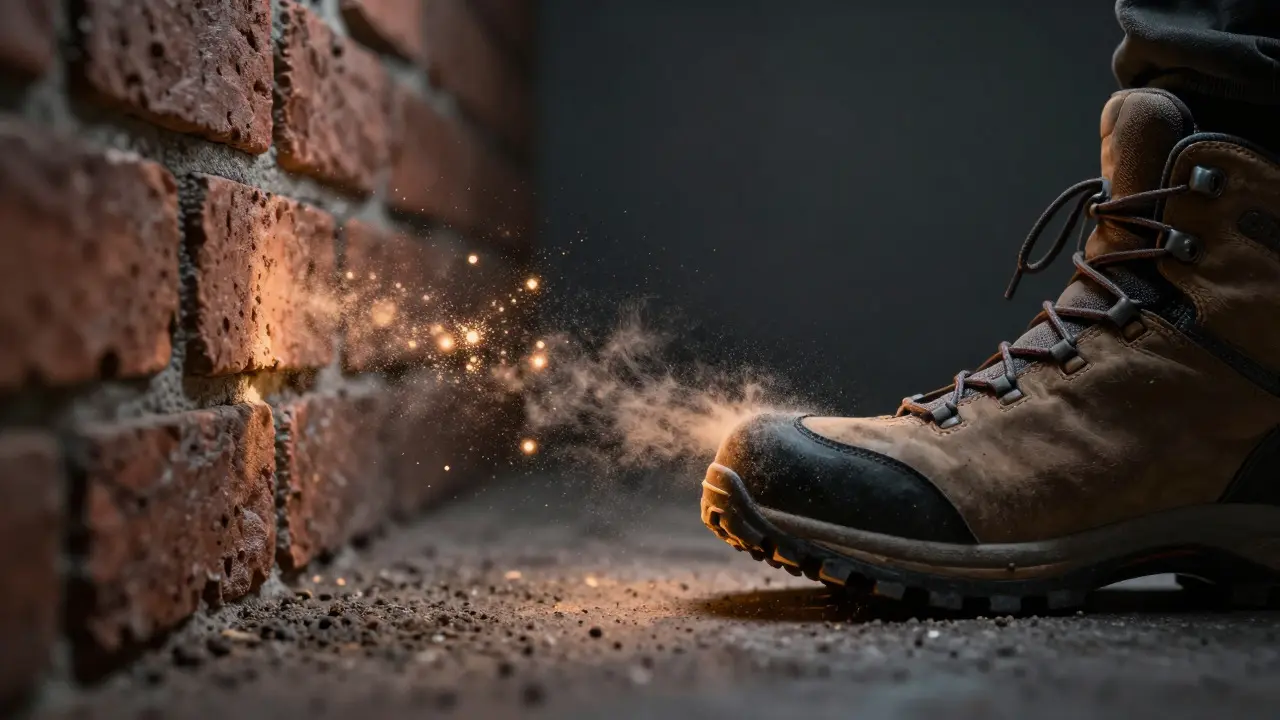
This exchange is usually invisible to the naked eye. A single human hair is roughly 70 micrometers wide-about one-third the width of a typical grain of sand. A fragment of window glass might be smaller than a pinhead. Despite their size, these particles retain chemical and physical properties that can be matched back to their source. For example, if a victim is attacked near a brick wall, tiny brick dust particles may adhere to the attacker’s shoes. Later, if those same shoe prints are found at another location, the brick dust becomes a critical link.
Common Types of Trace Evidence
Not all trace evidence looks the same. Forensic labs categorize these materials based on their origin and composition. Here are the most frequently encountered types:
- Textile Fibers, which include natural fibers like cotton, wool, and silk, as well as synthetic ones like polyester and nylon. Fiber analysis can identify the type of fabric, dye lot, and even the manufacturing process.
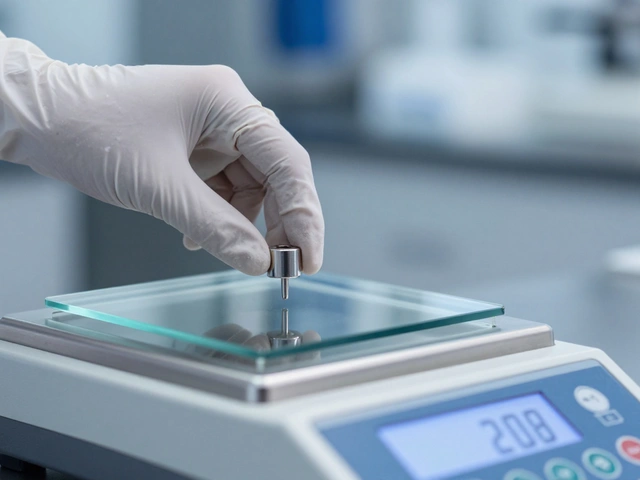
- Glass Fragments, which vary in color, thickness, and chemical composition depending on whether they came from a window, bottle, or headlight. Refractive index measurements help match fragments to specific sources.
- Soil and Pollen, which act as environmental markers. Soil composition changes drastically over short distances, making it useful for determining if a suspect’s vehicle was recently in a specific area.
- Paint Chips, which are often left behind in hit-and-run accidents. Multi-layered automotive paint allows analysts to match color layers and chemical binders to specific vehicle models and years.
- Biological Traces, including hair shafts (without roots), skin cells, and pollen grains. While hair without a root cannot provide full DNA profiles, it still offers valuable class characteristics.
How Trace Evidence Is Collected
Collecting trace evidence is a delicate balancing act. The goal is to secure the sample without contaminating it or losing it entirely. Because these particles are so small, standard tools like tweezers or forceps are often too clumsy. Instead, investigators use specialized techniques.
- Tape Lifting: Clear adhesive tape is pressed onto surfaces to lift fibers, hairs, or dust. The tape is then mounted on a slide for microscopic examination. This method is quick and effective for large flat areas like carpets or upholstery.
- Brushing and Vacuuming: Soft-bristled brushes gently sweep surfaces to gather loose particles. HEPA vacuum cleaners with special attachments can capture finer debris without blowing it away.
- Swabbing: Cotton swabs moistened with water or alcohol are used to collect residues like blood, semen, or chemical compounds from wounds or objects.
- Scraping: For paint chips or dried mud, fine scalpels or razor blades carefully scrape the material into sterile containers.
Proper documentation is crucial. Photographers record the exact location of the evidence before collection, and chain-of-custody forms track every person who handles the sample. A single mistake here-like touching a glass shard with bare fingers-can introduce foreign oils that ruin chemical tests later.
Analytical Methods in the Lab
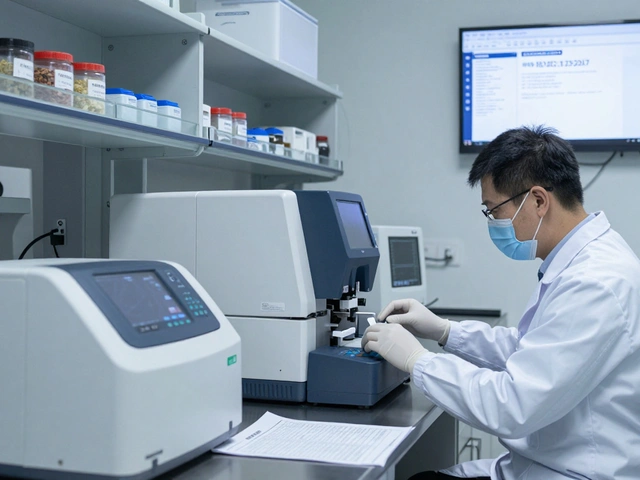
Once in the lab, trace evidence undergoes a series of tests to determine its identity and source. The choice of method depends on the material type. Here’s how common analyses work:
| Technique | Best For | What It Reveals |
|---|---|---|
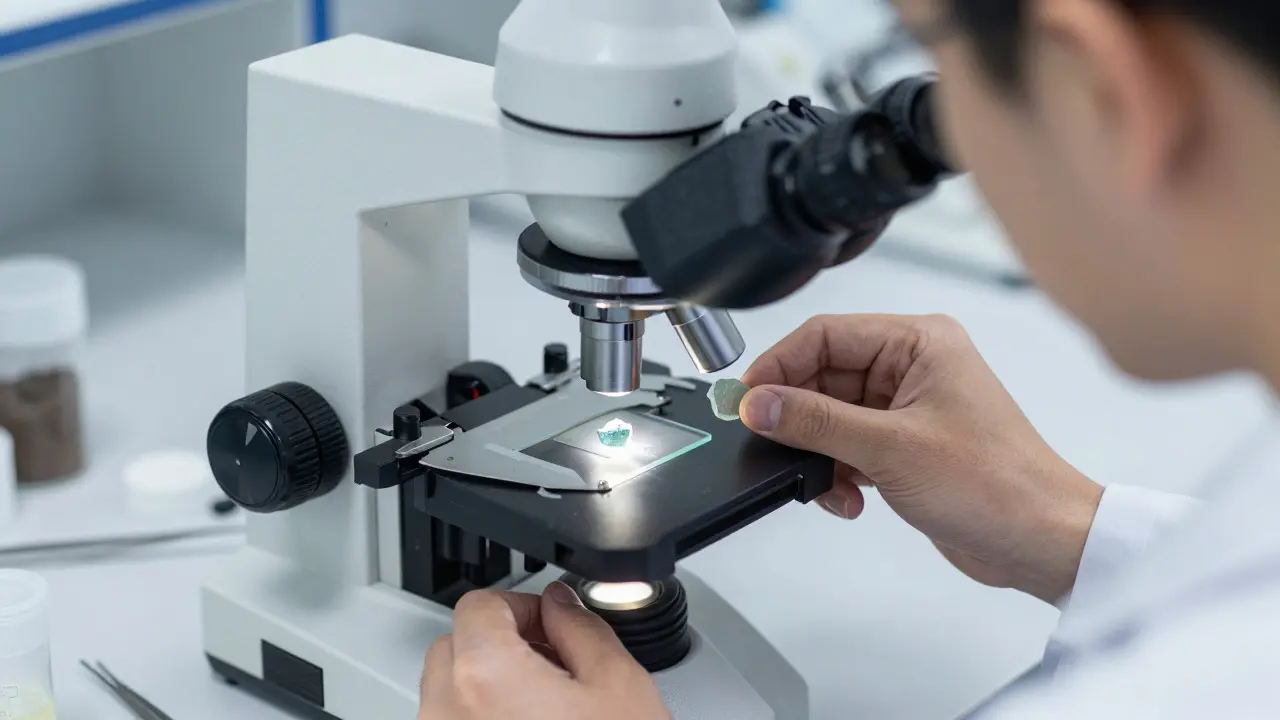
| Optical Microscopy | Fibers, Hairs, Particles | Morphology, Color, Striations, Diameter |
| Infrared Spectroscopy (FTIR) | Synthetics, Plastics, Paints | Chemical Composition, Polymer Type |
| Refractive Index Measurement | Glass Fragments | Density, Source Matching (Window vs. Bottle) |
| Mass Spectrometry | Pollutants, Drugs, Complex Mixtures | Molecular Weight, Elemental Composition |
| DNA Profiling | Hair Roots, Skin Cells, Blood | Individual Identification (Nuclear DNA) |
For instance, when analyzing a blue fiber found on a suspect’s jacket, a forensic microscopist first examines it under a microscope. They note the cross-section shape (round for synthetic, kidney-shaped for wool) and any cut ends. Next, FTIR spectroscopy confirms whether the fiber is acrylic or nylon. Finally, if the fiber matches a carpet from the crime scene, the combination of visual and chemical data strengthens the case significantly.
Why Trace Evidence Matters in Court
Trace evidence often serves as corroborating proof. While DNA provides individual identification, trace evidence typically offers "class identification," meaning it links a sample to a group of similar items rather than a single unique source. For example, a glass shard might match windows from thousands of cars, but if combined with a paint chip matching the suspect’s specific vehicle model, the probability of coincidence drops dramatically.
Juries find trace evidence compelling because it feels objective. Unlike eyewitness testimony, which can be flawed by memory or bias, a paint chip doesn’t lie. However, experts must present this evidence clearly. They explain the limitations-such as the fact that many commercial products share identical chemical compositions-to ensure the jury understands the weight of the findings. When presented properly, trace evidence can turn a weak case into a strong conviction.
Challenges and Limitations
Despite its power, trace evidence isn’t perfect. Contamination is the biggest risk. If a technician wears the same gloves on multiple samples, fibers can transfer unintentionally. Labs mitigate this by using clean rooms, changing gloves frequently, and running blank controls to check for background noise.
Another challenge is interpretation. Just because a fiber matches a carpet doesn’t mean the suspect sat on that specific carpet; they could have walked past it. Context matters. Investigators must consider the scenario: Was the fiber on the suspect’s front pocket (suggesting contact with a table) or their shoe (suggesting floor contact)? Understanding these nuances prevents over-interpretation.
Frequently Asked Questions
Is trace evidence admissible in court?
Yes, trace evidence is widely admissible in courts worldwide, provided it meets standards for reliability and proper chain of custody. Experts must testify to their methods and qualifications, and the scientific principles behind the analysis must be generally accepted in the scientific community.
How long does it take to analyze trace evidence?
Simple analyses like fiber microscopy can take a few hours. More complex tests, such as DNA extraction from hair shafts or detailed chemical profiling of paint, may take several days to weeks, depending on lab workload and sample quality.
Can trace evidence prove guilt beyond a reasonable doubt?
Rarely on its own. Trace evidence is usually part of a larger body of proof. It works best when combined with other evidence like witness statements, surveillance footage, or DNA matches. Its strength lies in corroborating other facts and narrowing down possibilities.
What is the difference between class and individual evidence?
Class evidence identifies a sample as belonging to a group (e.g., a specific brand of tire tread pattern). Individual evidence uniquely identifies a single source (e.g., a fingerprint or DNA profile). Most trace evidence falls into the class category, though some unique tool marks can reach individual identification levels.
Does weather affect trace evidence collection?
Yes, rain, wind, and sun can degrade or wash away trace evidence. Outdoor scenes require rapid collection and protection from elements. Indoor scenes are more stable, but temperature and humidity can still impact certain biological samples if not stored properly.